H.R. 4582: To amend the Family and Medical Leave Act of 1993 and title 5, United States Code, to clarify that organ donation surgery qualifies as a serious health condition.
Sponsor

Don Bacon
Republican · NE-2
Give a kidney, keep your job
Why it matters
The words "organ donation" appear nowhere in the federal law that gives you 12 weeks of job-protected leave. H.R. 4582 would insert them in two places — the private-sector definition and the parallel one covering federal civil service employees — so a donor's recovery is covered on the face of the statute instead of by interpretation. The bill carries 154 cosponsors, 120 Democrats and 34 Republicans behind a Republican sponsor, and has sat in three committees since July 2025 without a hearing.
H.R. 4582 adds the same eight words in two places. After the phrase "physical or mental condition," it inserts "(including recovery from surgery related to organ donation)" — once in the Family and Medical Leave Act, which covers private-sector workers, and once in the parallel definition that covers federal civil service employees. That is the entire change for private employers.
Nothing about the 12 weeks moves: a donor would draw on the same unpaid, job-protected leave every other covered worker gets, not an extra allotment on top of it. What changes is that a leave administrator reading the statute sees organ donation named, rather than having to decide whether a healthy person recovering from planned surgery fits a definition built around illness and injury.
Federal employees get a second provision. If a federal worker uses any part of that 12-week period to serve as an organ donor, the bill requires substituting the separate donor leave the government already offers, for as much of that stretch as possible. Substituting is not stacking. The paid donor leave would run inside the 12 weeks rather than extending them, which makes more of a federal donor's recovery paid and draws down the donor benefit at the same time.
Everything else about eligibility stays put. You still need to work for a covered employer, still need the hours and tenure the leave law requires, and the leave is still unpaid unless you substitute paid time you have already earned.
Bill Progress
Latest Action · Jul 22, 2025
Referred to Education and Workforce, and in addition to the Committees on Oversight and Government Reform, and House Administration, for a period to be subsequently determined by the Speaker, in each case for consideration of such provisions as fall within the jurisdiction of the committee concerned. for review
H.R. 4582 Bill Summary
What H.R. 4582 actually does.
Organ donation gets named in the leave law
The bill inserts "including recovery from surgery related to organ donation" into the Family and Medical Leave Act's definition of a serious health condition, so a donor's recovery is covered by the words of the statute rather than by how the general definition is read.
Federal employees get the identical language
The same phrase goes into the definition that governs family and medical leave for federal civil service employees, keeping the private-sector and federal standards aligned.
Federal donors must draw on donor leave first
A federal employee who uses any part of the 12-week period to serve as an organ donor would have to substitute the government's separate organ donor leave for as much of that time as possible.
The 12 weeks stay 12 weeks
The bill fits donation recovery inside the existing leave allowance. It creates no additional weeks, no new paid benefit, and no new program.
Who benefits from H.R. 4582?
Living organ donors who work for covered employers
Kidney and partial-liver donors are healthy people electing major surgery. Under this bill their recovery is named in the statute, so the leave request turns on eligibility rather than on whether donation counts as a health condition at all.
Federal employees who donate
Federal workers get the same explicit coverage, plus the substitution rule that puts the government's paid donor leave to work first — meaning more of the recovery period is paid, drawn from a benefit they already have.
People waiting for a transplant
The case sponsors make for the bill is that uncertainty about job protection is one of the frictions a potential donor weighs. The bill does not measure whether removing that uncertainty produces more donors.
Leave administrators at employers and agencies
HR staff handling a donation leave request would have statutory text to point to instead of a judgment call, which narrows the ground for a dispute.
Who is affected by H.R. 4582?
Workers recovering from donation surgery
The direct subject of the bill. Their recovery would be written into the definition of a serious health condition rather than read into it.
Donors whose jobs fall outside the leave law
The bill changes a definition, not the coverage thresholds. Employees at companies below 50 workers, and anyone who has not put in 12 months and 1,250 hours, remain outside the law entirely and gain nothing from this change.
Federal employees taking donation leave
They gain explicit coverage and pick up the substitution requirement: available donor leave must be used for as much of the 12-week period as possible, which spends that benefit rather than reserving it.
Covered employers and federal agencies
Employers would apply the amended definition to donation leave requests. Agencies would also have to administer the substitution rule and track donor leave against the 12-week period.
HR4582 Legislative Journey
House: Committee Action
Jul 22, 2025
Referred to the Committee on Education and Workforce, and in addition to the Committees on Oversight and Government Reform, and House Administration, for a period to be subsequently determined by the Speaker, in each case for consideration of such provisions as fall within the jurisdiction of the committee concerned.
About the Sponsor
Don Bacon
Republican, Nebraska's 2nd congressional district · 9 years in Congress
Committees: Agriculture, Armed Services
View full profile →
Cosponsors (168)
This bill has 168 cosponsors: 131 Democrats, 37 Republicans, reflecting bipartisan support. Cosponsors represent 41 states: Alabama, Arizona, California, and 38 more.
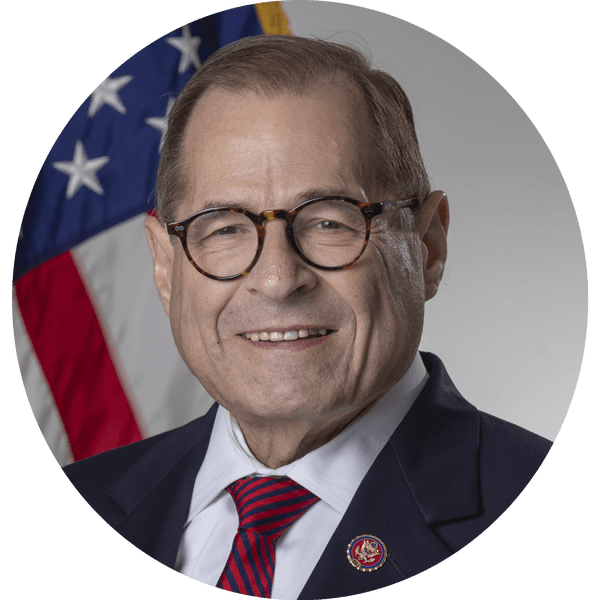
Jerrold Nadler
Democrat · NY

Troy Balderson
Republican · OH

Jim Costa
Democrat · CA

Mariannette Miller-Meeks
Republican · IA

Joe Wilson
Republican · SC

Andy Barr
Republican · KY

Lloyd Doggett
Democrat · TX

Herbert Conaway
Democrat · NJ
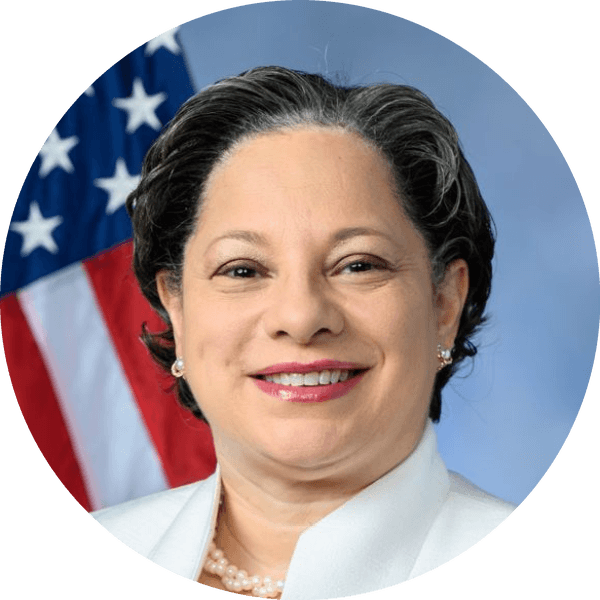
Jennifer McClellan
Democrat · VA

Mike Quigley
Democrat · IL

Yvette Clarke
Democrat · NY

Jesús García
Democrat · IL
Cosponsor Coverage Map
Committee Sponsors
Committee on House Administration
4 of 12 committee members cosponsored


Oversight and Government Reform Committee
13 of 47 committee members cosponsored


Education and Workforce Committee
11 of 37 committee members cosponsored


44 Republicans across these committees haven't cosponsored yet. Mobilize their constituents
What laws does H.R. 4582 change?
1 changes
Sections Amended
Section 101(11) of Family and Medical Leave Act of 1993 (29 U.S.C. 2611(11))
inserting ``(including recovery from surgery related to organ donation)'' after ``physical or mental condition''
H.R. 4582 Quick Facts
- Committee
- House Administration
- Chamber
- House
- Policy
- Health
- Introduced
- Jul 22, 2025
Referred to Education and Workforce, and in addition to the Committees on Oversight and Government Reform, and House Administration, for a period to be subsequently determined by the Speaker, in each case for consideration of such provisions as fall within the jurisdiction of the committee concerned. for review
Jul 22, 2025
Official Sources
Official bill page with the text, sponsors, cosponsor list, and committee referrals.
The private-sector definitions section the bill amends — subsection (11) is the "serious health condition" language that would gain the organ donation phrase.
The Labor Department regulation that spells out what counts as a serious health condition today, the interpretation the bill would replace with explicit statutory text.
The eligibility rule the bill leaves untouched: 50-employee employers, 12 months of service, 1,250 hours.
The parallel federal civil service definitions section that would receive the identical organ donation phrase.
The federal leave requirement the bill amends at subsection (d)(1) to require substituting available donor leave.
The separate federal organ donor leave the bill points to — up to 30 days of paid leave a year for organ donation.
OPM guidance on the paid donor leave a federal employee would have to substitute inside the 12-week period.
H.R. 4582 Common Questions
Does H.R. 4582 give organ donors extra leave on top of the 12 weeks?
No. Donation recovery would fit inside the same 12 weeks of job-protected leave already available. The bill adds no weeks and creates no separate allowance.
Is family and medical leave for organ donation paid?
Not by this bill. Federal family and medical leave is unpaid, though you can substitute paid time you have already earned. The one exception H.R. 4582 creates is for federal employees, who would have to use the government's paid donor leave for as much of the period as possible.
Can my employer deny leave for a kidney donation right now?
The statute today does not mention organ donation. Coverage rests on whether a donor's recovery is read into the general definition of a serious health condition, which is exactly the question H.R. 4582 removes by naming donation in the text.
Does H.R. 4582 protect every worker who donates an organ?
No. It changes a definition, not who the leave law reaches. You still need an employer with at least 50 employees, plus 12 months on the job and 1,250 hours worked in the past year. Donors outside those thresholds gain nothing from the bill.
What changes for federal employees under H.R. 4582?
Two things. Donation recovery is written into the federal leave definition, and any federal worker taking that leave to donate must substitute available organ donor leave for as much of the time as possible. The paid donor leave runs inside the 12 weeks rather than extending them.
Does the bill cover bone marrow donation?
The phrase H.R. 4582 adds is "recovery from surgery related to organ donation." Bone marrow donation is not named in it. Federal employees have a separate donor leave benefit that does cover marrow donation, but this bill's clarification is written around organ donation surgery.
Where does H.R. 4582 stand in Congress?
It was introduced on July 22, 2025 by Rep. Don Bacon with Rep. Jerrold Nadler, and has drawn 154 cosponsors from both parties. It sits in three House committees — Education and Workforce, Oversight and Government Reform, and House Administration — with no action taken since referral.
Based on H.R. 4582 bill text
H.R. 4582 Bill Text
“To amend the Family and Medical Leave Act of 1993 and title 5, United States Code, to clarify that organ donation surgery qualifies as a serious health condition.”
Source: U.S. Government Publishing Office
Get notified when H.R. 4582 moves
Committee votes, floor action, cosponsor changes — straight to your inbox.
Bill alerts + Legisletter's monthly briefing. Unsubscribe anytime.
Health Bills
9 related bills we're tracking
Nancy Gardner Sewell Medicare Multi-Cancer Early Detection Screening Coverage Act




Reported (Amended) by the Committee on Ways and Means. H. Rept. 119-333, Part I.
Oct 3, 2025
Mikaela Naylon Give Kids a Chance Act





Received in the Senate.
Dec 2, 2025
Improving Seniors’ Timely Access to Care Act of 2025



Ordered to be Reported in the Nature of a Substitute by the Yeas and Nays: 42 - 0.
Jul 15, 2026
CONNECT for Health Act of 2025



Referred to the Committee on Energy and Commerce, and in addition to the Committee on Ways and Means, for a period to be subsequently determined by the Speaker, in each case for consideration of such provisions as fall within the jurisdiction of the committee concerned.
Jun 26, 2025
ASAP Act



Ordered to be Reported in the Nature of a Substitute by the Yeas and Nays: 40 - 0.
Sep 16, 2026
Momnibus Act




Referred to the Subcommittee on Health.
Apr 20, 2026
Ensuring Lasting Smiles Act



Referred to the Committee on Energy and Commerce, and in addition to the Committees on Education and Workforce, and Ways and Means, for a period to be subsequently determined by the Speaker, in each case for consideration of such provisions as fall within the jurisdiction of the committee concerned.
May 8, 2025
Right to Contraception Act




Referred to the House Committee on Energy and Commerce.
Feb 5, 2025
Women’s Health Protection Act of 2025



Referred to the Committee on Energy and Commerce, and in addition to the Committee on the Judiciary, for a period to be subsequently determined by the Speaker, in each case for consideration of such provisions as fall within the jurisdiction of the committee concerned.
Jun 24, 2025
Trending Right Now
Bills gaining momentum across Congress
North Platte Canteen Congressional Gold Medal Act



Referred to the House Committee on Financial Services.
Feb 21, 2025
America’s Olympic and Paralympic Games Commemorative Coins Act





Referred to the House Committee on Financial Services.
Jul 14, 2025
Fit to Serve Act




Referred to the House Committee on Armed Services.
May 21, 2025
Tracking Health in Congress? Monitor bills, track cosponsor momentum, and launch advocacy campaigns — all from one advocacy platform.