Mr. Speaker, I rise today in support of H.R. 4307, the Enhancing Detection of Human Trafficking Act. This bipartisan bill is led by the gentleman from Michigan (Mr. Walberg) and the gentlewoman from Georgia (Mrs. McBath). It directs the Secretary of the Department of Labor to develop and implement effective training to ensure that the Department of Labor enforcement personnel continue to be educated on identifying and responding to human trafficking.
H.R. 4307: Enhancing Detection of Human Trafficking Act
Introduced Jul 10, 20253 cosponsors
Sponsor

Tim Walberg
Republican · MI-5
Train Labor inspectors to spot human trafficking
4 min readLast updated June 9, 2026
Why it matters
Labor Department inspectors already walk into the farms, factories, and worksites where trafficking and child labor happen — but only catch what they're trained to recognize. H.R. 4307 gives the Department 180 days to train the right employees to spot the signs and refer cases to the Justice Department, then report to Congress every year on how many they flagged. The House passed it by voice vote in March 2026; it's now in the Senate.
H.R. 4307, the Enhancing Detection of Human Trafficking Act, hands the Secretary of Labor a deadline: within 180 days of the bill becoming law, stand up a training program for the Department employees whose jobs put them face to face with trafficking.
Not every worker gets trained. The Secretary picks the ones whose official duties matter here — and the bill specifically tells them to weigh the needs of Wage and Hour Division staff working in states seeing a significant rise in oppressive child labor.
The training itself teaches three things: current detection methods (kept consistent with privacy laws), how to identify both suspected victims and suspected traffickers, and a clear course of action for handing cases to the Justice Department. It also builds in coordination with victim advocacy groups and state and local officials. The Department can run it in class or online, tailored to where each employee actually works.
Then comes the accountability piece. Within a year of launch and every year after, the Department of Labor has to report to the House Education and Workforce Committee and the Senate HELP Committee — how effective the training was, how many people completed it, how many cases it referred to DOJ, and how it tracks what those authorities did next. Lawmakers want proof the training produces referrals, and that referrals don't disappear into a black hole.
Bill Progress
IntroducedJul 10
Committee
Pass HouseMar 3
Pass SenateSep 30
SignedOct 20
Law
Latest Action · Oct 20, 2026
1/4
Signed by President.
H.R. 4307 Bill Summary
What H.R. 4307 actually does.
1
Inspectors get trafficking training within 180 days
Within 180 days of the bill becoming law, the Secretary of Labor has to launch a program training the Department of Labor employees whose official duties put them in a position to encounter trafficking.
2
Wage and Hour staff in child-labor hot spots get priority
When deciding who needs training, the Secretary must weigh the needs of Wage and Hour Division employees working in states with a significant increase in oppressive child labor.
3
Training covers spotting both victims and traffickers
The program teaches employees current detection methods, kept consistent with privacy laws, plus how to identify both suspected victims and the people who may be trafficking them.
4
A clear path to refer cases to the Justice Department
Training has to give employees a defined course of action for handing potential trafficking cases to the Department of Justice and other authorities, while coordinating with victim advocacy groups and state and local officials.
5
Training can run online or in person, tailored to the job
The Department can deliver the training in class or virtually, and the content must fit the employee's specific location or work setting and reflect current trends and best practices.
6
Yearly report cards to Congress
Within a year of the program launching and every year after, the Department of Labor must tell the House Education and Workforce Committee and the Senate HELP Committee how effective the training was, how many employees completed it, how many cases it referred to DOJ, and how it tracks what those authorities did with the referrals.
Who benefits from H.R. 4307?
Trafficking and child labor victims in U.S. workplaces
Labor Department inspectors already visit farms, factories, and worksites. Training them to recognize trafficking means a victim standing in front of a federal employee is more likely to be spotted and routed to help.
Department of Labor employees on the front lines
Workers the Secretary picks for training would get instruction built around their actual job setting, with in-class or virtual options and a chance to evaluate it afterward.
Communities seeing a child labor surge
Wage and Hour staff in states with rising oppressive child labor get singled out for extra attention, aiming federal eyes where the problem is growing fastest.
Congress and the public
The House Education and Workforce and Senate HELP committees get a yearly scorecard on completions, referrals to DOJ, and follow-up tracking, turning a training mandate into something lawmakers can actually measure.
Who is affected by H.R. 4307?
The Secretary of Labor
Owns the deadline: build the program within 180 days, decide which employees need training based on their official duties, and deliver a report to Congress every year.
Department of Labor employees selected for training
Would have to complete the training or continuing education and fill out an evaluation once they're done.
The Department of Justice and other referral authorities
Likely to field more trafficking referrals from Labor, and the Department has to track and report how DOJ and other authorities respond to each case.
Victim advocacy organizations and state and local officials
The training builds in coordination protocols with these partners, which could pull them into a more formal response network around Labor Department referrals.
On the Record
What Congress Is Saying
H.R. 4307 has come up 12 times in the Congressional Record so far.
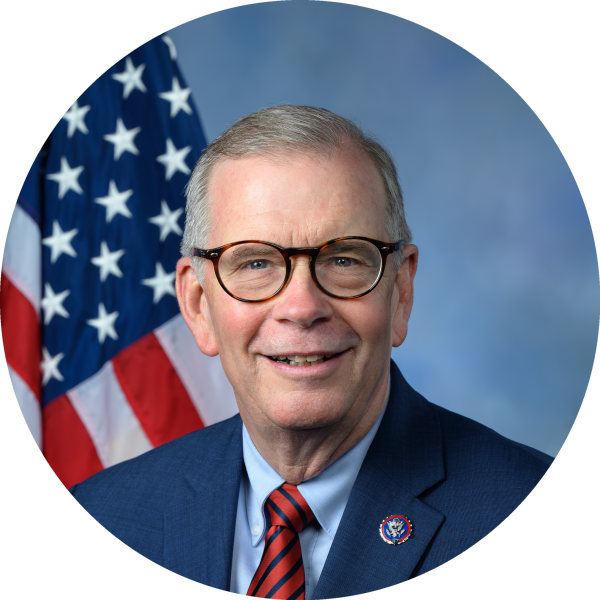
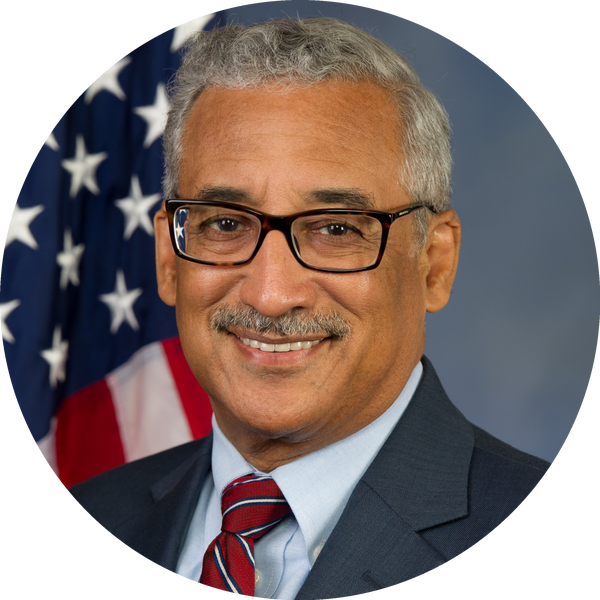
Mr. Speaker, I rise today in strong support of H.R. 4307, the Enhancing Detection of Human Trafficking Act. I thank my friend and colleague, Representative Lucy McBath, for her partnership on this important legislation. In my time on the Committee on Education and Workforce, I have come to the realization that the Department of Labor employees have a frontline view to detect patterns of human trafficking and labor exploitation. This is where my bill, H.R. 4307, comes into play.
H.R. 4307 also appeared in 4 routine cosponsor filings.
HR4307 Legislative Journey
Signed into Law
Oct 20, 2026
Signed by President.
+1 more action this day
Action Taken
Oct 15, 2026
Presented to President.
Action Taken
Oct 14, 2026
Message on Senate action sent to the House.
Passed
Sep 30, 2026
Passed Senate without amendment by Unanimous Consent. (consideration: CR S5299)
+1 more action this day
Sent to Senate
Mar 4, 2026
Received in the Senate, read twice.
House: Vote Held
Mar 3, 2026
On motion to suspend the rules and pass the bill, as amended Agreed to by voice vote. (text: CR H2363)
House: Committee Action
Feb 20, 2026
Reported (Amended) by the Committee on Education and Workforce. H. Rept. 119-507.
House: Vote: 36-0
Jan 8, 2026
Ordered to be Reported (Amended) by the Yeas and Nays: 36 - 0.
House: Committee Action
Jul 10, 2025
Referred to the House Committee on Education and Workforce.
About the Sponsor
Tim Walberg
Republican, Michigan's 5th congressional district · 19 years in Congress
Committees: Education and Workforce, Natural Resources
View full profile →
Cosponsors at time of passage (3)
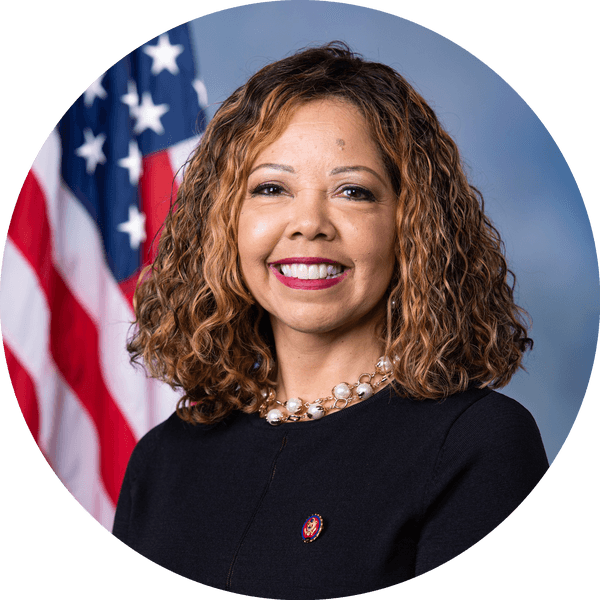
This bill has 3 cosponsors: 2 Democrats, 1 Republican, reflecting bipartisan support. Cosponsors represent 2 states: Georgia, New Jersey.
2Democrats1Republican·2 statesBipartisan
Committee Sponsors
Education and Workforce Committee
16D20R1I
|3 signed34 others3 of 37 committee members cosponsored at the time


H.R. 4307 Quick Facts
Cosponsors
3


- Committee
- Education and Workforce
- Chamber
- House
- Policy
- Crime and Law Enforcement
- Introduced
- Jul 10, 2025
Signed by President.
Oct 20, 2026
Official Sources
H.R. 4307 on Congress.gov
Official bill page with full text, actions timeline, cosponsors, and current status for the Enhancing Detection of Human Trafficking Act.
H. Rept. 119-507 — Committee Report
House Education and Workforce Committee report accompanying H.R. 4307, reported amended on February 20, 2026, after a 36-0 committee vote.
22 U.S.C. § 7102 — Trafficking Victims Protection Act Definitions
Federal statute defining 'severe forms of trafficking in persons' in paragraph (11) — the legal standard HR 4307 adopts for its training program.
29 U.S.C. § 203(l) — Fair Labor Standards Act: Oppressive Child Labor
Federal definition of oppressive child labor that HR 4307 references when requiring special attention for Wage and Hour Division staff in high-risk states.
DOL — Combating Labor Exploitation and Human Trafficking
Department of Labor's existing anti-trafficking hub covering enforcement, survivor assistance, and international monitoring — the infrastructure HR 4307 would expand with mandatory training.
DOL Wage and Hour Division — Anti-Trafficking Role
Describes WHD's current role detecting trafficking indicators during workplace investigations and referring cases to FBI and U.S. Attorneys — the division HR 4307 singles out for enhanced training.
DOJ — Human Trafficking
Department of Justice's main trafficking resource page — DOJ is the primary referral destination for cases the Labor Department identifies under HR 4307's training program.
House Education and Workforce Committee — House Passes HR 4307
Committee press release on the House passing the Enhancing Detection of Human Trafficking Act by voice vote on March 3, 2026.
About Legisletter
Legisletter is the advocacy platform that tracks every bill from introduction to Public Law — and connects the constituents affected by a bill to the legislators who vote on it.
H.R. 4307 Common Questions
How soon would the Labor Department have to start trafficking training under H.R. 4307?
Fast. H.R. 4307 gives the Secretary of Labor 180 days from the day the bill becomes law to get the training program up and running.
Which Labor Department employees would get human trafficking training under H.R. 4307?
Not everyone. The Secretary of Labor picks the employees whose official duties put them in a position to encounter trafficking — think workplace inspectors and investigators, not every desk job.
Why does H.R. 4307 single out Wage and Hour staff and child labor?
The bill tells the Secretary to weigh the needs of Wage and Hour Division employees working in states with a significant rise in oppressive child labor, aiming the extra training where forced and underage labor is growing.
Does H.R. 4307 create new criminal penalties or funding?
No. The bill is training and reporting only. It doesn't add penalties, create a new agency, or set aside money — the Labor Department would absorb the cost within its existing budget.
What happens after the Labor Department refers a trafficking case under H.R. 4307?
Cases go to the Department of Justice and other authorities. H.R. 4307 also makes the Labor Department track and report how those agencies respond, so referrals don't just vanish after handoff.
Does H.R. 4307 require reports to Congress?
Yes. Within a year of the program launching and every year after, the Labor Department must report to the House Education and Workforce Committee and the Senate HELP Committee on training results and how many cases it referred.
Has H.R. 4307 passed?
It cleared the House by voice vote on March 3, 2026, after a 36-0 committee vote, and the Senate received it the next day. It still needs Senate action to become law.
Based on H.R. 4307 bill text
H.R. 4307 Bill Text
“To direct the Secretary of Labor to train certain employees of Department of Labor how to effectively detect and assist law enforcement in preventing human trafficking during the course of their official duties, and for other purposes.”
Source: U.S. Government Publishing Office
Bill Alerts
Get notified when H.R. 4307 moves
Committee votes, floor action, cosponsor changes — straight to your inbox.
Bill alerts + Legisletter's monthly briefing. Unsubscribe anytime.
Crime and Law Enforcement Bills
9 related bills we're tracking
H.R. 909
Crime Victims Fund Stabilization Act of 2025

Ann WagnerR-MO



+323
327 cosponsors
Received in the Senate and Read twice and referred to the Committee on the Judiciary.
Jan 13, 2026
HouseCrime and Law Enforcement
H.R. 18
Bipartisan Background Checks Act of 2025
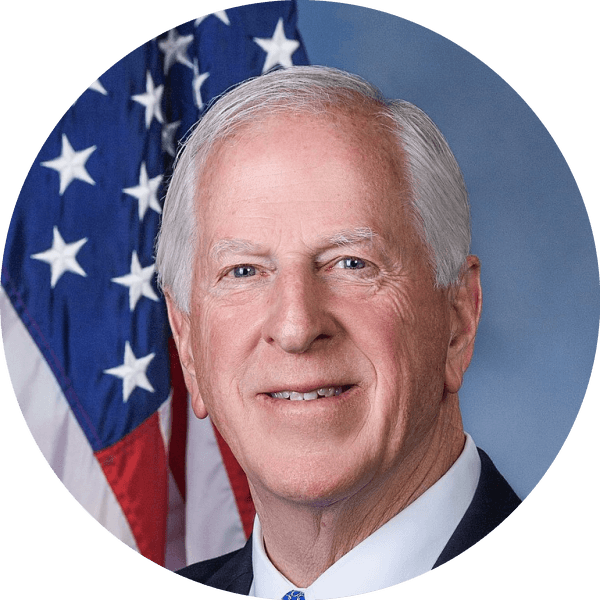
Mike ThompsonD-CA



+210
214 cosponsors
Referred to the House Committee on the Judiciary.
Jun 10, 2025
HouseCrime and Law Enforcement
H.R. 2853
Combating Organized Retail Crime Act of 2025

David JoyceR-OH




+202
206 cosponsors
Received in the Senate and Read twice and referred to the Committee on the Judiciary.
May 13, 2026
HouseCrime and Law Enforcement
H.R. 1564
Ethan's Law

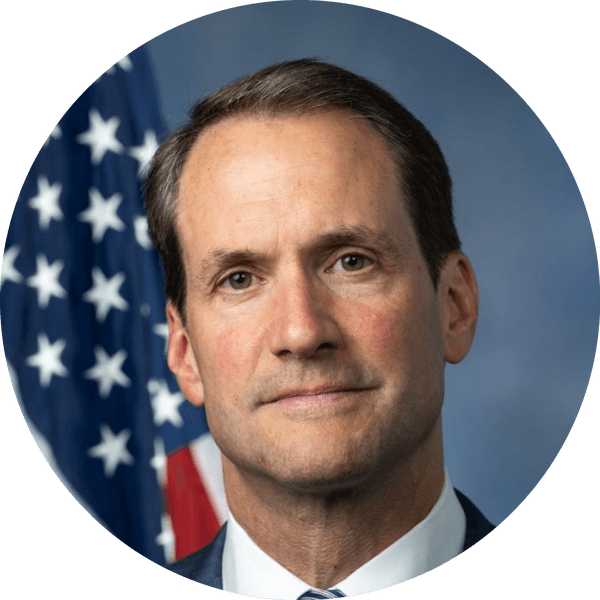
Rosa DeLauroD-CT



+197
201 cosponsors
+1 this monthReferred to the House Committee on the Judiciary.
Feb 25, 2025
HouseCrime and Law Enforcement
H.R. 3115
Assault Weapons Ban of 2025
Lucy McBathD-GA


+190
194 cosponsors
+1 this monthReferred to the House Committee on the Judiciary.
Apr 30, 2025
HouseCrime and Law Enforcement
H.R. 38
Constitutional Concealed Carry Reciprocity Act of 2025

Richard HudsonR-NC




+185
189 cosponsors
Placed on the Union Calendar, Calendar No. 289.
Oct 3, 2025
HouseCrime and Law Enforcement
H.R. 1269
Honoring Our Fallen Heroes Act of 2025

Mary ScanlonD-PA

+176
180 cosponsors
Referred to the House Committee on the Judiciary.
Feb 12, 2025
HouseCrime and Law Enforcement
H.R. 2368
Raise the Age Act of 2025

Glenn IveyD-MD

+172
176 cosponsors
Referred to the House Committee on the Judiciary.
Mar 26, 2025
HouseCrime and Law Enforcement
H.R. 21
Born-Alive Abortion Survivors Protection Act
Ann WagnerR-MO


+159
163 cosponsors
Received in the Senate and Read twice and referred to the Committee on the Judiciary.
Jan 24, 2025
HouseCrime and Law Enforcement
Trending Right Now
Bills gaining momentum across Congress
H.R. 1502Surging+36
North Platte Canteen Congressional Gold Medal Act

Adrian SmithR-NE


+255
259 cosponsors
+36 this monthReferred to the House Committee on Financial Services.
Feb 21, 2025
HouseArmed Forces and National Security
H.R. 3569Surging+19
Fit to Serve Act

Adam SmithD-WA




+184
188 cosponsors
+19 this monthReferred to the House Committee on Armed Services.
May 21, 2025
HouseArmed Forces and National Security
H.R. 6130Surging+12
ASAP Act

Vern BuchananR-FL



+227
231 cosponsors
+12 this monthOrdered to be Reported in the Nature of a Substitute by the Yeas and Nays: 40 - 0.
Sep 16, 2026
HouseHealth
Tracking Crime and Law Enforcement in Congress? Monitor bills, track cosponsor momentum, and launch advocacy campaigns — all from one advocacy platform.