Mr. Speaker, I rise today in strong opposition to H.R. 2189. Let's get honest about what this bill does and doesn't do. It does not require training. It does not set standards. It does not improve accountability, and it does not apply only to law enforcement. It does carve out a sweeping exemption in our Federal firearms laws and makes it easier for dangerous people to access dangerous weapons with fewer safeguards. Supporters keep saying that this bill is about helping law enforcement, but if that were true, the bill would mention law enforcement. It doesn't.
H.R. 2189: Law-Enforcement Innovate to De-Escalate Act
Introduced Mar 18, 202595 cosponsors
Sponsor

Scott Fitzgerald
Republican · WI-5
Bill Progress
IntroducedMar 18
Committee
Pass HouseFeb 12
Pass Senate
Signed
Law
Latest Action · Feb 24, 2026
1/4
Passed the House, received in Senate
House votes to pull non-lethal police gear from gun law
4 min readLast updated May 16, 2026
Why it matters
Police departments buying foam-round and stun-projectile launchers pay the same 10–11% federal firearms excise tax — and clear much of the same gun paperwork — as they would for service weapons. H.R. 2189 carves devices built not to kill out of three federal gun regimes at once: the Gun Control Act, the firearms excise tax, and the National Firearms Act. The House passed it 233–185 and sent it to the Senate.
H.R. 2189 creates a new federal category: the 'less-than-lethal projectile device.' To qualify, a device can't fire ordinary handgun, rifle, or shotgun ammunition or send any projectile faster than 500 feet per second, has to be designed so it won't cause death or serious injury, and can't take the kind of magazine used in semiautomatic firearms.
Anything that fits that definition gets pulled out of three places where federal law currently treats it like a gun. It comes out of the Gun Control Act, so it's no longer a regulated 'firearm.' It comes out of the federal firearms and ammunition excise tax, so departments stop paying the 10–11% surcharge that guns and ammo carry. And it comes out of the National Firearms Act, the strictest federal gun-registration regime.
To keep the line from being argued device by device, the bill puts the government on a clock. When a manufacturer or importer asks whether a specific device qualifies, the Attorney General — or the Treasury Secretary, on the tax side — has 90 days to decide. Treasury also has to publish an annual public list of approved devices, plus a separate list of non-lethal tools that shoot faster than 500 feet per second, and report that second list to Congress every year.
H.R. 2189 Bill Summary
What H.R. 2189 actually does.
1
Non-lethal launchers stop being 'firearms' under federal law
Devices that can't fire normal gun ammunition or anything faster than 500 feet per second, are built not to cause death or serious injury, and don't take semiautomatic-style magazines are removed from the Gun Control Act's definition of a firearm.
2
The 10–11% federal gun tax comes off less-lethal gear
Qualifying devices, and the shells or cartridges made for them, are exempted from the federal firearms and ammunition excise tax that otherwise applies to guns and ammo.
3
These devices drop out of the National Firearms Act
Qualifying less-than-lethal projectile devices are excluded from the National Firearms Act, the federal registration regime that covers items like short-barreled rifles and silencers.
4
A 90-day clock on whether a device qualifies
A manufacturer or importer can ask the government to rule on a specific device. The Attorney General handles the Gun Control Act question and the Treasury Secretary the tax question, each within 90 days of the request.
5
An annual public list — and a watchlist for faster devices
Treasury must publish and yearly update a list of approved less-than-lethal devices, plus a separate list of non-lethal devices that exceed 500 feet per second, and report that second list to Congress each year.
Who benefits from H.R. 2189?
Local police departments
Stop paying the 10–11% firearms excise tax on qualifying launchers and rounds, and clear less federal gun paperwork to acquire them — lowering the cost of stocking non-lethal options.
Makers of less-lethal devices
Get clearer rules and a binding 90-day classification answer, and their qualifying products and cartridges become exempt from the federal firearms excise tax.
People in police encounters
The bill's sponsors argue that making non-lethal tools cheaper and easier for departments to buy will put more of them in the field, though the bill itself sets no use-of-force rules.
Cities and the taxpayers who fund them
Department equipment budgets stretch further when less-lethal gear isn't carrying a firearms-level tax and regulatory load.
Who is affected by H.R. 2189?
ATF and the Treasury Department
Take on a new mandatory workload: 90-day device determinations on request, an annually updated public list of approved devices, and a yearly report to Congress on faster-than-500-fps non-lethal tools.
Manufacturers and importers
Must request a classification to lock in the benefit, and devices that exceed the 500-feet-per-second line don't qualify — instead landing on Treasury's public watchlist and in its report to Congress.
The federal Treasury
Forgoes the firearms and ammunition excise tax it currently collects on these devices and their rounds. The bill text carries no public estimate of the size; it depends on how many devices Treasury approves and how widely they're bought.
Members who opposed the bill
185 House members voted no, against 233 in favor. The Senate has not yet acted, so the policy line the bill draws remains contested.
On the Record
What Congress Is Saying
39 legislators have weighed in on H.R. 2189 — 24 Democrats, 15 Republicans.
Mr. Speaker, I rise in opposition to this bill, H.R. 2189, the taser bill. I would note that the bill doesn't mention tasers anywhere in the bill, other than in the title. I am a supporter of innovation. I am a supporter of de-escalation. I am a supporter of tasers. My son is a deputy sheriff. I support giving him and all law enforcement every tool needed to keep them and the people they serve safe, but let me be clear: This bill does nothing to help law enforcement access tasers. The fact is, this bill recklessly and needlessly weakens both the National Firearms Act and the Gun Control Act.
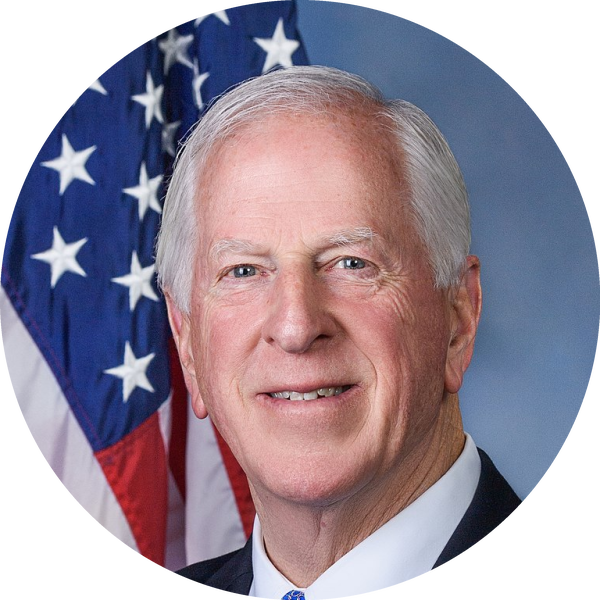

Mr. Speaker, I rise in strong support of H.R. 2189, the Law- Enforcement Innovate to De-Escalate Act. This bill will put lifesaving, less-lethal technology in the hands of more law enforcement and public safety officers. When the Gun Control Act of 1968 was enacted more than 50 years ago, it was not written with the intent to regulate less-lethal projectile devices such as tasers. Unfortunately, if a taser or other device uses an explosive propellant to discharge the projectile, the ATF classifies it as a firearm.
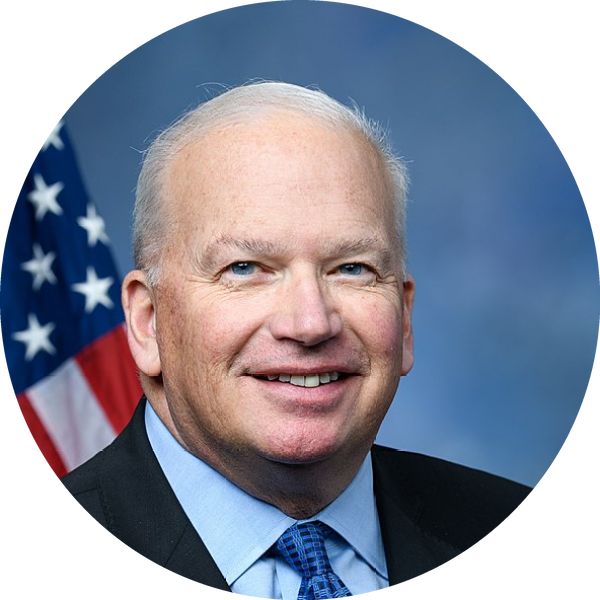
Mr. Speaker, I rise in support of the resolution and in support of H.R. 2189, the Law-Enforcement Innovate to De-Escalate Act. This bill will put lifesaving, less lethal technology in the hands of more law enforcement and public safety officers. When the Gun Control Act of 1968 was enacted more than 50 years ago, it was not written with the intent to regulate less lethal projectile devices such as tasers. Unfortunately, if a taser or other device uses an explosive propellant to discharge a projectile, the ATF classifies it as a firearm.
Mr. Speaker, I rise today in strong support of H.R. 2189, the Law-Enforcement Innovate to De-Escalate Act of 2025, bipartisan legislation that modernizes our Federal firearms laws to better align with 21st century technology and the real-world needs of law enforcement officers and the communities they protect. The bill does something straightforward but important. It creates a new classification for less-than-lethal projectile devices and removes them from outdated regulatory categories that were never designed with today's equipment in mind.

Mr. Speaker, H.R. 2189 does not allow felons or violent criminals to gain access to anything new. It does not override State or local law, and anyone barred from possessing these devices today remains barred tomorrow. What this bill actually does is correct an outdated Federal classification that treats tasers like deadly firearms. That outdated and absurd classification has driven up costs, created delays, and made it harder for law enforcement agencies to access less-than-lethal tools designed to specifically de-escalate situations and to save lives.
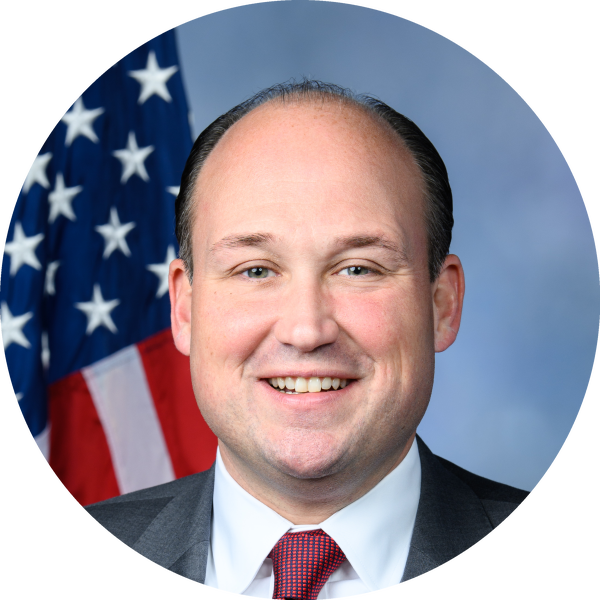
H.R. 2189 also appeared in 2 more House floor references, 1 in the Extensions of Remarks, and 34 routine cosponsor filings.
HR2189 Legislative Journey
Sent to Senate
Feb 24, 2026
Received in the Senate.
House: Passed 233-185
Feb 12, 2026
On passage Passed by the Yeas and Nays: 233 - 185 (Roll no. 70). (text of amendment in the nature of a substitute: CR H2190-2191)
+6 more actions this day
House: Committee Action
Feb 11, 2026
Rules Committee Resolution H. Res. 1057 Reported to House. Rule provides for consideration of S. 1383, H.R. 2189, H.R. 261 and H.R. 3617. The resolution provides for consideration of S. 1383, H.R. 2189, H.R. 261, and H.R. 3617 under a closed rule and provides for one motion to recommit H.R. 2189, H.R. 261, and H.R. 3617, and one motion to commit S. 1383.
House: Committee Action
Feb 9, 2026
Rules Committee Resolution H. Res. 1042 Reported to House. Rule provides for consideration of H.R. 2189, H.R. 261 and H.R. 3617. The resolution provides for consideration of H.R. 2189, H.R. 261, and H.R. 3617 under a closed rule and provides for one hour of debate and one motion to recommit on each bill.
House: Committee Action
Jan 30, 2026
Reported (Amended) by the Committee on Judiciary. H. Rept. 119-472.
House: Vote: 18-8
Nov 20, 2025
Ordered to be Reported (Amended) by the Yeas and Nays: 18 - 8.
House: Committee Action
Nov 18, 2025
Committee Consideration and Mark-up Session Held
House: Committee Action
Mar 18, 2025
Referred to the House Committee on the Judiciary.
About the Sponsor
Scott Fitzgerald
Republican, Wisconsin's 5th congressional district · 5 years in Congress
Committees: the Judiciary, Financial Services
View full profile →
Cosponsors (95)
No new cosponsors in 164 days — momentum stalled
This bill has 95 cosponsors: 23 Democrats, 72 Republicans, reflecting bipartisan support. Cosponsors represent 35 states: Alaska, Alabama, Arizona, and 32 more.
23Democrats72Republicans·35 statesBipartisan

J. Luis Correa
Democrat · CA

Pete Stauber
Republican · MN

Jasmine Crockett
Democrat · TX

Troy Nehls
Republican · TX

Marc Veasey
Democrat · TX

Donald Davis
Democrat · NC

Ben Cline
Republican · VA

Andy Biggs
Republican · AZ

John Rutherford
Republican · FL

Marie Perez
Democrat · WA

Lauren Boebert
Republican · CO

Wesley Hunt
Republican · TX
Committee Sponsors
Judiciary Committee
18D24R
|20 signed22 not yet20 of 42 committee members cosponsored


6 Republicans across this committee haven't cosponsored yet. Mobilize their constituents
What laws does H.R. 2189 change?
1 changes
Sections Amended
Section 5845(a) of Internal Revenue Code of 1986
striking ``an antique firearm or'' and inserting ``any antique firearm, any less-than-lethal projectile device (as defined in section 4182(d)(2)), any device referred to in section 4182(d)(1)(B), or''
H.R. 2189 Quick Facts
Cosponsors
95
- Committee
- Judiciary
- Chamber
- House
- Policy
- Crime and Law Enforcement
- Introduced
- Mar 18, 2025
Passed the House, received in Senate
Feb 24, 2026
Official Sources
18 U.S.C. § 921 — Firearms Definitions
The Gun Control Act definitions that HR 2189 amends to exclude less-than-lethal projectile devices from the federal definition of 'firearm'.
26 U.S.C. § 4181 — Firearms and Ammunition Excise Tax
The 10-11% manufacturers excise tax on firearms and ammunition that HR 2189 exempts qualifying less-than-lethal devices from.
26 U.S.C. § 4182 — Firearms Excise Tax Exemptions
The tax exemptions section that HR 2189 expands with a new subsection (d) for less-than-lethal devices, the 90-day classification request, and the annual device lists.
26 U.S.C. § 5845 — National Firearms Act Definitions
The NFA 'firearm' definition in section 5845(a) that HR 2189 amends to exclude less-than-lethal projectile devices.
ATF eRegulations — 27 CFR § 479.11 NFA Definitions
ATF regulatory definitions for National Firearms Act terms including 'destructive device' and 'firearm' — the regulatory framework HR 2189 modifies.
CBO Cost Estimate — H.R. 2189
The Congressional Budget Office's official estimate of the bill's budgetary effect, including the forgone firearms and ammunition excise tax revenue.
H. Rept. 119-472 — House Judiciary Committee Report (PDF)
The House Judiciary Committee's official report on HR 2189 (amended), filed before the 233-185 House passage.
H.R. 2189 Common Questions
What counts as a 'less-than-lethal projectile device' under H.R. 2189?
It's a device that can't fire ordinary handgun, rifle, or shotgun ammunition or send any projectile faster than 500 feet per second, is designed not to cause death or serious injury, and can't take a magazine of the kind used in semiautomatic firearms. Think foam-round, beanbag, or stun-projectile launchers — not anything that doubles as a gun.
Does H.R. 2189 remove the federal firearms tax from these devices?
Yes. Qualifying devices — and the shells or cartridges made for them — would be exempt from the federal firearms and ammunition excise tax, the 10–11% surcharge that normally applies to guns and ammo. Today a department buying these tools pays that tax; under the bill it wouldn't.
Has H.R. 2189 passed?
It passed the House on February 12, 2026 by a 233–185 vote and was received in the Senate on February 24. A Senate companion, S. 1283, was referred to the Judiciary Committee in April 2025 and hasn't advanced. It is not law yet.
Why are non-lethal police tools regulated like guns in the first place?
Federal law defines a 'firearm' broadly enough that a launcher firing a projectile can fall under the Gun Control Act, the National Firearms Act, and the 10–11% firearms excise tax — even when the device is built to avoid killing anyone. The bill's sponsors argue the tax and regulatory treatment hasn't kept pace with less-lethal technology.
Who decides if a specific device qualifies, and how long does it take?
A manufacturer, producer, or importer can ask the government to rule on a device. The Attorney General handles the Gun Control Act question; the Treasury Secretary handles the tax question. Either way, the bill gives them 90 days to decide after receiving the request or the device.
Does the bill change how police are allowed to use force?
No. H.R. 2189 only changes how these devices are taxed and classified under federal firearms law. It doesn't set use-of-force rules, training requirements, or when an officer may deploy a less-lethal tool — those stay matters of state and local policy.
What happens to devices that shoot faster than 500 feet per second?
They don't get the exemption. But the bill requires the Treasury Secretary to publish an annual public list of those faster-than-500-fps non-lethal devices and report it to Congress every year, including which devices were considered and why they were left off.
When would the tax exemption start applying?
The tax changes would apply to devices sold by the manufacturer, producer, or importer after the bill becomes law. Classification requests filed in the first 180 days after enactment are treated as received at the end of that window, giving the government time to stand up the process.
Based on H.R. 2189 bill text
H.R. 2189 Bill Text
“To modernize Federal firearms laws to account for advancements in technology and less-than-lethal weapons, and for other purposes.”
Source: U.S. Government Publishing Office
Bill Alerts
Get notified when H.R. 2189 moves
Committee votes, floor action, cosponsor changes — straight to your inbox.
Bill alerts + Legisletter's monthly briefing. Unsubscribe anytime.
Crime and Law Enforcement Bills
9 related bills we're tracking
H.R. 909
Crime Victims Fund Stabilization Act of 2025

Ann WagnerR-MO




+323
327 cosponsors
Received in the Senate and Read twice and referred to the Committee on the Judiciary.
Jan 13, 2026
HouseCrime and Law Enforcement
H.R. 2853
Combating Organized Retail Crime Act of 2025

David JoyceR-OH




+202
206 cosponsors
Placed on the Union Calendar, Calendar No. 402.
Jan 30, 2026
HouseCrime and Law Enforcement
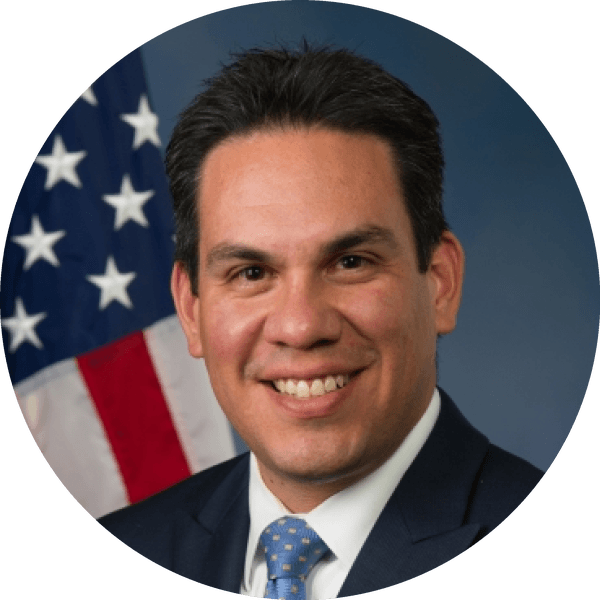
H.R. 3115
Assault Weapons Ban of 2025

Lucy McBathD-GA



+181
185 cosponsors
Referred to the House Committee on the Judiciary.
Apr 30, 2025
HouseCrime and Law Enforcement
H.R. 2799
Closing the Bump Stock Loophole Act of 2025
Dina TitusD-NV




+146
150 cosponsors
Referred to the Committee on the Judiciary, and in addition to the Committee on Ways and Means, for a period to be subsequently determined by the Speaker, in each case for consideration of such provisions as fall within the jurisdiction of the committee concerned.
Apr 9, 2025
HouseCrime and Law Enforcement
H.R. 1307
Office of Gun Violence Prevention Act of 2025

Maxwell FrostD-FL




+128
132 cosponsors
Referred to the House Committee on the Judiciary.
Feb 13, 2025
HouseCrime and Law Enforcement
H.R. 3740
Equal Access to Justice for Victims of Gun Violence Act of 2025

Eric SwalwellD-CA



+108
112 cosponsors
Referred to the House Committee on the Judiciary.
Jun 4, 2025
HouseCrime and Law Enforcement
H.R. 1266
Combating Illicit Xylazine Act

Jimmy PanettaD-CA



+105
109 cosponsors
+3 this monthForwarded by Subcommittee to Full Committee by Voice Vote.
Jun 25, 2026
HouseCrime and Law Enforcement
H.R. 1551
Protect and Serve Act of 2025
John RutherfordR-FL



+101
105 cosponsors
Referred to the House Committee on the Judiciary.
Feb 25, 2025
HouseCrime and Law Enforcement
H.R. 7599
Federal Extreme Risk Protection Order Act of 2026
Lucy McBathD-GA



+101
105 cosponsors
Referred to the House Committee on the Judiciary.
Feb 17, 2026
HouseCrime and Law Enforcement
Trending Right Now
Bills gaining momentum across Congress
H.R. 3514Gaining+9
Improving Seniors’ Timely Access to Care Act of 2025
Mike KellyR-PA




+291
295 cosponsors
+9 this monthForwarded by Subcommittee to Full Committee by Voice Vote.
Jun 25, 2026
HouseHealth
H.R. 2978Gaining+6
GUARD Act

Zachary NunnR-IA

+47
51 cosponsors
+6 this monthReported (Amended) by the Committee on Financial Services. H. Rept. 119-709, Part I.
Jun 24, 2026
HouseCrime and Law Enforcement
H.R. 2555Gaining+5
Freedom of Association in Higher Education Act of 2025

Erin HouchinR-IN




+41
45 cosponsors
+5 this monthOrdered to be Reported (Amended) by the Yeas and Nays: 18 - 15.
Jun 25, 2026
HouseEducation
Tracking Crime and Law Enforcement in Congress? Monitor bills, track cosponsor momentum, and launch advocacy campaigns — all from one advocacy platform.