H.R. 425: Repealing Big Brother Overreach Act
Sponsor

Warren Davidson
Republican · OH-8
189 lawmakers want to kill the corporate ownership database
Why it matters
An estimated 33 million businesses were supposed to start reporting their real owners to the federal government under a 2021 law. Courts blocked it, enforcement stalled, and now 189 House members want to repeal the whole thing before it ever takes full effect. The fight boils down to a question Washington has dodged for decades: should the government know who actually owns your LLC?
H.R. 425 is a full repeal bill — not a reform, not a scale-back, but a complete erasure of the Corporate Transparency Act from federal law.
The CTA was passed in 2021 as part of a defense spending bill. It created a federal database at FinCEN (the Treasury Department's financial crimes unit) where most corporations, LLCs, and similar entities had to report their "beneficial owners" — the real humans who own or control them. The goal was to close a gap that let criminals, sanctions evaders, and money launderers hide behind anonymous shell companies.
But the rollout hit a wall. Small business owners, accountants, and trade groups flooded Congress with complaints. The reporting requirements swept in millions of ordinary businesses — your local plumber, your neighbor's Etsy shop, a family holding company — alongside the anonymous shell entities the law was designed to catch. Penalties for filing late or getting it wrong could run up to $500 per day, with criminal liability on top.
Federal courts made things worse. A Texas district court issued a nationwide injunction blocking enforcement. Other courts disagreed. FinCEN kept changing deadlines. By early 2025, business owners had no idea whether they were legally required to file or not.
H.R. 425 cuts through that confusion by eliminating the law entirely. It repeals the CTA, strikes the penalty provisions that referenced it, and removes a related section of the Anti-Money Laundering Act of 2020. If passed, there would be no federal beneficial ownership reporting requirement on the books.
The tradeoff is real. Law enforcement and anti-corruption groups say the ownership database was the single biggest transparency reform in decades — and that repealing it hands anonymous shell companies back to anyone who wants to hide money. Supporters of the bill say the law was government overreach from the start, sweeping up millions of law-abiding businesses in a dragnet that was supposed to target criminals.
Bill Progress
Latest Action · Jun 18, 2026
Placed on House floor schedule, Calendar No. 609.
H.R. 425 Bill Summary
What H.R. 425 actually does.
The entire Corporate Transparency Act disappears
H.R. 425 repeals the CTA in full — not just the reporting deadline or the penalties, but the entire statutory framework that created the beneficial ownership database at FinCEN.
No more ownership reports for any business
Companies that were required to file beneficial ownership information under the CTA would have no federal obligation to do so. The reporting system, the deadlines, and the filing infrastructure all go away.
Criminal and civil penalties get stripped out
The bill removes references to the CTA's penalty section from the federal code governing financial crimes enforcement. That eliminates both the civil fines (up to $500/day) and criminal liability (up to 2 years in prison) tied to noncompliance.
Anti-Money Laundering Act provisions cleaned up
A related section of the 2020 Anti-Money Laundering Act that cross-referenced the CTA gets repealed, and another section is amended so the law reads consistently after the CTA is gone.
Who benefits from H.R. 425?
Small business owners who faced reporting deadlines
Millions of LLCs, corporations, and partnerships would no longer need to figure out whether they qualify for an exemption, track filing deadlines, or risk penalties for mistakes. The compliance burden vanishes entirely.
Accountants and small-firm advisers handling CTA filings
Many accounting firms added BOI reporting as a service line to help clients navigate the new rules. Repeal eliminates client exposure to fines and the legal uncertainty that made advising on CTA compliance a liability minefield.
Business trade groups that lobbied against the CTA
Organizations representing contractors, realtors, independent businesses, and community associations get a full policy win — the law they called burdensome and overreaching would be gone, not just scaled back.
Who is affected by H.R. 425?
FinCEN and the Treasury Department
They lose the legal authority for the beneficial ownership database and the enforcement tools that came with it. Years of rulemaking, system-building, and outreach around the CTA become moot.
Law enforcement and financial investigators
Federal and state investigators would lose access to a centralized ownership database designed to help identify the people behind shell companies used in fraud, money laundering, and sanctions evasion.
Banks running customer due diligence
Financial institutions that expected to cross-reference FinCEN's ownership data against their own records would have less government-collected information available to verify who they're doing business with.
Anti-corruption and transparency organizations
Groups that spent years pushing for the CTA as a cornerstone of financial transparency would see a major reform fully reversed — not narrowed, not modified, but repealed.
HR425 Legislative Journey
House: Committee Action
Jun 18, 2026
Reported (Amended) by the Committee on Financial Services. H. Rept. 119-701.
House: Vote: 26-25
Apr 21, 2026
Ordered to be Reported by the Yeas and Nays: 26 - 25.
House: Committee Action
Jan 15, 2025
Referred to the House Committee on Financial Services.
About the Sponsor
Warren Davidson
Republican, Ohio's 8th congressional district · 10 years in Congress
Committees: Financial Services, Foreign Affairs
View full profile →
Cosponsors (193)
All 193 cosponsors are Republicans. Cosponsors represent 41 states: Alaska, Alabama, Arkansas, and 38 more.

Troy Balderson
Republican · OH

Jack Bergman
Republican · MI

Andy Biggs
Republican · AZ

Vern Buchanan
Republican · FL

Eric Burlison
Republican · MO

Kat Cammack
Republican · FL

Juan Ciscomani
Republican · AZ

Michael Cloud
Republican · TX

Andrew Clyde
Republican · GA

Elijah Crane
Republican · AZ
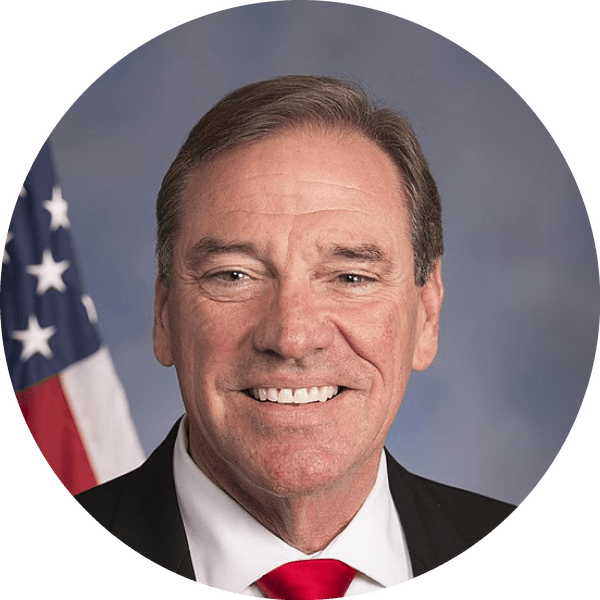
Neal Dunn
Republican · FL

Chuck Edwards
Republican · NC
Cosponsor Coverage Map
Committee Sponsors
Financial Services Committee
17 of 53 committee members cosponsored


13 Republicans across this committee haven't cosponsored yet. Mobilize their constituents
H.R. 425 Quick Facts
- Committee
- Financial Services
- Chamber
- House
- Policy
- Finance and Financial Sector
- Introduced
- Jan 15, 2025
Placed on House floor schedule, Calendar No. 609.
Jun 18, 2026
Official Sources
FinCEN's main BOI portal — the reporting system H.R. 425 would eliminate. As of March 2025, U.S. companies are exempt from filing under an interim final rule, but the CTA remains on the books.
FinCEN's March 21, 2025 announcement narrowing BOI reporting to foreign entities only — the administrative action that partially did what H.R. 425 would do legislatively.
Treasury Secretary Bessent's announcement that no fines or penalties will be enforced against U.S. companies under the CTA — the executive branch signal that preceded FinCEN's interim rule.
Treasury's formal announcement of the interim final rule that exempts all U.S.-created entities from BOI reporting — the regulatory complement to H.R. 425's legislative repeal.
FinCEN's February 2025 announcement pausing all enforcement of BOI reporting deadlines — the first sign that the administration was backing away from the CTA.
The parent statute that the CTA amended. H.R. 425 strips CTA references from 31 USC 5321 (civil penalties) and 5322 (criminal penalties) — both Bank Secrecy Act enforcement provisions.
FinCEN's plain-English explainer of the original BOI reporting rule — who had to file, what they had to disclose, and the deadlines. Updated to reflect March 2025 exemptions for U.S. entities.
The Senate version of the Repealing Big Brother Overreach Act — H.R. 425 needs a Senate companion to reach the President's desk.
Who is lobbying on H.R. 425?
5 organizations lobbying on this bill
NATIONAL LUMBER AND BUILDING MATERIAL DEALERS ASSOCIATION | 4 |
NATIONAL ASSOCIATION OF ELECTRICAL DISTRIBUTORS | 4 |
AMERICAN DENTAL ASSOCIATION | 3 |
FUND FOR CONSTITUTIONAL GOVERNMENT | 3 |
COMMUNITY ASSOCIATIONS INSTITUTE | 2 |
Showing 1-5 of 5 organizations
H.R. 425 Common Questions
Does H.R. 425 fully repeal the Corporate Transparency Act?
Yes. H.R. 425 repeals the Corporate Transparency Act and all amendments it made. The federal beneficial ownership reporting system would be entirely eliminated — not paused, not reformed, but repealed.
Would my LLC still need to file a BOI report if H.R. 425 passes?
No. If H.R. 425 becomes law, there would be no federal requirement for LLCs, corporations, or other entities to file beneficial ownership information with FinCEN. The entire reporting framework goes away.
What happens to the penalties for not filing ownership reports?
They get wiped out. H.R. 425 removes the CTA's penalty provisions from federal law — both the civil fines (up to $500/day) and the criminal penalties (up to 2 years in prison) for failing to report or filing false information.
Does H.R. 425 affect anti-money-laundering enforcement beyond the CTA?
It repeals one section of the Anti-Money Laundering Act of 2020 that was tied to the CTA, and cleans up cross-references. Broader anti-money-laundering statutes — Bank Secrecy Act reporting, suspicious activity reports, currency transaction rules — remain untouched.
How many cosponsors does H.R. 425 have?
189 cosponsors as of March 2026 — all Republican. That puts it within striking distance of the 218 votes needed to pass the House. The bill was introduced by Rep. Warren Davidson (R-OH).
Is there a Senate companion bill to H.R. 425?
Yes — S. 100, also titled the Repealing Big Brother Overreach Act. Without a Senate companion passing, H.R. 425 cannot become law on its own — it needs both chambers.
Could Congress reform the CTA instead of repealing it?
That is the alternative some lawmakers prefer — raising the employee threshold, exempting low-risk entities, or simplifying the filing process. H.R. 425 rejects that approach entirely and goes for full repeal.
Based on H.R. 425 bill text
H.R. 425 Bill Text
“To repeal the Corporate Transparency Act.”
Source: U.S. Government Publishing Office
Get notified when H.R. 425 moves
Committee votes, floor action, cosponsor changes — straight to your inbox.
Bill alerts + Legisletter's monthly briefing. Unsubscribe anytime.
Finance and Financial Sector Bills
9 related bills we're tracking
America’s Olympic and Paralympic Games Commemorative Coins Act





Referred to the House Committee on Financial Services.
Jul 14, 2025
761st Tank Battalion Congressional Gold Medal Act




Referred to the Committee on Financial Services, and in addition to the Committee on House Administration, for a period to be subsequently determined by the Speaker, in each case for consideration of such provisions as fall within the jurisdiction of the committee concerned.
Feb 26, 2025
Taxpayer Data Protection Act





Sponsor introductory remarks on measure. (CR H625-626)
Feb 11, 2025
Rosie the Riveter Commemorative Coin Act





Referred to the House Committee on Financial Services.
Jan 15, 2025
HELPER Act of 2025





Referred to the House Committee on Financial Services.
Mar 14, 2025
Anti-CBDC Surveillance State Act





Motion to reconsider laid on the table Agreed to without objection.
Jul 17, 2025
Protecting Privacy in Purchases Act




Received in the Senate and Read twice and referred to the Committee on Banking, Housing, and Urban Affairs.
Jul 15, 2026
Veterans Member Business Loan Act


Referred to the House Committee on Financial Services.
Jan 16, 2025
Credit Union Board Modernization Act





Read twice and referred to the Committee on Banking, Housing, and Urban Affairs.
Feb 11, 2025
Trending Right Now
Bills gaining momentum across Congress
North Platte Canteen Congressional Gold Medal Act





Referred to the House Committee on Financial Services.
Feb 21, 2025
Fit to Serve Act





Referred to the House Committee on Armed Services.
May 21, 2025
ASAP Act


Ordered to be Reported in the Nature of a Substitute by the Yeas and Nays: 40 - 0.
Sep 16, 2026
Tracking Finance and Financial Sector in Congress? Monitor bills, track cosponsor momentum, and launch advocacy campaigns — all from one advocacy platform.