H.R. 1181: Protecting Privacy in Purchases Act
Sponsor

Riley Moore
Republican · WV-2
Your credit card company can track that you bought a gun — Congress wants to stop it
Why it matters
In 2022, the International Organization for Standardization created a special merchant category code — 5723 — specifically for firearms retailers. That meant Visa, Mastercard, and every bank processing your card could see you bought from a gun store, even without knowing exactly what you bought. H.R. 1181 would kill that code and ban anything like it from replacing it.
The bill bans two things. First, payment card networks like Visa and Mastercard cannot require gun stores to use a merchant category code reserved for firearms retailers. Second, the banks and processors that actually assign codes to merchants cannot give a gun store any code that identifies it as a firearms seller. Gun stores would be coded the same as sporting goods or general merchandise — making their transactions indistinguishable from someone buying a tent or a baseball glove.
Enforcement runs through the Attorney General, not private lawsuits. Within 90 days of enactment, the AG must set up a complaint process. Anyone — including gun store owners — can file a complaint. If the AG finds a violation, the company gets 30 days to fix it. If it doesn't, the AG can go to federal court for an injunction.
The preemption clause is the sleeper provision. Several states have passed their own laws around firearm merchant codes — some requiring them, some banning them. H.R. 1181 wipes all of that out. Federal law becomes the only law on this issue, nationwide. However, the bill explicitly preserves existing fraud detection, suspicious activity reporting, and cybersecurity compliance — payment networks can still flag unusual patterns, just not by using a gun-store-specific code to find them.
Bill Progress
Latest Action · Jul 15, 2026
Passed the House, received in Senate
Visual Summary
H.R. 1181 at a Glance
<div style="max-width:100%;">
  <img src="https://legisletter.org/images/bill-infographics/hr1181-infographic.jpg" alt="HR1181 Visual Summary - Protecting Privacy in Purchases Act" style="max-width:100%;height:auto;display:block;" />
  <p style="margin:8px 0 0;font-size:14px;color:#555;text-align:center;">
    <a href="https://legisletter.org/bill/hr1181-protecting-privacy-purchases-act" target="_blank" rel="noopener noreferrer" style="color:inherit;text-decoration:underline;">HR1181 Visual Summary – Protecting Privacy in Purchases Act</a>
    <span> via </span>
    <a href="https://legisletter.org" target="_blank" rel="noopener noreferrer" style="color:inherit;text-decoration:none;font-weight:500;">legisletter.org</a>
  </p>
</div>H.R. 1181 Bill Summary
What H.R. 1181 actually does.
Bans gun-store-specific merchant codes
Payment card networks cannot require any code that is used only or primarily for firearms retailers or that identifies a store as selling guns, ammo, accessories, or gun parts.
Processors can't assign them either
The ban covers the entire chain — not just Visa and Mastercard at the top, but every bank and processor that assigns merchant codes to individual stores.
AG complaint process within 90 days
The Attorney General must create a public complaint process within 90 days of the bill becoming law. Gun store owners and individuals can both file complaints about violations.
30-day fix-it window, then federal court
Companies found in violation get 30 days to fix the problem after written notice from the AG. If they don't, the AG can seek a federal court injunction — but individuals cannot sue on their own.
Overrides every state and local law
All state and local laws regulating firearm-specific merchant codes are preempted. This kills existing state laws on both sides — whether they required or banned the codes.
Who benefits from H.R. 1181?
Gun owners who use credit or debit cards
Your purchases at firearms retailers would be categorized the same as buying camping gear or a fishing rod. No code in the payment system would mark you as a gun buyer.
Firearms retailers worried about banking access
Some gun store owners say a dedicated merchant code gives banks a reason to drop them or charge higher processing fees. Blending into broader categories removes that pressure point.
Privacy advocates on the right
Second Amendment groups have called the firearms MCC a step toward a de facto purchase registry. This bill would shut that door before the infrastructure matures.
Who is affected by H.R. 1181?
Payment networks and banks
Visa, Mastercard, American Express, and every acquiring bank would need to reclassify firearms retailers under general or sporting goods codes. They'd also face AG enforcement if they don't comply.
Gun safety advocates
Groups that pushed for MCC 5723 as a tool to detect patterns of suspicious bulk purchases would lose a data point they've argued could help prevent mass shootings.
States with existing MCC laws
States like California and Colorado that passed their own firearm merchant code laws would see those laws wiped out by federal preemption — whether they required or restricted the codes.
Law enforcement investigating bulk purchases
Suspicious Activity Reports from banks could still flag unusual transaction patterns, but the specific signal of a dedicated gun-store code would be gone from the data.
HR1181 Legislative Journey
Committee Action
Jul 15, 2026
Received in the Senate and Read twice and referred to the Committee on Banking, Housing, and Urban Affairs.
House: Passed 221-201
Jul 14, 2026
On passage Passed by the Yeas and Nays: 221 - 201 (Roll no. 240). (text: CR H4441-4442)
+12 more actions this day
House: Committee Action
Jul 13, 2026
Rules Committee Resolution H. Res. 1423 Reported to House. Rule provides for consideration of H.R. 139, H.R. 8595, H.R. 9237 and H.R. 1181. The resolution provides for consideration of H.R. 139, H.R. 9237, and H.R. 1181 under a closed rule, and H.R. 8595 under a structured rule with one hour of debate and one motion to reconsider on each bill.
House: Committee Action
Jun 23, 2026
Rules Committee Resolution H. Res. 1377 Reported to House. Rule provides for consideration of H.R. 1181, H.R. 9022, H.R. 8595 and H.R. 9237. The resolution provides for consideration of H.R. 1181 and H.R. 9237 under a closed rule and H.R. 9022 and H.R. 8595 under a structured rule. The resolution provides for one hour of general debate and one motion to recommit on each bill.
House: Committee Action
Feb 25, 2026
Reported (Amended) by the Committee on Financial Services. H. Rept. 119-522.
House: Vote: 29-23
Dec 17, 2025
Ordered to be Reported (Amended) by the Yeas and Nays: 29 - 23.
House: Committee Action
Dec 16, 2025
Committee Consideration and Mark-up Session Held
House: Committee Action
Feb 11, 2025
Referred to the House Committee on Financial Services.
About the Sponsor
Riley Moore
Republican, West Virginia's 2nd congressional district · 1 years in Congress
Committees: Appropriations
View full profile →
Cosponsors (132)
All 132 cosponsors are Republicans. Cosponsors represent 36 states: Alaska, Alabama, Arkansas, and 33 more.

Andy Barr
Republican · KY

Richard Hudson
Republican · NC

Aaron Bean
Republican · FL
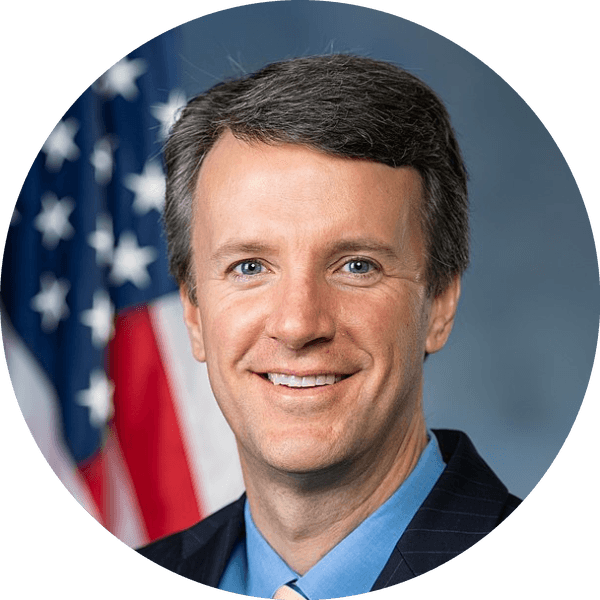
Ben Cline
Republican · VA

Scott Perry
Republican · PA

Beth Van Duyne
Republican · TX
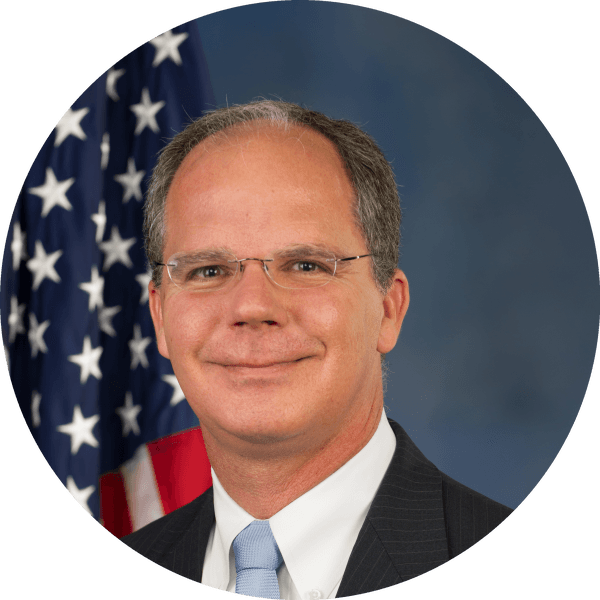
Brett Guthrie
Republican · KY

Mike Collins
Republican · GA

Brad Finstad
Republican · MN

Barry Moore
Republican · AL

Daniel Webster
Republican · FL

Michael Guest
Republican · MS
Cosponsor Coverage Map
Committee Sponsors
Banking, Housing, and Urban Affairs Committee
0 of 24 committee members cosponsored
No committee members have cosponsored this bill
Financial Services Committee
18 of 53 committee members cosponsored


25 Republicans across these committees haven't cosponsored yet. Mobilize their constituents
H.R. 1181 Quick Facts
- Committee
- Banking, Housing, and Urban Affairs
- Chamber
- House
- Policy
- Finance and Financial Sector
- Introduced
- Feb 11, 2025
Passed the House, received in Senate
Jul 15, 2026
Official Sources
Full bill text, actions, 132 cosponsors, and status tracking for the Protecting Privacy in Purchases Act
Sen. Hagerty's companion version of the Protecting Privacy in Purchases Act in the Senate
Official announcement of the Senate companion bill to block firearm purchase tracking via merchant category codes
Bill sponsor's issue page detailing H.R. 1181 and other Second Amendment legislation
The federal statute defining 'firearm,' 'ammunition,' and related terms referenced throughout the bill
The bill preserves existing SAR obligations — banks can still flag suspicious patterns, just not via a gun-store-specific MCC
The committee that reported H.R. 1181 on a 29-23 vote after December 2025 markup sessions
Guidance on suspicious activity reporting requirements that the bill explicitly preserves under its preemption clause
H.R. 1181 Common Questions
Can my credit card company tell I bought a gun?
Right now, yes — sort of. Since 2022, gun stores have had their own merchant category code (5723), so your bank can see you shopped at a firearms retailer. They can't see what you bought, but the store type is visible. H.R. 1181 would eliminate that code and force gun stores back into general or sporting goods categories.
Would gun stores still be able to accept credit cards?
Yes. The bill doesn't change how gun stores process payments — it changes how they're categorized. Instead of being labeled with a firearms-specific code, they'd be classified under broader categories like sporting goods or general merchandise. Your card works exactly the same way.
Does H.R. 1181 apply to debit cards and prepaid cards too?
Yes. The bill covers credit, debit, and prepaid transactions. It applies to every payment card network and every entity that processes card payments for merchants — not just traditional credit card companies.
Can banks still flag suspicious gun purchases for fraud?
Yes. The bill explicitly preserves existing fraud detection, suspicious activity reporting, and cybersecurity compliance. Banks can still flag unusual transaction patterns — they just can't use a gun-store-specific merchant code to identify them.
What happens to state laws that require or ban gun store codes?
They all get wiped out. H.R. 1181 preempts every state and local law on firearm merchant category codes. That includes states like California that pushed to require the codes and states that moved to ban them. Federal law becomes the only rule.
Can a gun store owner sue if a bank assigns them the wrong code?
No. The bill doesn't create a private right of action. Only the Attorney General can enforce it. Gun store owners can file complaints through the AG's process, and the AG investigates — but you can't take a bank to court yourself under this law.
How fast would violators have to comply?
Thirty days. If the Attorney General finds a violation, the company gets written notice and a 30-day window to fix it. If they don't, the AG can go to federal court for an injunction forcing compliance.
Is H.R. 1181 likely to pass?
It cleared the House Financial Services Committee 29-23 on a party-line vote and has 132 cosponsors — all Republican. House passage looks probable. The Senate is the bottleneck: it needs 60 votes to beat a filibuster, and bipartisan support is scarce so far.
Based on H.R. 1181 bill text
H.R. 1181 Bill Text
“To prohibit payment card networks and covered entities from requiring the use of or assigning merchant category codes that distinguish a firearms retailer from general-merchandise retailer or sporting-goods retailer, and for other purposes.”
Source: U.S. Government Publishing Office
Get notified when H.R. 1181 moves
Committee votes, floor action, cosponsor changes — straight to your inbox.
Bill alerts + Legisletter's monthly briefing. Unsubscribe anytime.
Finance and Financial Sector Bills
9 related bills we're tracking
America’s Olympic and Paralympic Games Commemorative Coins Act





Referred to the House Committee on Financial Services.
Jul 14, 2025
761st Tank Battalion Congressional Gold Medal Act


Referred to the Committee on Financial Services, and in addition to the Committee on House Administration, for a period to be subsequently determined by the Speaker, in each case for consideration of such provisions as fall within the jurisdiction of the committee concerned.
Feb 26, 2025
Taxpayer Data Protection Act




Sponsor introductory remarks on measure. (CR H625-626)
Feb 11, 2025
Repealing Big Brother Overreach Act



Placed on the Union Calendar, Calendar No. 609.
Jun 18, 2026
Rosie the Riveter Commemorative Coin Act




Referred to the House Committee on Financial Services.
Jan 15, 2025
HELPER Act of 2025



Referred to the House Committee on Financial Services.
Mar 14, 2025
Anti-CBDC Surveillance State Act




Motion to reconsider laid on the table Agreed to without objection.
Jul 17, 2025
Veterans Member Business Loan Act

Referred to the House Committee on Financial Services.
Jan 16, 2025
Credit Union Board Modernization Act




Read twice and referred to the Committee on Banking, Housing, and Urban Affairs.
Feb 11, 2025
Trending Right Now
Bills gaining momentum across Congress
ASAP Act


Ordered to be Reported in the Nature of a Substitute by the Yeas and Nays: 40 - 0.
Sep 16, 2026
Federal Firearms Licensee Protection Act of 2025

Referred to the House Committee on the Judiciary.
Mar 3, 2025
Therapeutic Fraud Prevention Act of 2025




Referred to the House Committee on Energy and Commerce.
May 7, 2025
Tracking Finance and Financial Sector in Congress? Monitor bills, track cosponsor momentum, and launch advocacy campaigns — all from one advocacy platform.