Mr. Speaker, the Rules Committee report (H. Rept. 119-199) to accompany House Resolution 580 should have included in its waivers of all points of order against consideration of H.R. 3633 and S. 1582 a disclosure of the following violation: Section 303 of the Congressional Budget Act which prohibits consideration of legislation providing new budget authority, a change in revenues, or a change in the public debt limit, for a fiscal year until the budget resolution for that year has been agreed to.
H.R. 3633: Digital Asset Market Clarity Act
Introduced May 29, 202521 cosponsors
Sponsor

J. Hill
Republican · AR-2
Congress draws the line on who polices your crypto
5 min readLast updated March 12, 2026
Why it matters
If you hold crypto in your own wallet, this bill says the government can't treat you like a bank. If you run an exchange, you're about to get two federal regulators. That split — who gets left alone and who gets watched — will shape what crypto looks like in America for the next decade.
H.R. 3633 passed the House 294-134 in July 2025 with bipartisan support and is now sitting in the Senate Banking Committee. It is the most comprehensive attempt Congress has ever made to answer a question that has paralyzed the crypto industry for years: is this stuff a security or a commodity, and who is supposed to be watching?
The bill's answer is both. The SEC keeps jurisdiction over tokens that start as investment contracts — the kind where you're buying in early and hoping the team builds something valuable. The CFTC gets exclusive authority over "digital commodities" once they're trading on mature, decentralized networks. That creates two distinct regulatory lanes where today there's a jurisdictional tug-of-war.
The numbers matter. New token projects can raise up to $50 million in a 12-month period without full SEC registration, as long as no single buyer ends up with more than 10% of the supply. Once the CFTC sets up its expedited registration process — which it has 180 days to do — exchanges, brokers, and dealers get 90 days to register or shut down. Insiders are locked in: founders and executives who hold tokens can only sell between 5% and 20% of their holdings in any 12-month period.
For a blockchain to qualify as "mature" and move from SEC oversight to the lighter CFTC regime, no insider group can control more than 20% of the voting power or own more than 20% of the total supply. For blockchains that existed before the bill, at least 50% of the tokens must be held by people other than the founding team.
Two provisions got the most attention on the House floor. First, the bill explicitly protects self-custody — your right to hold crypto in your own hardware or software wallet and make peer-to-peer transfers without registering as a financial institution. Blockchain developers and validators are also exempt from money transmitter rules. Second, Title VI bans the Federal Reserve from issuing, testing, studying, or even developing a central bank digital currency, directly or through intermediaries.
The bill also plugs crypto intermediaries into the Bank Secrecy Act, meaning exchanges and brokers must follow the same anti-money-laundering and suspicious-activity reporting rules that banks do. And it overrides state securities laws for digital commodities — creating one federal framework instead of a patchwork of 50 state regimes.
The Senate's own crypto market-structure bill is still taking shape in the Banking Committee. Whether Senate negotiators accept the House's definitions — particularly what counts as "mature" enough to escape securities regulation — will determine if this becomes law or stalls.
Bill Progress
IntroducedMay 29
Committee
Pass HouseJul 17
Pass Senate
Signed
Law
Latest Action · Sep 15, 2026
1/3
Passed the House, received in Senate
Visual Summary
H.R. 3633 at a Glance
<div style="max-width:100%;">
  <img src="https://legisletter.org/images/bill-infographics/hr3633-clarity-act-infographic.jpeg" alt="HR3633 Visual Summary - Digital Asset Market Clarity Act" style="max-width:100%;height:auto;display:block;" />
  <p style="margin:8px 0 0;font-size:14px;color:#555;text-align:center;">
    <a href="https://legisletter.org/bill/hr3633-digital-asset-market-clarity-act" target="_blank" rel="noopener noreferrer" style="color:inherit;text-decoration:underline;">HR3633 Visual Summary – Digital Asset Market Clarity Act</a>
    <span> via </span>
    <a href="https://legisletter.org" target="_blank" rel="noopener noreferrer" style="color:inherit;text-decoration:none;font-weight:500;">legisletter.org</a>
  </p>
</div>H.R. 3633 Bill Summary
What H.R. 3633 actually does.
1
SEC handles securities, CFTC handles commodities
Tokens sold as investment contracts stay under SEC oversight. Once a blockchain is decentralized enough to qualify as 'mature,' its tokens become 'digital commodities' and move to CFTC jurisdiction. Both agencies have 180 days to write joint rules for cases that overlap.
2
$50M fundraising exemption for new token projects
Crypto projects can raise up to $50 million in 12 months without full SEC registration, as long as they file disclosures, no single buyer gets more than 10% of the supply, and the project is based in the U.S. That cap adjusts annually for inflation.
3
90-day registration deadline for exchanges and brokers
After the CFTC sets up its expedited registration process (which it has 180 days to do), every crypto exchange, broker, and dealer has 90 days to register or stop operating. They must follow recordkeeping, custody, and customer protection rules.
4
Self-custody wallets protected by law
You keep the right to hold crypto in your own hardware or software wallet and make peer-to-peer transfers — no registration required. Blockchain developers and validators are also exempt from money transmitter rules. This only applies to personal use, not if you're holding assets for others.
5
Insider selling limits and decentralization thresholds
Token insiders can only sell 5% to 20% of their holdings per year, with a lifetime cap of 30% to 50%. For a blockchain to qualify as 'mature,' no insider group can control more than 20% of voting power or own more than 20% of the total supply.
6
Federal digital dollar banned
Title VI prohibits the Federal Reserve from issuing, testing, studying, or developing a central bank digital currency — directly or through intermediaries like banks. The only exception is for open, permissionless digital currencies that preserve the same privacy as physical cash.
Who benefits from H.R. 3633?
Crypto holders who self-custody
If you keep your crypto in your own wallet — a Ledger, a Trezor, a phone app you control — this bill says the federal government cannot require you to register as a financial institution. That protection has never been written into federal law before.
Crypto exchanges and brokers ready to play by rules
Platforms that have been operating in legal limbo get a defined registration path. Instead of wondering whether the SEC or CFTC will come after them, they know exactly which agency to register with and what rules to follow.
Blockchain developers and validators
If you write open-source code or run a node, you are explicitly not a money transmitter, broker, or exchange under this bill. That distinction has been a career-threatening gray area for thousands of developers.
Anyone worried about government surveillance of money
The CBDC ban means the Federal Reserve cannot create a trackable digital dollar. For people concerned about the government monitoring every transaction, this closes that door by statute.
Who is affected by H.R. 3633?
Token issuers and crypto startups
If you launch a new token, you now face disclosure requirements, a $50M fundraising cap, and a 4-year deadline to decentralize your blockchain enough to qualify as 'mature.' Miss that deadline and your token stays under full SEC securities regulation.
Existing exchanges, brokers, and dealers
Platforms already operating in the U.S. face a hard 90-day registration window once the CFTC finalizes its process. They must also comply with Bank Secrecy Act anti-money-laundering rules, custody requirements, and trade surveillance standards.
State securities regulators
The bill overrides state securities laws for digital commodities. States lose the ability to classify these assets as securities under their own rules, replaced by one federal framework.
DeFi users and protocols
Decentralized finance trading protocols and messaging systems get a carve-out from exchange and broker registration — but only if no person other than the user controls the funds or the execution of transactions. Protocols that don't meet that test could face registration requirements.
Cost & Funding
Authorization
No specific new funding authorized. The bill reduces the Federal Reserve's Discretionary Surplus Fund by $15 million (effective September 30, 2035).
- The CFTC will fund its expanded crypto oversight through annual fees charged to registered digital commodity exchanges, brokers, and dealers — not taxpayer money.
- The $15 million cut to the Fed's surplus fund offsets the bill's costs under congressional budget rules.
- Late registration fees start at 5% of the amount due, multiplied by each consecutive 30-day period past the deadline.
On the Record
What Congress Is Saying
47 legislators have weighed in on H.R. 3633 — 21 Democrats, 26 Republicans.
Mr. Speaker, I thank my friend, the gentleman from Georgia, for this opportunity to speak. Mr. Speaker, I rise today in support of the rule for H.R. 3633, the Digital Asset Market Clarity Act of 2025 and H.R. 1919, the Anti-CBDC Surveillance State Act. Together, these bills provide much needed clarity on digital asset regulation and ensure critical consumer protections so Americans retain their financial freedom. Before basketball became the great sport that we know and love, it needed rules. Without structure, the game could not grow and thrive. The same is true for digital assets.


I rise in strong opposition to H.R. 3633, the so-called CLARITY Act. I believe this misguided legislation will have devastating impacts on our financial stability, national security, and investor protection. While my Republican friends claim that this bill will regulate crypto market structure, in reality, it eviscerates the longstanding history of investor protections that have made our markets the envy of the world. Most importantly, this bill, this push for crypto, will not end well for the U.S. taxpayer.
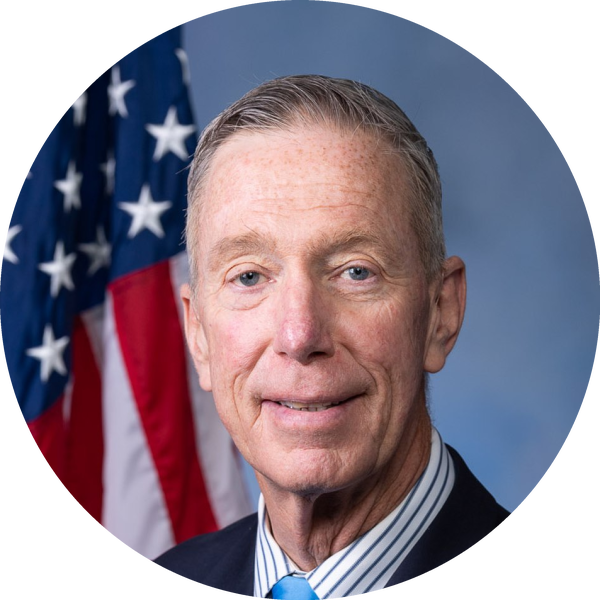
Mr. Speaker, I am a proud cosponsor of the CLARITY Act and voted YEA when it was marked up in the House Financial Services Committee. I would have voted YEA on this bill, which will foster investment and job creation in the rapidly growing digital economy. Had I been present, I would have voted YEA on Roll Call No. 199, passage of H.R. 3633.
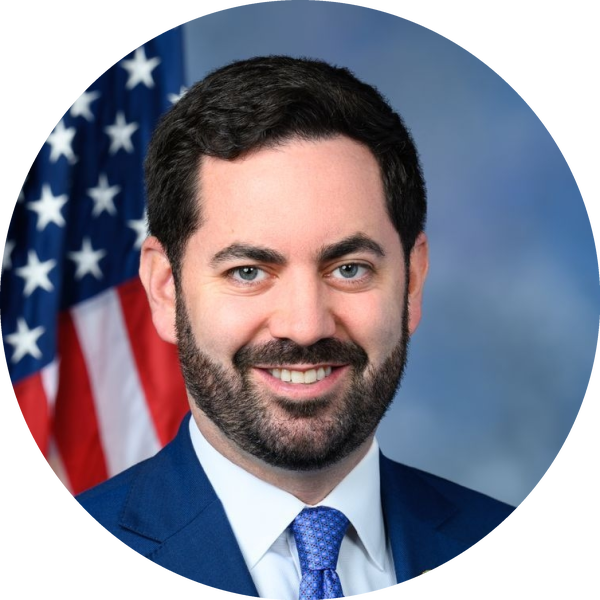
Mr. Speaker, I rise in support of the rule and the underlying legislation. The four separate measures being considered under this rule all have a singular commonality. They serve to put American interests first, where they should always be. All of us can agree that within the global markets, and on the global stage, America must always remain competitive and stand tall. That is not sometimes. That is not occasionally. That is not part of the time. That is always.
His constituents are lucky to have him representing them in the House of Representatives. Mr. Speaker, I rise in support of the rule and the underlying legislation. This is an important week in the House as we take up legislation to fund our military and advance several key financial services bills, including efforts to establish a clear market structure for cryptocurrency and protect Americans' financial privacy by blocking a surveillance-style central bank digital currency. Let me begin with the Defense appropriations bill.
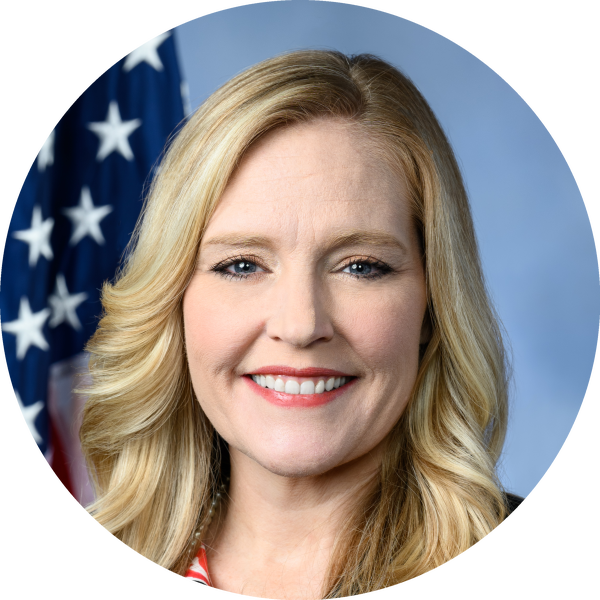
H.R. 3633 also appeared in 4 more House floor references, 1 in the Extensions of Remarks, and 6 routine cosponsor filings.
HR3633 Legislative Journey
Action Taken
Sep 15, 2026
Motion by Senator Tillis to reconsider the vote by which cloture on the motion to proceed to the measure was not invoked (Record Vote No. 234) entered in Senate.
Action Taken
Aug 8, 2026
Cloture motion on the motion to proceed to the measure presented in Senate. (CR S4557)
Committee Action
Jun 1, 2026
Committee on Banking, Housing, and Urban Affairs. Reported by Senator Scott SC, with an amendment in the nature of a substitute. Without written report.
Passed Committee
May 14, 2026
Committee on Banking, Housing, and Urban Affairs. Ordered to be reported with an amendment in the nature of a substitute favorably.
Committee Action
Sep 18, 2025
Received in the Senate and Read twice and referred to the Committee on Banking, Housing, and Urban Affairs.
House: Passed 294-134
Jul 17, 2025
On passage Passed by the Yeas and Nays: 294 - 134 (Roll no. 199). (text of amendment in the nature of a substitute: CR H3373-3397)
+8 more actions this day
House: Committee Action
Jul 15, 2025
Rules Committee Resolution H. Res. 580 Reported to House. Rule provides for consideration of H.R. 4016, H.R. 3633, H.R. 1919 and S. 1582. The resolution provides for consideration of H.R. 4016 and H.R. 3633 under a structured rule, and H.R. 1919 and S. 1582 under a closed rule, with one hour of general debate on each bill. The resolution provides for a motion to recommit on H.R. 4016, H.R. 3633, and H.R. 1919, and a motion to commit on S. 1582.
House: Committee Action
Jun 23, 2025
Reported (Amended) by the Committee on Financial Services. H. Rept. 119-168, Part II.
House: Vote: 32-19
Jun 10, 2025
Ordered to be Reported (Amended) by the Yeas and Nays: 32 - 19.
House: Committee Action
May 29, 2025
Referred to the Committee on Financial Services, and in addition to the Committee on Agriculture, for a period to be subsequently determined by the Speaker, in each case for consideration of such provisions as fall within the jurisdiction of the committee concerned.
About the Sponsor
J. Hill
Republican, Arkansas's 2nd congressional district · 11 years in Congress
Committees: Financial Services, House Permanent Select Committee on Intelligence
View full profile →
Cosponsors (21)
No new cosponsors in 472 days — momentum stalled
This bill has 21 cosponsors: 7 Democrats, 14 Republicans, reflecting bipartisan support. Cosponsors represent 14 states: Alaska, Georgia, Iowa, and 11 more.
7Democrats14Republicans·14 statesBipartisan

Glenn Thompson
Republican · PA

Angie Craig
Democrat · MN

Tom Emmer
Republican · MN

Dusty Johnson
Republican · SD

Donald Davis
Democrat · NC

Bryan Steil
Republican · WI

Ritchie Torres
Democrat · NY

Warren Davidson
Republican · OH

Josh Gottheimer
Democrat · NJ

Bill Huizenga
Republican · MI

Zachary Nunn
Republican · IA

Michael Lawler
Republican · NY
Committee Sponsors
Banking, Housing, and Urban Affairs Committee
11D13R
|0 signed24 not yet0 of 24 committee members cosponsored
No committee members have cosponsored this bill
Financial Services Committee
23D30R
|9 signed44 not yet9 of 53 committee members cosponsored


Agriculture Committee
24D29R
|9 signed44 not yet9 of 53 committee members cosponsored


57 Republicans across these committees haven't cosponsored yet. Mobilize their constituents
What laws does H.R. 3633 change?
8 key amendments · 8 total changes
Securities Act of 1933 - new digital asset-related definitions (Section 2(a))
+
New defined terms related to digital assets are added to Section 2(a) of the Securities Act of 1933, including but not limited to terms such as "digital asset", "digital commodity", "investment contract asset", "digital commodity intermediary", and related concepts needed to distinguish when a digital asset is treated as a security versus a commodity.What this means: This adds core definitions to the 1933 Act so that federal securities law can differentiate between traditional securities and various kinds of digital assets and intermediaries.
Securities Exchange Act of 1934 - new digital asset-related definitions (Section 3(a))
+
New defined terms are added to Section 3(a) of the Securities Exchange Act of 1934 to cover "digital commodity", "digital commodity exchange", "digital commodity broker", "digital commodity dealer", and to clarify how digital assets fit within or outside existing concepts such as "security" and "exchange".What this means: This amends the 1934 Act so that the SEC can clearly classify and regulate market participants that trade or handle digital commodities rather than treating all digital assets as conventional securities.
Commodity Exchange Act - new digital asset-related definitions (7 U.S.C. 1a and related sections)
+
The Commodity Exchange Act is amended to insert explicit definitions for "digital commodity", "digital commodity exchange", "digital commodity broker", "digital commodity dealer", "qualified digital asset custodian", and related terms, and to clarify the scope of the Commodity Futures Trading Commission's jurisdiction over spot and other transactions in digital commodities.What this means: This change formally brings certain digital assets and the platforms that trade them under the Commodity Exchange Act so the CFTC can regulate them as a new class of commodities.
Federal securities laws - treatment of investment contract assets (new provisions under Title II, Section 201)
+
A new statutory framework is added specifying that an "investment contract asset" initially sold as part of an investment contract can, once certain criteria are met (such as network decentralization or functionality criteria specified in the Act), be treated as a "digital commodity" rather than an ongoing security.What this means: This creates a path for some tokens that start out as securities offerings to later be treated as non-securities commodities once the underlying blockchain project is sufficiently mature.
Federal securities laws - exemptions for primary digital commodity offerings (Title II, Section 202)
+
A new exemption is created for certain primary offers and sales of digital commodities that satisfy disclosure, size, purchaser protection, and other conditions set out in the Act, allowing these offerings to occur without full registration under the Securities Act of 1933.What this means: This establishes a tailored exemption so qualifying token issuances can raise capital with lighter but prescribed disclosure instead of full SEC registration.
Federal securities laws and Commodity Exchange Act - regulatory treatment of digital commodity intermediaries (Title III & Title IV)
+
New registration categories and ongoing requirements are added for digital commodity exchanges, brokers, dealers, and associated persons at both the Securities and Exchange Commission and the Commodity Futures Trading Commission, including recordkeeping, customer protection, and prudential standards tailored to digital assets.What this means: This creates a formal dual-regulator regime under which platforms and intermediaries that handle digital commodities must register and comply with digital-asset-specific rules at the SEC and/or CFTC.
Commodity Exchange Act - new CFTC jurisdiction over digital commodity spot markets (Title IV, Section 401)
+
The Commodity Exchange Act is amended to grant the Commodity Futures Trading Commission explicit authority over certain spot and other transactions in digital commodities, including oversight of registered digital commodity exchanges and brokers operating in those markets.What this means: This gives the CFTC clear statutory power to police trading platforms and brokers dealing in digital commodities, not just derivatives tied to them.
Federal law preempting State securities treatment of digital commodities (Title III, Section 308)
+
A new provision is added stating that digital commodities, as defined and regulated under this Act and the amended federal securities and commodities laws, are exempt from treatment as "securities" under State blue sky laws to the extent specified in the Act.What this means: This preempts conflicting state securities regimes for covered digital commodities, replacing them with a unified federal classification and oversight framework.
H.R. 3633 Quick Facts
Cosponsors
21
- Committee
- Banking, Housing, and Urban Affairs
- Chamber
- House
- Policy
- Finance and Financial Sector
- Introduced
- May 29, 2025
Passed the House, received in Senate
Sep 15, 2026
Official Sources
H.R. 3633 on Congress.gov
Full bill text, actions, cosponsors, and status tracking for the Digital Asset Market Clarity Act
CRS Insight: Overview of the CLARITY Act
Congressional Research Service analysis of H.R. 3633's regulatory framework, definitions, and jurisdictional split
SEC Crypto Task Force
The SEC task force developing the crypto regulatory framework that H.R. 3633 would codify into law
CFTC Digital Assets
CFTC resource hub for digital asset regulation, customer advisories, and the agency's role in crypto oversight
FinCEN Guidance on Virtual Currency Business Models
FinCEN's 2019 guidance on how Bank Secrecy Act rules apply to convertible virtual currency businesses — the framework H.R. 3633 extends to crypto intermediaries
FinCEN Regulations on Virtual Currency Users, Administrators, and Exchangers
FinCEN's foundational 2013 guidance defining when virtual currency participants are money transmitters — directly relevant to the bill's self-custody and developer exemptions
Federal Reserve — Central Bank Digital Currency (CBDC)
The Federal Reserve's CBDC research page — Title VI of H.R. 3633 would ban the Fed from issuing, testing, or developing a digital dollar
Treasury DeFi Illicit Finance Risk Assessment
Treasury's 2023 assessment of how illicit actors exploit DeFi services — the anti-money-laundering risks H.R. 3633's Bank Secrecy Act provisions address
Who is lobbying on H.R. 3633?
47 organizations lobbying on this bill
HR 3633 has drawn a 105-organization lobbying scrum led by Digital Currency Group and the Community Bankers Association of Illinois with 12 filings each, followed closely by Filecoin Foundation with 11—clear evidence that this fight is no longer just crypto’s to lose. The dominant bloc is a hybrid of crypto-native firms, bank and trade associations, and venture investors pressing to lock in the rules on market structure and tax treatment, while the presence of JPMorgan Chase, Visa, and BlackRock shows Washington now sees digital-asset policy as core financial infrastructure, not a niche tech issue. Foreign players including Tether Operations, LMAX Group, TRON, Xapo Bank, and Polygon Labs underscore that the bill’s regulatory perimeter will have global consequences.
Total filings: 105
Foreign interests: 6
PARADIGM OPERATIONS LP | 6 |
CHAMBER OF DIGITAL COMMERCE D/B/A THE DIGITAL CHAMBER | 6 |
FILECOIN FOUNDATION | 5 |
ANCHORAGE DIGITAL BANK | 4 |
CRYPTO COUNCIL FOR INNOVATION | 4 |
LMAX GROUPUnited Kingdom | 4 |
TETHER OPERATIONS, S.A. DE C.V.El Salvador | 4 |
A16Z CAPITAL MANAGEMENT LLC | 3 |
JUMP CRYPTO HOLDINGS LLC | 3 |
MULTICOIN CAPITAL | 3 |
Showing 1-10 of 47 organizations
...
H.R. 3633 Common Questions
Can I still use my own crypto wallet under H.R. 3633?
Yes. The bill writes self-custody protections into federal law for the first time. You can hold crypto in your own hardware or software wallet and make peer-to-peer transfers without registering as a financial institution. One catch: the protection only covers personal use. If you hold assets for other people, it does not apply.
Which agency regulates crypto under this bill — the SEC or the CFTC?
Both, depending on the asset. Tokens sold as investment contracts stay under the SEC. Once a blockchain decentralizes enough to qualify as 'mature' — meaning no insider group controls more than 20% of voting power or owns more than 20% of the supply — its tokens become 'digital commodities' and move to CFTC jurisdiction. The two agencies share oversight of trading venues and must write joint rules within 180 days.
How much can a crypto project raise without full SEC registration?
Up to $50 million in a 12-month period. The cap adjusts annually for inflation. To qualify, no single buyer can end up with more than 10% of the total supply, and the project must be organized in the U.S. The issuer also has to file disclosures with the SEC covering source code, tokenomics, and a development plan.
Does H.R. 3633 ban a federal digital dollar?
Yes. Title VI prohibits the Federal Reserve from issuing, testing, studying, or developing a central bank digital currency — directly or through banks acting as intermediaries. The only exception is for a digital currency that is open, permissionless, and preserves the same privacy as physical cash and coins.
How fast do crypto exchanges have to register under this bill?
The CFTC has 180 days after enactment to set up an expedited registration process. Once that process is live, every crypto exchange, broker, and dealer has 90 days to register or stop operating. During the transition, firms that apply can operate under provisional status while their registration is processed.
Are blockchain developers treated as money transmitters under H.R. 3633?
No. The bill explicitly exempts developers and service providers who do not control the blockchain from money transmitter registration. Validators, miners, and node operators also fall outside the exchange and broker definitions, as long as they are maintaining or supporting the network rather than executing trades on behalf of customers.
What are the insider selling limits for token founders?
Token founders, executives, and insiders who hold more than 5% of a token's supply face two restrictions. Per year, they can sell between 5% and 20% of their holdings (exact percentage set by SEC rulemaking). Over their lifetime, total sales are capped between 30% and 50%. They must also hold tokens for at least 12 months before selling.
Does H.R. 3633 override state crypto regulations?
For digital commodities, yes. Once a token qualifies as a digital commodity under the bill's federal framework, it is exempt from state securities laws. That replaces the current patchwork of 50 different state regimes with one set of federal rules. States still retain authority over other consumer protection and fraud enforcement.
Based on H.R. 3633 bill text
H.R. 3633 Bill Text
“To provide for a system of regulation of the offer and sale of digital commodities by the Securities and Exchange Commission and the Commodity Futures Trading Commission, to amend the Federal Reserve Act to prohibit the Federal reserve banks from offering certain products or services directly to an individual, to prohibit the use of central bank digital currency for monetary policy, and for other purposes.”
Source: U.S. Government Publishing Office
Bill Alerts
Get notified when H.R. 3633 moves
Committee votes, floor action, cosponsor changes — straight to your inbox.
Bill alerts + Legisletter's monthly briefing. Unsubscribe anytime.
Finance and Financial Sector Bills
9 related bills we're tracking
H.R. 4382Surging+55
America’s Olympic and Paralympic Games Commemorative Coins Act

Brad ShermanD-CA




+304
308 cosponsors
+55 this monthReferred to the House Committee on Financial Services.
Jul 14, 2025
HouseFinance and Financial Sector
H.R. 1628
761st Tank Battalion Congressional Gold Medal Act

Gary PalmerR-AL



+284
288 cosponsors
+4 this monthReferred to the Committee on Financial Services, and in addition to the Committee on House Administration, for a period to be subsequently determined by the Speaker, in each case for consideration of such provisions as fall within the jurisdiction of the committee concerned.
Feb 26, 2025
HouseFinance and Financial Sector
H.R. 1101
Taxpayer Data Protection Act

Haley StevensD-MI



+201
205 cosponsors
Sponsor introductory remarks on measure. (CR H625-626)
Feb 11, 2025
HouseFinance and Financial Sector
H.R. 425
Repealing Big Brother Overreach Act
Warren DavidsonR-OH



+189
193 cosponsors
Placed on the Union Calendar, Calendar No. 609.
Jun 18, 2026
HouseFinance and Financial Sector
H.R. 429
Rosie the Riveter Commemorative Coin Act

John GaramendiD-CA




+164
168 cosponsors
Referred to the House Committee on Financial Services.
Jan 15, 2025
HouseFinance and Financial Sector
H.R. 2094
HELPER Act of 2025

John RutherfordR-FL


+149
153 cosponsors
Referred to the House Committee on Financial Services.
Mar 14, 2025
HouseFinance and Financial Sector
H.R. 1919
Anti-CBDC Surveillance State Act
Tom EmmerR-MN



+131
135 cosponsors
Motion to reconsider laid on the table Agreed to without objection.
Jul 17, 2025
HouseFinance and Financial Sector
H.R. 1181
Protecting Privacy in Purchases Act

Riley MooreR-WV



+128
132 cosponsors
Received in the Senate and Read twice and referred to the Committee on Banking, Housing, and Urban Affairs.
Jul 15, 2026
HouseFinance and Financial Sector
H.R. 507
Veterans Member Business Loan Act

Vicente GonzalezD-TX


+67
71 cosponsors
+1 this monthReferred to the House Committee on Financial Services.
Jan 16, 2025
HouseFinance and Financial Sector
Trending Right Now
Bills gaining momentum across Congress
H.R. 6130Surging+18
ASAP Act
Vern BuchananR-FL

+220
224 cosponsors
+18 this monthOrdered to be Reported in the Nature of a Substitute by the Yeas and Nays: 40 - 0.
Sep 16, 2026
HouseHealth
H.R. 1773Surging+27
Federal Firearms Licensee Protection Act of 2025
John RutherfordR-FL



+137
141 cosponsors
+27 this monthReferred to the House Committee on the Judiciary.
Mar 3, 2025
HouseCrime and Law Enforcement
H.R. 3243Surging+25
Therapeutic Fraud Prevention Act of 2025

Ted LieuD-CA



+196
200 cosponsors
+25 this monthReferred to the House Committee on Energy and Commerce.
May 7, 2025
HouseCommerce
Tracking Finance and Financial Sector in Congress? Monitor bills, track cosponsor momentum, and launch advocacy campaigns — all from one advocacy platform.