H.R. 6955: Main Street Capital Access Act
Sponsor

J. Hill
Republican · AR-2
Community banks play by big-bank rules — this bill rewrites the playbook
Why it matters
More than 4,600 community banks hold roughly $5.6 trillion in assets and serve the small towns and rural counties where national banks rarely open branches. Under current law, many of them face the same capital requirements, exam schedules, and application timelines as trillion-dollar institutions. H.R. 6955 would raise asset thresholds, impose hard deadlines on regulators, and carve out lighter treatment for banks under $15 billion — the broadest community bank deregulation package since 2018.
The bill touches almost every piece of the federal banking regulatory framework, organized across eight titles.
On capital rules, it raises the Community Bank Leverage Ratio eligibility ceiling from $10 billion to $15 billion in assets and drops the required leverage range from 8-10% to 6-8%. Rural banks under $10 billion get an even lower floor — the lesser of the standard CBLR or 7.5%, phased in over two years. New banks get a three-year ramp-up to meet federal capital requirements.
On timelines, the bill imposes a 90-day clock on the Fed, FDIC, and OCC for bank holding company and merger applications. If regulators miss the deadline, the application is automatically approved. New banks requesting business plan changes get a 30-day clock with the same auto-approval default. Exams must be completed within 270 days and final reports delivered within 90 days of the exit interview.
On oversight structure, the bill creates an Office of Independent Examination Review inside the FFIEC, led by a three-member board appointed by the President. Banks can appeal major supervisory decisions for de novo review — meaning the appeal board evaluates the case from scratch, without deferring to the original examiner. The bill also orders a rewrite of the CAMELS rating system using objective criteria, with Congress finding that the current system "relies heavily on examiner judgment, which can lead to subjective and inconsistent ratings."
Other provisions ban climate-related stress tests, strip "reputational risk" from the supervisory toolkit, raise the small bank holding company threshold to $25 billion, bump enhanced-regulation triggers from $250 billion to $370 billion, exempt mergers resulting in banks under $10 billion from antitrust review, and loosen deposit-broker rules through a 50/40/30% tiered exclusion for reciprocal deposits.
Bill Progress
Latest Action · Jul 22, 2026
Passed the House, received in Senate
H.R. 6955 Bill Summary
What H.R. 6955 actually does.
Capital requirements drop for banks under $15 billion
The Community Bank Leverage Ratio eligibility ceiling rises from $10 billion to $15 billion in assets. The required leverage ratio range drops from 8-10% to 6-8%. Rural banks under $10 billion get the lesser of the standard CBLR or 7.5%, phased in over two years. New banks get a three-year phase-in for all federal capital requirements.
Regulators face 90-day clocks with automatic approval
Applications for bank holding companies, savings and loan holding companies, and mergers must be approved or denied within 90 days. If regulators miss the deadline, the application is automatically approved. New banks requesting business plan changes get a 30-day clock with the same default.
Banks get an independent appeals board for exam disputes
The bill creates an Office of Independent Examination Review inside the FFIEC, led by a three-member board appointed by the President. Banks can appeal major supervisory decisions for de novo review — the board evaluates the case independently without deferring to the original examiner.
CAMELS ratings get an objectivity overhaul
The FFIEC must rewrite the CAMELS rating system using clear, objective criteria. The subjective "Management" component would be either eliminated or limited to objective measures of governance and controls. Congress finds the current system leads to "subjective and inconsistent ratings across similar institutions."
Climate stress tests banned, reputational risk removed
The Fed cannot subject any bank or nonbank financial company to climate-related stress tests. Separately, every federal banking agency must strip all references to "reputational risk" from exam manuals, guidance, and supervisory decisions — citing its use in Operation Choke Point to restrict legal businesses from accessing banking services.
Small bank mergers skip antitrust review
Mergers resulting in a combined institution under $10 billion in assets are exempt from monopoly and competition analysis. The threshold adjusts with GDP growth every five years. Separately, the small bank holding company threshold rises to $25 billion, and enhanced-regulation triggers move from $250 billion to $370 billion.
Who benefits from H.R. 6955?
Community banks under $15 billion in assets
They become eligible for the Community Bank Leverage Ratio at a lower range (6-8% instead of 8-10%), get short-form call reports, and qualify for lighter exam schedules if well-managed and well-capitalized with under $6 billion.
Rural banks in small towns and non-metro counties
Rural depository institutions under $10 billion get a capital floor of 7.5% or the standard CBLR — whichever is lower — phased in over two years. The bill also orders a joint study on how to improve growth and profitability at rural banks.
New bank founders and de novo applicants
A three-year phase-in for capital requirements gives startups time to build their balance sheets. Business plan change requests face a 30-day clock with automatic approval, and the bill orders a study on why so few new banks have opened in the last decade.
Banks facing exams or supervisory disputes
Exams must finish within 270 days and final reports within 90 days of the exit interview. A new independent review board can overrule examiners on material supervisory decisions, and anti-retaliation protections prevent agencies from punishing banks that appeal.
Who is affected by H.R. 6955?
Federal banking regulators (OCC, FDIC, Fed, NCUA)
They face new deadlines on applications and exams, mandatory annual reporting on processing times, a 15-year look-back review of existing rules, cumulative-impact reviews every seven years, and public disclosure of stress test models within 90 days.
Large banks approaching $370 billion in assets
Enhanced-regulation triggers rise from $250 billion to $370 billion, meaning some institutions currently under heightened supervision would shift to lighter treatment. The thresholds auto-adjust with GDP growth starting in 2031.
The CFPB's role in bank oversight
The CFPB Director loses voting power on the FDIC Board, becoming a non-voting observer. FDIC Board members also face a two-term limit and a 12-year maximum tenure.
Fintech companies partnering with banks
The bill includes a bank-fintech partnership enhancement provision and modernizes merchant banking rules, though the specific changes are framework-level rather than prescriptive.
HR6955 Legislative Journey
Committee Action
Jul 22, 2026
Received in the Senate and Read twice and referred to the Committee on Banking, Housing, and Urban Affairs.
House: Passed 270-155
Jul 21, 2026
On passage Passed by the Yeas and Nays: 270 - 155, 1 Present (Roll no. 271). (text of amendment in the nature of a substitute: CR H4708-4722)
+11 more actions this day
House: Committee Action
Jul 20, 2026
Rules Committee Resolution H. Res. 1438 Reported to House. Rule provides for consideration of H.R. 8800, H.R. 8884, H. Con. Res. 113, H.R. 7008, H.R. 6955 and H.R. 9770. The resolution provides for consideration of H.R. 8800 under a structured rule and for consideration of H.R. 8884, H. Con. Res. 113, H.R. 7008, H.R. 6955, and H.R. 9770 under a closed rule, with one hour of debate on each measure and one motion to recommit on H.R. 8800, H.R. 8884, H.R. 7008, H.R. 6955, and H.R. 9770.
House: Committee Action
Apr 20, 2026
Reported (Amended) by the Committee on Financial Services. H. Rept. 119-617.
House: Vote: 26-16
Mar 4, 2026
Ordered to be Reported by the Yeas and Nays: 26 - 16.
House: Committee Action
Jan 7, 2026
Referred to the House Committee on Financial Services.
About the Sponsor
J. Hill
Republican, Arkansas's 2nd congressional district · 11 years in Congress
Committees: Financial Services, House Permanent Select Committee on Intelligence
View full profile →
Cosponsors (33)
All 33 cosponsors are Republicans. Cosponsors represent 22 states: California, Florida, Georgia, and 19 more.

Andy Barr
Republican · KY

Bill Huizenga
Republican · MI

Frank Lucas
Republican · OK

Pete Sessions
Republican · TX
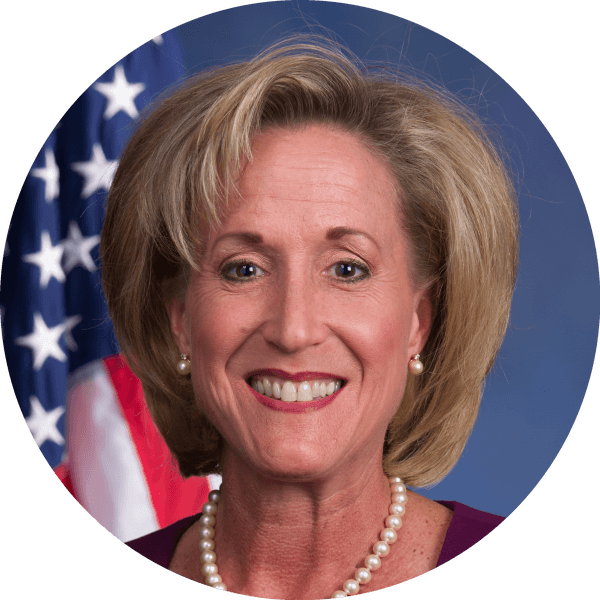
Ann Wagner
Republican · MO
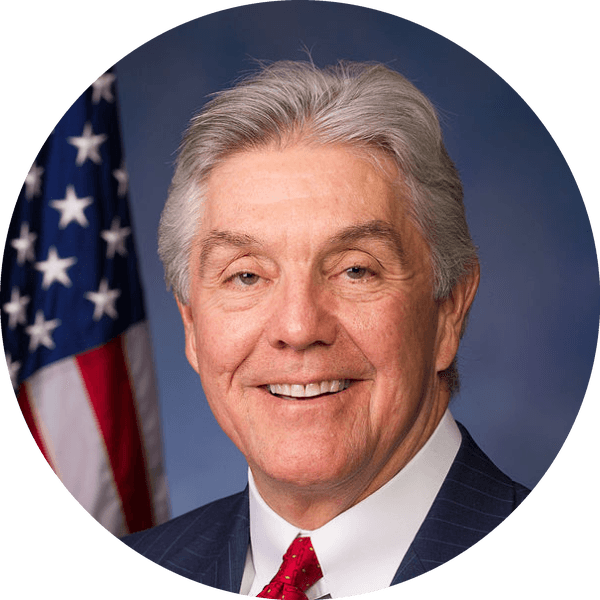
Roger Williams
Republican · TX

Tom Emmer
Republican · MN

Barry Loudermilk
Republican · GA
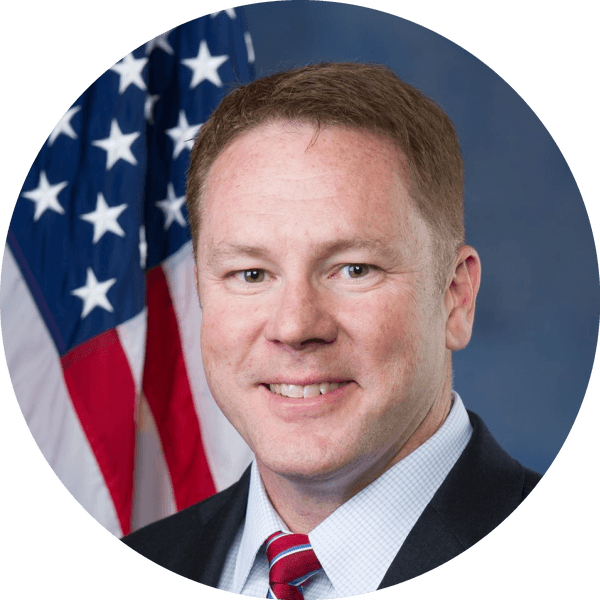
Warren Davidson
Republican · OH
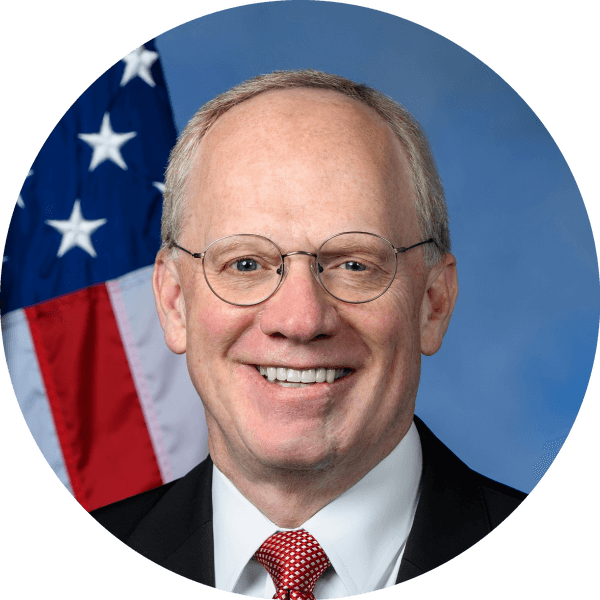
John Rose
Republican · TN

Bryan Steil
Republican · WI

William Timmons
Republican · SC
Committee Sponsors
Banking, Housing, and Urban Affairs Committee
0 of 24 committee members cosponsored
No committee members have cosponsored this bill
Financial Services Committee
29 of 53 committee members cosponsored


14 Republicans across these committees haven't cosponsored yet. Mobilize their constituents
What laws does H.R. 6955 change?
9 changes
Sections Amended
Section 101 of Federal Credit Union Act (12 U.S.C. 1752). SEC. 103. CDFI FUND TRANSPARENCY. Section 104(b) of the Riegle Community Development and Regulatory Improvement Act of 1994 (12 U.S.C. 4703(b))
adding to the end the following: ``(5) Annual testimony
Section 1(b) of Riegle Community Development and Regulatory Improvement Act of 1994 (Public Law 103-325; 108 Stat. 2160)
inserting after the item relating to section 114 the following: ``Sec
Section 1(b) of Dodd-Frank Wall Street Reform and Consumer Protection Act
inserting after the item relating to section 176 the following: ``Sec
Section 205(j) of Federal Credit Union Act (12 U.S.C. 1785(j))
inserting ``the Bureau of Consumer Financial Protection,'' before ``the Administration'' each place that term appears
Section 10(d) of Federal Deposit Insurance Act (12 U.S.C. 1820(d))
adding at the end the following: ``(11) Examination relief for certain well managed and well capitalized insured depository institutions
Section 204 of Federal Credit Union Act (12 U.S.C. 1784)
adding at the end the following: ``(h) Examination Relief for Certain Well Managed and Well Capitalized Insured Credit Unions
H.R. 6955 Quick Facts
- Committee
- Banking, Housing, and Urban Affairs
- Chamber
- House
- Policy
- Finance and Financial Sector
- Introduced
- Jan 7, 2026
Passed the House, received in Senate
Jul 22, 2026
Official Sources
H.R. 6955 Common Questions
What banks qualify for lower capital requirements under H.R. 6955?
Banks with up to $15 billion in assets would become eligible for the Community Bank Leverage Ratio, up from the current $10 billion ceiling. The required ratio drops to a 6-8% range. Rural banks under $10 billion get an even lower floor of 7.5%.
What happens if a regulator misses the 90-day deadline on a bank merger application?
The application is automatically approved. H.R. 6955 sets a 90-day clock for the Fed, FDIC, and OCC on holding company and merger applications. Regulators can extend the deadline by up to 30 days, but only at the applicant's request.
Does H.R. 6955 ban climate stress tests for banks?
Yes. The bill prohibits the Fed from subjecting any bank holding company or nonbank financial company to a climate-related stress test. It also requires the Fed to publicly disclose stress test scenarios at least 60 days before conducting them.
How does H.R. 6955 change bank merger antitrust review?
Mergers resulting in a combined institution under $10 billion in assets are exempt from monopoly and competition analysis. The threshold adjusts with GDP growth. Larger mergers still face the standard antitrust review.
What is the new independent exam review board created by H.R. 6955?
The bill creates an Office of Independent Examination Review inside the FFIEC, led by a three-member board appointed by the President. Banks can appeal supervisory decisions for de novo review — meaning the board evaluates the case from scratch, without deferring to the original examiner.
What does H.R. 6955 do about reputational risk in bank exams?
Every federal banking agency must strip all references to "reputational risk" from exam manuals, guidance, and supervisory decisions. The bill cites Operation Choke Point, where the FDIC acknowledged using reputational risk reviews to restrict legal businesses from accessing banking services.
How long do regulators have to finish a bank exam under H.R. 6955?
270 days from start to finish, with the final report due within 90 days after the exit interview. Well-managed banks under $6 billion also become eligible for alternating limited-scope exams and combined exam cycles.
Does H.R. 6955 help new banks get started?
Yes. New banks get a three-year phase-in for federal capital requirements. If they need to change their business plan, regulators have 30 days to respond — or the change is automatically approved. The bill also orders a study on why so few new banks have opened in the last decade.
Based on H.R. 6955 bill text
H.R. 6955 Bill Text
“To make improvements to the Federal banking laws, and for other purposes.”
Source: U.S. Government Publishing Office
Get notified when H.R. 6955 moves
Committee votes, floor action, cosponsor changes — straight to your inbox.
Bill alerts + Legisletter's monthly briefing. Unsubscribe anytime.
Finance and Financial Sector Bills
9 related bills we're tracking
America’s Olympic and Paralympic Games Commemorative Coins Act



Referred to the House Committee on Financial Services.
Jul 14, 2025
761st Tank Battalion Congressional Gold Medal Act

Referred to the Committee on Financial Services, and in addition to the Committee on House Administration, for a period to be subsequently determined by the Speaker, in each case for consideration of such provisions as fall within the jurisdiction of the committee concerned.
Feb 26, 2025
Taxpayer Data Protection Act



Sponsor introductory remarks on measure. (CR H625-626)
Feb 11, 2025
Repealing Big Brother Overreach Act


Placed on the Union Calendar, Calendar No. 609.
Jun 18, 2026
Rosie the Riveter Commemorative Coin Act



Referred to the House Committee on Financial Services.
Jan 15, 2025
HELPER Act of 2025

Referred to the House Committee on Financial Services.
Mar 14, 2025
Anti-CBDC Surveillance State Act



Motion to reconsider laid on the table Agreed to without objection.
Jul 17, 2025
Protecting Privacy in Purchases Act


Received in the Senate and Read twice and referred to the Committee on Banking, Housing, and Urban Affairs.
Jul 15, 2026
Veterans Member Business Loan Act
Referred to the House Committee on Financial Services.
Jan 16, 2025
Trending Right Now
Bills gaining momentum across Congress
ASAP Act


Ordered to be Reported in the Nature of a Substitute by the Yeas and Nays: 40 - 0.
Sep 16, 2026
Fit to Serve Act




Referred to the House Committee on Armed Services.
May 21, 2025
Therapeutic Fraud Prevention Act of 2025




Referred to the House Committee on Energy and Commerce.
May 7, 2025
Tracking Finance and Financial Sector in Congress? Monitor bills, track cosponsor momentum, and launch advocacy campaigns — all from one advocacy platform.