H.R. 507: Veterans Member Business Loan Act
Sponsor

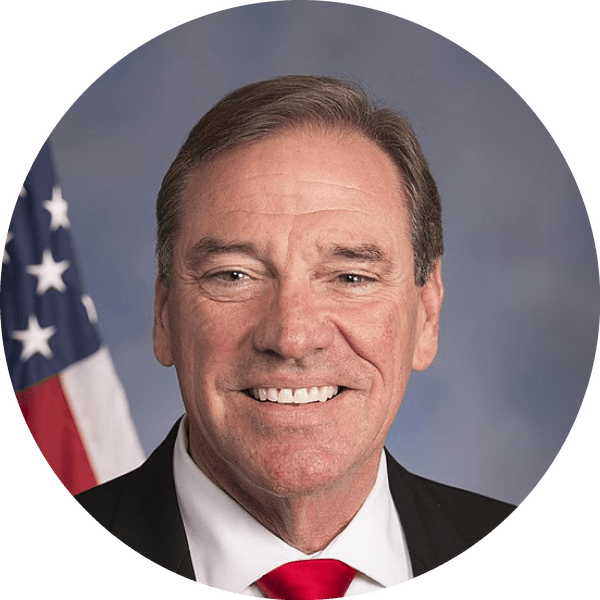
Vicente Gonzalez
Democrat · TX-34
Free up credit union loans for veteran businesses
Why it matters
Federal law caps how much a credit union can carry in business loans — 12.25% of its total assets. Once a credit union nears that ceiling, veteran business borrowers get crowded out alongside everyone else. H.R. 507 would stop loans made to veterans from counting toward that cap, leaving credit unions more room to say yes.
Federal Credit Unions can't lend unlimited amounts to businesses. Federal law caps their total business lending at 12.25% of assets, and once a credit union nears that line, it has to start turning business borrowers away.
The law already lets a handful of loan types sit outside that cap. H.R. 507 would add one more to the list: loans made to veterans. A veteran's business loan would still be a real loan with real terms — it just wouldn't count against the credit union's cap.
The bill leans on the definition of "veteran" already written into federal law, so it doesn't create a new category or eligibility test.
It doesn't hand out grants, forgive debt, or guarantee anyone a loan. You'd still have to qualify, and the credit union would still set the rate and terms. The change would only apply to Federal Credit Unions, and it wouldn't start until six months after the bill became law.
Bill Progress
Latest Action · Jan 16, 2025
Referred to the House Committee on Financial Services.
H.R. 507 Bill Summary
What H.R. 507 actually does.
Veteran loans stop counting against the business-lending cap
Loans a Federal Credit Union makes to veterans would be excluded from the member business loan total that federal law limits, freeing up room for more business lending.
Uses the veteran definition already in federal law
The bill points to the existing federal definition of "veteran" rather than writing a new one, so eligibility follows the standard already used across federal programs.
Applies only to Federal Credit Unions
Banks, state-chartered credit unions, and online lenders are not covered. The change is limited to Federal Credit Unions and the cap they operate under.
No guaranteed approval and no special rates
The bill reclassifies certain loans; it doesn't set interest rates, loan sizes, or approval standards. Credit unions would still run their own underwriting.
Takes effect six months after enactment
If the bill becomes law, the change waits out a 6-month transition window so credit unions and regulators can update their policies and systems.
Who benefits from H.R. 507?
Veterans starting or growing a business
If you're a veteran looking to finance inventory, equipment, a work vehicle, or day-to-day cash flow, a Federal Credit Union would have more headroom to make that loan.
Veteran-owned businesses near a credit union's cap
Even strong applicants get turned down when a credit union is maxed out on business lending. Taking veteran loans off the books for cap purposes is meant to keep that from happening.
Credit unions that serve military communities
Credit unions built around bases and veteran members would gain flexibility to keep lending to those members without burning through their cap.
Who is affected by H.R. 507?
Veteran borrowers at Federal Credit Unions
You may find it easier to get approved, but the bill doesn't change underwriting. It changes how the loan is counted, not whether you qualify.
Non-veteran business borrowers
Business loans to non-veterans would still count toward the cap under the existing rules, with no change from this bill.
Credit unions and their compliance teams
Lenders would need to update loan-classification systems, staff training, and reporting during the 6-month window before the change takes effect.
Credit union regulators
The National Credit Union Administration and other overseers would need to apply the veteran carveout consistently across covered credit unions.
HR507 Legislative Journey
House: Committee Action
Jan 16, 2025
Referred to the House Committee on Financial Services.
About the Sponsor
Vicente Gonzalez
Democrat, Texas's 34th congressional district · 9 years in Congress
Committees: Financial Services
View full profile →
Cosponsors (71)
This bill has 71 cosponsors: 45 Democrats, 26 Republicans, reflecting bipartisan support. Cosponsors represent 31 states: Alaska, Alabama, Arizona, and 28 more.

Brian Fitzpatrick
Republican · PA

Jim Costa
Democrat · CA

Jill Tokuda
Democrat · HI

Juan Ciscomani
Republican · AZ

Julia Brownley
Democrat · CA

Jared Golden
Democrat · ME

Sheila Cherfilus-McCormick
Democrat · FL

Gerald Connolly
Democrat · VA

Andy Biggs
Republican · AZ

David Valadao
Republican · CA

Henry Cuellar
Democrat · TX

Dina Titus
Democrat · NV
Committee Sponsors
Financial Services Committee
4 of 53 committee members cosponsored


19 Democrats across this committee haven't cosponsored yet. Mobilize their constituents
H.R. 507 Quick Facts
- Committee
- Financial Services
- Chamber
- House
- Policy
- Finance and Financial Sector
- Introduced
- Jan 16, 2025
Referred to the House Committee on Financial Services.
Jan 16, 2025
Official Sources
Official bill page with text, actions, cosponsors, and status updates for the Veterans Member Business Loan Act.
Section 107A of the Federal Credit Union Act, the statute H.R. 507 amends to exclude veteran loans from the member business loan definition.
The bill borrows the existing federal definition of 'veteran' from Title 38 rather than writing a new eligibility test.
The National Credit Union Administration's official guidance on the 12.25% member business loan cap H.R. 507 would carve veteran loans out of.
SBA's official resource hub for veteran entrepreneurs, the borrowers H.R. 507 is meant to give credit unions more room to serve.
The VA office that supports veteran-owned small businesses and offers authoritative context on veteran business participation.
H.R. 507 Common Questions
What does H.R. 507 actually do?
It would stop loans that Federal Credit Unions make to veterans from counting as member business loans. That frees up room under the federal cap on credit union business lending, so credit unions can lend more to veteran-owned businesses.
Why do credit unions limit business loans at all?
Federal law caps a credit union's total business lending at 12.25% of its assets. The limit keeps credit unions focused on consumer members. H.R. 507 would let loans to veterans sit outside that cap.
Would H.R. 507 guarantee me a loan if I'm a veteran?
No. You'd still have to qualify under the credit union's normal underwriting. The bill changes how a loan is counted, not whether you get approved or what rate you pay.
Which lenders would H.R. 507 cover?
Only Federal Credit Unions. Banks, online lenders, and state-chartered credit unions aren't affected — the bill amends the Federal Credit Union Act, which governs federally chartered credit unions.
Who counts as a veteran under H.R. 507?
The bill uses the definition of "veteran" already written into federal law rather than creating a new one. Eligibility would follow that existing federal standard.
When would the change take effect?
Not right away. H.R. 507 sets a 6-month transition period after it's signed into law before the new rule kicks in, giving credit unions and regulators time to update their systems.
Does H.R. 507 create grants or new funding for veterans?
No. The bill doesn't set up a grant program, direct payments, or any new federal money. It only changes how certain credit union loans are classified under the lending cap.
Based on H.R. 507 bill text
H.R. 507 Bill Text
“To amend the Federal Credit Union Act to exclude extensions of credit made to veterans from the definition of a member business loan.”
Source: U.S. Government Publishing Office
Get notified when H.R. 507 moves
Committee votes, floor action, cosponsor changes — straight to your inbox.
Bill alerts + Legisletter's monthly briefing. Unsubscribe anytime.
Finance and Financial Sector Bills
9 related bills we're tracking
America’s Olympic and Paralympic Games Commemorative Coins Act





Referred to the House Committee on Financial Services.
Jul 14, 2025
761st Tank Battalion Congressional Gold Medal Act




Referred to the Committee on Financial Services, and in addition to the Committee on House Administration, for a period to be subsequently determined by the Speaker, in each case for consideration of such provisions as fall within the jurisdiction of the committee concerned.
Feb 26, 2025
Taxpayer Data Protection Act





Sponsor introductory remarks on measure. (CR H625-626)
Feb 11, 2025
Repealing Big Brother Overreach Act




Placed on the Union Calendar, Calendar No. 609.
Jun 18, 2026
Rosie the Riveter Commemorative Coin Act




Referred to the House Committee on Financial Services.
Jan 15, 2025
HELPER Act of 2025




Referred to the House Committee on Financial Services.
Mar 14, 2025
Anti-CBDC Surveillance State Act





Motion to reconsider laid on the table Agreed to without objection.
Jul 17, 2025
Protecting Privacy in Purchases Act




Received in the Senate and Read twice and referred to the Committee on Banking, Housing, and Urban Affairs.
Jul 15, 2026
Credit Union Board Modernization Act





Read twice and referred to the Committee on Banking, Housing, and Urban Affairs.
Feb 11, 2025
Trending Right Now
Bills gaining momentum across Congress
Fit to Serve Act





Referred to the House Committee on Armed Services.
May 21, 2025
ASAP Act




Ordered to be Reported in the Nature of a Substitute by the Yeas and Nays: 40 - 0.
Sep 16, 2026
Therapeutic Fraud Prevention Act of 2025





Referred to the House Committee on Energy and Commerce.
May 7, 2025
Tracking Finance and Financial Sector in Congress? Monitor bills, track cosponsor momentum, and launch advocacy campaigns — all from one advocacy platform.