H.R. 2126: FOCA Act of 2025
Sponsor

Clay Higgins
Republican · LA-3
Washington shouldn't pick sides on union construction deals
Why it matters
Whether a contractor must sign a union agreement to build a federal courthouse, highway, or VA hospital has flipped with nearly every administration since 2001. H.R. 2126, backed by 107 House Republicans, would write one answer into law: agencies can neither require those agreements nor ban them, on direct contracts and on federally funded projects alike.
Project labor agreements are pre-hire deals that set wages, work rules, and dispute procedures for everyone on a construction job, usually negotiated with building-trades unions. Presidents have taken turns on them: George W. Bush barred agencies from requiring them, Barack Obama encouraged them, and a 2022 executive order under Joe Biden made them the default on federal construction projects of $35 million or more.
H.R. 2126 would end that back-and-forth by barring agencies from either requiring or prohibiting these agreements on any covered construction contract. Agencies also could not score a bidder higher or lower because it has signed one or refused to. The rule applies to contracts awarded after the bill becomes law and to the subcontracts under them.
The reach goes past federal agencies' own contracts. States, cities, and other recipients building with federal grants, financial assistance, or cooperative agreements would have to follow the same neutrality rule in their bid documents. That pulls in a large share of highway, transit, water, and school construction that runs on federal money.
Nothing stops a contractor from signing a union agreement on its own. What changes is who decides: the company, not the agency awarding the work.
An agency head could still exempt a project to avert an imminent threat to public health or safety, or for national security. The bill rules out one justification in advance: the chance of a labor dispute involving non-union workers or contractors does not count. Projects that already had union-agreement terms in place, with at least one contract awarded before enactment, could apply to keep them.
Bill Progress
Latest Action · Mar 14, 2025
Referred to the House Committee on Oversight and Government Reform.
H.R. 2126 Bill Summary
What H.R. 2126 actually does.
No union agreement required to win a federal job
Agencies, and construction managers working for them, could not put terms in bid specifications or project agreements that require a bidder, contractor, or subcontractor to sign or follow an agreement with a labor organization.
No bans on union agreements either
The same documents could not prohibit a contractor from entering one. The bill blocks both directions, so an agency could not use bid terms to push firms away from unions any more than toward them.
Union status can't tip the scoring
Agencies could not give preference to, or count against, a bidder because it has signed a labor agreement for the project or a related project, or because it refused to.
Federally funded local projects follow the same rule
Grant recipients, financial-assistance recipients, and parties to cooperative agreements for construction, plus the construction managers working for them, would have to keep these requirements and prohibitions out of their bid documents.
Contractors can still sign voluntarily
The bill states plainly that a contractor or subcontractor may choose to enter a labor agreement on its own. Only the government-imposed version is off the table.
Narrow emergency and grandfather exemptions
Agency heads could exempt a project for an imminent public health or safety threat or for national security, but not because of a possible labor dispute with non-union workers. Projects with existing union-agreement terms and at least one contract already awarded could apply to keep them.
60-day deadline to rewrite contracting rules
The Federal Acquisition Regulation would have to be revised within 60 days of enactment. When an agency or grant recipient fails to comply, the awarding agency decides what corrective action to take; the bill sets no fixed penalty.
Who benefits from H.R. 2126?
Non-union construction firms bidding on federal work
Open-shop contractors make up a large share of the private construction industry. On covered projects they could bid without first signing an agreement with building-trades unions or changing how they hire and pay their crews.
Small and disadvantaged subcontractors
The bill lists expanding opportunities for small and disadvantaged businesses as one of its purposes, and it covers subcontracts explicitly. Smaller trade firms often inherit labor terms set by the prime contract; here those terms could not be mandated from above.
Workers on open-shop crews
Employees of non-union contractors could work federal and federally funded jobs without the project agreement setting separate terms for them. Supporters argue this widens the pool of available workers; opponents argue project agreements guarantee standards those workers might not otherwise get.
Contractors that want predictable rules
Firms that plan bids years out would face one standard written into law rather than executive orders that have changed with administrations since 2001.
Who is affected by H.R. 2126?
Building-trades unions
Unions would lose the ability to have agencies make their agreements a condition of winning federal or federally funded work. They could still negotiate agreements that contractors sign voluntarily.
Union contractors that compete on project agreements
Firms whose bids depend on union terms applying to every contractor on a job would face open-shop competitors on covered projects, without an agency-required agreement setting common wages and rules.
States, cities, and transit and water authorities
Any recipient building with federal grants or cooperative agreements would have to keep project-labor-agreement mandates out of its bid documents, even where state or local policy favors them. Some may have to rework standard contract templates.
Federal agencies and construction managers
Contracting officers would lose a tool some agencies use to manage labor supply and schedule risk on large, multi-year projects, and would need a public health, safety, or national security justification for any exemption.
HR2126 Legislative Journey
House: Committee Action
Mar 14, 2025
Referred to the House Committee on Oversight and Government Reform.
About the Sponsor
Clay Higgins
Republican, Louisiana's 3rd congressional district · 9 years in Congress
Committees: House Select Subcommittee to Investigate the Remaining Questions Surrounding January 6, 2021, Oversight and Government Reform, Armed Services
View full profile →
Cosponsors (107)
All 107 cosponsors are Republicans. Cosponsors represent 31 states: Alabama, Arkansas, Arizona, and 28 more.
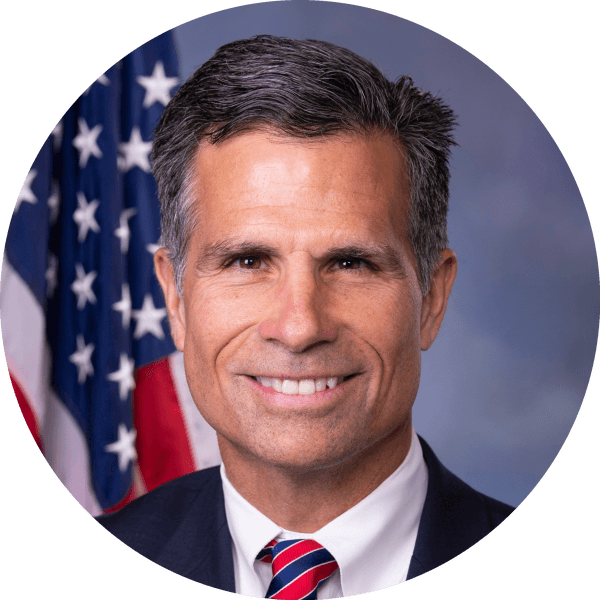
Daniel Meuser
Republican · PA

Mike Collins
Republican · GA

Andrew Ogles
Republican · TN
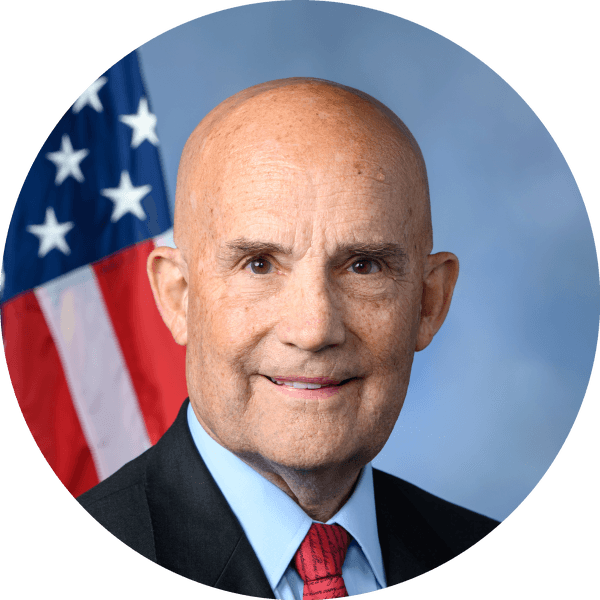
Keith Self
Republican · TX
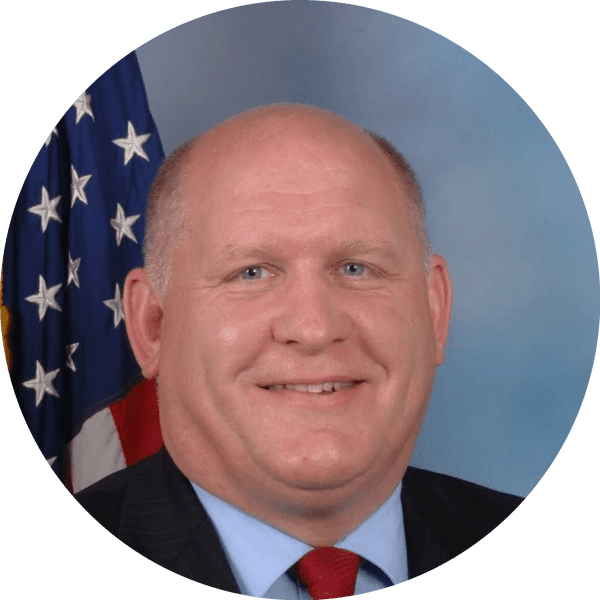
Glenn Thompson
Republican · PA

Brandon Gill
Republican · TX

Robert Aderholt
Republican · AL

Scott Perry
Republican · PA

Elijah Crane
Republican · AZ

Ben Cline
Republican · VA

Pete Sessions
Republican · TX

Rick Allen
Republican · GA
Cosponsor Coverage Map
Committee Sponsors
Oversight and Government Reform Committee
19 of 47 committee members cosponsored


7 Republicans across this committee haven't cosponsored yet. Mobilize their constituents
H.R. 2126 Quick Facts
- Committee
- Oversight and Government Reform
- Chamber
- House
- Policy
- Government Operations and Politics
- Introduced
- Mar 14, 2025
Referred to the House Committee on Oversight and Government Reform.
Mar 14, 2025
Official Sources
Official bill page with text, status, actions, and the full list of 107 cosponsors for H.R. 2126.
The 2022 order that made project labor agreements the default on federal construction projects of $35 million or more, the policy H.R. 2126 would replace with a neutrality rule.
The current contracting rule that carries out the 2022 order, including the $35 million threshold and exceptions, and the text H.R. 2126 would force agencies to rewrite.
The December 2023 final rule, effective January 22, 2024, that wrote the project labor agreement mandate into federal contracting rules.
The part of the Federal Acquisition Regulation covering labor laws in federal contracting, where the bill's neutrality rule would land.
H.R. 2126 requires the Federal Acquisition Regulation to be revised within 60 days of enactment to reflect its requirements.
The House committee where H.R. 2126 has been pending since its referral in March 2025.
H.R. 2126 Common Questions
What is H.R. 2126, the Fair and Open Competition Act?
It's a House bill that would bar federal agencies from requiring or prohibiting union agreements on construction projects they fund or award. Contractors decide for themselves whether to sign one.
Would H.R. 2126 ban project labor agreements?
No. Contractors could still sign project labor agreements voluntarily. What the bill blocks is an agency making one a condition of the job, or forbidding one.
How is this different from current federal policy?
A 2022 executive order made project labor agreements the default on federal construction projects of $35 million or more. H.R. 2126 would replace that approach with a neutrality rule in law, with no dollar threshold.
Does it cover state and local projects paid for with federal money?
Yes. Construction funded through federal grants, financial assistance, or cooperative agreements after enactment is covered, so a city building with federal transit or water dollars would follow the same rule.
Can a bidder be scored higher for already having a union agreement?
No. Agencies could not give preference to, or penalize, a bidder based on whether it has signed or refused to sign a labor agreement for the project or a related one.
What happens to projects already under a union agreement?
Contracts awarded before enactment aren't affected. For ongoing projects with union terms already in their documents and at least one contract awarded, the agency can grant an exemption to keep those terms.
Can an agency skip the rule to avoid a strike?
Not on that basis alone. Exemptions require an imminent threat to public health or safety or a national security need, and the bill says a possible labor dispute involving non-union workers doesn't qualify.
Who sponsored H.R. 2126, and has it passed?
Rep. Clay Higgins (R-LA) introduced it in March 2025 with 107 Republican cosponsors. It is in the House Oversight and Government Reform Committee and has not received a vote.
Based on H.R. 2126 bill text
H.R. 2126 Bill Text
“To preserve open competition and Federal Government neutrality towards the labor relations of Federal Government contractors on Federal and federally funded construction projects, and for other purposes.”
Source: U.S. Government Publishing Office
Get notified when H.R. 2126 moves
Committee votes, floor action, cosponsor changes — straight to your inbox.
Bill alerts + Legisletter's monthly briefing. Unsubscribe anytime.
Government Operations and Politics Bills
9 related bills we're tracking
Protect Our Letter Carriers Act of 2025





Referred to the Committee on the Judiciary, and in addition to the Committee on Oversight and Government Reform, for a period to be subsequently determined by the Speaker, in each case for consideration of such provisions as fall within the jurisdiction of the committee concerned.
Feb 6, 2025
John R. Lewis Voting Rights Advancement Act of 2025



Referred to the House Committee on the Judiciary.
Mar 5, 2025
Washington, D.C. Admission Act


Referred to the Committee on Oversight and Government Reform, and in addition to the Committees on Rules, Armed Services, the Judiciary, and Energy and Commerce, for a period to be subsequently determined by the Speaker, in each case for consideration of such provisions as fall within the jurisdiction of the committee concerned.
Jan 3, 2025
Rights for the TSA Workforce Act





Referred to the Subcommittee on Transportation and Maritime Security.
Mar 11, 2025
DISCLOSE Act of 2026



Referred to the Committee on House Administration, and in addition to the Committees on Ways and Means, and the Judiciary, for a period to be subsequently determined by the Speaker, in each case for consideration of such provisions as fall within the jurisdiction of the committee concerned.
Mar 4, 2026
Federal Retirement Fairness Act




ASSUMING FIRST SPONSORSHIP - Ms. Randall asked unanimous consent that she may hereafter be considered as the first sponsor of H.R. 1522, a bill originally introduced by Representative Connolly, for the purpose of adding cosponsors and requesting reprintings pursuant to clause 7 of rule XII. Agreed to without objection.
Jul 22, 2025
FIND Act




Referred to the House Committee on Oversight and Government Reform.
Jan 3, 2025
Fair Pay for Federal Contractors Act of 2025


Referred to the Committee on Appropriations, and in addition to the Committee on Oversight and Government Reform, for a period to be subsequently determined by the Speaker, in each case for consideration of such provisions as fall within the jurisdiction of the committee concerned.
Sep 30, 2025
Saving the Civil Service Act

ASSUMING FIRST SPONSORSHIP - Mr. Walkinshaw asked unanimous consent that he may hereafter be considered as the first sponsor of H.R. 492, a bill originally introduced by Representative Connolly, for the purpose of adding cosponsors and requesting reprintings pursuant to clause 7 of rule XII. Agreed to without objection.
Sep 16, 2025
Trending Right Now
Bills gaining momentum across Congress
ASAP Act



Ordered to be Reported in the Nature of a Substitute by the Yeas and Nays: 40 - 0.
Sep 16, 2026
Fit to Serve Act





Referred to the House Committee on Armed Services.
May 21, 2025
America’s Olympic and Paralympic Games Commemorative Coins Act





Referred to the House Committee on Financial Services.
Jul 14, 2025
Tracking Government Operations and Politics in Congress? Monitor bills, track cosponsor momentum, and launch advocacy campaigns — all from one advocacy platform.