S. 836: Children and Teens’ Online Privacy Protection Act

Sponsor
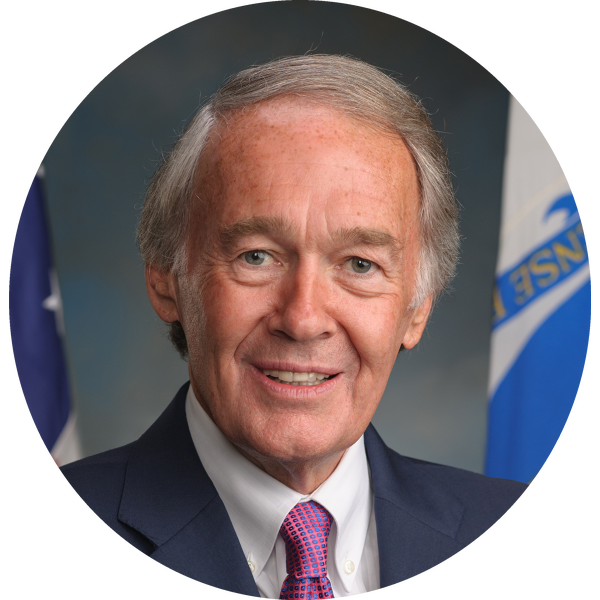
Edward Markey
Democrat · MA
Bill Progress
Latest Action · Mar 5, 2026
Passed the Senate, received in House
Why it matters
The bill would update federal online privacy law to cover not just children under 13, but also teens age 13 through 16, while adding new limits on targeted advertising, overseas data storage notices, and data retention.
S. 836 would significantly widen federal online privacy protections by extending them to "teens," defined here as people who have attained age 13 and are under age 17. That means the bill covers two groups: children already protected under existing youth privacy law and teens age 13 through 16 who have often fallen into a gray area. The bill also broadens what counts as personal information, including not just names, addresses, phone numbers, and Social Security numbers, but also persistent identifiers like IP addresses and device IDs, geolocation information precise enough to identify a street name and city or town, photos, videos, audio files, biometric data such as fingerprints, iris or retina scans, facial templates, DNA, and gait, plus information linked or linkable to a child, teen, or parent.
The bill takes direct aim at behavior-based ad targeting. It would make it unlawful for operators to collect personal information from children or teens in violation of FTC regulations, and it bars collection for "individual-specific advertising to children or teens" unless specifically authorized by law or consistent with the transaction or service requested. That advertising category is defined broadly: marketing to a specific child or teen, or their device, based on personal information, profiling, or unique device identifiers. But it does carve out exclusions for responses to specific user requests like search queries, contextual advertising, ad performance measurement and reporting, and ads directed to an adult profile on a shared household device.
The bill also creates new rights for teens and for parents of children. They could ask companies for a description of the data collected and the methods and purposes of collection, demand deletion of personal information or submitted content, challenge inaccurate information and have it corrected, and get a copy of collected information if available. Companies also could not retain personal information longer than reasonably necessary to complete a transaction or provide a service, and they would have to maintain reasonable security practices to protect data confidentiality, integrity, and accessibility. If data is stored or transferred outside the United States, operators must give direct notice to parents in the case of children or to the teens themselves.
Enforcement would hinge on whether a company had "actual knowledge or knowledge fairly implied on the basis of objective circumstances" that a user was a child or teen. Congress is telling the Federal Trade Commission to clarify that standard fast: the FTC must issue guidance within 180 days of enactment. The bill also sets a reporting schedule that would keep pressure on regulators. The FTC must submit an enforcement report 1 year after enactment and annually after that, plus an oversight report 3 years after enactment on how platforms ensure compliance for apps directed to children. The Government Accountability Office must separately report to Congress 1 year after enactment on privacy and mental health issues involving teens using financial technology products. State laws would only be displaced where they conflict with this federal law, and states would still be free to adopt stronger protections.
What does S. 836 do?
Protections expanded to teens age 13-16
The bill defines a "teen" as someone who has attained age 13 and is under age 17, extending federal privacy protections beyond younger children to cover users age 13 through 16.
Targeted ads to minors sharply limited
Operators may not collect personal information from children or teens for "individual-specific advertising" unless specifically authorized by law or consistent with the transaction or service. The bill defines this as marketing aimed at a specific child or teen, or their device, using personal information, profiling, or unique device identifiers, while excluding contextual ads, search-query responses, performance measurement, and ads aimed at an adult profile on a shared device.
Personal information definition greatly broadened
The bill covers traditional identifiers like name, address, email, phone number, and Social Security number, but also persistent identifiers such as IP addresses and device serial numbers, geolocation data precise enough to identify a street name and city or town, and biometric data including fingerprints, voice prints, iris or retina scans, facial templates, DNA, and gait.
Teens and parents get deletion and correction rights
Teens, and parents of children, would have the right to request a description of the data collected and how and why it was collected, delete personal information or submitted content, challenge accuracy and have information corrected, and obtain a copy of collected information if available.
Overseas storage notice and shorter retention
Companies must provide direct notice to parents of children, or to teens themselves, if personal information is stored or transferred outside the United States. They also may not retain personal information longer than reasonably necessary to complete a transaction or provide a service.
FTC guidance due in 180 days
The Federal Trade Commission must issue guidance within 180 days of enactment explaining the standard for when an operator has "actual knowledge or knowledge fairly implied on the basis of objective circumstances" that a user is a child or teen. The FTC must also report on enforcement 1 year after enactment and annually thereafter, with a separate oversight report due 3 years after enactment.
Who benefits from S. 836?
Teens age 13 through 16
This group gains federal privacy rights they often have not had before, including the right to learn what data is being collected, delete it, correct it, and receive direct notice if their data is stored or transferred outside the United States.
Parents of children
Parents get stronger control over children's data, including rights to request descriptions of collection practices, seek deletion, challenge inaccurate information, and receive direct notice when a child's data is stored or transferred abroad.
Students in schools using ed-tech
The bill allows operators working under written agreements with educational agencies or institutions to use student data without individual verifiable consent only if data use is limited to educational purposes and the school gets specific notices and review mechanisms.
States with stronger privacy laws
States benefit because the bill only preempts state law where there is a conflict, meaning states can still pass or keep laws that provide greater protection than the federal baseline.
Who is affected by S. 836?
App developers, websites, and online services
Any commercial operator in interstate or foreign commerce that runs a website, online service, online application, or mobile application and collects or maintains personal information would face new compliance duties, unless it is a nonprofit exempt under Section 5 of the FTC Act.
Advertising and ad-tech companies
Companies that rely on persistent identifiers like IP addresses, unique device IDs, or cookie customer numbers to profile users would face tighter limits when the user is a child or a teen age 13 through 16, especially for individual-specific advertising.
Schools and education technology vendors
Educational agencies, institutions, and vendors operating under written agreements would need to make sure data use is restricted to educational purposes and that institutions receive the required notice and review tools to qualify for the bill's consent exemption.
Federal regulators
The FTC must issue guidance within 180 days of enactment, submit an enforcement report 1 year after enactment and every year after that, and produce an oversight report 3 years after enactment. The GAO must deliver a separate study to Congress 1 year after enactment on teen privacy and mental health in financial technology products.
S. 836 Common Questions
Can apps use teens' data for targeted ads under S. 836?
No. Under the Children and Teens’ Online Privacy Protection Act, operators cannot collect personal information from children or teens for individual-specific advertising (Section 2(b)(2)).
What age counts as a teen under the Children and Teens’ Online Privacy Protection Act?
A teen is anyone age 13 through 16 under the Children and Teens’ Online Privacy Protection Act (Section 2(a)(6)).
Does S. 836 require notice before kids' or teens' data is transferred outside the United States?
Yes. According to S. 836 Section 2(b)(2), an operator must give direct notice to the parent of a child or to the teen before storing or transferring personal information outside the U.S.
Can teens delete or correct personal information collected by an app under S. 836?
Yes. Under the Children and Teens’ Online Privacy Protection Act, teens can request deletion, challenge accuracy, and have inaccurate information corrected; parents get those rights for children (Section 2(b)(3)).
Which types of data count as personal information for kids and teens under S. 836?
S. 836 includes persistent identifiers, geolocation, photos, videos, audio with a voice, and biometric data like fingerprints, DNA, and gait as personal information (Section 2(a)(3)).
Does S. 836 apply to mobile apps and online applications, not just websites?
Yes. Under the Children and Teens’ Online Privacy Protection Act, an operator includes those running websites, online services, online applications, and mobile applications (Section 2(a)(1)).
Can a website be liable if third parties collect kids' data on its platform under S. 836?
Yes. Under S. 836, an operator includes a company that allows others to collect or maintain personal information, or allows public disclosure of it, on its service (Section 2(a)(1)).
Is parental consent still required for children and teen consent required for teens under S. 836?
Yes. According to S. 836 Section 2(b)(3), operators need verifiable parental consent for children and verifiable consent from the teen for teens before collecting, using, or disclosing personal information.
Can companies keep kids' or teens' personal data forever under the Children and Teens’ Online Privacy Protection Act?
No. Under the Children and Teens’ Online Privacy Protection Act, operators may not retain personal information longer than reasonably necessary to provide the requested service (Section 2(b)(2)).
How soon does the FTC have to explain when a company should know a user is a teen under S. 836?
Within 180 days of enactment. S. 836 requires FTC guidance on when knowledge is 'fairly implied on the basis of objective circumstances' (Section 2(e)(3)).
Based on S. 836 bill text
S836 Legislative Journey
Passed 860-869
Mar 5, 2026
Passed Senate with amendments by Unanimous Consent. (consideration: CR S860-869; text: CR S861-868)
+1 more action this day
Committee Action
Jan 27, 2026
Committee on Commerce, Science, and Transportation. Reported by Senator Cruz with amendments. With written report No. 119-99.
Passed Committee
Jun 25, 2025
Committee on Commerce, Science, and Transportation. Ordered to be reported with amendments favorably.
Committee Action
Mar 4, 2025
Read twice and referred to the Committee on Commerce, Science, and Transportation.
About the Sponsor
Edward Markey
Democrat, MA · 49 years in Congress
Committees: Small Business and Entrepreneurship, Commerce, Science, and Transportation, Environment and Public Works
View full profile →
Cosponsors (21)
This bill has 21 cosponsors: 13 Democrats, 7 Republicans, 1 Independent, reflecting bipartisan support. Cosponsors represent 19 states: Alabama, Arizona, Connecticut, and 16 more.
Bill Cassidy
Republican · LA
Maria Cantwell
Democrat · WA
Brian Schatz
Democrat · HI
Shelley Capito
Republican · WV
Amy Klobuchar
Democrat · MN
Mike Crapo
Republican · ID
Ron Wyden
Democrat · OR
Chuck Grassley
Republican · IA
Ben Luján
Democrat · NM
Richard Blumenthal
Democrat · CT
Jeff Merkley
Democrat · OR
Peter Welch
Democrat · VT
Committee Sponsors
Commerce, Science, and Transportation Committee
6 of 28 committee members cosponsored
8 Democrats across this committee haven't cosponsored yet. Mobilize their constituents
S. 836 Quick Facts
- Committee
- Commerce, Science, and Transportation
- Chamber
- Senate
- Policy
- Commerce
- Introduced
- Mar 4, 2025
Passed the Senate, received in House
Mar 5, 2026
Who is lobbying on S. 836?
38 organizations lobbying on this bill
ENTERTAINMENT SOFTWARE ASSOCIATION | 20 |
AMERICAN ASSOCIATION FOR JUSTICE | 10 |
AMERICAN ADVERTISING FEDERATION | 8 |
SNAP INC. | 8 |
ENTERTAINMENT SOFTWARE ASSOCIATION | 8 |
DROPBOX, INC. | 8 |
REDDIT, INC. | 8 |
ROBLOX CORPORATION | 8 |
NEWS MEDIA ALLIANCE | 7 |
GOOGLE CLIENT SERVICES LLC | 7 |
Showing 1-10 of 38 organizations
S. 836 Bill Text
“To amend the Children’s Online Privacy Protection Act of 1998 to strengthen protections relating to the online collection, use, and disclosure of personal information of children and teens, and for other purposes.”
Source: U.S. Government Publishing Office
Get notified when S. 836 moves
Committee votes, floor action, cosponsor changes — straight to your inbox.
Bill alerts + Legisletter's monthly briefing. Unsubscribe anytime.
Commerce Bills
4 related bills we're tracking
Made in America Manufacturing Finance Act
Read twice. Placed on Senate Legislative Calendar under General Orders. Calendar No. 283.
Dec 4, 2025
App Store Accountability Act
Forwarded by Subcommittee to Full Committee (Amended) by Voice Vote.
Dec 11, 2025
SBA Fraud Enforcement Extension Act
Received in the Senate. Read twice. Placed on Senate Legislative Calendar under General Orders. Calendar No. 281.
Dec 2, 2025
Small Business Innovation and Economic Security Act
Held at the desk.
Mar 4, 2026
Trending Right Now
Bills gaining momentum across Congress
Federal Extreme Risk Protection Order Act of 2026
Referred to the House Committee on the Judiciary.
Feb 17, 2026
ALERT Act
Referred to the Committee on Transportation and Infrastructure, and in addition to the Committee on Armed Services, for a period to be subsequently determined by the Speaker, in each case for consideration of such provisions as fall within the jurisdiction of the committee concerned.
Feb 20, 2026
Fair Housing for Survivors Act of 2026
Referred to the House Committee on the Judiciary.
Mar 5, 2026
Tracking Commerce in Congress? Monitor bills, track cosponsor momentum, and launch advocacy campaigns — all from one advocacy platform.