H.R. 3597: Protecting Circuit Boards and Substrates Act
Sponsor

Blake Moore
Republican · UT-1
Congress bets $3 billion on American-made circuit boards
Why it matters
H.R. 3597 would put $3 billion behind moving printed circuit board production into the United States, and add a 25% tax credit for companies that buy American-made boards and substrates starting in 2026. Individual awards run up to $300 million per project — more if the President tells Congress a bigger one is needed for national security.
H.R. 3597 works on two fronts. First, a tax credit: companies that buy printed circuit boards and integrated circuit substrates fabricated in the United States could claim 25% of the cost back, on anything paid or incurred after December 31, 2025. It folds into the general business credit, so it's claimed like other manufacturing incentives.
Second, a grant program run by the Commerce Department. It authorizes $3 billion for fiscal year 2026 — money that stays available all the way through 2065 — to help companies build, expand, or modernize U.S. board and substrate facilities, fund research, and train workers. Any single project is capped at $300 million unless the President notifies Congress that a larger award is needed for national security or economic competitiveness.
The program comes with strings. Applicants generally have to show a workable plan, commitments to worker and community investment, and partnerships with training providers — though small businesses are exempt from the workforce and education requirements. Foreign entities of concern are barred outright, and no program funds can go to them.
Accountability runs through the back end. Commerce must set start and completion dates for each project, and missing them triggers progressive clawbacks. If a recipient knowingly enters joint research or technology licensing with a foreign entity of concern on national-security-relevant technology, the Secretary can recover the full award. Any delay waiver has to be reported to Congress within 15 days, and the Government Accountability Office reviews the program two years after the first award, then every two years for a decade.
Bill Progress
Latest Action · May 23, 2025
Referred to Ways and Means, and in addition to the Committees on Energy and Commerce, and Science, Space, and Technology, for a period to be subsequently determined by the Speaker, in each case for consideration of such provisions as fall within the jurisdiction of the committee concerned. for review
H.R. 3597 Bill Summary
What H.R. 3597 actually does.
Buy American-made boards, get 25% back
The bill creates a tax credit worth 25% of the cost a company pays to purchase or acquire printed circuit boards and integrated circuit substrates fabricated in the United States. It applies to amounts paid or incurred after December 31, 2025, and is claimed as part of the general business credit.
$3 billion to build the factories — available through 2065
The bill authorizes $3 billion for fiscal year 2026, with funds remaining available through fiscal year 2065, for a Commerce-run program that helps companies construct, expand, or modernize U.S. board and substrate facilities, fund research and development, and pay for workforce training.
$300 million per-project cap, unless the President steps in
No single award can exceed $300 million unless the Secretary of Commerce, after consulting the Secretary of Defense and the Director of National Intelligence, recommends a larger one and the President notifies Congress that it's necessary for national security and to expand the domestic supply of boards and substrates.
Foreign entities of concern are locked out
The Secretary can't approve an application from a foreign entity of concern, and no program funds may go to one. Recipients also risk losing their full award if they knowingly enter joint research or technology licensing with such an entity on technology that raises national security concerns.
Lighter rules for small businesses
Applicants usually have to show a sustainable plan, worker and community investment commitments, and partnerships with training or educational institutions. Small businesses are exempt from the worker/community investment and education commitment requirements, and the bill gives preference to small, minority-owned, women-owned, and veteran-owned businesses.
Clawbacks, 15-day reports, and a decade of GAO reviews
Commerce sets target dates for each project to start and finish, and missing them triggers progressive recovery of the award. Any delay waiver must be reported to Congress within 15 days with the reason, duration, and recipient's name. The Government Accountability Office reviews the program two years after the first award, then every two years for ten years.
Who benefits from H.R. 3597?
U.S. manufacturers that buy domestic boards and substrates
Any company that buys printed circuit boards or integrated circuit substrates fabricated in the United States could claim 25% of that cost as a tax credit, for purchases made after December 31, 2025.
Companies building or upgrading U.S. board facilities
Firms able to finance, build, expand, or modernize domestic board and substrate plants could compete for direct federal awards from the $3 billion program — covering construction, modernization, workforce training, real property concessions, and research.
Small, minority-owned, women-owned, and veteran-owned businesses
These businesses get preference when Commerce reviews applications, and small businesses also skip the worker/community investment and education commitment requirements that larger applicants must meet.
Colleges, training providers, and disadvantaged workers
The bill favors projects partnered with historically Black colleges, Hispanic-serving institutions, Tribal Colleges, rural-serving schools, or providers offering stackable, portable credentials — and requires many applicants to fund training and job placement for economically disadvantaged workers.
Who is affected by H.R. 3597?
Foreign entities of concern
They are barred from receiving any program funds, and the Secretary can't approve their applications. Recipients that knowingly do joint research or technology licensing with them on national-security-relevant technology risk losing their entire award.
Award recipients that miss their deadlines
Companies that don't start and complete projects by the dates Commerce sets face progressive clawbacks of their award, unless the Secretary formally determines the delay was beyond their control and reports the waiver to Congress within 15 days.
The Commerce Department and other federal agencies
Commerce runs the program and the Treasury administers the tax credit, but the bill requires coordination with Defense, State, Energy, the intelligence community, the SBA, NIST, CISA, and Treasury's foreign-assets office — plus recurring oversight by the Government Accountability Office.
States, territories, D.C., and Tribal governments
The bill defines "State" to include the 50 states, D.C., commonwealths, territories, possessions, and federally recognized Tribes — so projects in any of those places can fit into the incentive structure.
Cost & Funding
Authorization
$3,000,000,000
- Authorized for fiscal year 2026, with funds remaining available through fiscal year 2065.
- Authorization is not the same as appropriation — Congress would still have to fund the program through the spending process.
- The 25% tax credit is separate and would reduce federal revenue based on qualifying purchases; the bill does not set a total cap on the credit.
- Individual awards are capped at $300 million unless the President notifies Congress that a larger one is necessary for national security or economic competitiveness.
HR3597 Legislative Journey
House: Committee Action
May 23, 2025
Referred to the Committee on Ways and Means, and in addition to the Committees on Energy and Commerce, and Science, Space, and Technology, for a period to be subsequently determined by the Speaker, in each case for consideration of such provisions as fall within the jurisdiction of the committee concerned.
About the Sponsor
Blake Moore
Republican, Utah's 1st congressional district · 5 years in Congress
Committees: the Budget, Ways and Means
View full profile →
Cosponsors (25)
This bill has 25 cosponsors: 12 Democrats, 13 Republicans, reflecting bipartisan support. Cosponsors represent 16 states: Alabama, California, Colorado, and 13 more.

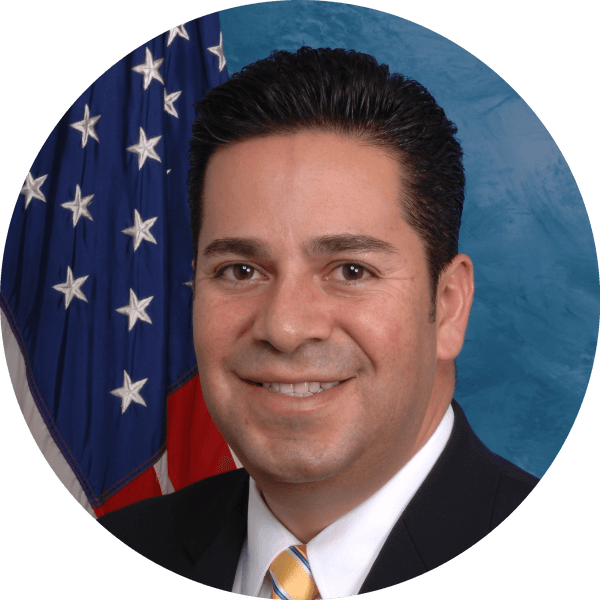
Raja Krishnamoorthi
Democrat · IL

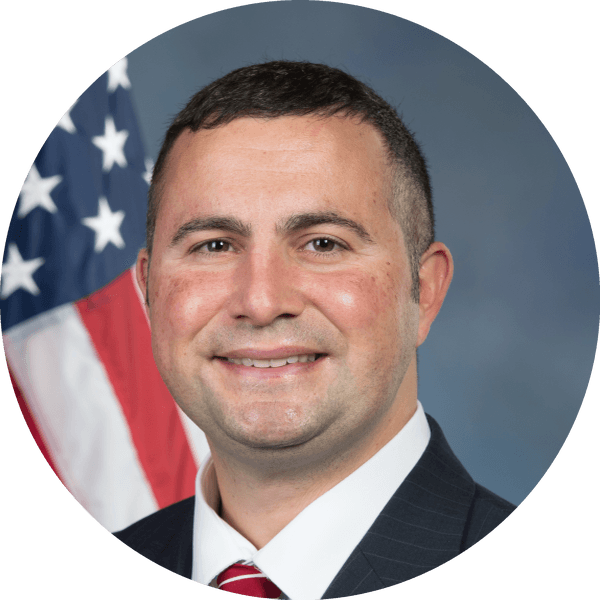
Donald Davis
Democrat · NC

Eugene Vindman
Democrat · VA

Seth Magaziner
Democrat · RI
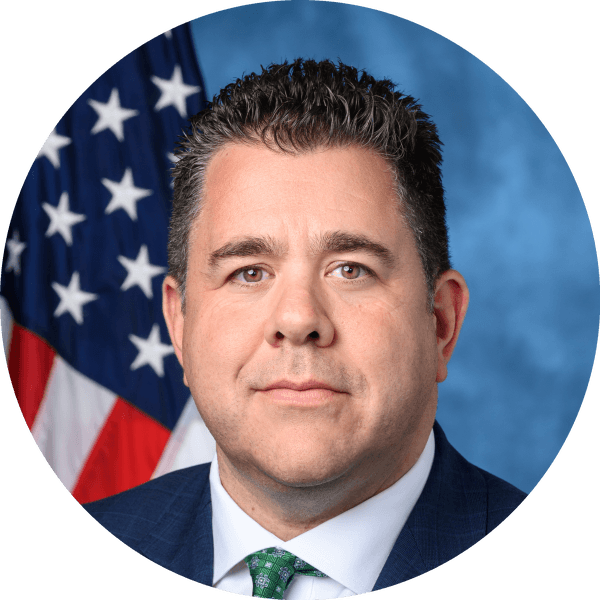
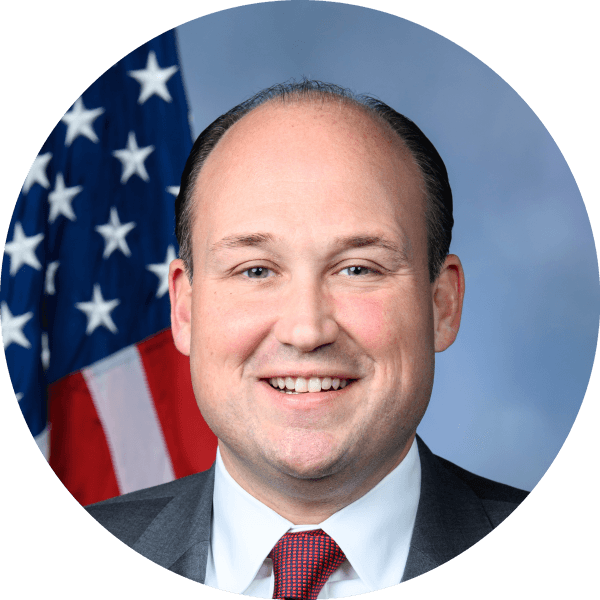
Nick LaLota
Republican · NY

Suhas Subramanyam
Democrat · VA
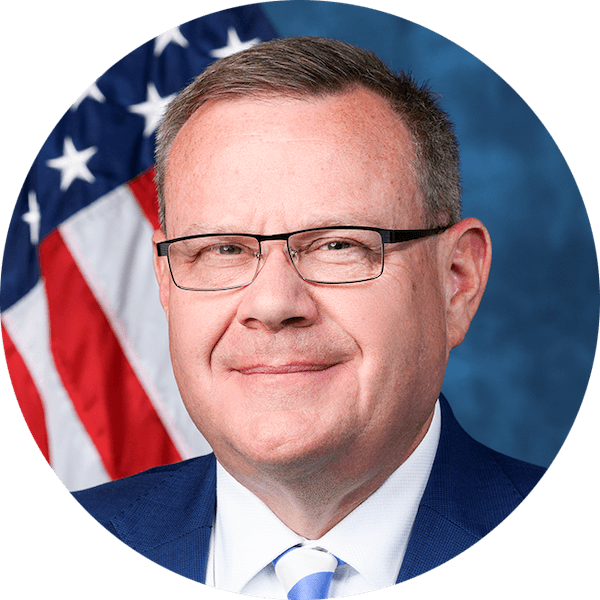
Tim Moore
Republican · NC

Pat Harrigan
Republican · NC

Joe Neguse
Democrat · CO

Jack Bergman
Republican · MI

James Moylan
Republican · GU
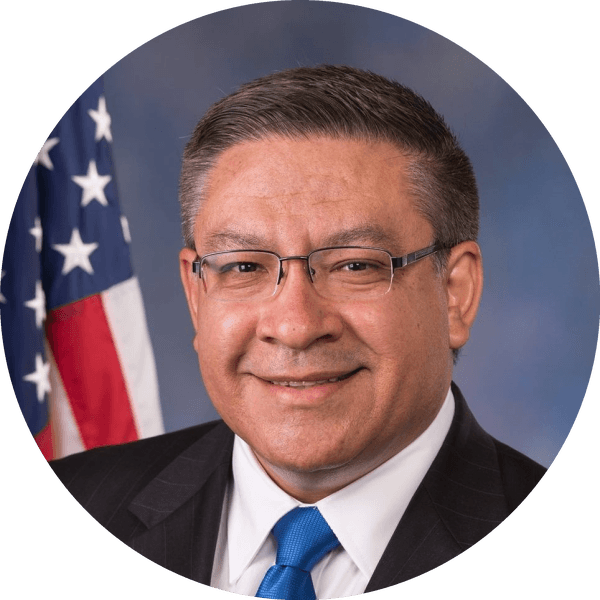
Salud Carbajal
Democrat · CA
Committee Sponsors
Science, Space, and Technology Committee
3 of 40 committee members cosponsored


Energy and Commerce Committee
0 of 54 committee members cosponsored
No committee members have cosponsored this bill
Ways and Means Committee
0 of 45 committee members cosponsored
No committee members have cosponsored this bill
74 Republicans across these committees haven't cosponsored yet. Mobilize their constituents
H.R. 3597 Quick Facts
- Committee
- Science, Space, and Technology
- Chamber
- House
- Policy
- Commerce
- Introduced
- May 23, 2025
Referred to Ways and Means, and in addition to the Committees on Energy and Commerce, and Science, Space, and Technology, for a period to be subsequently determined by the Speaker, in each case for consideration of such provisions as fall within the jurisdiction of the committee concerned. for review
May 23, 2025
Official Sources
Official legislative page for the Protecting Circuit Boards and Substrates Act, including text, status, and sponsors.
The bill creates a Commerce-run incentive program for domestic electronics manufacturing, mirroring the CHIPS for America structure that Commerce administers through NIST.
Section 2 adds the new printed circuit board credit to the general business credit under Internal Revenue Code section 38, so IRS guidance on the general business credit is directly relevant.
The bill adopts the definition of 'foreign entity of concern' from 15 U.S.C. 4651, the statute that governs who is barred from receiving program funds.
Official text of the William M. (Mac) Thornberry National Defense Authorization Act for FY2021, where the bill's 'foreign entity' and 'foreign entity of concern' definitions originate.
The bill uses the Small Business Act definition of small business, so SBA size standards help explain which firms qualify for the workforce exceptions and award preferences.
H.R. 3597 Common Questions
How big is the circuit board tax credit in H.R. 3597?
It's worth 25% of what a company pays to buy printed circuit boards or integrated circuit substrates fabricated in the United States. The credit folds into the general business credit and is claimed like other manufacturing incentives.
When does the H.R. 3597 tax credit start?
It applies to amounts paid or incurred after December 31, 2025 — so purchases made in 2026 and later would qualify.
How much money does H.R. 3597 put toward U.S. circuit board manufacturing?
The bill authorizes $3 billion for fiscal year 2026 for a Commerce-run incentive program, and that money would stay available all the way through fiscal year 2065. Authorizing it isn't the same as funding it — appropriators would still have to release the cash.
What's the biggest award a single project can get under H.R. 3597?
A single project is capped at $300 million. It can go higher only if the Secretary of Commerce recommends it and the President notifies Congress that a larger award is needed for national security.
Can a company lose its funding for working with a foreign entity of concern?
Yes. If a recipient knowingly enters joint research or technology licensing with a foreign entity of concern on technology that raises national security concerns, Commerce can recover the entire award.
Does H.R. 3597 claw back money if a project misses its deadlines?
Yes. Commerce sets target dates for each project to start and finish, and missing them triggers progressive recovery of the award — unless the Secretary formally finds the delay was beyond the company's control and reports the waiver to Congress within 15 days.
Do small businesses get a break on H.R. 3597's requirements?
Yes. Small businesses are exempt from the worker and community investment requirement and the education/training commitment that larger applicants must meet. The bill also gives small, minority-owned, women-owned, and veteran-owned businesses preference for awards.
Can foreign entities of concern get money under H.R. 3597?
No. The bill bars Commerce from approving their applications, and says none of the program's funds can go to a foreign entity of concern.
Based on H.R. 3597 bill text
H.R. 3597 Bill Text
“To provide incentives for the domestic production of printed circuit boards, and for other purposes.”
Source: U.S. Government Publishing Office
Get notified when H.R. 3597 moves
Committee votes, floor action, cosponsor changes — straight to your inbox.
Bill alerts + Legisletter's monthly briefing. Unsubscribe anytime.
Commerce Bills
9 related bills we're tracking
Therapeutic Fraud Prevention Act of 2025




Referred to the House Committee on Energy and Commerce.
May 7, 2025
Algorithmic Accountability Act of 2025





Referred to the House Committee on Energy and Commerce.
Sep 19, 2025
Children and Teens’ Online Privacy Protection Act




Held at the desk.
Mar 16, 2026
Competition and Antitrust Law Enforcement Reform Act of 2025




Read twice and referred to the Committee on the Judiciary.
Jan 16, 2025
NO FAKES Act of 2025



Read twice and referred to the Committee on the Judiciary.
Apr 9, 2025
Made in America Manufacturing Finance Act



Committee on Small Business and Entrepreneurship. Hearings held.
May 13, 2026
Antitrust Accountability and Transparency Act

Read twice and referred to the Committee on the Judiciary.
Mar 17, 2026
Algorithmic Accountability Act of 2025



Read twice and referred to the Committee on Commerce, Science, and Transportation.
Jun 25, 2025
App Store Freedom Act



Referred to the House Committee on Energy and Commerce.
May 6, 2025
Trending Right Now
Bills gaining momentum across Congress
America’s Olympic and Paralympic Games Commemorative Coins Act



Referred to the House Committee on Financial Services.
Jul 14, 2025
Fit to Serve Act



Referred to the House Committee on Armed Services.
May 21, 2025
ASAP Act





Ordered to be Reported in the Nature of a Substitute by the Yeas and Nays: 40 - 0.
Sep 16, 2026
Tracking Commerce in Congress? Monitor bills, track cosponsor momentum, and launch advocacy campaigns — all from one advocacy platform.