Mr. Speaker, I urge my colleagues to support H.R. 3174 that supports American manufacturing, and I reserve the balance of my time.
H.R. 3174: Made in America Manufacturing Finance Act
Introduced May 1, 202512 cosponsors
Sponsor
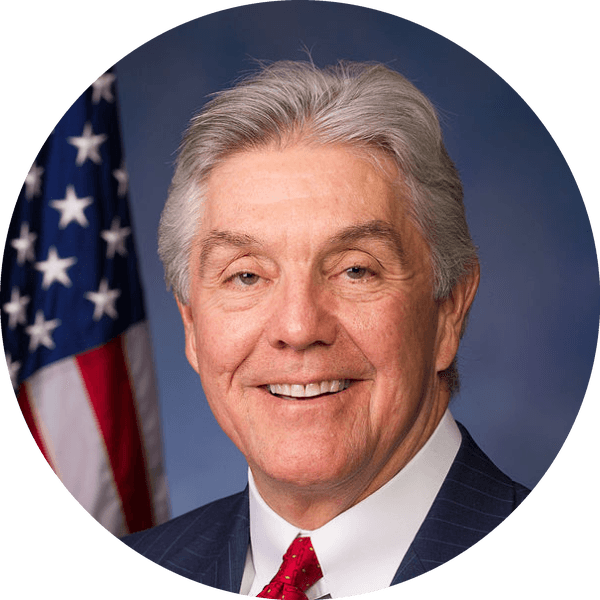
Roger Williams
Republican · TX-25
U.S. factories could borrow double — if every plant stays home
4 min readLast updated May 29, 2026
Why it matters
Small manufacturers can borrow up to $3.75 million through a government-backed SBA loan today. H.R. 3174 would double that to $7.5 million — and up to $9 million for exporters — but only for factories whose production stays entirely on U.S. soil. The bill cleared the House by voice vote in December and now sits on the Senate calendar.
H.R. 3174, the Made in America Manufacturing Finance Act, raises how much a small manufacturer can borrow through the SBA's loan-guarantee programs. The SBA doesn't hand out the cash itself — it backs a portion of loans made by banks, which makes lenders more willing to write them. The bill roughly doubles the cap on those guarantees for factories.
For the standard 7(a) loan, the guarantee limit goes from $3.75 million to $7.5 million. For factories that export, it climbs to $9 million, with up to $8 million of that available for working capital and supplies. The 504 program, which finances big fixed assets like buildings and machinery, jumps from $5.5 million to $10 million.
There's a catch built into the definition. To qualify, a business has to be a manufacturer — classified in one of the federal government's manufacturing industry codes — and every one of its production facilities has to be inside the United States. A company that runs even one plant abroad doesn't make the cut.
Supporters frame it as a financing lever for bringing production back home. SBA leadership cheered the House vote as a pro-growth move, and the bill's backers argue cheaper, larger loans will unlock investment in equipment and factory expansions. The change lands as small-business bankruptcies have been climbing and both parties talk about rebuilding fragile supply chains.
The open question is what bigger loans actually buy. Cheaper credit doesn't fix the slow permitting, power-grid constraints, and worker shortages that hold up factory projects, so companies could borrow more without breaking ground any faster. Because the loans carry a federal guarantee, taxpayers are on the hook if more of these larger deals default — and the bill adds no new rules for how lenders underwrite them.
Bill Progress
IntroducedMay 1
Committee
Pass HouseDec 1
Pass Senate
Signed
Law
Latest Action · May 13, 2026
1/2
Passed the House, received in Senate
Visual Summary
H.R. 3174 at a Glance
<div style="max-width:100%;">
  <img src="https://legisletter.org/images/bill-infographics/hr3174-made-manufacturing-finance-act.jpeg" alt="HR3174 Visual Summary - Made in America Manufacturing Finance Act" style="max-width:100%;height:auto;display:block;" />
  <p style="margin:8px 0 0;font-size:14px;color:#555;text-align:center;">
    <a href="https://legisletter.org/bill/hr3174-made-manufacturing-finance-act" target="_blank" rel="noopener noreferrer" style="color:inherit;text-decoration:underline;">HR3174 Visual Summary – Made in America Manufacturing Finance Act</a>
    <span> via </span>
    <a href="https://legisletter.org" target="_blank" rel="noopener noreferrer" style="color:inherit;text-decoration:none;font-weight:500;">legisletter.org</a>
  </p>
</div>H.R. 3174 Bill Summary
What H.R. 3174 actually does.
1
Doubles the standard SBA loan a factory can get
Qualifying small manufacturers can borrow up to $7.5 million through the SBA's 7(a) program, up from the usual $3.75 million ceiling. That extra room is meant to cover bigger machines, building expansions, or working capital.
2
Lifts the cap higher for exporters
Factories borrowing for export purposes can access up to $9 million in 7(a) financing, up from $4.5 million, with as much as $8 million of that earmarked for working capital and supplies.
3
Raises the 504 limit for buildings and equipment to $10 million
The SBA's 504 program, which finances major fixed assets like new facilities and heavy machinery, increases from $5.5 million to $10 million for small manufacturers.
4
Defines a 'small manufacturer' as fully made in America
To unlock the higher caps, a business has to be classified in a federal manufacturing industry code and keep all of its production facilities inside the United States. One plant abroad disqualifies it.
Who benefits from H.R. 3174?
Small U.S. factories ready to expand
Manufacturers that are capital-intensive enough to need a large loan but still small enough to qualify under SBA rules gain the most. Doubling their borrowing ceiling can be the difference between taking on a big new order and turning it down for lack of equipment.
Small manufacturers that sell overseas
Exporting factories get the highest cap — up to $9 million — which can fund larger production runs and the supplies needed to ship abroad. A federal guarantee on that much credit makes lenders more willing to back export deals.
Banks and lenders that originate SBA loans
With a bigger slice of each loan guaranteed by the government, lenders can write larger, higher-dollar deals to manufacturers with less of their own money at risk. That can mean more loans and bigger ones.
Who is affected by H.R. 3174?
Manufacturers with any production overseas
A factory that runs even one plant abroad falls outside the new definition and stays under the lower standard caps. To reach the higher limits, all production has to be in the United States.
Non-manufacturing small businesses
Service firms, retailers, and other small businesses keep the existing loan caps. The higher limits apply only to manufacturers, creating a gap in how much each type of business can borrow through the same SBA programs.
SBA loan administrators
The agency has to update its rules, forms, and systems to recognize the new 'small manufacturer' category and verify a borrower's industry code and that every production facility sits in the U.S. before applying the higher caps.
On the Record
What Congress Is Saying
12 legislators have weighed in on H.R. 3174 — 5 Democrats, 7 Republicans.
Mr. Speaker, I rise in strong support of my bill, H.R. 3174, the Made in America Manufacturing Finance Act. The ability to manufacture in the United States is vital to our country's economic and national security. However, for decades, America's policies have shipped good-paying manufacturing jobs overseas and opened the door for foreign adversaries to fill the void. We must reverse this trend which would require more than just luck. That is why the Trump administration has been championing progrowth and pro-American policies that are fueling a domestic manufacturing comeback.
H.R. 3174 also appeared in 4 more House floor references, 1 more Senate floor reference, and 4 routine cosponsor filings.
HR3174 Legislative Journey
Committee Action
May 13, 2026
Committee on Small Business and Entrepreneurship. Hearings held.
Action Taken
Dec 4, 2025
Read twice. Placed on Senate Legislative Calendar under General Orders. Calendar No. 283.
Committee Action
Dec 2, 2025
Received in the Senate and Read twice and referred to the Committee on Finance.
House: Vote Held
Dec 1, 2025
On motion to suspend the rules and pass the bill, as amended Agreed to by voice vote. (text: CR H4912)
House: Committee Action
Aug 15, 2025
Reported (Amended) by the Committee on Small Business. H. Rept. 119-224.
House: Vote Held
Jul 22, 2025
Ordered to be Reported (Amended) by Voice Vote.
House: Committee Action
May 1, 2025
Referred to the House Committee on Small Business.
About the Sponsor
Roger Williams
Republican, Texas's 25th congressional district · 13 years in Congress
Committees: Small Business, Financial Services
View full profile →
Cosponsors (12)
No new cosponsors in 462 days — momentum stalled
All 12 cosponsors are Republicans. Cosponsors represent 8 states: Georgia, Kansas, Minnesota, and 5 more.
12Republicans·8 states
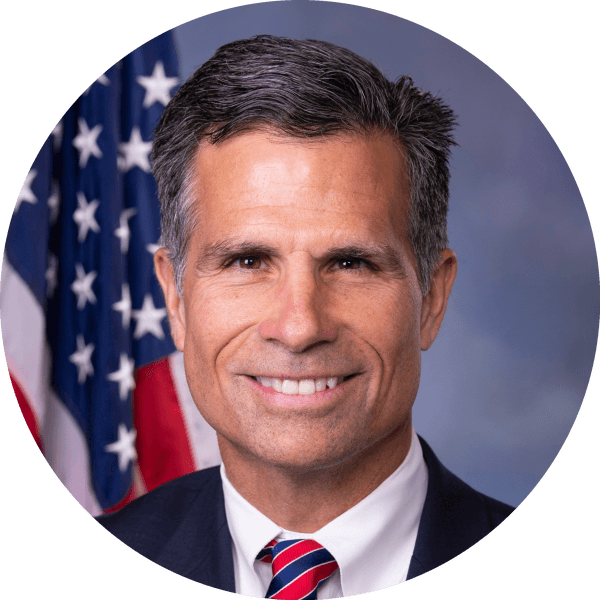
Daniel Meuser
Republican · PA

Nathaniel Moran
Republican · TX

Craig Goldman
Republican · TX
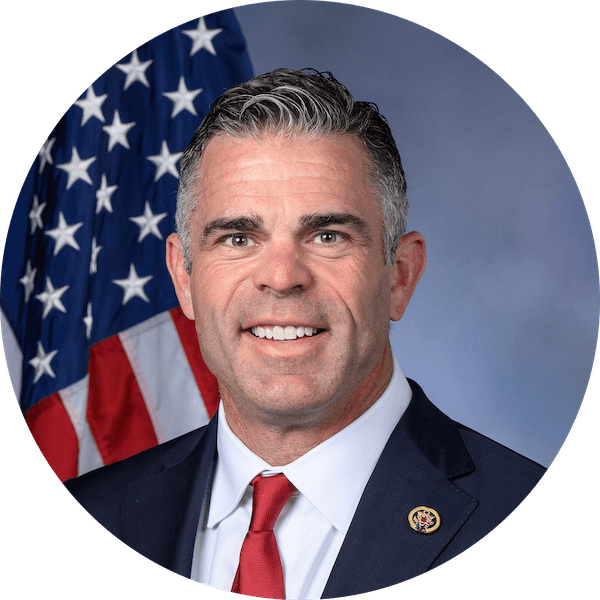
Tony Wied
Republican · WI

Troy Downing
Republican · MT

Brad Finstad
Republican · MN
Jake Ellzey
Republican · TX
Brian Jack
Republican · GA

Nick LaLota
Republican · NY

Kimberlyn King-Hinds
Republican · MP

Beth Van Duyne
Republican · TX

Derek Schmidt
Republican · KS
Committee Sponsors
Small Business and Entrepreneurship Committee
9D10R
|0 signed19 not yet0 of 19 committee members cosponsored
No committee members have cosponsored this bill
Finance Committee
12D14R1I
|0 signed27 not yet0 of 27 committee members cosponsored
No committee members have cosponsored this bill
Small Business Committee
12D14R
|8 signed18 not yet8 of 26 committee members cosponsored


28 Republicans across these committees haven't cosponsored yet. Mobilize their constituents
What laws does H.R. 3174 change?
5 key amendments · 5 total changes
Small Business Act, Section 3 (15 U.S.C. 632)
+
‘‘(gg) SMALL MANUFACTURER.—The term ‘small manufacturer’ means a small business concern—
‘‘(1) the primary business of which is classified in sector 31, 32, or 33 of the North American Industrial Classification System; and
‘‘(2) all of the production facilities of which are located in the United States.’’.
What this means: This creates a new statutory definition of “small manufacturer” limited to NAICS manufacturing sectors 31–33 whose production facilities are entirely in the United States.
Small Business Act, Section 7(a)(3)(A) (15 U.S.C. 636(a)(3)(A)) – introductory clause
−
‘‘if the total’’+
‘‘except as provided in subparagraph (B),’’ before ‘‘if the total’’What this means: This change makes clear that the general loan guarantee cap in subparagraph (A) is now subject to an exception laid out in subparagraph (B), setting up higher limits for certain borrowers such as small manufacturers.
Small Business Act, Section 7(a)(3)(A) (15 U.S.C. 636(a)(3)(A)) – guarantee cap structure
−
‘‘would exceed $3,750,000’’+
‘‘would exceed—
‘‘(i) $3,750,000’’
What this means: This restructures the existing single guarantee limit of $3,750,000 into clause (i) of a two‑tiered limit, paving the way for a higher cap for small manufacturers in clause (ii).
Small Business Act, Section 7(a)(3)(A) (15 U.S.C. 636(a)(3)(A)) – new higher cap for small manufacturers
−
‘‘, except as provided in subparagraph (B);’’+
‘‘; or’’ and the following new clause: ‘‘(ii) in the case of a borrower that is a small manufacturer, $7,500,000 (or if the gross loan amount would exceed $10,000,000);’’What this means: This authorizes SBA to guarantee up to $7,500,000 (or up to a $10,000,000 gross loan) specifically for small manufacturers, effectively doubling the standard 7(a) guarantee cap for that group.
Small Business Act, Section 7(a)(3)(B) (15 U.S.C. 636(a)(3)(B)) – export loan caps, including for small manufacturers
−
‘‘would exceed $4,500,000’’ and ‘‘section 7(a)(14) for export purposes; and’’+
‘‘would exceed—
‘‘(i) $4,500,000’’ and, in clause (i), ‘‘paragraph (14) for export purposes; or’’; and a new clause ‘‘(ii) in the case of a borrower that is a small manufacturer, $9,000,000 (or if the gross loan amount would exceed $10,000,000), of which not more than $8,000,000 may be u’’ [text continues]
What this means: This restructures the export loan guarantee cap and raises it for small manufacturers to $9,000,000 (with a $10,000,000 gross loan ceiling), significantly increasing SBA-backed export financing available to domestic manufacturers.
H.R. 3174 Quick Facts
Cosponsors
12
- Committee
- Small Business and Entrepreneurship
- Chamber
- House
- Policy
- Commerce
- Introduced
- May 1, 2025
Passed the House, received in Senate
May 13, 2026
Official Sources
Bill text and status (Congress.gov)
Official bill page with full text, actions, cosponsors, and related bills for the Made in America Manufacturing Finance Act
House Committee Report (H. Rept. 119-224)
House Small Business Committee report explaining the bill's purpose and amendments
SBA 7(a) Loan Program
SBA's primary business loan program — HR 3174 doubles the 7(a) guarantee cap from $3.75M to $7.5M for qualifying small manufacturers
SBA 504 Loan Program
Long-term fixed-rate financing for major assets — HR 3174 raises the 504 cap from $5.5M to $10M for small manufacturers
SBA: Increasing Access to Capital for American Manufacturers
SBA's dedicated page on capital access programs for manufacturers, including 7(a), 504, and the Working Capital Pilot
15 U.S.C. § 632 — Small Business Act definitions
The section of federal law HR 3174 amends to add the new 'small manufacturer' definition (NAICS sectors 31-33, all U.S. production)
15 U.S.C. § 636 — SBA loan authority
The section of federal law HR 3174 amends to raise 7(a) loan guarantee caps for small manufacturers
NAICS Sector 31-33: Manufacturing (Census Bureau)
Census Bureau data on NAICS manufacturing sectors 31-33 — the industry codes that define eligibility under HR 3174
H.R. 3174 Common Questions
How much more can a small manufacturer borrow under H.R. 3174?
It roughly doubles the cap. The standard SBA 7(a) loan guarantee for a qualifying small manufacturer rises from $3.75 million to $7.5 million. The 504 program, used for buildings and equipment, jumps from $5.5 million to $10 million.
What counts as a 'small manufacturer' under the bill?
A small business whose main work is making things — classified in one of the federal manufacturing industry codes (NAICS sectors 31, 32, or 33) — and whose production facilities are all inside the United States.
Can a company with a factory overseas still qualify?
No. Every one of a company's production facilities has to be in the United States to meet the definition. Even one plant abroad keeps the business under the lower standard loan caps.
How much can a manufacturer that exports borrow?
Exporting factories get the highest cap: up to $9 million in 7(a) financing, compared with $4.5 million today. Of that, no more than $8 million can go toward working capital, supplies, or export financing.
Does the SBA hand out the money itself?
No. The SBA guarantees a portion of loans made by banks and other lenders. That guarantee lowers the lender's risk, which is why H.R. 3174 raising the guarantee caps makes it easier for factories to get bigger loans approved.
Does H.R. 3174 cost taxpayers anything?
The bill includes no new spending or appropriation — it only changes loan-size limits. But because the loans carry a federal guarantee, taxpayers could be exposed to larger losses if more of these bigger manufacturer loans default.
Has H.R. 3174 passed?
Not yet. The House passed it by voice vote on December 1, 2025. It has since moved to the Senate, where it sits on the legislative calendar (Calendar No. 283) awaiting action.
Based on H.R. 3174 bill text
H.R. 3174 Bill Text
“To increase loan limits for loans made to small manufacturers, and for other purposes.”
Source: U.S. Government Publishing Office
Bill Alerts
Get notified when H.R. 3174 moves
Committee votes, floor action, cosponsor changes — straight to your inbox.
Bill alerts + Legisletter's monthly briefing. Unsubscribe anytime.
Commerce Bills
9 related bills we're tracking
H.R. 3243Gaining+7
Therapeutic Fraud Prevention Act of 2025

Ted LieuD-CA



+200
204 cosponsors
+7 this monthReferred to the House Committee on Energy and Commerce.
May 7, 2025
HouseCommerce
H.R. 5511
Algorithmic Accountability Act of 2025

Yvette ClarkeD-NY




+28
32 cosponsors
Referred to the House Committee on Energy and Commerce.
Sep 19, 2025
HouseCommerce
H.R. 3597
Protecting Circuit Boards and Substrates Act

Blake MooreR-UT




+21
25 cosponsors
Referred to the Committee on Ways and Means, and in addition to the Committees on Energy and Commerce, and Science, Space, and Technology, for a period to be subsequently determined by the Speaker, in each case for consideration of such provisions as fall within the jurisdiction of the committee concerned.
May 23, 2025
HouseCommerce
S. 836
Children and Teens’ Online Privacy Protection Act

Edward MarkeyD-MA



+17
21 cosponsors
Held at the desk.
Mar 16, 2026
SenateCommerce
S. 130
Competition and Antitrust Law Enforcement Reform Act of 2025

Amy KlobucharD-MN


+9
13 cosponsors
Read twice and referred to the Committee on the Judiciary.
Jan 16, 2025
SenateCommerce
S. 1367
NO FAKES Act of 2025

Christopher CoonsD-DE


+9
13 cosponsors
Read twice and referred to the Committee on the Judiciary.
Apr 9, 2025
SenateCommerce
S. 4107
Antitrust Accountability and Transparency Act
Amy KlobucharD-MN

+4
8 cosponsors
Read twice and referred to the Committee on the Judiciary.
Mar 17, 2026
SenateCommerce
S. 2164
Algorithmic Accountability Act of 2025
Ron WydenD-OR


+3
7 cosponsors
Read twice and referred to the Committee on Commerce, Science, and Transportation.
Jun 25, 2025
SenateCommerce
H.R. 3209
App Store Freedom Act
Kat CammackR-FL


+2
6 cosponsors
Referred to the House Committee on Energy and Commerce.
May 6, 2025
HouseCommerce
Trending Right Now
Bills gaining momentum across Congress
H.R. 1502Surging+21
North Platte Canteen Congressional Gold Medal Act

Adrian SmithR-NE


+255
259 cosponsors
+21 this monthReferred to the House Committee on Financial Services.
Feb 21, 2025
HouseArmed Forces and National Security
H.R. 6130Surging+12
ASAP Act

Vern BuchananR-FL


+227
231 cosponsors
+12 this monthOrdered to be Reported in the Nature of a Substitute by the Yeas and Nays: 40 - 0.
Sep 16, 2026
HouseHealth
H.R. 3569Surging+13
Fit to Serve Act

Adam SmithD-WA



+185
189 cosponsors
+13 this monthReferred to the House Committee on Armed Services.
May 21, 2025
HouseArmed Forces and National Security
Tracking Commerce in Congress? Monitor bills, track cosponsor momentum, and launch advocacy campaigns — all from one advocacy platform.