Mr. Speaker, I rise today in strong support of S. 3971, a reauthorization of the SBIR and STTR Programs. For more than 40 years, and Small Business Innovation Research Program (SBIR), and later its companion program the Small Business Technology Transfer Program (STTR), have been contributing to U.S. leadership in technological innovation through support for small business research and development. I have had a front-row seat to the explosive growth of entrepreneurship in Silicon Valley over my lifetime.
S. 3971: Small Business Innovation and Economic Security Act
Introduced Mar 3, 20261 cosponsors
Sponsor

Joni Ernst
Republican · IA
Startups can win $30M awards — but face tougher vetting
5 min readLast updated June 17, 2026
Why it matters
A new Strategic Breakthrough track lets a federal agency hand a single small business up to $30 million to push a proven technology into production. The same bill keeps the SBIR and STTR research programs alive through 2031, and lets agencies deny awards to firms tied to Chinese-military or export-control watchlists.
S. 3971 does three big things to the federal small-business research pipeline. It extends the SBIR and STTR programs through September 30, 2031, creates a new high-dollar award track, and tightens who can get federal research money in the first place.
The headline new money is the Strategic Breakthrough award. An agency can give a single small business up to $30 million over four years to take a technology it already proved under a prior award and drive it toward production. To qualify, a firm needs at least one prior Phase II award, a technology that market research shows actually works, and 100% matching funds from new private capital or other government programs. At the Department of Defense, there are extra strings: a senior acquisition official has to commit to folding the technology into a real program.
The money is carved out of what agencies already spend. Agencies with more than $100 million in research budgets can route up to half a percent of it into these breakthrough awards, and they have to decide on a proposal within 90 days.
The other half of the bill is gatekeeping. Agencies are told to screen applicants for security risks and can deny an award if a firm or its affiliates connect to any of eight federal watchlists, including lists tied to Chinese-military firms, export controls, forced-labor enforcement, and banned telecom equipment. They can also deny based on classified information. The due-diligence review looks past simple ownership at foreign financial ties, key personnel's foreign affiliations, investment relationships, and technology-licensing deals.
The bill softens those gates at the edges. A denied firm is supposed to get a notice explaining the basis as far as national security allows, and a rejection in one round doesn't bar the company from applying again later. Starting in fiscal 2027, agencies also have to cap how many proposals any one firm can submit.
Bill Progress
IntroducedMar 3
Committee
Pass SenateMar 3
Pass HouseMar 17
SignedApr 13
LawApr 13
Latest Action · Apr 13, 2026
1/3
Became Public Law No: 119-83.
S. 3971 Bill Summary
What S. 3971 actually does.
1
$30M Strategic Breakthrough awards for proven tech
Lets an agency give a single small business up to $30 million over 48 months to move a previously funded technology toward production, if the firm has a prior Phase II award and a market-validated solution.
2
100% matching funds required
To unlock a Strategic Breakthrough award, a firm must bring new private capital or other government funding equal to the federal award. Defense awards require at least 20% of the match from new non-SBIR DoD funding.
3
SBIR and STTR run through 2031
Extends both programs and their pilot programs from a 2025 expiration to September 30, 2031, giving agencies and applicants several more years of funding certainty.
4
Foreign-tie watchlists can block an award
Agencies can deny an award if a firm or its affiliates connect to any of eight federal watchlists, including lists tied to Chinese-military companies, export controls, forced-labor enforcement, and banned telecom equipment.
5
Deeper due-diligence on applicants
Security reviews look beyond ownership at foreign financial obligations, key personnel's foreign affiliations, investment relationships, and technology-licensing deals with entities in countries of concern.
6
Rejected firms get notice and can reapply
An agency must tell a denied firm the basis for a security rejection, as far as national security allows, and a denial in one cycle doesn't bar the company from applying in a later one.
7
Proposal limits start in fiscal 2027
Each agency's program office must set an equal cap on how many proposals any one firm can submit per year, solicitation, or topic, with narrow waivers for urgent agency needs.
Who benefits from S. 3971?
Small businesses with a proven Phase II technology
The firms most ready to scale gain a path to up to $30 million in follow-on funding — far above the usual SBIR ceilings — to reach production milestones.
Defense-focused startups
Companies whose technology a senior DoD acquisition official commits to buying can tap the Strategic Breakthrough track to bridge the gap between a prototype and a real program of record.
Firms with clean, domestic ownership
Small businesses without foreign entanglements face less competition from applicants whose hidden affiliations would now trigger a denial.
The broader SBIR and STTR ecosystem
Thousands of firms, universities, and the agencies that fund them get six more years of program certainty instead of a 2025 cliff.
Who is affected by S. 3971?
Firms with foreign investors or affiliates
Any tie to a listed foreign or sanctioned entity now triggers extra review and a real risk of denial, even for an otherwise strong application.
Firms chasing the $30M track
The 100% matching-funds requirement is a high bar: a full $30 million award means lining up $30 million in new private or other-government money first.
All SBIR and STTR applicants
Starting in fiscal 2027, agency-set proposal caps limit how many bids any one firm can submit, and the deeper due-diligence review means more disclosure paperwork.
Federal agencies running the programs
Agencies take on new screening duties, interagency coordination with intelligence and law enforcement, denial-notice procedures, and recurring briefings to Congress.
On the Record
What Congress Said
S. 3971 was signed into law on Apr 15, 2026.
Mr. Speaker, I rise in support of S. 3971, the Small Business Innovation and Economic Security Act. S. 3971 reauthorizes the Small Business Innovation Research (SBIR) and Small Business Technology Transfer (STTR) programs to unleash American innovation. SBIR and STTR provide federal Research & Development (R&D) funding to small technology companies. These programs are collectively called "America's Seed Fund" because they help startups develop their ideas and grow their businesses, bringing them to market.
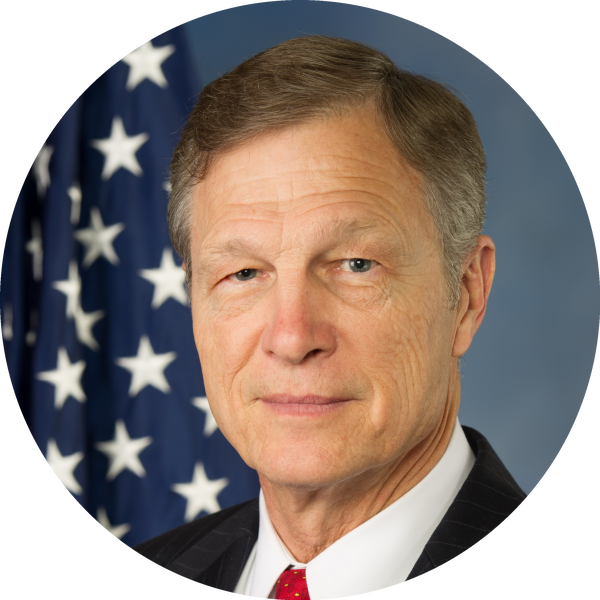

Mr. Speaker, I rise today in support of S. 3971, the Small Business Innovation and Economic Security Act. Mr. Speaker, the Small Business Innovation Research and Small Business Technology Transfer, SBIR and STTR, programs saw their reauthorizations lapse last October. As a result, nearly $6 billion in funding for small, innovative companies was frozen.
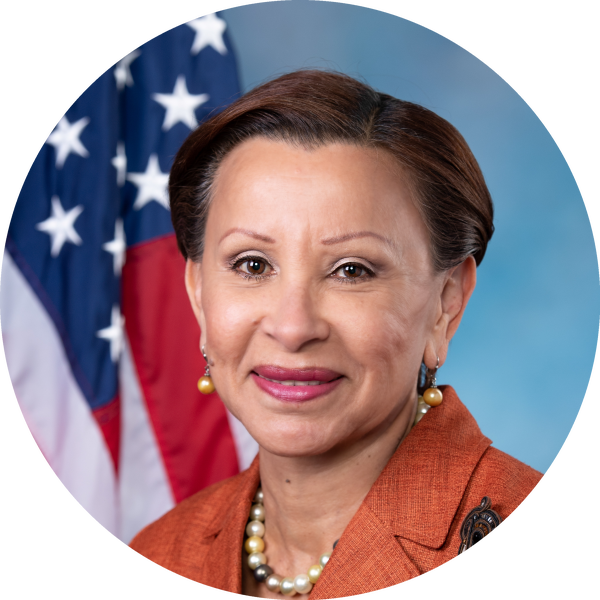
Is there objection to the request of the gentlewoman from Texas? There was no objection. Ms. VAN DUYNE. Mr. Speaker, I yield myself such time as I may consume. Mr. Speaker, I rise today in support of S. 3971, the Small Business Innovation and Economic Security Act, which reauthorizes the Small Business Innovation Research and Small Business Technology Transfer programs through September 30, 2031. The SBIR and the STTR programs are critical to American innovation and help ensure the United States remains a step ahead of foreign adversaries.
The Speaker pro tempore··House
S. 3971 also appeared in 1 more Senate floor reference and 4 routine cosponsor filings.
S3971 Legislative Journey
Signed into Law
Apr 13, 2026
Became Public Law No: 119-83.
+3 more actions this day
Action Taken
Apr 2, 2026
Presented to President.
House: Vote: 345-41
Mar 17, 2026
On motion to suspend the rules and pass the bill Agreed to by the Yeas and Nays: (2/3 required): 345 - 41 (Roll no. 89).
House: Vote Held
Mar 16, 2026
At the conclusion of debate, the Yeas and Nays were demanded and ordered. Pursuant to the provisions of clause 8, rule XX, the Chair announced that further proceedings on the motion would be postponed.
House: Action Taken
Mar 4, 2026
Held at the desk.
Introduced
Mar 3, 2026
Introduced in the Senate, read twice, considered, read the third time, and passed without amendment by Voice Vote. (consideration: CR S752-756; text: CR S752-756)
+2 more actions this day
About the Sponsor
Joni Ernst
Republican, IA · 11 years in Congress
Committees: Small Business and Entrepreneurship, Agriculture, Nutrition, and Forestry, Armed Services
View full profile →
Cosponsors at time of passage (1)
This bill has 1 cosponsor: 1 Democrat. Cosponsors represent 1 state: Massachusetts.
1Democrat·1 state
What laws does S. 3971 change?
2 changes
Sections Amended
Section 9 of Small Business Act (15 U.S.C. 638)
adding at the end the following: ``(aaa) Reducing Administrative Burden
Section 851(e) of National Defense Authorization Act for Fiscal Year 2020 (10 U.S.C. 4901 note)
striking ``September 30, 2025'' and inserting ``September 30, 2031''
S. 3971 Quick Facts
Cosponsors
1

- Chamber
- Senate
- Policy
- Commerce
- Introduced
- Mar 3, 2026
Became Public Law No: 119-83.
Apr 13, 2026
Official Sources
S. 3971 on Congress.gov
The official bill page tracking S. 3971's text, actions, and Senate passage.
About SBIR and STTR — America's Seed Fund
The federal SBIR and STTR programs that S. 3971 reauthorizes through 2031.
Apply for SBIR/STTR Awards
How small businesses move through the award phases the new Strategic Breakthrough track builds on.
SBIR/STTR Policy Directives
The SBA policy directives that govern how participating agencies run the programs the bill amends.
15 U.S.C. 638 — Small Business Act, Section 9
The statute S. 3971 amends, governing SBIR/STTR awards, security screening, and award allocations.
Commerce BIS Entity List
One of the eight federal watchlists an agency can use to deny an award under the bill's security screening.
About Legisletter
Legisletter is the advocacy platform that tracks every bill from introduction to Public Law — and connects the constituents affected by a bill to the legislators who vote on it.
S. 3971 Common Questions
How big is a Strategic Breakthrough award under S. 3971?
Up to $30 million to a single small business, including its affiliates, over a period of up to 48 months. The money goes toward pushing a proven technology to production or development milestones.
What does a startup need to qualify for the $30M award?
At least one prior Phase II SBIR or STTR award, a technology that market research shows is an effective solution, and 100% matching funds from new private capital or other government programs.
When do the SBIR and STTR programs expire now?
S. 3971 extends both programs and their pilot programs through September 30, 2031. They had been set to lapse in 2025.
Can my company be denied an award for foreign ties?
Yes. An agency can deny an award if your firm or its affiliates connect to any of eight federal watchlists, including lists tied to Chinese-military companies, export controls, forced-labor enforcement, and banned telecom equipment.
What does the security review actually examine?
Beyond ownership, the due-diligence review looks at your cybersecurity, patents, foreign financial ties, key personnel's foreign affiliations, investment relationships, and technology-licensing deals with entities in countries of concern.
If I'm denied for a security risk, can I reapply?
Yes. A denial doesn't bar you from applying in a later award cycle. The agency also has to notify you of the basis for the rejection, as far as it can without compromising national security.
Will there be a limit on how many proposals I can submit?
Yes. Starting in fiscal 2027, each agency's program office must set an equal cap on proposals per firm, by year, solicitation, or topic. Agencies can waive it for urgent, time-sensitive needs on up to 5% of topics.
How much can SBIR awardees get for technical and business help?
Up to $6,500 per Phase I project and up to $50,000 per Phase II project, which firms can now also use to hire or train staff and screen for foreign involvement in their work.
Based on S. 3971 bill text
S. 3971 Bill Text
“To extend the SBIR and STTR programs, and for other purposes.”
Source: U.S. Government Publishing Office
Bill Alerts
Get notified when S. 3971 moves
Committee votes, floor action, cosponsor changes — straight to your inbox.
Bill alerts + Legisletter's monthly briefing. Unsubscribe anytime.
Commerce Bills
9 related bills we're tracking
H.R. 3243Gaining+9
Therapeutic Fraud Prevention Act of 2025

Ted LieuD-CA



+200
204 cosponsors
+9 this monthReferred to the House Committee on Energy and Commerce.
May 7, 2025
HouseCommerce
H.R. 5511
Algorithmic Accountability Act of 2025

Yvette ClarkeD-NY




+28
32 cosponsors
Referred to the House Committee on Energy and Commerce.
Sep 19, 2025
HouseCommerce
H.R. 3597
Protecting Circuit Boards and Substrates Act

Blake MooreR-UT



+21
25 cosponsors
Referred to the Committee on Ways and Means, and in addition to the Committees on Energy and Commerce, and Science, Space, and Technology, for a period to be subsequently determined by the Speaker, in each case for consideration of such provisions as fall within the jurisdiction of the committee concerned.
May 23, 2025
HouseCommerce
S. 836
Children and Teens’ Online Privacy Protection Act
Edward MarkeyD-MA



+17
21 cosponsors
Held at the desk.
Mar 16, 2026
SenateCommerce
S. 130
Competition and Antitrust Law Enforcement Reform Act of 2025

Amy KlobucharD-MN



+9
13 cosponsors
Read twice and referred to the Committee on the Judiciary.
Jan 16, 2025
SenateCommerce
S. 1367
NO FAKES Act of 2025

Christopher CoonsD-DE


+9
13 cosponsors
Read twice and referred to the Committee on the Judiciary.
Apr 9, 2025
SenateCommerce
H.R. 3174
Made in America Manufacturing Finance Act
Roger WilliamsR-TX


+8
12 cosponsors
Committee on Small Business and Entrepreneurship. Hearings held.
May 13, 2026
HouseCommerce
S. 4107
Antitrust Accountability and Transparency Act
Amy KlobucharD-MN

+4
8 cosponsors
Read twice and referred to the Committee on the Judiciary.
Mar 17, 2026
SenateCommerce
S. 2164
Algorithmic Accountability Act of 2025

Ron WydenD-OR


+3
7 cosponsors
Read twice and referred to the Committee on Commerce, Science, and Transportation.
Jun 25, 2025
SenateCommerce
Trending Right Now
Bills gaining momentum across Congress
H.R. 1502Surging+36
North Platte Canteen Congressional Gold Medal Act

Adrian SmithR-NE


+255
259 cosponsors
+36 this monthReferred to the House Committee on Financial Services.
Feb 21, 2025
HouseArmed Forces and National Security
H.R. 3569Surging+19
Fit to Serve Act

Adam SmithD-WA



+184
188 cosponsors
+19 this monthReferred to the House Committee on Armed Services.
May 21, 2025
HouseArmed Forces and National Security
H.R. 6130Surging+12
ASAP Act

Vern BuchananR-FL


+227
231 cosponsors
+12 this monthOrdered to be Reported in the Nature of a Substitute by the Yeas and Nays: 40 - 0.
Sep 16, 2026
HouseHealth
Tracking Commerce in Congress? Monitor bills, track cosponsor momentum, and launch advocacy campaigns — all from one advocacy platform.