S. 130: Competition and Antitrust Law Enforcement Reform Act of 2025
Sponsor

Amy Klobuchar
Democrat · MN
Make the biggest mergers prove they're harmless
Why it matters
A company with $100 billion in U.S. revenue could face a penalty of up to $15 billion for crushing a rival under S. 130. The bill flips the burden on the largest mergers, adds revenue-based fines for monopoly conduct, and authorizes $1.26 billion for the two federal agencies that enforce antitrust law.
S. 130 rewrites the core test for mergers. Right now, the government can block a deal only if it may "substantially" lessen competition, and courts have read that as a high bar. The bill lowers it: a deal could be stopped if it creates an appreciable risk of materially lessening competition, meaning anything more than a trivial amount.
For the largest deals, the burden moves to the companies. If a buyer would end up holding more than $5 billion of the target, or if either company is worth more than $100 billion and the deal tops $50 million, a court must presume the merger is harmful unless the companies prove otherwise. Those dollar figures rise each year with the size of the economy.
The bill also creates a new offense for exclusionary conduct: tactics that disadvantage rivals or blunt their ability to compete. A company with more than 50% of a market is presumed to be breaking the law when it engages in that conduct, unless it shows real benefits to competition or that new rivals have entered and neutralized the risk.
Penalties are tied to revenue: up to 15% of a company's total U.S. revenue for the prior year, or 30% of revenue in the affected line of business, whichever is larger. The same scale would apply to price-fixing and monopolization cases under existing law, and the FTC could seek those penalties in court.
The rest of the bill builds out enforcement. Workers who report antitrust violations get protection from retaliation and can collect 10% to 30% of criminal fines. Forced arbitration clauses can no longer block antitrust class actions. And the FTC gets a new independent Competition Advocate with subpoena power, plus an office that publishes data on how market concentration affects prices and wages.
Bill Progress
Latest Action · Jan 16, 2025
Read twice and Referred to the Judiciary. for review
S. 130 Bill Summary
What S. 130 actually does.
Easier to stop harmful mergers
Replaces the current "substantially lessen competition" test with an "appreciable risk of materially lessening competition" standard, where "materially" means more than a trivial amount. Deals that create monopsony, meaning outsized power as a buyer of labor or supplies, are covered alongside monopoly.
Biggest deals must justify themselves
A court must presume a merger is harmful when the buyer would hold more than $5 billion of the target, when either party is worth more than $100 billion and the deal exceeds $50 million, or when a company with over 50% market share buys a rival. The companies can rebut that presumption by showing the deal will not materially harm competition. Dollar thresholds adjust annually.
Monopoly tactics become their own offense
Creates a new ban on exclusionary conduct that presents an appreciable risk of harming competition. Firms with more than 50% market share or significant market power are presumed in violation. Enforcers would not need to prove below-cost pricing, a broken business relationship, or harm on more than one side of a platform.
Fines scaled to company revenue
Violations of the new exclusionary conduct rule, and of existing bans on price-fixing and monopolization, could bring penalties up to the greater of 15% of total U.S. revenue for the prior year or 30% of U.S. revenue in the affected line of business. DOJ and the FTC must publish joint penalty guidelines within one year.
Rewards and protection for whistleblowers
Employees and contractors who report antitrust violations are protected from retaliation and can file a complaint with the Department of Labor within 180 days. People whose original information leads to more than $1 million in criminal fines can receive 10% to 30% of what is collected.
Class actions can't be forced into arbitration
Predispute arbitration clauses and class-action waivers would be unenforceable in antitrust cases where plaintiffs seek class certification, and a court, not an arbitrator, decides whether the rule applies. Winning plaintiffs would also collect interest on their damages from the day the lawsuit is served.
A new independent watchdog inside the FTC
Creates an Office of Competition Advocate, led by an official serving a 7-year term who can be removed only by a unanimous FTC vote, with power to subpoena companies that file merger notices. A separate Office of Market Analysis and Data would report on competition, including effects on wages.
More money for antitrust enforcement
Authorizes $535 million for the Justice Department's Antitrust Division and $725 million for the FTC in fiscal year 2025. Starting in fiscal year 2026, the agencies keep all merger filing fees for enforcement.
Who benefits from S. 130?
Workers in one-employer towns
Nurses, warehouse workers, and meatpacking employees in regions dominated by a single hospital system or plant could benefit from the bill's explicit coverage of buyer power over labor. The bill's findings say dominant employers pay low wages and limit future job opportunities.
Employees who spot price-fixing
A worker who reports a bid-rigging or price-fixing scheme that ends in a $10 million criminal fine could receive between $1 million and $3 million, and could not be fired or demoted for coming forward.
Startups and smaller rivals
Companies squeezed out by a dominant competitor would no longer have to wait for proof of below-cost pricing or a clear market definition before enforcers step in. The bill's findings describe even unprofitable newcomers as an important check on dominant firms.
Shoppers and customers in consolidated industries
Consumers paying more in markets with few sellers, from airlines to pharmacies, could see more mergers blocked before they close. The bill defines market power to include harm to quality and choice, not just price.
Who is affected by S. 130?
The largest U.S. companies
Any company with more than $100 billion in assets, sales, or market value would carry the burden of proof on most acquisitions over $50 million. Dominant firms also face penalties that could run into the billions.
Companies that settle merger cases
Businesses that resolve a merger challenge must file annual reports with the FTC or Justice Department for 5 years, certified under penalty of perjury by a CEO, CFO, general counsel, or equivalent officer.
Businesses using arbitration clauses
Companies that rely on arbitration agreements or class-action waivers in customer, supplier, or employee contracts could no longer use them to keep antitrust class actions out of court.
Regulated industries
Companies in regulated sectors like telecom, energy, or finance could no longer assume their federal oversight shields them from antitrust suits. Immunity would apply only when a federal agency actively regulates and explicitly authorizes the conduct and the governing law does not preserve antitrust claims.
Cost & Funding
Authorization
$535 million for the DOJ Antitrust Division and $725 million for the FTC in fiscal year 2025, about $1.26 billion combined
- The bill authorizes $535 million for the Justice Department's Antitrust Division and $725 million for the FTC for fiscal year 2025.
- Beginning in fiscal year 2026, all merger filing fees stay with the two agencies for enforcement instead of depending on annual appropriations.
- New civil penalties flow to the U.S. Treasury. A single case against a company with $50 billion in U.S. revenue could carry a penalty of up to $7.5 billion under the 15% cap.
- No CBO cost estimate has been published for this bill.
S130 Legislative Journey
Committee Action
Jan 16, 2025
Read twice and referred to the Committee on the Judiciary.
About the Sponsor
Amy Klobuchar
Democrat, MN · 19 years in Congress
Committees: Agriculture, Nutrition, and Forestry, Commerce, Science, and Transportation, Joint Committee of Congress on the Library
View full profile →
Cosponsors (13)
All 13 cosponsors are Democrats. Cosponsors represent 11 states: Colorado, Connecticut, Hawaii, and 8 more.

Sheldon Whitehouse
Democrat · RI
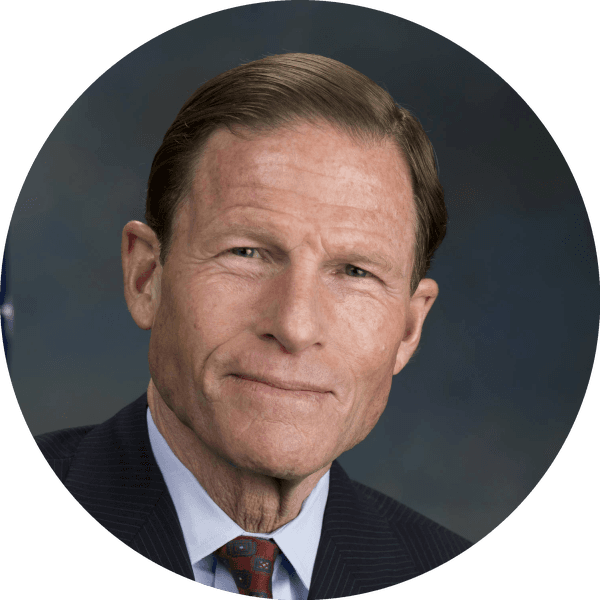
Richard Blumenthal
Democrat · CT
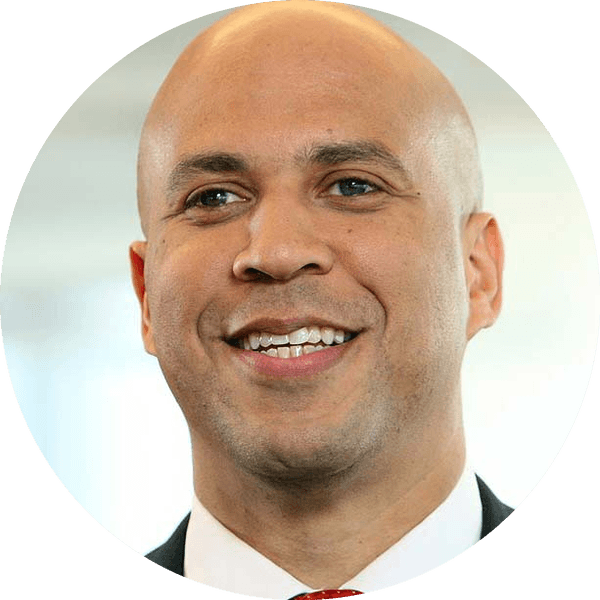
Cory Booker
Democrat · NJ

Mazie Hirono
Democrat · HI

Peter Welch
Democrat · VT

Martin Heinrich
Democrat · NM

Edward Markey
Democrat · MA

Christopher Murphy
Democrat · CT

Tina Smith
Democrat · MN
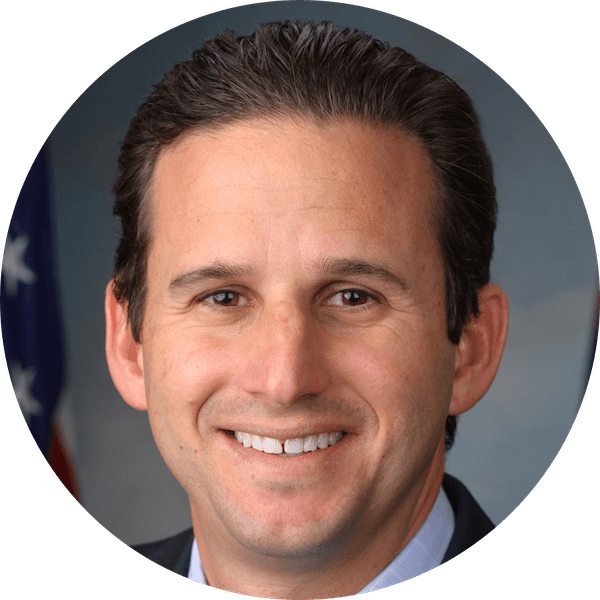
Brian Schatz
Democrat · HI

Mark Warner
Democrat · VA
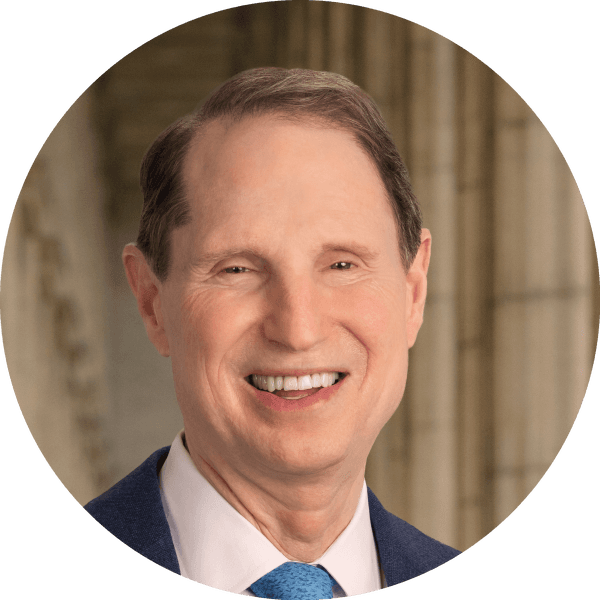
Ron Wyden
Democrat · OR
Committee Sponsors
Judiciary Committee
5 of 21 committee members cosponsored


5 Democrats across this committee haven't cosponsored yet. Mobilize their constituents
What laws does S. 130 change?
4 changes
Sections Amended
Section 5 of Federal Trade Commission Act (15 U.S.C. 45) to the extent that such section applies to unfair methods of competition; and (B) this Act and the amendments made by this Act. SEC. 4. UNLAWFUL ACQUISITIONS. (a) Market Power.--Subsection (a) of the first section of the Clayton Act (15 U.S.C. 12)
adding at the end the following: ``The term `market power' in this Act means the ability of a person, or a group of persons acting in concert, to profitably impose terms or conditions on counterparties, including terms regarding price, quantity, product or service quality, or other terms affecting the value of consideration exchanged in the transaction, that are more favorable to the person or group of persons imposing them than what the person or group of persons could obtain in a competitive market
Section 7A of Clayton Act (15 U.S.C. 18a)
adding at the end the following: ``(l)(1) Each person who resolves a proceeding brought under the antitrust laws by the Federal Trade Commission or United States by entering into an agreement or by the final judgment in a Federal or administrative court regarding an acquisition with respect to which notification is required under this section shall, on an annual basis during the 5-year period beginning on the date on which the agreement is entered into, file with the Federal Trade Commission or the Assistant Attorney General, as applicable, and the Competition Advocate, information sufficient for the Federal Trade Commission or the United States, as applicable, to assess the competitive impact of the acquisition, including-- ``(A) the pricing, availability, and quality of any product or service, or inputs thereto, in any market, that was covered by the agreement; ``(B) the source, and the resulting magnitude and extent, of any cost-saving efficiencies or any benefits to consumers or trading partners that were claimed as a benefit of the acquisition and the extent to which any cost savings were passed on to consumers or trading partners; and ``(C) the effectiveness of any divestitures or any conditions placed on the acquisition in fully restoring competition
Section 1 of sherman act.--Section 1 of the Sherman Antitrust Act (15 U.S.C. 1) is amended-- (A) by striking ``Every'' and inserting ``(a) Every''; and (B) by adding at the end the following: ``(b)(1) Every person who violates this section shall be liable to the United States for a civil or criminal penalty of not more than the greater of-- ``(A) 15 percent of the total United States revenues of the person for the previous calendar year; or ``(B) 30 percent of the United States revenues of the person in any part of the trade or commerce related to or targeted by the unlawful conduct under this section during the period of the unlawful conduct. ``(2) A penalty under this section may be recovered in a civil or criminal action brought by the United States.''. (2) Section 2 of the sherman act.--Section 2 of the Sherman Antitrust Act (15 U.S.C. 2) is amended-- (A) by striking ``Every'' and inserting ``(a) Every''; and (B) by adding at the end the following ``(b)(1) Every person who violates this section shall be liable to the United States for a civil penalty of not more than the greater of-- ``(A) 15 percent of the total United States revenues of the person for the previous calendar year; or ``(B) 30 percent of the United States revenues of the person in any part of the trade or commerce related to or targeted by the unlawful conduct under this section during the period of the unlawful conduct. ``(2) A civil penalty under this section may be recovered in a civil action brought by the United States.''. (3) Section 5 of the federal trade commission act.--Section 5 of the Federal Trade Commission Act (15 U.S.C. 45)
adding at the end the following: ``(o)(1) The Commission may commence a civil action in a district court of the United States against any person, partnership, or corporation for a violation of subsection (a)(1) respecting an unfair method of competition that constitutes a violation of sections 1 or 2 of the Sherman Act (15 U
Section 4 of Clayton Act (15 U.S.C. 15)
striking subsection (a) and inserting the following: ``(a) Except as provided in subsection (b), any person who shall be injured in his business or property by reason of anything forbidden in the antitrust laws may sue therefor in any district court of the United States in the district in which the defendant resides or is found or has an agent, without respect to the amount in controversy, and shall recover threefold the damages by him sustained, the cost of suit, including a reasonable attorney's fee, and simple interest on threefold the damages by him sustained for the period beginning on the date of service of such person's pleading setting forth a claim under the antitrust laws and ending on the date of judgment
S. 130 Quick Facts
- Committee
- Judiciary
- Chamber
- Senate
- Policy
- Commerce
- Introduced
- Jan 16, 2025
Read twice and Referred to the Judiciary. for review
Jan 16, 2025
Official Sources
Official text, sponsor and cosponsor list, and actions for the Competition and Antitrust Law Enforcement Reform Act of 2025.
The current merger law and its "substantially to lessen competition" test, which S. 130 would replace with an appreciable-risk standard.
Plain-language overview of the Sherman, Clayton, and FTC Acts that S. 130 amends.
The framework the two agencies currently use to review mergers, which the bill would supplement with statutory presumptions for the largest deals.
The Hart-Scott-Rodino filing program whose fees S. 130 would let the FTC and DOJ keep for enforcement.
The existing administrative rewards program for reporting antitrust crimes; S. 130 would write 10% to 30% awards into law.
The Justice Department office that would receive a $535 million authorization and co-write the bill's penalty guidelines.
S. 130 Common Questions
Which mergers would S. 130 presume illegal?
Deals where the buyer ends up holding more than $5 billion of the target, deals over $50 million where either company is worth more than $100 billion, and acquisitions of rivals by firms with over 50% market share. Companies can rebut the presumption with evidence.
How big are the fines for monopoly behavior under S. 130?
Up to 15% of a company's total U.S. revenue for the prior year, or 30% of U.S. revenue in the affected business line, whichever is larger. For a company with $100 billion in U.S. revenue, that could mean up to $15 billion.
Can I get paid for reporting price-fixing?
Under S. 130, yes. If your original information leads to more than $1 million in criminal fines, the Attorney General can award you 10% to 30% of what is collected. Reporting a scheme that ends in a $10 million fine could pay $1 million to $3 million.
Can my employer fire me for reporting an antitrust violation?
S. 130 would make retaliation illegal for employees and contractors who report antitrust violations. You would have 180 days to file a complaint with the Department of Labor.
Would S. 130 end forced arbitration for antitrust claims?
For class actions, yes. Arbitration clauses and class-action waivers signed before a dispute could not be enforced in antitrust cases where plaintiffs seek class certification, and a judge decides whether that rule applies.
Does S. 130 cover employers that hold down wages?
Yes. The bill adds monopsony, meaning outsized power as a buyer, to merger law, so a deal that gives an employer the power to hold down wages or squeeze suppliers can be challenged.
How much funding would the FTC and DOJ get under S. 130?
The bill authorizes $535 million for the Justice Department's Antitrust Division and $725 million for the FTC in fiscal year 2025. From 2026 on, the agencies keep all merger filing fees for enforcement.
Is S. 130 likely to pass?
It faces long odds for now. The bill has 13 Democratic cosponsors and no Republicans, and it has not moved out of the Senate Judiciary Committee since it was introduced in January 2025.
Based on S. 130 bill text
S. 130 Bill Text
“To reform the antitrust laws to better protect competition in the American economy, to amend the Clayton Act to modify the standard for an unlawful acquisition, to deter anticompetitive exclusionary conduct that harms competition and consumers, to enhance the ability of the Department of Justice and the Federal Trade Commission to enforce the antitrust laws, and for other purposes.”
Source: U.S. Government Publishing Office
Get notified when S. 130 moves
Committee votes, floor action, cosponsor changes — straight to your inbox.
Bill alerts + Legisletter's monthly briefing. Unsubscribe anytime.
Commerce Bills
9 related bills we're tracking
Therapeutic Fraud Prevention Act of 2025




Referred to the House Committee on Energy and Commerce.
May 7, 2025
Algorithmic Accountability Act of 2025





Referred to the House Committee on Energy and Commerce.
Sep 19, 2025
Protecting Circuit Boards and Substrates Act




Referred to the Committee on Ways and Means, and in addition to the Committees on Energy and Commerce, and Science, Space, and Technology, for a period to be subsequently determined by the Speaker, in each case for consideration of such provisions as fall within the jurisdiction of the committee concerned.
May 23, 2025
Children and Teens’ Online Privacy Protection Act



Held at the desk.
Mar 16, 2026
NO FAKES Act of 2025



Read twice and referred to the Committee on the Judiciary.
Apr 9, 2025
Made in America Manufacturing Finance Act


Committee on Small Business and Entrepreneurship. Hearings held.
May 13, 2026
Antitrust Accountability and Transparency Act

Read twice and referred to the Committee on the Judiciary.
Mar 17, 2026
Algorithmic Accountability Act of 2025

Read twice and referred to the Committee on Commerce, Science, and Transportation.
Jun 25, 2025
App Store Freedom Act
Referred to the House Committee on Energy and Commerce.
May 6, 2025
Trending Right Now
Bills gaining momentum across Congress
North Platte Canteen Congressional Gold Medal Act



Referred to the House Committee on Financial Services.
Feb 21, 2025
Fit to Serve Act



Referred to the House Committee on Armed Services.
May 21, 2025
ASAP Act



Ordered to be Reported in the Nature of a Substitute by the Yeas and Nays: 40 - 0.
Sep 16, 2026
Tracking Commerce in Congress? Monitor bills, track cosponsor momentum, and launch advocacy campaigns — all from one advocacy platform.