I rise today in support of H.R. 4495, the SBA Fraud Enforcement Extension Act. This bill builds off the work done by Ranking Member Velazquez in a previous Congress. That bill extended the statute of limitations for investigating fraud in the PPP and EIDL programs. All of the major pandemic relief programs, including the Shuttered Venues Operators Grant Program and Restaurant Revitalization Fund, will have extended statutes of limitations from 5 years to 10 years because of this bill.
H.R. 4495: SBA Fraud Enforcement Extension Act
Introduced Jul 17, 20252 cosponsors
Sponsor
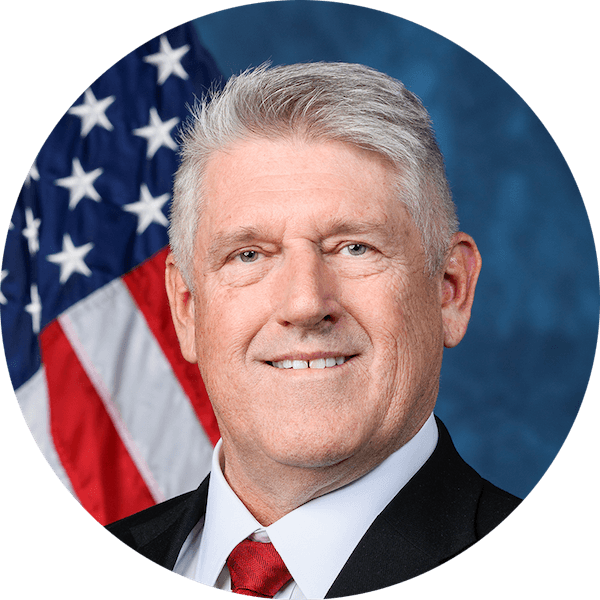
Troy Downing
Republican · MT-2
Ten years to chase pandemic relief fraud
3 min readLast updated June 14, 2026
Why it matters
A House Small Business Committee staff report estimates roughly $200 billion in fraudulent pandemic relief went out the door across SBA programs. H.R. 4495 gives prosecutors and civil enforcers 10 years to file fraud cases tied to two of them — double the usual five-year deadline that's already running out on the oldest cases.
Most federal fraud cases have to be filed within five years. This bill doubles that to 10 years, but only for two pandemic programs: the Shuttered Venue Operators Grant and the Restaurant Revitalization Fund.
It doesn't invent any new crimes. It leans on fraud laws already on the books — conspiracy, theft of government money, false statements, identity theft, wire and mail fraud, money laundering, and the federal false claims statutes. The only thing that changes is the clock.
Supporters say big fraud schemes take years to untangle, and the original deadlines were expiring before cases could be built. The trade-off is that legitimate grant recipients stay exposed to legal scrutiny for a decade, even when the issue turns out to be a paperwork mistake rather than intentional fraud.
Bill Progress
IntroducedJul 17
Committee
Pass HouseDec 1
Pass Senate
Signed
Law
Latest Action · Dec 2, 2025
1/2
Passed the House, received in Senate
H.R. 4495 Bill Summary
What H.R. 4495 actually does.
1
Fraud deadline doubles to 10 years
Gives the government up to 10 years after a violation or conspiracy to file criminal charges or a civil enforcement action — up from the standard five-year federal limit.
2
Covers shuttered venue grants
Applies the longer deadline to the Shuttered Venue Operators Grant program, which sent relief to live venues, theaters, and related businesses during the pandemic.
3
Covers restaurant relief grants
Applies the same 10-year deadline to the Restaurant Revitalization Fund, which provided pandemic aid to restaurants, bars, and similar food businesses.
4
No new crimes — just more time
Creates no new offenses. It relies on existing federal laws covering conspiracy, theft of government money, false statements, identity-related fraud, wire and mail fraud, and money laundering.
5
Both prosecutors and civil enforcers
The 10-year window applies to criminal prosecutions and to civil cases, including actions under the federal False Claims Act.
Who benefits from H.R. 4495?
Federal prosecutors and investigators
Big pandemic fraud cases can take years to trace through shell companies and bank records. A longer deadline keeps complex cases from expiring before charges are filed.
SBA inspectors general
The watchdogs auditing pandemic relief get more runway to follow the money and coordinate cases across agencies.
Taxpayers
Every dollar of fraud recovered is a dollar of relief money clawed back. The committee's findings point to roughly $200 billion in suspected fraud across SBA programs.
Restaurants and venues that followed the rules
Businesses that used their grants honestly benefit if tougher enforcement protects the credibility of relief programs they relied on.
Who is affected by H.R. 4495?
Shuttered venue grant recipients
Live venue and theater operators who took an SVOG grant remain open to criminal or civil fraud scrutiny for up to 10 years after any alleged violation.
Restaurant relief grant recipients
Restaurants and bars that received Restaurant Revitalization Fund money stay exposed to enforcement for a decade if fraud is suspected in their applications or spending.
Consultants and intermediaries
Advisers, agents, or co-conspirators tied to allegedly false applications or misused funds face the same extended enforcement window.
Businesses still holding old records
Covered grant recipients have reason to keep applications, receipts, and financial records on hand far longer in case questions surface years later.
On the Record
What Congress Is Saying
10 legislators have weighed in on H.R. 4495 — 4 Democrats, 6 Republicans.
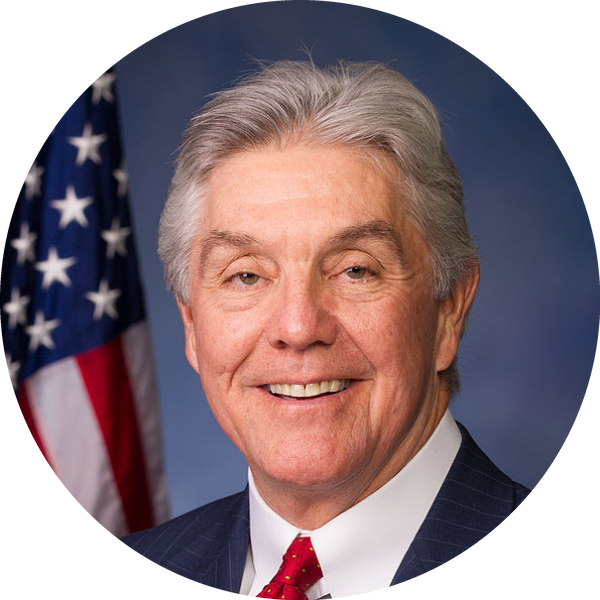
Mr. Speaker, I rise in support of H.R. 4495, the SBA Fraud Enforcement Extension Act, a companion piece of legislation to S. 1199, introduced by Senator Ernst. H.R. 4495 is bipartisan legislation introduced by the gentleman from Montana (Mr. Downing) and the gentleman from New Jersey (Mr. Conaway). For 4 years, the Biden administration's SBA failed to address over $200 billion in COVID-19 era fraud. H.R. 4495 extends the soon-to- expire statute of limitations for two pandemic-era relief programs: The Shuttered Venue Operators Grant and the Restaurant Revitalization Fund.
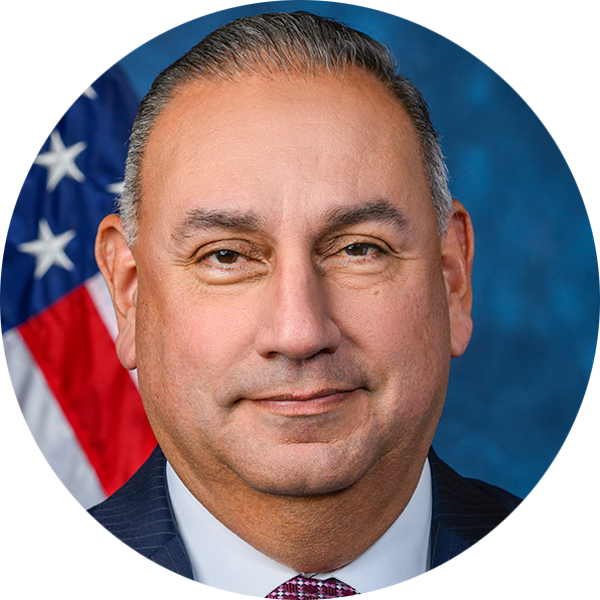
Mr. Speaker, I rise today in support of H.R. 4495, the SBA Fraud Enforcement Extension Act. I am the co-lead on this legislation, along with my friend, colleague, and fellow Air Force veteran, Representative Downing. During the COVID-19 pandemic, more than 30 million small businesses were negatively impacted. The Federal Government took action to ensure that an unprecedented amount of money flowed into small businesses in the form of grants and loans in order to help them stay afloat.
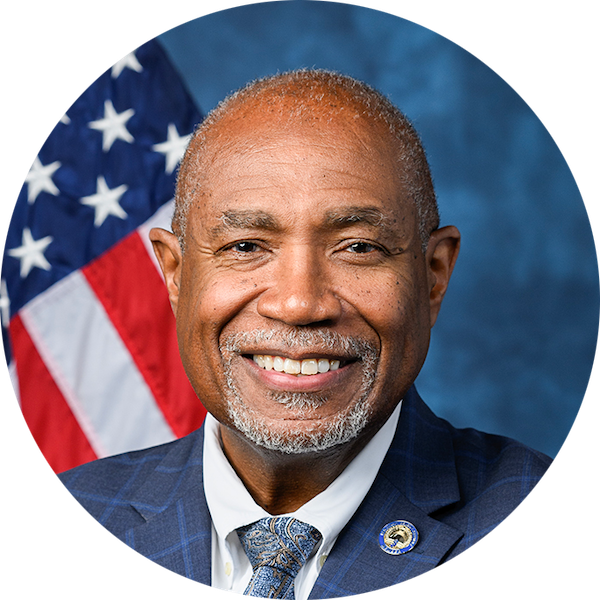
H.R. 4495 also appeared in 3 more House floor references and 2 routine cosponsor filings.
HR4495 Legislative Journey
Sent to Senate
Dec 2, 2025
Received in the Senate. Read twice. Placed on Senate Legislative Calendar under General Orders. Calendar No. 281.
House: Vote: 4914-4916
Dec 1, 2025
On motion to suspend the rules and pass the bill Agreed to by voice vote. (text: CR H4914-4916)
House: Committee Action
Aug 15, 2025
Reported by the Committee on Small Business. H. Rept. 119-226.
House: Vote: 23-0
Jul 22, 2025
Ordered to be Reported by the Yeas and Nays: 23 - 0.
House: Committee Action
Jul 17, 2025
Referred to the House Committee on Small Business.
About the Sponsor
Troy Downing
Republican, Montana's 2nd congressional district · 1 years in Congress
Committees: Natural Resources, Financial Services
View full profile →
Cosponsors (2)
No new cosponsors in 456 days — momentum stalled
All 2 cosponsors are Democrats. Cosponsors represent 2 states: New Jersey, Virginia.
2Democrats·2 states
Committee Sponsors
Small Business Committee
12D14R
|0 signed26 not yet0 of 26 committee members cosponsored
No committee members have cosponsored this bill
14 Republicans across this committee haven't cosponsored yet. Mobilize their constituents
What laws does H.R. 4495 change?
1 changes
Sections Amended
Section 5003 of American Rescue Plan Act of 2021 (15 U.S.C. 9009c)
adding at the end the following: ``(d) Statute of Limitations
H.R. 4495 Quick Facts
Cosponsors
2

- Committee
- Small Business
- Chamber
- House
- Policy
- Commerce
- Introduced
- Jul 17, 2025
Passed the House, received in Senate
Dec 2, 2025
Official Sources
H.R. 4495 on Congress.gov
Full bill text, cosponsors, and legislative history for the SBA Fraud Enforcement Extension Act
S. 1199 — Senate Companion Bill
Identical Senate version introduced by Sen. Joni Ernst (R-IA) on March 27, 2025
H. Rept. 119-226 — Committee Report
House Small Business Committee report on H.R. 4495, ordered reported 23-0 on July 22, 2025
SBA: Shuttered Venue Operators Grant Program
Official SBA page for the SVOG program — one of the two grant programs covered by the extended statute of limitations
SBA: Restaurant Revitalization Fund
Official SBA page for the RRF program — the second grant program covered by the bill's 10-year enforcement window
SBA OIG: Pandemic Response Oversight
SBA Inspector General oversight hub tracking fraud investigations across all pandemic relief programs, including SVOG and RRF
House Small Business Committee: COVID-19 Fraud Investigation Report
Committee staff report estimating approximately $200 billion in fraudulent pandemic relief disbursements across SBA programs
DOJ: Combating COVID-19 Fraud
Department of Justice COVID-19 Fraud Enforcement Task Force page with enforcement actions and reporting resources
H.R. 4495 Common Questions
How long does the government have to bring a pandemic grant fraud case under H.R. 4495?
10 years from the date of the violation or conspiracy. That's double the usual five-year federal deadline, and it applies to both criminal charges and civil cases for the two covered programs.
Which grant programs does H.R. 4495 cover?
Just two: the Shuttered Venue Operators Grant program for live venues and theaters, and the Restaurant Revitalization Fund for restaurants and bars. Other pandemic relief programs like PPP aren't covered by this bill.
Does H.R. 4495 create any new crimes?
No. It changes only the deadline. The actual offenses — conspiracy, theft of government money, false statements, identity theft, wire and mail fraud, and money laundering — are all existing federal laws.
Does the longer deadline apply to civil False Claims Act cases too?
Yes. The 10-year window covers civil enforcement under the federal False Claims Act, not just criminal prosecutions. The government can pursue either track for fraud tied to the covered grants.
I got a Restaurant Revitalization Fund grant and used it honestly. Am I at risk?
The bill extends the window for fraud cases, not honest mistakes. It targets intentional misconduct like false applications or misused funds. Still, recipients have reason to keep their records longer in case questions come up.
Why extend the deadline now?
Supporters say large pandemic fraud schemes take years to untangle and the original deadlines were expiring before cases could be built. A House Small Business Committee report points to roughly $200 billion in suspected SBA fraud.
Where does H.R. 4495 stand?
The House passed it by voice vote in December 2025, and it's now on the Senate calendar. An identical companion bill, S. 1199 from Sen. Joni Ernst, is also pending in the Senate.
Based on H.R. 4495 bill text
H.R. 4495 Bill Text
“To extend the statute of limitations for fraud under certain pandemic programs, and for other purposes.”
Source: U.S. Government Publishing Office
Bill Alerts
Get notified when H.R. 4495 moves
Committee votes, floor action, cosponsor changes — straight to your inbox.
Bill alerts + Legisletter's monthly briefing. Unsubscribe anytime.
Commerce Bills
9 related bills we're tracking
H.R. 3243Gaining+9
Therapeutic Fraud Prevention Act of 2025
Ted LieuD-CA
+200
204 cosponsors
+9 this monthReferred to the House Committee on Energy and Commerce.
May 7, 2025
HouseCommerce
H.R. 5511
Algorithmic Accountability Act of 2025
Yvette ClarkeD-NY


+28
32 cosponsors
Referred to the House Committee on Energy and Commerce.
Sep 19, 2025
HouseCommerce
H.R. 3597
Protecting Circuit Boards and Substrates Act
Blake MooreR-UT
+21
25 cosponsors
Referred to the Committee on Ways and Means, and in addition to the Committees on Energy and Commerce, and Science, Space, and Technology, for a period to be subsequently determined by the Speaker, in each case for consideration of such provisions as fall within the jurisdiction of the committee concerned.
May 23, 2025
HouseCommerce
S. 836
Children and Teens’ Online Privacy Protection Act
Edward MarkeyD-MA


+17
21 cosponsors
Held at the desk.
Mar 16, 2026
SenateCommerce
S. 130
Competition and Antitrust Law Enforcement Reform Act of 2025

Amy KlobucharD-MN

+9
13 cosponsors
Read twice and referred to the Committee on the Judiciary.
Jan 16, 2025
SenateCommerce
S. 1367
NO FAKES Act of 2025
Christopher CoonsD-DE


+9
13 cosponsors
Read twice and referred to the Committee on the Judiciary.
Apr 9, 2025
SenateCommerce
H.R. 3174
Made in America Manufacturing Finance Act
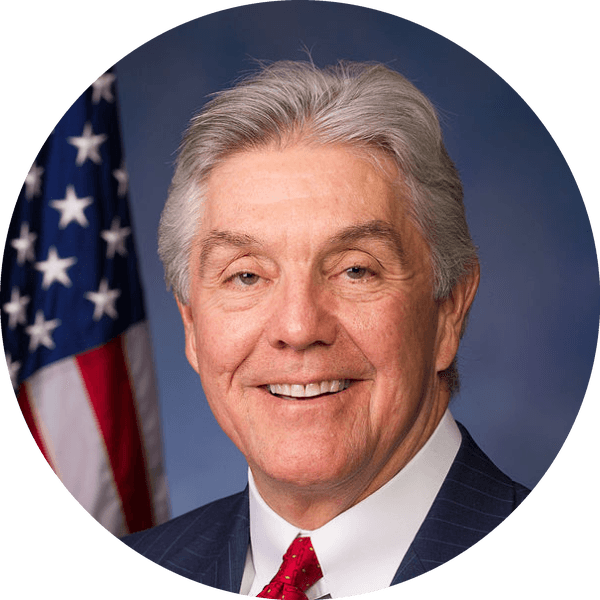
Roger WilliamsR-TX
+8
12 cosponsors
Committee on Small Business and Entrepreneurship. Hearings held.
May 13, 2026
HouseCommerce
S. 4107
Antitrust Accountability and Transparency Act
Amy KlobucharD-MN

+4
8 cosponsors
Read twice and referred to the Committee on the Judiciary.
Mar 17, 2026
SenateCommerce
S. 2164
Algorithmic Accountability Act of 2025
Ron WydenD-OR

+3
7 cosponsors
Read twice and referred to the Committee on Commerce, Science, and Transportation.
Jun 25, 2025
SenateCommerce
Trending Right Now
Bills gaining momentum across Congress
H.R. 1502Surging+36
North Platte Canteen Congressional Gold Medal Act

Adrian SmithR-NE


+255
259 cosponsors
+36 this monthReferred to the House Committee on Financial Services.
Feb 21, 2025
HouseArmed Forces and National Security
H.R. 3569Surging+19
Fit to Serve Act

Adam SmithD-WA




+184
188 cosponsors
+19 this monthReferred to the House Committee on Armed Services.
May 21, 2025
HouseArmed Forces and National Security
H.R. 6130Surging+12
ASAP Act

Vern BuchananR-FL




+227
231 cosponsors
+12 this monthOrdered to be Reported in the Nature of a Substitute by the Yeas and Nays: 40 - 0.
Sep 16, 2026
HouseHealth
Tracking Commerce in Congress? Monitor bills, track cosponsor momentum, and launch advocacy campaigns — all from one advocacy platform.