H.R. 1734: Preventing Deep Fake Scams Act
Sponsor
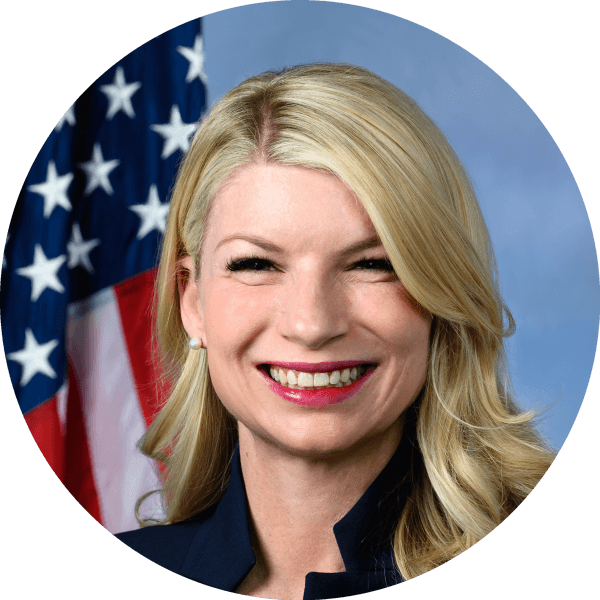
Brittany Pettersen
Democrat · CO-7
Bank regulators owe Congress a plan against voice-clone fraud
Why it matters
Seven federal agencies that oversee your bank and credit union would have one year to tell Congress how AI-cloned voices and faces are being used to break into accounts, and what the law should do about it. H.R. 1734 turns scattered concern into a single deadline and a single set of recommendations.
H.R. 1734, the Preventing Deep Fake Scams Act, is a study bill. It creates a temporary Task Force on Artificial Intelligence in the Financial Services Sector and gives it one job: tell Congress how AI is being used against bank and credit union customers, and what to do about it.
The task force pulls together every major federal financial regulator. Treasury chairs it, joined by the Comptroller of the Currency, the Federal Reserve, the FDIC, the Consumer Financial Protection Bureau, the National Credit Union Administration, and FinCEN, the Treasury office that tracks financial crime. Each agency head can send a designee.
The bill's findings explain why voice matters. Many banks offer voice banking for security and convenience, and the bill says the popularity of social media has made video and audio of potential targets easier to obtain. The bill's concern is that a cloned voice could pass the same check your real one does.
The work runs on a fixed clock. Within 90 days of enactment, the task force must open a public comment request, and it must consult banks and credit unions of different sizes, the outside vendors that sell them AI tools, and independent AI experts. Within one year, it must deliver a report covering how institutions already defend against AI-driven fraud, the risks from bad actors using AI to steal data and identities, a list of best practices for protecting customers, and legislative and regulatory recommendations.
The report must also settle on shared definitions for terms like "generative AI," "machine learning," and "deep fakes," so agencies and banks stop talking past each other. Ninety days after the final report, the task force disbands. From enactment to shutdown, that is at most about 15 months.
Nothing in the bill changes what your bank must do on day one; any new rules would come later, from the recommendations it produces. It sets no penalties, requires no specific technology, and authorizes no dollar amount.
Bill Progress
Latest Action · Feb 27, 2025
Referred to the House Committee on Financial Services.
H.R. 1734 Bill Summary
What H.R. 1734 actually does.
Every major bank regulator at one table
Creates a Task Force on Artificial Intelligence in the Financial Services Sector chaired by the Treasury Secretary, with the heads of the OCC, Federal Reserve, FDIC, CFPB, NCUA, and FinCEN, or their designees.
The public gets a say within 90 days
The task force must solicit public feedback on its report no later than 90 days after the bill becomes law.
Small banks and credit unions get consulted, not just big ones
The task force must consult depository institutions and credit unions of varying asset sizes, third-party vendors that provide AI tools to them, and artificial intelligence experts.
A fraud playbook for your bank
The report must describe how banks and credit unions already protect customers from AI-driven fraud and list best practices for stopping data theft, identity theft, and fraud.
Recommendations Congress can act on
The report must include legislative and regulatory recommendations on regulating AI and protecting consumers, plus an assessment of the risks posed by bad actors using AI. It is due within one year of enactment.
One shared vocabulary for AI
The report must set standard definitions for terms including "generative AI," "machine learning," "natural language processing," "algorithmic AI," and "deep fakes."
A deadline to shut down
The task force ends 90 days after issuing its final report, so it is not a permanent new office.
Who benefits from H.R. 1734?
Anyone who banks by phone
If your bank or credit union verifies you by voice, you are the customer the bill's findings describe. The report is meant to produce best practices for protecting accounts like yours from cloned-voice access.
People with a public voice or face online
Creators, public speakers, and anyone who posts video regularly supply exactly the raw material the bill's findings say fraudsters can exploit. The task force must study that risk directly.
Community banks and small credit unions
Smaller institutions often lack in-house AI security teams. The bill requires the task force to consult institutions of varying asset sizes, so their constraints shape the best practices, not just the biggest banks' playbooks.
Lawmakers writing the next fraud bill
Congress would receive one set of agreed definitions and recommendations from seven agencies, instead of piecing together separate guidance from each regulator.
Who is affected by H.R. 1734?
Seven federal financial agencies
Treasury, the OCC, the Federal Reserve, the FDIC, the CFPB, the NCUA, and FinCEN would have to staff the task force, run a public comment process within 90 days, and produce a joint report within a year, without a dedicated funding line.
Banks and credit unions using voice authentication
Institutions that rely on voice banking would have their security practices reviewed and could face new rules later if Congress or regulators adopt the report's recommendations.
AI vendors serving banks
Companies that sell AI tools to depository institutions and credit unions would be consulted, and their products could become the subject of future regulatory recommendations.
HR1734 Legislative Journey
House: Committee Action
Feb 27, 2025
Referred to the House Committee on Financial Services.
About the Sponsor
Brittany Pettersen
Democrat, Colorado's 7th congressional district · 3 years in Congress
Committees: Financial Services
View full profile →
Cosponsors (11)
This bill has 11 cosponsors: 4 Democrats, 7 Republicans, reflecting bipartisan support. Cosponsors represent 7 states: California, Iowa, Nebraska, and 4 more.
Mike Flood
Republican · NE
Suzanne Bonamici
Democrat · OR
Brian Fitzpatrick
Republican · PA
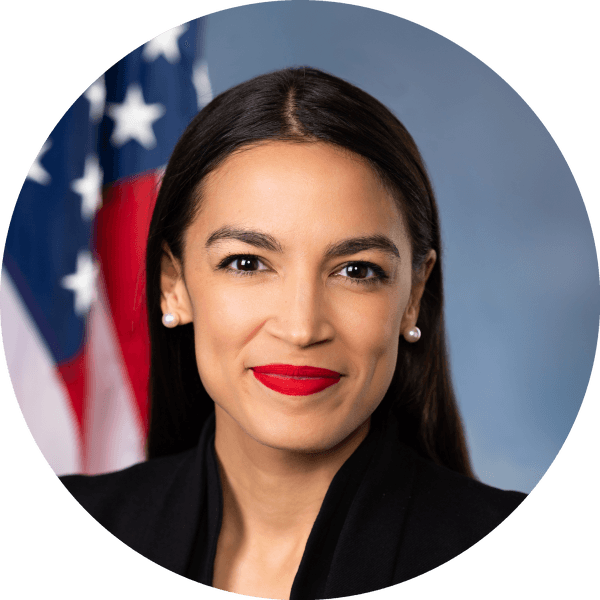
Alexandria Ocasio-Cortez
Democrat · NY

Josh Harder
Democrat · CA
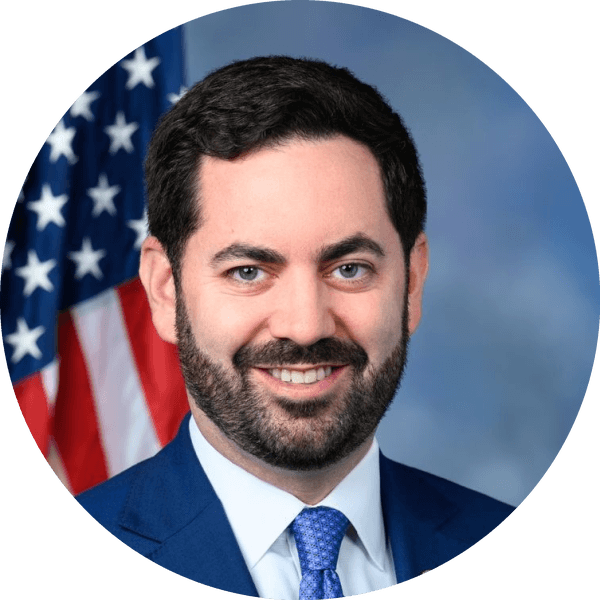
Michael Lawler
Republican · NY

Zachary Nunn
Republican · IA
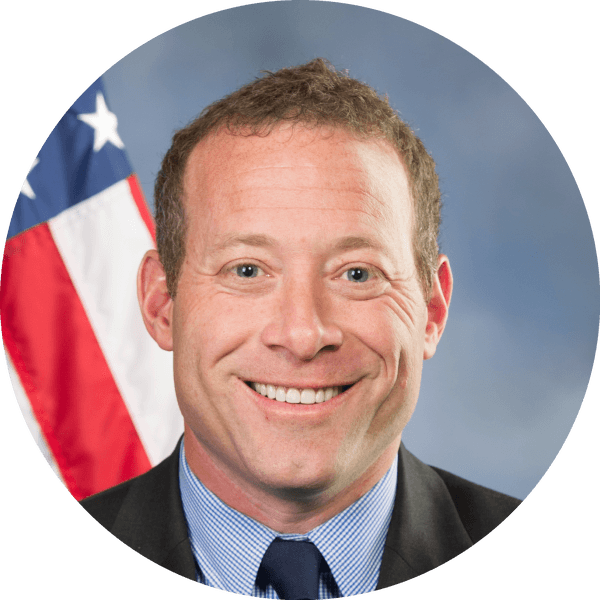
Josh Gottheimer
Democrat · NJ
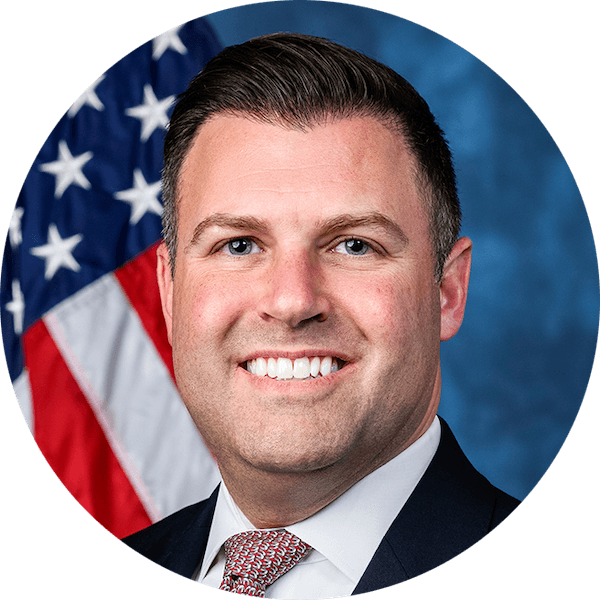
Ryan Mackenzie
Republican · PA
Robert Bresnahan
Republican · PA
Jefferson Van Drew
Republican · NJ
Committee Sponsors
Financial Services Committee
4 of 53 committee members cosponsored


22 Democrats across this committee haven't cosponsored yet. Mobilize their constituents
H.R. 1734 Quick Facts
- Committee
- Financial Services
- Chamber
- House
- Policy
- Finance and Financial Sector
- Introduced
- Feb 27, 2025
Referred to the House Committee on Financial Services.
Feb 27, 2025
Official Sources
Official congressional page for the Preventing Deep Fake Scams Act, with bill text, cosponsors, and status.
FinCEN, one of the seven task force members, warned banks in November 2024 about criminals using generative AI deepfakes to get past identity verification.
Treasury, which would chair the task force, published this December 2024 report on AI risks in finance after collecting 103 public comments.
Treasury hub for its AI work in the financial sector, including security resources and best practices for institutions.
FTC consumer guidance on AI voice-clone scams, the fraud the bill asks bank regulators to study.
The committee H.R. 1734 was referred to, which would need to mark it up before a House vote.
Who is lobbying on H.R. 1734?
1 organization lobbying on this bill
NOTARIZE, INC. DBA PROOF.COM | 2 |
Showing 1-1 of 1 organizations
H.R. 1734 Common Questions
What is the Preventing Deep Fake Scams Act?
H.R. 1734 creates a temporary federal task force to study how AI, including cloned voices and faces, is used to commit fraud against bank and credit union customers, then report back to Congress with best practices and recommendations within one year.
Can scammers use a cloned voice to get into my bank account?
That is the risk the bill is built around. Its findings say many banks offer voice banking, and that audio and video from social media can be used to replicate someone's voice and appearance to access their financial accounts.
Which agencies would be on the deepfake fraud task force?
Seven: Treasury (as chair), the Comptroller of the Currency, the Federal Reserve, the FDIC, the Consumer Financial Protection Bureau, the National Credit Union Administration, and FinCEN. Each head can send a designee.
Does H.R. 1734 create new rules for banks?
No. It sets no penalties and requires no specific technology. It produces a report with best practices and legislative and regulatory recommendations, which Congress or regulators could use to write rules later.
Can the public comment on the task force's work?
Yes. The task force must open a request for public feedback within 90 days of the bill becoming law, and it must also consult banks, credit unions, AI vendors, and AI experts.
Are small banks and credit unions included?
Yes. The bill requires the task force to consult depository institutions and credit unions of varying asset sizes, not only the largest institutions.
How much does H.R. 1734 cost?
The bill authorizes no new funding. The seven agencies would do the work within existing budgets, and the task force shuts down 90 days after its final report.
Where does the Preventing Deep Fake Scams Act stand in Congress?
Rep. Brittany Pettersen (D-CO) introduced it on February 27, 2025. It was referred to the House Financial Services Committee and has 11 cosponsors, 7 Republicans and 4 Democrats.
Based on H.R. 1734 bill text
H.R. 1734 Bill Text
“To establish the Task Force on Artificial Intelligence in the Financial Services Sector to report to Congress on issues related to artificial intelligence in the financial services sector, and for other purposes. Be it enacted by the Senate and House of Representatives of the United States of America in Congress assembled, SECTION 1.”
Source: U.S. Government Publishing Office
Get notified when H.R. 1734 moves
Committee votes, floor action, cosponsor changes — straight to your inbox.
Bill alerts + Legisletter's monthly briefing. Unsubscribe anytime.
Finance and Financial Sector Bills
9 related bills we're tracking
America’s Olympic and Paralympic Games Commemorative Coins Act


Referred to the House Committee on Financial Services.
Jul 14, 2025
761st Tank Battalion Congressional Gold Medal Act
Referred to the Committee on Financial Services, and in addition to the Committee on House Administration, for a period to be subsequently determined by the Speaker, in each case for consideration of such provisions as fall within the jurisdiction of the committee concerned.
Feb 26, 2025
Taxpayer Data Protection Act
Sponsor introductory remarks on measure. (CR H625-626)
Feb 11, 2025
Repealing Big Brother Overreach Act

Placed on the Union Calendar, Calendar No. 609.
Jun 18, 2026
Rosie the Riveter Commemorative Coin Act


Referred to the House Committee on Financial Services.
Jan 15, 2025
HELPER Act of 2025
Referred to the House Committee on Financial Services.
Mar 14, 2025
Anti-CBDC Surveillance State Act
Motion to reconsider laid on the table Agreed to without objection.
Jul 17, 2025
Protecting Privacy in Purchases Act
Received in the Senate and Read twice and referred to the Committee on Banking, Housing, and Urban Affairs.
Jul 15, 2026
Veterans Member Business Loan Act
Referred to the House Committee on Financial Services.
Jan 16, 2025
Trending Right Now
Bills gaining momentum across Congress
North Platte Canteen Congressional Gold Medal Act


Referred to the House Committee on Financial Services.
Feb 21, 2025
Fit to Serve Act
Referred to the House Committee on Armed Services.
May 21, 2025
ASAP Act
Ordered to be Reported in the Nature of a Substitute by the Yeas and Nays: 40 - 0.
Sep 16, 2026
Tracking Finance and Financial Sector in Congress? Monitor bills, track cosponsor momentum, and launch advocacy campaigns — all from one advocacy platform.