H.R. 1548: Leveling the Playing Field 2.0 Act
Sponsor

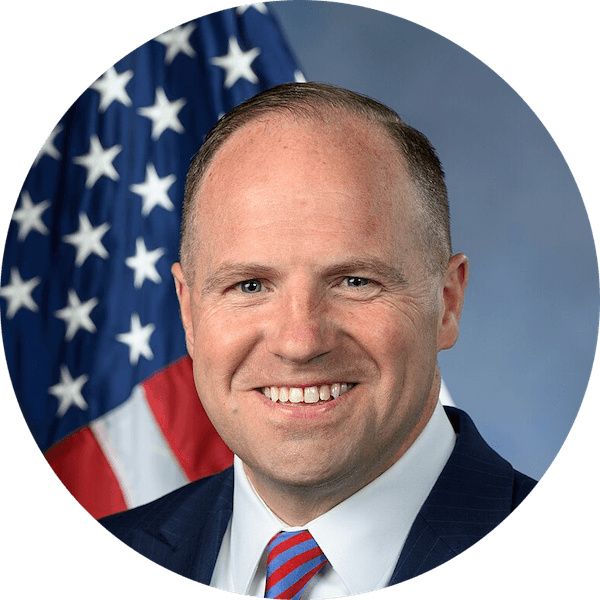
Beth Van Duyne
Republican · TX-24
Closing the gaps that let imports escape US duties
Why it matters
American factories win trade cases against underpriced or subsidized imports, then watch the same goods come back rerouted through another country or tweaked just enough to slip the duty. H.R. 1548 rewrites the antidumping and countervailing duty rulebook to close those escape routes, and it has drawn 92 cosponsors from both parties, an unusually broad coalition for a trade bill.
This is a technical bill with a blunt goal: make US trade penalties harder to dodge. It's the sequel to the original Leveling the Playing Field Act, the 2015 law that overhauled how the government handles unfair-trade complaints. A decade of workarounds later, sponsors say the rules need another pass.
One big change deals with repeat offenders. When a domestic industry starts recovering after winning a trade case, that recovery can be used as evidence the problem is over, which makes the next case harder to win. The bill tells investigators they can't treat a rebound as proof of no harm if the rebound only happened because the earlier duties worked. It also speeds up these follow-on cases: a repeat countervailing-duty case gets a preliminary decision in 85 days and a final one 75 days after that.
A second cluster of changes goes after harder-to-see advantages. Investigators could count subsidies that flow across borders, where a third country bankrolls production that ends up shipped from somewhere else. They could treat an artificially cheap currency as a subsidy. And the bill spells out twelve situations, from state-owned input suppliers to unenforced labor and environmental laws, that it says distort the real cost of making a product, letting the government set those distorted costs aside when it calculates whether goods are underpriced.
The rest is enforcement at the dock. Importers can be required to certify their goods aren't dodging a duty, with false certifications exposed to criminal penalties. Foreign-based importers would have to keep enough US assets on hand to cover potential duties or post a bond, and a violation carries a $50,000 penalty. One provision reaches backward: the rule on foreign cost distortions would apply to cases and even pending court fights dating to June 29, 2015, the day the original 2015 law took effect.
Bill Progress
Latest Action · Feb 24, 2025
Referred to the House Committee on Ways and Means.
H.R. 1548 Bill Summary
What H.R. 1548 actually does.
Recovery can't be used to kill a follow-up case
When a domestic industry rebounds because earlier duties worked, investigators can't treat that recovery as proof the harm is gone. Repeat cases also run on a fixed, faster timeline.
Third-country subsidies can count
If one country bankrolls production that's exported from another, and the exporting country helps arrange it, investigators can treat the subsidy as the exporting country's own and add it up with direct subsidies.
Cheap currency can trigger duties
A government holding its currency artificially low can be treated as providing a countervailable subsidy in a trade case, with a defined method for measuring the benefit.
Twelve flags for distorted costs
The bill lists specific conditions, including state-owned input suppliers, export limits, financial assistance, and unenforced labor or environmental laws, that let the government disregard a country's stated production costs.
Harder to disguise circumvented goods
Rewrites the rules and deadlines for circumvention inquiries, with set timelines and automatic suspension of duty liquidation while an inquiry runs.
Foreign importers must keep US assets
Nonresident importers have to hold US assets or a bond covering potential duties at the highest applicable rate. Skipping it carries a $50,000 penalty. Validated Tier 2 or Tier 3 C-TPAT members are exempt.
Who benefits from H.R. 1548?
Manufacturers in repeat trade fights
Steel, aluminum, chemical, and machinery makers who win a case and then face the same imports through a new route would get tools to keep the duty from being watered down.
Workers in those plants
The factory-state coalition behind the bill, heavy with Ohio, Michigan, Pennsylvania, Indiana, and West Virginia members, reflects where these manufacturing jobs concentrate.
Industries facing state-backed competition
Companies up against subsidized or state-owned foreign producers gain ways to surface support that doesn't appear on the invoice, including cross-border subsidies and currency moves.
Trade enforcement agencies
Commerce, the International Trade Commission, and Customs get clearer authority, firmer deadlines, and more procedural tools to investigate evasion and circumvention.
Who is affected by H.R. 1548?
Importers and customs brokers
More certifications, more paperwork, greater enforcement exposure, and fewer ways to challenge some Customs evasion decisions.
Foreign-based importers
Must keep US assets sufficient to cover potential duties or post a bond, or face a $50,000 penalty per violation, or 50% of the goods' value if they're worth under $50,000.
Foreign exporters under scrutiny
Broader definitions of unfair support, more investigations, and a harder time avoiding duties by changing sourcing or shipping routes.
Retailers and manufacturers using imported inputs
Costs could rise or shipments could be delayed if more imports or components are hit with duties or held up by enforcement.
Trading partners, including Canada and Mexico
The changes apply to goods from Canada and Mexico under the USMCA implementing law, so North American trade is directly in scope.
HR1548 Legislative Journey
House: Committee Action
Feb 24, 2025
Referred to the House Committee on Ways and Means.
About the Sponsor
Beth Van Duyne
Republican, Texas's 24th congressional district · 5 years in Congress
Committees: Small Business, Ways and Means
View full profile →
Cosponsors (92)
This bill has 92 cosponsors: 37 Democrats, 55 Republicans, reflecting bipartisan support. Cosponsors represent 30 states: Alabama, Arkansas, Arizona, and 27 more.

Terri Sewell
Democrat · AL

Carol Miller
Republican · WV

John Moolenaar
Republican · MI

Raja Krishnamoorthi
Democrat · IL

Mike Bost
Republican · IL

Eric Crawford
Republican · AR
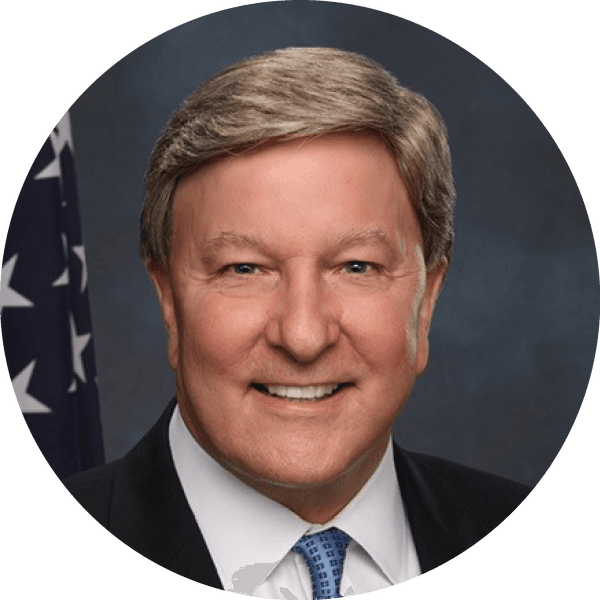
Mike Rogers
Republican · AL

Troy Balderson
Republican · OH

Jack Bergman
Republican · MI
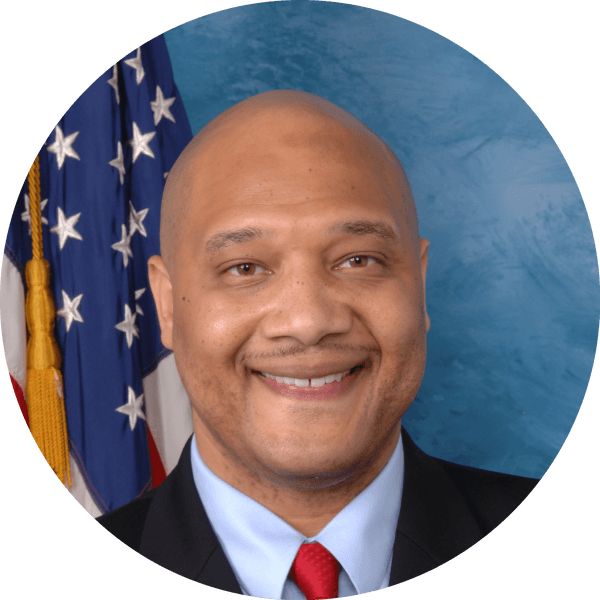
André Carson
Democrat · IN

Juan Ciscomani
Republican · AZ

Monica De La Cruz
Republican · TX
Committee Sponsors
Ways and Means Committee
7 of 45 committee members cosponsored


20 Republicans across this committee haven't cosponsored yet. Mobilize their constituents
What laws does H.R. 1548 change?
9 changes
Sections Amended
Section 771 of Tariff Act of 1930 (19 U.S.C. 1677)
adding at the end the following: ``(37) Treatment of successive investigations
Section 702 of Tariff Act of 1930 (19 U.S.C. 1671a)
adding at the end the following: ``(f) Initiation by Administering Authority of Successive Countervailing Duty Investigation
Section 732 of Tariff Act of 1930 (19 U.S.C. 1673a)
adding at the end the following: ``(f) Initiation by Administering Authority of Successive Antidumping Duty Investigation
Section 771A of Tariff Act of 1930 (19 U.S.C. 1677-1)
adding at the end the following: ``(d) Multinational Corporations
Section 771(15) of Tariff Act of 1930 (19 U.S.C. 1677(15))
adding at the end the following: ``(D) Situations in which the quantity of a foreign like product selected for comparison under section 771(16) is insufficient to establish a proper comparison to the export price or constructed export price
Section 781 of Tariff Act of 1930 (19 U.S.C. 1677j)
striking subsection (f) and inserting the following: ``(f) Procedures for Conducting Circumvention Inquiries
H.R. 1548 Quick Facts
- Committee
- Ways and Means
- Chamber
- House
- Policy
- Foreign Trade and International Finance
- Introduced
- Feb 24, 2025
Referred to the House Committee on Ways and Means.
Feb 24, 2025
Official Sources
The International Trade Commission determines whether a domestic industry is materially injured by dumped or subsidized imports — the central injury test this bill rewrites.
Commerce's Enforcement & Compliance division administers the AD/CVD investigations, circumvention inquiries, and duty calculations that this bill overhauls.
The EAPA program allows interested parties to report suspected duty evasion — this bill extends those procedures to safeguard actions and limits protests of evasion determinations.
TFTEA is the 2015 law that created the EAPA evasion framework; this bill amends and expands several TFTEA provisions including covered merchandise definitions.
Validated Tier 2 or Tier 3 C-TPAT participants are exempt from the bill's new asset requirements for nonresident importers.
The underlying statute this bill amends — Title VII governs all antidumping and countervailing duty law in the United States.
The bill was referred to the Ways and Means Committee; the Trade Subcommittee has jurisdiction over tariffs, trade enforcement, and the International Trade Commission.
Who is lobbying on H.R. 1548?
5 organizations lobbying on this bill
ALLIANCE FOR AMERICAN MANUFACTURING | 4 |
AMERICAN WIRE PRODUCERS ASSOCIATION | 4 |
COLD FINISHED STEEL BAR INSTITUTE | 4 |
SPECIALTY STEEL INDUSTY OF NORTH AMERICA | 4 |
MUNICIPAL CASTINGS ASSOCIATION FORMERLY MUNICIPAL CASTINGS FAIR TRADE COUNCIL | 3 |
Showing 1-5 of 5 organizations
H.R. 1548 Common Questions
What does the Leveling the Playing Field 2.0 Act do?
It rewrites how the US handles unfair-trade cases so penalties are harder to dodge. H.R. 1548 targets rerouting, product tweaks, hidden foreign subsidies, and currency undervaluation, and speeds up repeat cases. It's a sequel to the 2015 Leveling the Playing Field Act.
What stops importers from rerouting goods to dodge a duty?
H.R. 1548 rewrites the circumvention rules so Commerce can act when goods are shipped through a third country or altered just enough to sidestep an existing duty. It sets fixed deadlines for these inquiries and keeps duties in place while one is underway.
Can a country's undervalued currency trigger US trade penalties?
Yes. H.R. 1548 directs Commerce to examine whether a government keeping its currency artificially cheap is effectively subsidizing its exporters. If so, that undervaluation can be treated as a countervailable subsidy in a trade case.
Does the bill make it easier to bring a repeat trade case?
Yes. When a domestic industry rebounds because earlier duties worked, H.R. 1548 says investigators can't treat that recovery as proof the harm is over. Repeat cases also run on a set timeline, with a follow-on countervailing-duty case getting a preliminary decision in 85 days.
What's the $50,000 penalty for foreign importers in H.R. 1548?
Importers based outside the US would have to keep enough US assets, or post a bond, to cover potential duties. Skip that and the civil penalty is $50,000 per violation, or 50% of the goods' value if they're worth under $50,000. Validated Tier 2 or Tier 3 C-TPAT members are exempt.
Can a subsidy from one country count against imports from another?
Yes. Under H.R. 1548, if a third country subsidizes production and the exporting country helps arrange it, Commerce can treat that subsidy as the exporting country's own and add it up with any direct subsidies. It targets supply chains that span multiple countries.
Does the Leveling the Playing Field 2.0 Act apply to Canada and Mexico?
Yes. H.R. 1548 says its changes apply to goods from Canada and Mexico under the USMCA implementing law, so the new rules reach North American trade, not just imports from outside the region.
Is any part of H.R. 1548 retroactive?
One part is. The rule on foreign cost distortions would reach back to June 29, 2015, the day the original Leveling the Playing Field Act took effect, and apply to investigations, reviews, and even court cases that aren't yet final.
Based on H.R. 1548 bill text
H.R. 1548 Bill Text
“To amend the Tariff Act of 1930 to improve the administration of antidumping and countervailing duty laws, and for other purposes.”
Source: U.S. Government Publishing Office
Get notified when H.R. 1548 moves
Committee votes, floor action, cosponsor changes — straight to your inbox.
Bill alerts + Legisletter's monthly briefing. Unsubscribe anytime.
Foreign Trade and International Finance Bills
9 related bills we're tracking
Agricultural Risk Review Act of 2025




Received in the Senate and Read twice and referred to the Committee on Banking, Housing, and Urban Affairs.
Jun 24, 2025
Save Our Shrimpers Act




Received in the Senate and Read twice and referred to the Committee on Foreign Relations.
May 13, 2026
Remote Access Security Act




Received in the Senate and Read twice and referred to the Committee on Banking, Housing, and Urban Affairs.
Jan 13, 2026
To expand the sharing of information with respect to suspected violations of intellectual property rights in trade.




Received in the Senate and Read twice and referred to the Committee on Finance.
Apr 28, 2026
GAIN AI Act of 2025


Referred to the House Committee on Foreign Affairs.
Oct 31, 2025
Supporting American Allies Act



Referred to the House Committee on Ways and Means.
Jun 4, 2025
To require the Congressional Budget Office to conduct an economic review of the economic impact of tariff modifications before implementation.

Referred to the House Committee on Ways and Means.
Jul 10, 2025
Full AI Stack Export Promotion Act

Ordered to be Reported in the Nature of a Substitute by the Yeas and Nays: 37 - 7.
Apr 22, 2026
Respect NATO Allies Act

Referred to the Committee on Ways and Means, and in addition to the Committees on Foreign Affairs, and Rules, for a period to be subsequently determined by the Speaker, in each case for consideration of such provisions as fall within the jurisdiction of the committee concerned.
Feb 12, 2026
Trending Right Now
Bills gaining momentum across Congress
North Platte Canteen Congressional Gold Medal Act




Referred to the House Committee on Financial Services.
Feb 21, 2025
Fit to Serve Act





Referred to the House Committee on Armed Services.
May 21, 2025
ASAP Act



Ordered to be Reported in the Nature of a Substitute by the Yeas and Nays: 40 - 0.
Sep 16, 2026
Tracking Foreign Trade and International Finance in Congress? Monitor bills, track cosponsor momentum, and launch advocacy campaigns — all from one advocacy platform.