H.R. 6996: Full AI Stack Export Promotion Act
Sponsor

Randy Fine
Republican · FL-6
Sell American AI to allies, lock out adversaries
Why it matters
This bill commits the U.S. government to a single goal: get allied countries running their AI on American chips, American clouds, and American data centers — and keep that technology out of the hands of foreign adversaries. It gives Commerce and the State Department a 180-day clock to stand up an export program, a diplomatic strategy, and security rules, plus a public scorecard tracking how much of the world's AI runs on U.S. tech.
H.R. 6996, the Full AI Stack Export Promotion Act, doesn't spend money or create a new agency. It hands the Commerce and State Departments a list of assignments aimed at one outcome: more of the world's AI built on U.S. technology.
The centerpiece is an export program at Commerce. Industry groups can submit proposals to help sell the "full AI stack" — not just chips, but data centers, cloud services, trained models, and the technical standards tying them together — to allies and partners. There's a catch: a group can only join if it was created solely to participate in this program, and every proposal has to meet U.S.-approved security requirements.
The State Department gets the diplomatic side. It would run regular listening sessions with industry, set up a hotline for companies to report foreign trade barriers, and lean on diplomatic channels to clear those barriers. A formal strategy is due within 180 days of the bill becoming law.
Security is the flip side of the sales pitch. Commerce, working with State, Defense, and Energy, would set conditions on foreign buyers to stop "illicit or unauthorized" access by foreign adversaries — a term the bill ties to the "covered nation" list in federal defense law, which centers on China, Russia, Iran, and North Korea.
The bill is heavy on measurement. State must study global AI deployment within 180 days. Commerce must launch an export scorecard estimating each country's AI computing capacity and what share of the world's AI chips, data centers, models, and cloud services are American-run — published publicly every six months for five years.
Bill Progress
Latest Action · Apr 22, 2026
Committee approved bill for floor consideration in the Nature of a Substitute by the Yeas and Nays: 37 - 7.
H.R. 6996 Bill Summary
What H.R. 6996 actually does.
An export program for the whole American AI stack
Section 4 directs Commerce to run a program where industry groups submit proposals to help export the "full AI stack" to allies and partners. A group qualifies only if it was formed solely to take part in this program, and every proposal must meet U.S.-approved security standards. Commerce reports to Congress on the results within 180 days of launching it.
A State Department push to clear foreign trade barriers
Section 5 puts the Secretary of State, working with Commerce, in charge of knocking down barriers U.S. AI firms hit abroad — through industry listening sessions, a company hotline for reporting barriers, and diplomatic pressure. A formal strategy is due within 180 days of enactment, with the strategy and a progress update sent to Congress afterward.
A study of who's deploying AI worldwide
Section 6 orders State, with the Director of National Intelligence and Commerce, to study where and how AI is being deployed globally, how the U.S. stack stacks up against foreign rivals, and which countries should be export priorities. The report is due within 180 days, in unclassified form with an optional classified annex.
Security conditions on foreign buyers
Section 7 tells Commerce, with State, Defense, and Energy, to set security measures with foreign purchasers to block adversary access to U.S. AI technology — including standardized requirements for gear deployed in third countries and checks for adversary hardware in buyers' supply chains. A report is due within 180 days.
Standards to reassure big buyers the tech is trustworthy
Section 8 creates an AI Full Stack Confidence Initiative, led by Commerce with State, Defense, Energy, and industry. Within 180 days, the government would develop practices, products, or standards meant to show major buyers the U.S. AI stack is private, secure, and reliable.
A public scorecard tracking America's AI share for five years
Section 9 requires Commerce, with the DNI and State, to publish an export-success tracker estimating each country's AI computing capacity and what share of the world's AI chips, data centers, model usage, and cloud revenue is American-run. The first report is due within 180 days, then every six months for five years, and it must be public.
Who benefits from H.R. 6996?
U.S. chipmakers and GPU designers
The bill is built to push American-designed AI semiconductors — explicitly including graphics processing units — into allied markets. Companies in this space would get a dedicated Commerce export program, a State Department hotline for reporting foreign barriers, and a diplomatic strategy working to open doors abroad.
Cloud, data center, and AI infrastructure firms
Because the bill defines the AI stack to include data centers, cloud services, trained models, and technical standards — not just chips — the benefits reach far beyond hardware. Firms across that stack could plug into the export consortia and the confidence standards aimed at major foreign buyers.
Allied and partner governments buying U.S. AI
Friendly governments shopping for AI systems would get a more organized path to buying American, backed by standardized security and reliability practices. The bill's stated policy is to drive adoption of the U.S. stack by allies and partners over Chinese alternatives.
Anyone tracking the global AI race
The public scorecard would put hard estimates on something usually guarded as a trade secret: how much of the world's AI compute, chips, models, and cloud capacity is American-run. Those numbers go to Congress and the public every six months for five years.
Who is affected by H.R. 6996?
Companies that want to join the export program
Section 4 sets a strict gate: a consortium can participate only if it was created solely for this program, and every proposal must meet U.S.-approved security standards. That shapes who can take part, how these groups are structured, and what they're allowed to offer.
Foreign buyers of U.S. AI systems
Section 7 would attach security conditions to purchases — rules to prevent transfer to adversaries, including by remote access, and checks for adversary hardware or software in the buyer's own supply chain. Buyers abroad would have to meet those conditions to get the technology.
Commerce and State Department staff
The agencies inherit a compressed workload: an export program, a diplomatic strategy, a global deployment study, security measures, a confidence initiative, and a public scorecard — most due within the same 180-day window, then biannual tracker reports for five years.
Countries on the foreign-adversary list
The bill ties "foreign adversaries" to the "covered nation" definition in federal defense law, which centers on China, Russia, Iran, and North Korea. Its entire security structure is aimed at keeping the U.S. AI stack out of those countries' reach, including through third-country deployments.
HR6996 Legislative Journey
House: Vote: 37-7
Apr 22, 2026
Ordered to be Reported in the Nature of a Substitute by the Yeas and Nays: 37 - 7.
House: Committee Action
Jan 9, 2026
Referred to the House Committee on Foreign Affairs.
About the Sponsor
Randy Fine
Republican, Florida's 6th congressional district · 1 years in Congress
Committees: Education and Workforce, Foreign Affairs
View full profile →
Cosponsors (1)
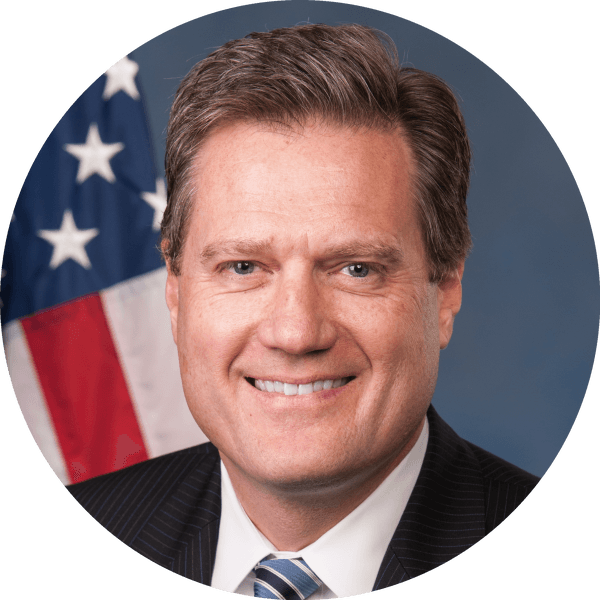
This bill has 1 cosponsor: 1 Republican. Cosponsors represent 1 state: Michigan.
Committee Sponsors
Foreign Affairs Committee
1 of 53 committee members cosponsored

27 Republicans across this committee haven't cosponsored yet. Mobilize their constituents
H.R. 6996 Quick Facts

- Committee
- Foreign Affairs
- Chamber
- House
- Policy
- Foreign Trade and International Finance
- Introduced
- Jan 9, 2026
Committee approved bill for floor consideration in the Nature of a Substitute by the Yeas and Nays: 37 - 7.
Apr 22, 2026
Official Sources
The official bill record, text, sponsors, and status for the Full AI Stack Export Promotion Act.
The Commerce Bureau of Industry and Security is the agency the bill tasks with the export program and the security measures on AI chips; this is its public information page on advanced-computing export controls.
Explains how U.S. export licensing of advanced computing items already works — the regulatory backdrop the bill's new export program would operate within.
The bill defines "foreign adversaries" by reference to this statute's "covered nation" list — China, Russia, Iran, and North Korea.
One of the two committees the bill names to receive its required reports, alongside House Foreign Affairs.
H.R. 6996 Common Questions
What does H.R. 6996 actually do?
It directs the Commerce and State Departments to help export American AI technology — chips, cloud, data centers, and models — to allied countries, while setting up security rules to keep that tech away from foreign adversaries.
What counts as the "full AI stack"?
The bill defines it broadly: the compute and data infrastructure behind AI, including high-performance computing, data centers, the trained models running on them, cloud services, and the technical standards tying it all together. It's far more than just chips.
Are GPUs covered by the bill?
Yes. The bill defines AI semiconductor products to include any chip designed to train, run, or accelerate AI models — and it names graphics processing units specifically.
Which countries does the bill treat as adversaries?
It ties "foreign adversaries" to the "covered nation" definition in federal defense law, which centers on China, Russia, Iran, and North Korea. The security provisions are built to keep U.S. AI tech out of their reach.
Would foreign buyers face new security requirements?
Yes. The bill directs Commerce, with State, Defense, and Energy, to set conditions on foreign purchasers to prevent transfer to adversaries — including by remote access — and to check for adversary hardware in the buyer's own supply chain.
Can any company join the AI export program?
No. A consortium qualifies only if it was created solely to take part in the program, and every proposal it submits has to meet U.S.-approved security standards.
What is the public AI export scorecard?
Commerce would publish estimates of each country's AI computing capacity and what share of the world's AI chips, data centers, model usage, and cloud revenue is American-run. The first report is due within 180 days, then every 6 months for 5 years.
What's the timeline for H.R. 6996?
Most assignments — the diplomatic strategy, the global deployment study, the security measures, and the first scorecard — are due within 180 days of the bill becoming law. For now it has one cosponsor and sits in the House Foreign Affairs Committee.
Based on H.R. 6996 bill text
H.R. 6996 Bill Text
“To facilitate the export of United States artificial intelligence systems, computing hardware, and standards globally.”
Source: U.S. Government Publishing Office
Get notified when H.R. 6996 moves
Committee votes, floor action, cosponsor changes — straight to your inbox.
Bill alerts + Legisletter's monthly briefing. Unsubscribe anytime.
Foreign Trade and International Finance Bills
9 related bills we're tracking
Leveling the Playing Field 2.0 Act





Referred to the House Committee on Ways and Means.
Feb 24, 2025
Agricultural Risk Review Act of 2025




Received in the Senate and Read twice and referred to the Committee on Banking, Housing, and Urban Affairs.
Jun 24, 2025
Save Our Shrimpers Act




Received in the Senate and Read twice and referred to the Committee on Foreign Relations.
May 13, 2026
Remote Access Security Act




Received in the Senate and Read twice and referred to the Committee on Banking, Housing, and Urban Affairs.
Jan 13, 2026
To expand the sharing of information with respect to suspected violations of intellectual property rights in trade.



Received in the Senate and Read twice and referred to the Committee on Finance.
Apr 28, 2026
GAIN AI Act of 2025



Referred to the House Committee on Foreign Affairs.
Oct 31, 2025
Supporting American Allies Act



Referred to the House Committee on Ways and Means.
Jun 4, 2025
To require the Congressional Budget Office to conduct an economic review of the economic impact of tariff modifications before implementation.

Referred to the House Committee on Ways and Means.
Jul 10, 2025
Respect NATO Allies Act

Referred to the Committee on Ways and Means, and in addition to the Committees on Foreign Affairs, and Rules, for a period to be subsequently determined by the Speaker, in each case for consideration of such provisions as fall within the jurisdiction of the committee concerned.
Feb 12, 2026
Trending Right Now
Bills gaining momentum across Congress
North Platte Canteen Congressional Gold Medal Act


Referred to the House Committee on Financial Services.
Feb 21, 2025
Fit to Serve Act




Referred to the House Committee on Armed Services.
May 21, 2025
ASAP Act



Ordered to be Reported in the Nature of a Substitute by the Yeas and Nays: 40 - 0.
Sep 16, 2026
Tracking Foreign Trade and International Finance in Congress? Monitor bills, track cosponsor momentum, and launch advocacy campaigns — all from one advocacy platform.