Mr. Speaker, I rise today in support of the rule. The appropriations bills need to be passed for fiscal year 2026 Defense; Homeland Security; Labor, Health and Human Services, and Education; and Transportation, Housing, and Urban Development. For the first time in years, Congress is approaching the finish line of passing all 12 appropriations bills in a transparent and timely manner, reclaiming our constitutional power of the purse.
S.J.Res. 88: A joint resolution terminating the national emergency declared to impose global tariffs.
Introduced Oct 7, 20256 cosponsors
Sponsor
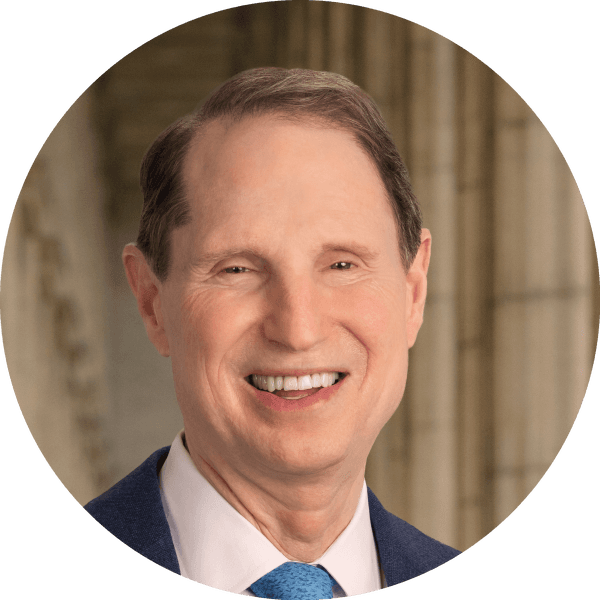
Ron Wyden
Democrat · OR
The Senate voted to end Trump's global tariff emergency
3 min readLast updated June 6, 2026
Why it matters
A 10% tariff hits most imports into the U.S., and the Senate just voted 51-47 to cancel the national emergency the administration used to impose it. The fight now moves to the House.
S.J. Res. 88 terminates the national emergency the President declared on April 2, 2025. That declaration is what the administration used to impose a 10% tariff on most imports, plus steeper duties on certain trading partners. End the emergency, and you cut off the legal footing those tariffs stand on.
Congress is using the National Emergencies Act, a law that lets lawmakers vote to end an emergency a president has declared. Sponsors argue an emergency order shouldn't be the basis for a sweeping, long-running tariff policy, and that trade taxes this large belong to Congress.
The resolution doesn't replace the tariffs with anything. It sets no new rates, creates no exemptions, and spends no money. It's a single up-or-down vote on whether the emergency keeps going.
The Senate passed it 51-47 on October 30, 2025, with Republican Rand Paul joining Senate Democrats. It then moved to the House, where it's currently held at the desk. Even if the House passes it, the President can veto it — and an override would take two-thirds of both chambers.
Bill Progress
IntroducedOct 7
Committee
Pass SenateOct 30
Pass House
Signed
Law
Latest Action · Oct 31, 2025
1/3
Passed the Senate, received in House
S.J.Res. 88 Bill Summary
What S.J.Res. 88 actually does.
1
Cancels the emergency behind the tariffs
Terminates the national emergency the President declared on April 2, 2025 in Executive Order 14257 — the order the administration used to impose global tariffs.
2
Takes effect the day it's signed
The emergency would end on the date the resolution becomes law, not after a delay or phase-out.
3
Uses Congress's power to end an emergency
Relies on the National Emergencies Act, which lets Congress vote to terminate a national emergency a president has declared.
4
Doesn't replace the tariffs
Sets no new tariff rates, creates no exemptions, and establishes no new trade program. It only ends the emergency.
Who benefits from S.J.Res. 88?
Shoppers buying imported goods
A 10% tariff on most imports raises landed costs, and those costs often reach consumers as higher prices. If the tariffs unwind, that pressure could ease.
Businesses that import parts or products
Manufacturers and retailers that depend on foreign-made components or finished goods could see lower and more predictable costs if the broad tariffs end.
Lawmakers who want Congress back in trade decisions
Members who believe major tariff policy should run through Congress, not an emergency order, gain a precedent for using the National Emergencies Act to check it.
Who is affected by S.J.Res. 88?
The administration
The President would lose the specific emergency authority the resolution targets as the basis for the global tariffs.
U.S. producers shielded by the tariffs
Domestic firms that gained an edge from higher barriers on foreign competitors could face more import competition if the tariffs fall away.
Customs and trade agencies
Federal agencies that collect and enforce the duties would have to revise guidance and collection if the emergency authority is terminated.
Foreign exporters and trading partners
Companies and governments hit by the global tariffs could regain easier access to the U.S. market if the duties are rolled back.
On the Record
What Congress Is Saying
24 legislators have weighed in on S.J.Res. 88 — 10 Democrats, 14 Republicans.
Mr. President, I rise in opposition to S.J. Res. 88, which would terminate the trade deficit national emergency. I agree with my colleagues that tariffs should be more targeted to avoid harm to Americans. I made precisely that point at a Finance Committee hearing in May. We should consider more exemptions, whether for unavailable natural resources, capital equipment, or other key inputs. It is equally important that enforcement guidance provides the clarity that U.S. companies need to comply with the tariffs and make critical business decisions.

Mr. Speaker, I rise in support of the rule and of the underlying legislation. This morning, the Rules Committee met and produced a rule, House Resolution 1014, providing for consideration of H.R. 7147 and H.R. 7148. The rule provides for consideration of H.R. 7148, the Consolidated Appropriations Act, 2026, under a structured rule with two amendments made in order. The rule further provides that H.R. 7147, the Department of Homeland Security Appropriations Act, 2026, will be considered under a closed rule.

Mr. Speaker, I rise today in strong support of the rule to consider the final four fiscal year 2026 appropriations bills. These appropriations bills, like the previous eight that came before it, are fiscally responsible and represent a return to regular order. The deliberate and Member-driven approach of this process is a testament to the leadership of my friend and fellow Oklahoman, Chairman Tom Cole. This package will strengthen American military superiority and fund the E-7 Wedgetail program at Tinker Air Force Base.
Under the previous order, all time has expired. The joint resolution was ordered to be engrossed for a third reading and was read the third time. Vote on S.J. Res. 88
The Presiding Officer··Senate
S.J.Res. 88 also appeared in 2 more Senate floor references and 1 routine cosponsor filing.
SJRES88 Legislative Journey
House: Action Taken
Oct 31, 2025
Held at the desk.
Passed 51-47
Oct 30, 2025
Passed Senate without amendment by Yea-Nay Vote. 51 - 47. Record Vote Number: 600. (text: CR S7843)
+5 more actions this day
Committee Action
Oct 7, 2025
Read twice and referred to the Committee on Finance.
About the Sponsor
Ron Wyden
Democrat, OR · 45 years in Congress
Committees: Finance, Joint Committee on Taxation, Energy and Natural Resources
View full profile →
Cosponsors (6)
No new cosponsors in 379 days — momentum stalled
This bill has 6 cosponsors: 5 Democrats, 1 Republican, reflecting bipartisan support. Cosponsors represent 6 states: Kentucky, Massachusetts, New Hampshire, and 3 more.
5Democrats1Republican·6 statesBipartisan

Committee Sponsors
Finance Committee
12D14R1I
|2 signed25 not yet2 of 27 committee members cosponsored


10 Democrats across this committee haven't cosponsored yet. Mobilize their constituents
S.J.Res. 88 Quick Facts
Cosponsors
6



- Committee
- Finance
- Chamber
- Senate
- Policy
- Foreign Trade and International Finance
- Introduced
- Oct 7, 2025
Passed the Senate, received in House
Oct 31, 2025
Official Sources
S.J. Res. 88 on Congress.gov
The official bill page with sponsors, full action history, and current status in the House.
Full Text of S.J. Res. 88
The one-sentence resolution as passed by the Senate, terminating the April 2, 2025 tariff emergency.
Senate Roll Call Vote 600
The official 51-47 Senate vote of October 30, 2025, with each senator's recorded position.
National Emergencies Act — 50 U.S.C. 1622
Section 202 of this statute is the authority Congress is using to vote to terminate the emergency.
IEEPA — 50 U.S.C. 1701
The International Emergency Economic Powers Act, the emergency authority the President invoked to impose the tariffs.
Executive Order 14257 (Reciprocal Tariffs)
The April 2, 2025 order that declared the emergency and imposed the 10% tariff this resolution targets.
S.J.Res. 88 Common Questions
What does S.J. Res. 88 do?
It cancels the national emergency the President declared on April 2, 2025 — the declaration the administration used to impose a 10% tariff on most imports. The resolution is one sentence long and does nothing else.
Would S.J. Res. 88 lower tariffs and prices?
Not on its own. It ends the emergency the tariffs rest on, which could unwind them — but agencies and possibly courts would decide what happens to duties already in place. The resolution sets no new rates itself.
Did S.J. Res. 88 pass?
The Senate passed it on October 30, 2025 by a 51-47 vote. It then went to the House, where it's currently held at the desk with no scheduled vote.
Was the vote on S.J. Res. 88 bipartisan?
Mostly Democratic, with one Republican crossover: Sen. Rand Paul of Kentucky cosponsored it and joined Senate Democrats to pass it 51-47.
Can the President veto S.J. Res. 88?
Yes. It's a joint resolution, so it goes to the President like a bill. He can sign or veto it, and overriding a veto would take a two-thirds vote in both the House and the Senate.
Does S.J. Res. 88 create new tariff rates or exemptions?
No. The resolution only terminates the emergency. It sets no new tariff rates, creates no exemptions, and builds no replacement trade framework.
When would the tariff emergency end under S.J. Res. 88?
On the day the resolution becomes law. There's no waiting period — the emergency ends on the date of enactment.
What law lets Congress end a presidential emergency?
The National Emergencies Act. It includes a process that lets Congress vote to terminate an emergency a president has declared, which is the authority S.J. Res. 88 uses.
Based on S.J.Res. 88 bill text
S.J.Res. 88 Bill Text
“Terminating the national emergency declared to impose global tariffs.”
Source: U.S. Government Publishing Office
Bill Alerts
Get notified when S.J.Res. 88 moves
Committee votes, floor action, cosponsor changes — straight to your inbox.
Bill alerts + Legisletter's monthly briefing. Unsubscribe anytime.
Foreign Trade and International Finance Bills
9 related bills we're tracking
H.R. 1548
Leveling the Playing Field 2.0 Act

Beth Van DuyneR-TX




+88
92 cosponsors
Referred to the House Committee on Ways and Means.
Feb 24, 2025
HouseForeign Trade and International Finance
H.R. 1713
Agricultural Risk Review Act of 2025

Frank LucasR-OK



+16
20 cosponsors
Received in the Senate and Read twice and referred to the Committee on Banking, Housing, and Urban Affairs.
Jun 24, 2025
HouseForeign Trade and International Finance
H.R. 2071
Save Our Shrimpers Act

Troy NehlsR-TX




+16
20 cosponsors
Received in the Senate and Read twice and referred to the Committee on Foreign Relations.
May 13, 2026
HouseForeign Trade and International Finance
H.R. 2683
Remote Access Security Act

Michael LawlerR-NY



+13
17 cosponsors
Received in the Senate and Read twice and referred to the Committee on Banking, Housing, and Urban Affairs.
Jan 13, 2026
HouseForeign Trade and International Finance
H.R. 4930
To expand the sharing of information with respect to suspected violations of intellectual property rights in trade.

Blake MooreR-UT


+2
6 cosponsors
Received in the Senate and Read twice and referred to the Committee on Finance.
Apr 28, 2026
HouseForeign Trade and International Finance
H.R. 5885
GAIN AI Act of 2025
John MoolenaarR-MI



4 cosponsors
Referred to the House Committee on Foreign Affairs.
Oct 31, 2025
HouseForeign Trade and International Finance
H.R. 3727
Supporting American Allies Act

Jared MoskowitzD-FL


3 cosponsors
Referred to the House Committee on Ways and Means.
Jun 4, 2025
HouseForeign Trade and International Finance
H.R. 4326
To require the Congressional Budget Office to conduct an economic review of the economic impact of tariff modifications before implementation.
Josh GottheimerD-NJ

3 cosponsors
Referred to the House Committee on Ways and Means.
Jul 10, 2025
HouseForeign Trade and International Finance
H.R. 6996
Full AI Stack Export Promotion Act
Randy FineR-FL

1 cosponsor
Ordered to be Reported in the Nature of a Substitute by the Yeas and Nays: 37 - 7.
Apr 22, 2026
HouseForeign Trade and International Finance
Trending Right Now
Bills gaining momentum across Congress
H.R. 1502Surging+36
North Platte Canteen Congressional Gold Medal Act
Adrian SmithR-NE




+255
259 cosponsors
+36 this monthReferred to the House Committee on Financial Services.
Feb 21, 2025
HouseArmed Forces and National Security
H.R. 3569Surging+19
Fit to Serve Act

Adam SmithD-WA



+184
188 cosponsors
+19 this monthReferred to the House Committee on Armed Services.
May 21, 2025
HouseArmed Forces and National Security
H.R. 6130Surging+12
ASAP Act

Vern BuchananR-FL


+227
231 cosponsors
+12 this monthOrdered to be Reported in the Nature of a Substitute by the Yeas and Nays: 40 - 0.
Sep 16, 2026
HouseHealth
Tracking Foreign Trade and International Finance in Congress? Monitor bills, track cosponsor momentum, and launch advocacy campaigns — all from one advocacy platform.