H.R. 8770: SAFEGUARDS Act of 2026
Sponsor

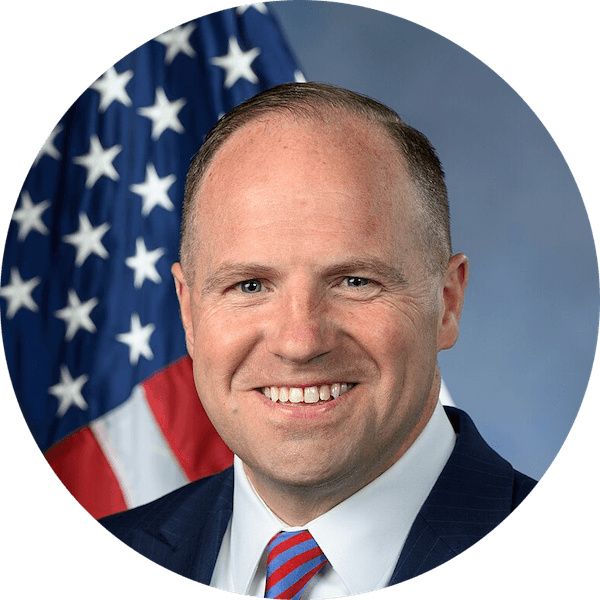
Dale Strong
Republican · AL-5
The security fee on your ticket should buy security
Why it matters
$750 million a year. H.R. 8770 would lock that much of the 9/11 Security Fee travelers already pay into airport security grants and checkpoint technology, starting in fiscal year 2028 — once Congress stops routing part of the fee into the general Treasury.
The 9/11 Security Fee is collected by airlines on every ticket and passed to TSA. The SAFEGUARDS Act opens with a sense of Congress calling it a passenger-paid fee created for one purpose, and says using it for anything else "undermines public trust."
That language points at a real practice. For years, part of the fee has been credited to the Treasury's general fund to help offset federal spending, rather than going to aviation security. The bill says that diversion should end no later than 2027, the date already set in current law.
Starting in fiscal year 2028, the first $500 million of fee revenue each year would go to airport security projects, and the next $250 million would go to checkpoint screening technology.
The $500 million goes to the existing Aviation Security Capital Fund, which TSA uses for grants and agreements with airports on security projects. The bill also directs TSA to set the fee so it collects at least that much for the fund each year.
The $250 million goes to a new Aviation Security Checkpoint Technology Fund inside the Department of Homeland Security. It pays for testing, buying, installing, and maintaining screening equipment — the scanners and systems you walk through — and the money does not expire at the end of the year.
There is a catch written into the text. Both deposits apply only after the general-fund offset has ended. If that diversion is extended, the new funding floors do not take effect.
Bill Progress
Latest Action · Jul 14, 2026
Passed the House, received in Senate
H.R. 8770 Bill Summary
What H.R. 8770 actually does.
Congress puts the fee's purpose on the record
A sense of Congress states the 9/11 Security Fee should fund only aviation security — passenger and baggage screening, security technology, and security personnel — and that its diversion to other purposes should end no later than 2027. This section expresses intent; it does not change the law by itself.
$500 million a year for airport security projects
Beginning in fiscal year 2028, the first $500 million in fee revenue each year goes to the Aviation Security Capital Fund, and TSA must set the fee to collect at least that amount for the fund.
Airport security grants get simpler terms
The bill replaces the fund's existing spending rules with a single authority: TSA can use the money to make grants or enter into related agreements for airport security projects.
$250 million a year for checkpoint scanners and screening systems
The next $250 million each year goes to a new Aviation Security Checkpoint Technology Fund within DHS, covering testing, procurement, deployment, installation, and upkeep of checkpoint technology.
Technology money doesn't expire
Funds in the checkpoint technology account stay available until spent, so equipment purchases are not tied to a single year's budget deadline.
Everything waits on the end of the Treasury diversion
Both funding streams apply only after fee revenue is no longer credited as offsetting receipts to the Treasury's general fund.
Who benefits from H.R. 8770?
Anyone who flies commercially
Every passenger pays up to $5.60 per one-way trip. Under this bill, a guaranteed $750 million of that money each year would go to the screening equipment and airport security projects the fee is named for.
Airports planning security upgrades
Airports rebuilding checkpoints, baggage screening areas, or other security infrastructure could seek grants from a fund with a $500 million annual floor.
TSA screening operations
TSA would have two dedicated funding streams it could plan around year to year, rather than depending entirely on annual appropriations for major equipment.
Screening technology manufacturers
Companies that build and service CT scanners, body scanners, and identity verification systems would see a steady $250 million-a-year market for testing, procurement, and maintenance.
Who is affected by H.R. 8770?
The federal budget
Fee revenue that has been counted as general Treasury receipts would be reserved for aviation security, removing an offset lawmakers have used to help pay for other spending.
Congressional budget negotiators
Any future deal that extends the fee diversion past 2027 would also stop this bill's funding floors from starting.
Department of Homeland Security
DHS would house and manage the new Aviation Security Checkpoint Technology Fund.
TSA leadership
TSA would have to set the fee so it collects at least $500 million for the capital fund and at least $250 million for the technology fund every year.
Cost & Funding
Authorization
At least $750 million a year from existing 9/11 Security Fee revenue, beginning in fiscal year 2028. No new fee and no new appropriation — the bill redirects money travelers already pay, once the Treasury diversion ends.
- $500 million a year goes to the Aviation Security Capital Fund; the next $250 million goes to the new checkpoint technology fund.
- At $5.60 per one-way trip, $750 million equals the fee on roughly 134 million one-way flights a year.
- Split: two-thirds to airport security projects, one-third to checkpoint technology.
- The checkpoint technology money does not expire at year-end, which allows multi-year equipment purchases.
- Both deposits are conditioned on ending the practice of crediting part of the fee to the Treasury's general fund.
- No CBO cost estimate was available for this analysis.
HR8770 Legislative Journey
Committee Action
Jul 14, 2026
Received in the Senate and Read twice and referred to the Committee on Commerce, Science, and Transportation.
House: Vote: 4389-4390
Jul 13, 2026
On motion to suspend the rules and pass the bill, as amended Agreed to by voice vote. (text: CR H4389-4390)
House: Committee Action
Jul 9, 2026
Reported (Amended) by the Committee on Homeland Security. H. Rept. 119-737.
House: Vote: 26-3
Jun 24, 2026
Ordered to be Reported by the Yeas and Nays: 26 - 3.
House: Committee Action
May 13, 2026
Referred to the Subcommittee on Transportation and Maritime Security.
House: Committee Action
May 12, 2026
Referred to the House Committee on Homeland Security.
About the Sponsor
Dale Strong
Republican, Alabama's 5th congressional district · 3 years in Congress
Committees: Homeland Security, Appropriations
View full profile →
Cosponsors (6)
This bill has 6 cosponsors: 1 Democrat, 5 Republicans, reflecting bipartisan support. Cosponsors represent 5 states: Colorado, Mississippi, New York, and 2 more.

Committee Sponsors
Commerce, Science, and Transportation Committee
0 of 28 committee members cosponsored
No committee members have cosponsored this bill
Homeland Security Committee
6 of 33 committee members cosponsored


28 Republicans across these committees haven't cosponsored yet. Mobilize their constituents
H.R. 8770 Quick Facts



- Committee
- Commerce, Science, and Transportation
- Chamber
- House
- Policy
- Transportation and Public Works
- Introduced
- May 12, 2026
Passed the House, received in Senate
Jul 14, 2026
Official Sources
Official status page for the SAFEGUARDS Act of 2026, with the bill text, actions, and the House vote record.
TSA explains the September 11 Security Fee of $5.60 per one-way trip and publishes annual collections, the revenue this bill would direct to aviation security.
The statute that sets the 9/11 Security Fee and the yearly amounts credited to the Treasury general fund, which H.R. 8770 amends.
The law behind the Aviation Security Capital Fund, which would receive the first $500 million of fee revenue each year under the bill.
TSA overview of CT checkpoint scanners, the kind of screening technology the new checkpoint technology fund would buy and maintain.
The House Homeland Security Committee report on the bill, explaining its purpose and the committee changes adopted before the floor vote.
H.R. 8770 Common Questions
What is the 9/11 Security Fee on my plane ticket?
It's a TSA fee airlines collect on each ticket: $5.60 per one-way trip, capped at $11.20 for a round trip. It was created after the September 11 attacks to help pay for aviation security.
Does H.R. 8770 raise the security fee?
No. The bill doesn't set a new fee amount. It controls where existing fee revenue goes, directing at least $750 million a year to airport security and checkpoint technology.
Isn't the security fee already spent on security?
Not all of it. For years, part of the fee has been credited to the Treasury's general fund to offset other federal spending. The bill says that diversion should end no later than 2027.
What would the new checkpoint technology fund pay for?
Testing, buying, installing, and maintaining screening equipment at airport checkpoints. It would get $250 million a year, and the money stays available until spent.
How can airports get money from H.R. 8770?
Through TSA. The first $500 million a year goes to the Aviation Security Capital Fund, and TSA can use it to make grants or sign agreements with airports for security projects.
When would the $750 million start?
Fiscal year 2028 at the earliest, and only if Congress has ended the practice of sending part of the fee to the general Treasury. If that diversion is extended, the new funding doesn't start.
Is H.R. 8770 bipartisan?
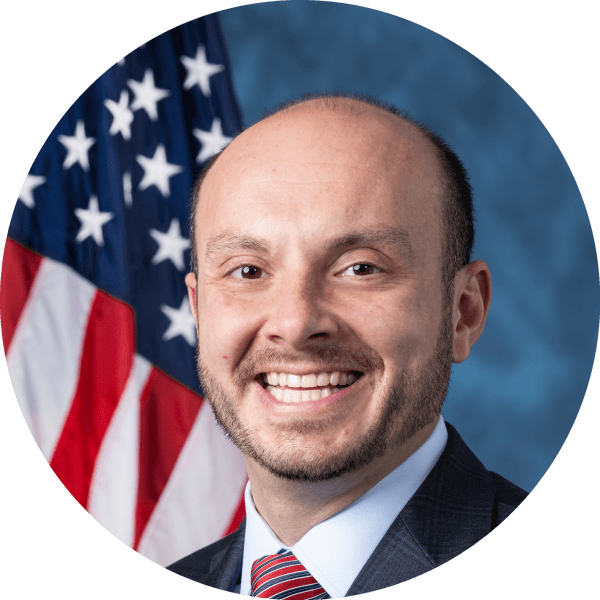
Yes. Rep. Dale Strong (R-AL) introduced it with Rep. Timothy Kennedy (D-NY) among the original cosponsors, and the House passed it by voice vote on July 13, 2026.
Where is H.R. 8770 now?
It passed the House and was referred to the Senate Committee on Commerce, Science, and Transportation on July 14, 2026. The committee would need to act before a full Senate vote.
Based on H.R. 8770 bill text
H.R. 8770 Bill Text
“To amend title 49, United States Code, to establish funds for investments in aviation security, and for other purposes.”
Source: U.S. Government Publishing Office
Get notified when H.R. 8770 moves
Committee votes, floor action, cosponsor changes — straight to your inbox.
Bill alerts + Legisletter's monthly briefing. Unsubscribe anytime.
Transportation and Public Works Bills
9 related bills we're tracking
Stronger Communities through Better Transit Act





Referred to the Subcommittee on Highways and Transit.
May 16, 2025
SHIPS for America Act of 2025




Referred to the Subcommittee on Coast Guard and Maritime Transportation.
May 1, 2025
ALERT Act


Received in the Senate and Read twice and referred to the Committee on Commerce, Science, and Transportation.
Apr 15, 2026
PART Act



Forwarded by Subcommittee to Full Committee by Voice Vote.
Feb 10, 2026
ROTOR Act





On motion to suspend the rules and pass the bill Failed by the Yeas and Nays: (2/3 required): 264 - 133 (Roll no. 72).
Feb 24, 2026
SELF DRIVE Act of 2026



Forwarded by Subcommittee to Full Committee by the Yeas and Nays: 12 - 11.
Feb 10, 2026
BASICS Act




Referred to the House Committee on Transportation and Infrastructure.
Feb 9, 2026
She DRIVES Act




Placed on Senate Legislative Calendar under General Orders. Calendar No. 141.
Jul 31, 2025
To amend title 23, United States Code, and the Infrastructure Investment and Jobs Act with respect to vehicle roadside crashes, work zone safety, and for other purposes.


Referred to the Subcommittee on Highways and Transit.
Apr 24, 2025
Trending Right Now
Bills gaining momentum across Congress
North Platte Canteen Congressional Gold Medal Act




Referred to the House Committee on Financial Services.
Feb 21, 2025
America’s Olympic and Paralympic Games Commemorative Coins Act




Referred to the House Committee on Financial Services.
Jul 14, 2025
Fit to Serve Act



Referred to the House Committee on Armed Services.
May 21, 2025
Tracking Transportation and Public Works in Congress? Monitor bills, track cosponsor momentum, and launch advocacy campaigns — all from one advocacy platform.