H.R. 6555: Enhancing Bank Resolution Participation Act
Sponsor

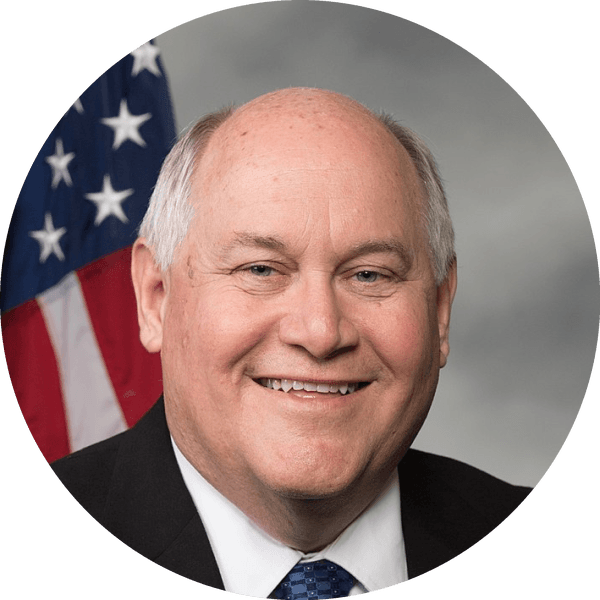
Bill Huizenga
Republican · MI-4
Congress wants more buyers ready when a bank fails
Why it matters
When a bank fails, the FDIC has days — sometimes a weekend — to find a buyer, and a thin pool of bidders can mean a costlier rescue paid for out of the Deposit Insurance Fund. H.R. 6555 orders the three federal bank regulators to study whether tools that widen that buyer pool, including ones that let private equity bid, should be used more. They'd have one year to report back.
H.R. 6555, the Enhancing Bank Resolution Participation Act, is a study order — it grants no new powers, spends no new money, and forces no one to use any particular tool. It directs the OCC, the FDIC, and the Federal Reserve to jointly examine two tools that can pull more bidders into a failed-bank sale.
The first is the "shelf charter" — a pre-approved bank charter that sits ready so a new owner can move fast when a bank collapses. The second is the FDIC's "modified bidder qualification process," a path the agency opened in 2008 that lets firms without an existing bank charter, including private equity, bid for a failed bank's assets.
Regulators would have to look back at every conditional or preliminary shelf charter approval since January 1, 2008, and check whether either tool was considered in any 2023 bank receivership. For those 2023 failures, the study asks a pointed question: could wider use of these tools have drawn more bidders, gotten a better deal, protected the Deposit Insurance Fund, or reduced the need for an emergency determination by the Treasury Secretary?
The report is due to the House and Senate banking committees within one year, and it has to flag legal or regulatory roadblocks and recommend changes — including a hard look at the benefits and risks of private equity owning banks this way.
Bill Progress
Latest Action · Feb 25, 2026
Placed on House floor schedule, Calendar No. 459.
H.R. 6555 Bill Summary
What H.R. 6555 actually does.
Three regulators study how to widen the bidder pool
The OCC, FDIC, and Federal Reserve would have to jointly examine shelf charters and the FDIC's modified bidder qualification process — the two tools the bill is built around for bringing more buyers into a failed-bank sale.
Every shelf charter approval since 2008 gets reviewed
Regulators would have to look back at all conditional or preliminary shelf charter approvals the OCC granted from January 1, 2008, through the bill's enactment, plus the overall impact of both tools on financial stability and consumer access to banking.
A direct look at the 2023 bank failures
The study has to check whether these tools were considered or used in any 2023 receivership the FDIC handled, and whether wider use could have brought in more bidders, protected the Deposit Insurance Fund, or reduced the need for a Treasury emergency determination.
Weighs whether private equity should own banks this way
Regulators would have to analyze the benefits and risks of private equity firms owning banks through shelf charters and the modified bidder process — the most contested piece of the whole review.
Maps the legal roadblocks
The study has to examine how the Bank Holding Company Act and the Home Owners' Loan Act apply to shelf charter proposals, identifying where current law gets in the way of using these tools in a bank failure.
Report to Congress within one year
Within a year of enactment, the regulators would have to send the House and Senate banking committees their findings plus recommendations for legislative or regulatory changes.
Who benefits from H.R. 6555?
Anyone who banks at a smaller institution
A bigger pool of qualified buyers can mean a smoother handoff when a bank fails — less disruption to your deposits, payments, and access to your money during the transition to a new owner.
The Deposit Insurance Fund
The fund, paid into by banks, covers the losses when a failed bank's assets sell for less than its obligations. More competitive bidding could lower those losses — the bill asks regulators to test exactly that.
Private equity firms and nonbank investors
If the study leads to reforms, firms without an existing bank charter could be better positioned to bid for failed banks — the modified bidder process exists to let them in.
Federal bank regulators
The OCC, FDIC, and Fed would get a formal, shared record of what these tools can do and where current rules limit them before the next crisis hits.
Who is affected by H.R. 6555?
The OCC, FDIC, and Federal Reserve
The three agencies would have to do the study jointly and deliver a report to Congress within one year, using existing staff and resources — the bill provides no new money for the work.
Private equity firms and nonbank investors
The study turns directly on whether and how these firms should participate more in failed-bank acquisitions, including the risks of them owning banks through shelf charters.
Traditional banks and bank holding companies
If future reforms make failed-bank acquisitions easier for outside investors, established banks could face more competition the next time assets come up for sale.
The House and Senate banking committees
Both committees would receive the report and use it to decide whether broader changes to bank-resolution law are worth pursuing.
HR6555 Legislative Journey
House: Committee Action
Feb 25, 2026
Reported (Amended) by the Committee on Financial Services. H. Rept. 119-534.
House: Vote: 51-0
Dec 17, 2025
Ordered to be Reported (Amended) by the Yeas and Nays: 51 - 0.
House: Committee Action
Dec 16, 2025
Committee Consideration and Mark-up Session Held
House: Committee Action
Dec 10, 2025
Referred to the House Committee on Financial Services.
About the Sponsor
Bill Huizenga
Republican, Michigan's 4th congressional district · 15 years in Congress
Committees: Financial Services, Foreign Affairs
View full profile →
Cosponsors (2)
This bill has 2 cosponsors: 1 Democrat, 1 Republican, reflecting bipartisan support. Cosponsors represent 2 states: New Jersey, New York.
Committee Sponsors
Financial Services Committee
2 of 53 committee members cosponsored


29 Republicans across this committee haven't cosponsored yet. Mobilize their constituents
H.R. 6555 Quick Facts


- Committee
- Financial Services
- Chamber
- House
- Policy
- Finance and Financial Sector
- Introduced
- Dec 10, 2025
Placed on House floor schedule, Calendar No. 459.
Feb 25, 2026
Official Sources
The official bill record, including text, the 51-0 committee vote, and the Union Calendar status.
The October 2017 OCC report the bill uses to define a 'shelf charter.'
The OCC's first conditional shelf charter approval — the kind of approval since January 2008 the study must review.
How the FDIC's modified bidder qualification process lets firms without a bank charter bid for a failed bank.
The official record of bank failures, including the 2023 receiverships the study examines.
The fund the bill asks regulators to test whether wider bidding could better protect.
One of the two statutes the study must analyze for how it applies to shelf charter proposals.
The other statute the bill names as a potential legal roadblock to shelf charters.
H.R. 6555 Common Questions
What does H.R. 6555 actually do?
It orders the OCC, FDIC, and Federal Reserve to jointly study two tools — shelf charters and the modified bidder qualification process — that can bring more buyers into a failed-bank sale. It grants no new powers and spends no new money.
What is a shelf charter?
It's a pre-approved bank charter that sits ready so a buyer can move quickly when a bank fails. The bill uses the definition from the OCC's October 2017 report on permissible activities for national banks.
Would this let private equity firms buy failed banks?
Not by itself — it's a study. But it directly examines the benefits and risks of private equity owning banks through these tools, and the modified bidder process the FDIC opened in 2008 already lets firms without a bank charter bid for a failed bank's assets.
Does H.R. 6555 look at the 2023 bank failures?
Yes. Regulators have to check whether these tools were considered in any 2023 FDIC receivership, and whether wider use could have drawn more bidders, protected the Deposit Insurance Fund, or reduced the need for a Treasury emergency determination.
How soon would the report be due?
Within one year of enactment. The OCC, FDIC, and Federal Reserve would have to send a joint report to the House Financial Services Committee and the Senate Banking Committee.
Could the study change bank laws?
Indirectly. The report has to flag legal and regulatory roadblocks and recommend specific legislative or regulatory changes, including how the Bank Holding Company Act applies to shelf charter proposals. Congress would still have to act on any of it.
What's the status of H.R. 6555?
It cleared the House Financial Services Committee 51-0 and sits on the Union Calendar awaiting a floor vote. It would still need to pass the full House and the Senate before becoming law.
Based on H.R. 6555 bill text
H.R. 6555 Bill Text
“To require the Comptroller of the Currency and the Federal Deposit Insurance Corporation to carry out a study on shelf charters and modified bidder qualification processes, and for other purposes.”
Source: U.S. Government Publishing Office
Get notified when H.R. 6555 moves
Committee votes, floor action, cosponsor changes — straight to your inbox.
Bill alerts + Legisletter's monthly briefing. Unsubscribe anytime.
Finance and Financial Sector Bills
9 related bills we're tracking
America’s Olympic and Paralympic Games Commemorative Coins Act





Referred to the House Committee on Financial Services.
Jul 14, 2025
761st Tank Battalion Congressional Gold Medal Act


Referred to the Committee on Financial Services, and in addition to the Committee on House Administration, for a period to be subsequently determined by the Speaker, in each case for consideration of such provisions as fall within the jurisdiction of the committee concerned.
Feb 26, 2025
Taxpayer Data Protection Act



Sponsor introductory remarks on measure. (CR H625-626)
Feb 11, 2025
Repealing Big Brother Overreach Act



Placed on the Union Calendar, Calendar No. 609.
Jun 18, 2026
Rosie the Riveter Commemorative Coin Act





Referred to the House Committee on Financial Services.
Jan 15, 2025
HELPER Act of 2025

Referred to the House Committee on Financial Services.
Mar 14, 2025
Anti-CBDC Surveillance State Act





Motion to reconsider laid on the table Agreed to without objection.
Jul 17, 2025
Protecting Privacy in Purchases Act




Received in the Senate and Read twice and referred to the Committee on Banking, Housing, and Urban Affairs.
Jul 15, 2026
Veterans Member Business Loan Act

Referred to the House Committee on Financial Services.
Jan 16, 2025
Trending Right Now
Bills gaining momentum across Congress
North Platte Canteen Congressional Gold Medal Act



Referred to the House Committee on Financial Services.
Feb 21, 2025
Fit to Serve Act





Referred to the House Committee on Armed Services.
May 21, 2025
ASAP Act


Ordered to be Reported in the Nature of a Substitute by the Yeas and Nays: 40 - 0.
Sep 16, 2026
Tracking Finance and Financial Sector in Congress? Monitor bills, track cosponsor momentum, and launch advocacy campaigns — all from one advocacy platform.