H.R. 6551: New BANK Act of 2025
Sponsor

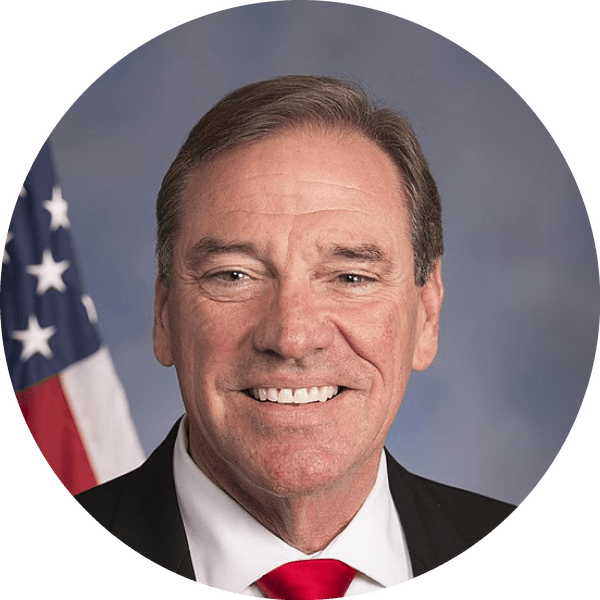
Barry Loudermilk
Republican · GA-11
Starting a bank is a black box — this opens it
Why it matters
Very few new banks open anymore, and no one publishes why so many applications stall. This bill would make four federal regulators release annual scorecards showing how many charter applications they got, how many they approved or denied, and how long each decision took.
The New BANK Act of 2025 aims at the front door of the banking system. It does not change the standards for approving a new bank, credit union, holding company, or deposit insurance application. It tells regulators to publish an annual scorecard of what's actually happening at that front door.
Four agencies would each report yearly: the Office of the Comptroller of the Currency, the National Credit Union Administration, the Federal Reserve, and the FDIC. Each report would show how many applications came in, how many were approved, denied, withdrawn, or returned, and the mean and median time it took to decide.
The median-time requirement matters more than it sounds. An average can be dragged up by a handful of stuck applications, while the median shows the typical wait. Publishing both reveals whether long delays are the exception or the norm.
There's a limit built in. Regulators only have to explain the common reasons applications fail "to the extent practicable," which gives them room to keep those explanations vague. And because the bill sets no deadlines, creates no appeals, and eases no standards, its real effect rides on whether public numbers create enough pressure to change how agencies move.
A fifth report would pull in the states. The Fed, FDIC, and NCUA would work with state regulators to publish state-by-state data on state-chartered banks and credit unions, so the picture isn't limited to federal charters.
Bill Progress
Latest Action · Feb 25, 2026
Placed on House floor schedule, Calendar No. 455.
H.R. 6551 Bill Summary
What H.R. 6551 actually does.
Yearly scorecard on new national banks
The Comptroller of the Currency would publish annual data on national bank and federal savings association charter applications — how many were received, approved (preliminary and final), denied, withdrawn, expired, mooted, or returned — plus the mean and median time to decide.
Yearly scorecard on new credit unions
The National Credit Union Administration would publish annual numbers on federal credit union charter applications, including approvals, denials, withdrawals, inactive applications, and those returned for resubmission, along with approval timelines.
Yearly scorecard on bank holding companies
The Federal Reserve would publish annual data on applications to become a top-tier depository institution holding company, including approvals, denials, withdrawals, mooted cases, returns, and mean and median approval times.
Yearly scorecard on deposit insurance
The FDIC would publish annual information on deposit insurance applications, including how many were approved, denied, withdrawn, mooted, or returned, and how long approvals took.
State-by-state data on state charters
The Federal Reserve, FDIC, and NCUA would jointly work with state regulators to publish annual state-by-state data on state bank, savings association, and credit union charter applications, including approval counts and approval times.
Why applications fall apart
Each report would, where practical, explain the most common reasons applications were denied, withdrawn, allowed to lapse, marked inactive, or sent back.
Who benefits from H.R. 6551?
People trying to start a bank or credit union
Founders and their investors would get a realistic read on how long reviews take, how often applications succeed, and the common reasons proposals stall — before they spend a year and serious money applying.
Communities without a local bank
Groups pushing to open a bank or credit union in an underserved area could track whether regulators are actually clearing new institutions or quietly slow-walking them.
Congress and oversight watchdogs
Lawmakers would get a regular, comparable dataset to judge whether regulators are moving applications fairly and consistently across agencies.
Researchers and journalists
Public data on charter approvals, denials, and delays would make it far easier to track trends in new bank creation.
Who is affected by H.R. 6551?
Federal banking regulators
The OCC, Federal Reserve, FDIC, and NCUA would need to collect, standardize, and publish detailed application data every year.
State banking and credit union regulators
They would coordinate with federal agencies and supply state-level charter data for the joint annual report.
Applicants for new charters
Their applications would not face new approval standards, but the aggregate outcomes and delays would become visible to the public.
Existing banks and credit unions
Over time they could face more competition if the reporting builds pressure for faster, more consistent approvals of new entrants.
HR6551 Legislative Journey
House: Committee Action
Feb 25, 2026
Reported (Amended) by the Committee on Financial Services. H. Rept. 119-530.
House: Vote: 53-0
Dec 17, 2025
Ordered to be Reported (Amended) by the Yeas and Nays: 53 - 0.
House: Committee Action
Dec 16, 2025
Committee Consideration and Mark-up Session Held
House: Committee Action
Dec 10, 2025
Referred to the House Committee on Financial Services.
About the Sponsor
Barry Loudermilk
Republican, Georgia's 11th congressional district · 11 years in Congress
Committees: House Select Subcommittee to Investigate the Remaining Questions Surrounding January 6, 2021, House Administration, Financial Services
View full profile →
Cosponsors (2)
This bill has 2 cosponsors: 1 Democrat, 1 Republican, reflecting bipartisan support. Cosponsors represent 2 states: New Jersey, New York.
Committee Sponsors
Financial Services Committee
2 of 53 committee members cosponsored


29 Republicans across this committee haven't cosponsored yet. Mobilize their constituents
H.R. 6551 Quick Facts


- Committee
- Financial Services
- Chamber
- House
- Policy
- Finance and Financial Sector
- Introduced
- Dec 10, 2025
Placed on House floor schedule, Calendar No. 455.
Feb 25, 2026
Official Sources
Official bill text, status, sponsors, and the 53-0 committee report for the New BANK Act of 2025.
The Comptroller of the Currency office that decides the national bank and federal savings association charter applications Section 2 would require reporting on.
The NCUA chartering process for new federal credit unions that Section 3 would require annual approval and timing data on.
Filing information for applications to form a depository institution holding company, the subject of Section 4's annual report.
The FDIC deposit insurance application process for de novo institutions covered by Section 5's reporting requirement.
An existing FDIC tracker of pending deposit insurance applications — a preview of the kind of data this bill would standardize across regulators.
The statutory definition of a State credit union that Section 6 cites for the joint state-by-state report.
H.R. 6551 Common Questions
What does the New BANK Act actually do?
It makes federal banking regulators publish an annual report on new bank and credit union applications — how many came in, how many were approved or denied, and how long each decision took. It's a transparency bill, not a change to the rules.
Does H.R. 6551 make it easier to start a bank?
No. The bill doesn't change any approval standards, set deadlines, or create an appeals process. It only forces regulators to publish data on how applications are handled. The hope is that public numbers create pressure for faster, more consistent decisions.
Which regulators have to publish these reports?
Four federal agencies: the OCC for national banks, the NCUA for federal credit unions, the Federal Reserve for bank holding companies, and the FDIC for deposit insurance. A fifth, joint report covers state-chartered institutions.
Will the reports show how long bank approvals take?
Yes. Each agency must publish both the mean and the median time to approve applications. The median matters because it shows the typical wait, while an average can be skewed by a few badly delayed cases.
Does it cover state-chartered banks and credit unions too?
Yes. The Fed, FDIC, and NCUA would work with state regulators on a joint report showing state-by-state data on state bank, savings association, and credit union charter applications, including how many were approved and how long it took.
Will regulators explain why applications get rejected?
Sometimes. Each report must list the most common reasons applications were denied, withdrawn, or expired — but only "to the extent practicable." That wording gives agencies room to keep their explanations general.
Who sponsored H.R. 6551, and does it have bipartisan support?
Yes. It's sponsored by Republican Barry Loudermilk of Georgia, with cosponsors from both parties. The House Financial Services Committee voted it out 53-0, a sign of broad agreement on the transparency idea.
Has the bill become law yet?
Not yet. The committee reported it and it's on the Union Calendar, meaning it's waiting for a vote on the House floor. It would still need to pass the full House, the Senate, and be signed by the president.
Based on H.R. 6551 bill text
H.R. 6551 Bill Text
“To require annual reports on national bank and Federal savings association charter applications, depository institution holding company applications, Federal deposit insurance applications, and State depository institution charter applications, and for other purposes.”
Source: U.S. Government Publishing Office
Get notified when H.R. 6551 moves
Committee votes, floor action, cosponsor changes — straight to your inbox.
Bill alerts + Legisletter's monthly briefing. Unsubscribe anytime.
Finance and Financial Sector Bills
9 related bills we're tracking
America’s Olympic and Paralympic Games Commemorative Coins Act





Referred to the House Committee on Financial Services.
Jul 14, 2025
761st Tank Battalion Congressional Gold Medal Act




Referred to the Committee on Financial Services, and in addition to the Committee on House Administration, for a period to be subsequently determined by the Speaker, in each case for consideration of such provisions as fall within the jurisdiction of the committee concerned.
Feb 26, 2025
Taxpayer Data Protection Act





Sponsor introductory remarks on measure. (CR H625-626)
Feb 11, 2025
Repealing Big Brother Overreach Act





Placed on the Union Calendar, Calendar No. 609.
Jun 18, 2026
Rosie the Riveter Commemorative Coin Act





Referred to the House Committee on Financial Services.
Jan 15, 2025
HELPER Act of 2025




Referred to the House Committee on Financial Services.
Mar 14, 2025
Anti-CBDC Surveillance State Act





Motion to reconsider laid on the table Agreed to without objection.
Jul 17, 2025
Protecting Privacy in Purchases Act




Received in the Senate and Read twice and referred to the Committee on Banking, Housing, and Urban Affairs.
Jul 15, 2026
Veterans Member Business Loan Act



Referred to the House Committee on Financial Services.
Jan 16, 2025
Trending Right Now
Bills gaining momentum across Congress
North Platte Canteen Congressional Gold Medal Act





Referred to the House Committee on Financial Services.
Feb 21, 2025
Fit to Serve Act





Referred to the House Committee on Armed Services.
May 21, 2025
ASAP Act




Ordered to be Reported in the Nature of a Substitute by the Yeas and Nays: 40 - 0.
Sep 16, 2026
Tracking Finance and Financial Sector in Congress? Monitor bills, track cosponsor momentum, and launch advocacy campaigns — all from one advocacy platform.