H.R. 6546: Merger Process Review Act
Sponsor

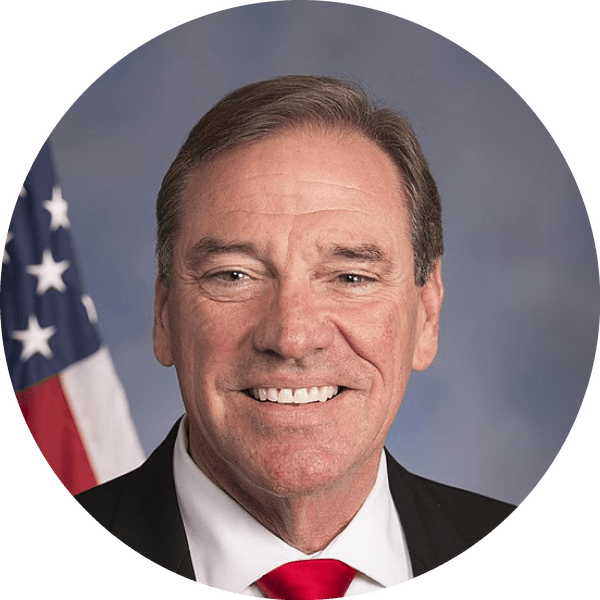
Roger Williams
Republican · TX-25
Bank merger reviews shouldn't be a black box
Why it matters
4 federal banking regulators decide whether banks and credit unions can merge. H.R. 6546 orders a public audit of each one within a year, then every 3 years, putting average and median review times, the causes of delay, and the effects on competition and customers on the record.
H.R. 6546 sends each banking regulator's own inspector general, the internal watchdog, to examine how that agency handles merger applications. It covers the Federal Reserve, the Office of the Comptroller of the Currency, the FDIC, and the National Credit Union Administration. The first review is due within 1 year of enactment, and another every 3 years after that.
Each review has to start with numbers: the mean and median time it takes to process an application. It then has to name the sources of delay that may be holding up deals that already meet the legal standards for approval, and compare the benefits and risks of different ways of running a review.
Speed is not the only thing on the checklist. The inspectors general must also judge how the review process, and the mergers it approves, affect competition, financial stability, bank safety, and whether customers can still get the products and services they rely on. Each review ends with specific recommendations.
The results go to Congress and get posted online. The agency then has to publish its own written answer, including a plan to carry out whichever recommendations it considers appropriate. The approval standards stay exactly where they are; what changes is that the timing and handling of every regulator's merger reviews becomes a matter of public record on a fixed schedule.
The definition of a merger is broad. It reaches outright acquisitions of a bank or credit union as well as deals for its stock, its assets, or its deposits, filed under banking, thrift, credit union, and bank holding company law.
Bill Progress
Latest Action · Feb 25, 2026
Placed on House floor schedule, Calendar No. 453.
H.R. 6546 Bill Summary
What H.R. 6546 actually does.
Every merger regulator gets audited on a schedule
The inspector general at the Federal Reserve, OCC, FDIC, and NCUA must each review their agency's merger review procedures within 1 year of enactment and every 3 years after that.
Wait times become a published number
Each review must evaluate measurable data, including the mean and median time it takes the agency to process a merger application.
Bottlenecks get named
Reviews must identify sources of delay that may hold up deals that already meet the legal requirements for approval.
Customers and competition stay on the checklist
Reviews must assess how merger procedures and the mergers they approve affect competition, financial stability, safety and soundness, and the availability of financial products and services.
Recommendations, then a public response
Each report goes to Congress and online. The agency must publish a written response and a plan to implement the recommendations to the extent it considers appropriate.
Credit unions and asset deals are included
The review covers applications to acquire an insured bank or credit union, its equity, its assets, or its deposits, across six separate federal approval authorities.
Who benefits from H.R. 6546?
Community banks and credit unions looking to combine
Smaller institutions often merge to spread compliance costs or plan for succession. They would get a published benchmark of how long each regulator takes, and where applications tend to stall.
Customers of a bank that is being bought
Depositors and borrowers would be able to read how regulators weigh competition and access to services when approving deals like the one affecting their accounts.
Lawmakers overseeing the banking agencies
Congress would receive a recurring set of reports and written agency responses from all four regulators, rather than relying on hearings or complaints about individual deals.
Who is affected by H.R. 6546?
The Federal Reserve, OCC, FDIC, and NCUA
Each agency would face a recurring audit of its merger process and would have to publish a written response, including an implementation plan, after every report.
Inspector general offices at the four regulators
These offices take on a standing review every 3 years, covering processing data, delay analysis, competition effects, and recommendations.
Groups that scrutinize bank consolidation
The review asks regulators to find delays in deals that meet approval standards, which could build pressure for faster approvals. The same reviews must also report on competition and customer access, giving critics of consolidation a public record to cite.
HR6546 Legislative Journey
House: Committee Action
Feb 25, 2026
Reported (Amended) by the Committee on Financial Services. H. Rept. 119-528.
House: Vote: 52-0
Dec 17, 2025
Ordered to be Reported (Amended) by the Yeas and Nays: 52 - 0.
House: Committee Action
Dec 16, 2025
Committee Consideration and Mark-up Session Held
House: Committee Action
Dec 9, 2025
Referred to the House Committee on Financial Services.
About the Sponsor
Roger Williams
Republican, Texas's 25th congressional district · 13 years in Congress
Committees: Small Business, Financial Services
View full profile →
Cosponsors (2)
All 2 cosponsors are Republicans. Cosponsors represent 2 states: New York, Ohio.
Committee Sponsors
Financial Services Committee
2 of 53 committee members cosponsored


28 Republicans across this committee haven't cosponsored yet. Mobilize their constituents
H.R. 6546 Quick Facts


- Committee
- Financial Services
- Chamber
- House
- Policy
- Finance and Financial Sector
- Introduced
- Dec 9, 2025
Placed on House floor schedule, Calendar No. 453.
Feb 25, 2026
Official Sources
Bill text, status, the committee report (H. Rept. 119-528), and every action on the Merger Process Review Act.
A March 2026 inspector general evaluation found the Fed does not track enough data to monitor how efficiently it processes merger and acquisition applications, the same kind of review H.R. 6546 would make recurring.
The Fed already publishes average and median approval times for merger applications, the baseline the bill asks every regulator’s inspector general to evaluate.
The OCC’s procedures for reviewing mergers of national banks and federal savings associations, one of the four processes the bill puts under audit.
The FDIC’s merger application forms, regulations, and policy statements under the Bank Merger Act.
How the National Credit Union Administration handles credit union merger applications, which the bill includes alongside bank deals.
Section 18(c) of the Federal Deposit Insurance Act sets the statutory factors regulators weigh when approving bank mergers, one of six authorities the bill covers.
H.R. 6546 Common Questions
What does the Merger Process Review Act do?
It requires the internal watchdog at each of the 4 federal banking regulators to audit how the agency handles merger applications, publish the results online, and send them to Congress. The first audit is due within 1 year, then every 3 years.
Would H.R. 6546 make it easier for banks to merge?
Not directly. The approval standards do not change and no deadline is imposed. The audits must identify delays in deals that meet the legal requirements, but they must also weigh competition and customer access.
Which agencies approve bank mergers?
Depending on the institution and the deal, it can be the Federal Reserve, the Office of the Comptroller of the Currency, the FDIC, or the National Credit Union Administration. H.R. 6546 covers all four.
Why do bank mergers take so long to approve?
Regulators have to weigh competition, financial stability, and community impact, and timelines vary by agency and deal. H.R. 6546 would require each agency's inspector general to measure average and median processing times and name the sources of delay.
Are credit union mergers included?
Yes. The bill defines covered institutions to include insured credit unions, so NCUA's merger reviews are audited alongside those of the bank regulators.
Can I read the audit reports?
Yes. Each inspector general report must be posted online, and the agency being reviewed must also post its written response and any plan to act on the recommendations.
Does it matter if my bank is buying deposits instead of the whole bank?
No. The bill counts applications to acquire a bank or credit union outright, or to acquire its stock, its assets, or its deposits.
Has H.R. 6546 passed the House?
Not yet. The House Financial Services Committee approved it 52-0 in December 2025, and it was placed on the House Union Calendar in February 2026, awaiting a floor vote.
Based on H.R. 6546 bill text
H.R. 6546 Bill Text
“To require the Inspector General of each Federal prudential regulator to carry out a review every 3 years of the regulator’s handling of insured depository institution merger applications, and for other purposes.”
Source: U.S. Government Publishing Office
Get notified when H.R. 6546 moves
Committee votes, floor action, cosponsor changes — straight to your inbox.
Bill alerts + Legisletter's monthly briefing. Unsubscribe anytime.
Finance and Financial Sector Bills
9 related bills we're tracking
America’s Olympic and Paralympic Games Commemorative Coins Act





Referred to the House Committee on Financial Services.
Jul 14, 2025
761st Tank Battalion Congressional Gold Medal Act




Referred to the Committee on Financial Services, and in addition to the Committee on House Administration, for a period to be subsequently determined by the Speaker, in each case for consideration of such provisions as fall within the jurisdiction of the committee concerned.
Feb 26, 2025
Taxpayer Data Protection Act





Sponsor introductory remarks on measure. (CR H625-626)
Feb 11, 2025
Repealing Big Brother Overreach Act




Placed on the Union Calendar, Calendar No. 609.
Jun 18, 2026
Rosie the Riveter Commemorative Coin Act





Referred to the House Committee on Financial Services.
Jan 15, 2025
HELPER Act of 2025





Referred to the House Committee on Financial Services.
Mar 14, 2025
Anti-CBDC Surveillance State Act





Motion to reconsider laid on the table Agreed to without objection.
Jul 17, 2025
Protecting Privacy in Purchases Act




Received in the Senate and Read twice and referred to the Committee on Banking, Housing, and Urban Affairs.
Jul 15, 2026
Veterans Member Business Loan Act



Referred to the House Committee on Financial Services.
Jan 16, 2025
Trending Right Now
Bills gaining momentum across Congress
North Platte Canteen Congressional Gold Medal Act





Referred to the House Committee on Financial Services.
Feb 21, 2025
Fit to Serve Act





Referred to the House Committee on Armed Services.
May 21, 2025
ASAP Act




Ordered to be Reported in the Nature of a Substitute by the Yeas and Nays: 40 - 0.
Sep 16, 2026
Tracking Finance and Financial Sector in Congress? Monitor bills, track cosponsor momentum, and launch advocacy campaigns — all from one advocacy platform.