H.R. 4788: To require the District of Columbia to permit Members of Congress who have a valid license or permit which is issued pursuant to the law of a State which permits the Member to carry a concealed firearm, or who is otherwise entitled to carry a concealed firearm in the State in which the Member resides, to carry a concealed firearm in the District of Columbia, and for other purposes.
Sponsor

Andrew Clyde
Republican · GA-9
Congress would exempt itself from D.C. gun law
Why it matters
Washington, D.C. enforces some of the country's tightest pistol rules. H.R. 4788 would lift them for one group — Members of Congress with home-state carry authority — the moment it becomes law, while everyone else in the city stays under the same restrictions. The bill has 45 cosponsors.
H.R. 4788 does one thing: it forces the District of Columbia to let qualifying Members of Congress carry concealed handguns inside the city, even though D.C.'s own pistol law would otherwise prohibit it.
Not every lawmaker automatically qualifies. A Member has to clear three conditions. Federal law can't already bar them from having a firearm — the same disqualifiers that apply to anyone, like certain criminal convictions. They need a valid concealed-carry permit issued by a state, or to live in a state that lets them carry concealed without one. And they have to be carrying photo ID.
The bill spells out exactly who counts as a "Member of Congress": Senators, Representatives, the non-voting Delegates, and the Resident Commissioner from Puerto Rico. The non-voting members get the same treatment as full voting members.
There's no phase-in. The exemption kicks in the day the bill is signed — no waiting period, no implementation deadline for D.C., and no money attached. And it stops where it starts. The carve-out covers Members of Congress and no one else: a constituent visiting from the same state with the same permit would still be subject to D.C.'s pistol rules.
Bill Progress
Latest Action · Jul 29, 2025
Referred to the House Committee on Oversight and Government Reform.
H.R. 4788 Bill Summary
What H.R. 4788 actually does.
Members of Congress could carry concealed in D.C.
D.C.'s pistol restriction would no longer apply to a qualifying Member of Congress. The District would have to allow them to carry a concealed handgun in the city.
A three-part eligibility test
A lawmaker qualifies only if all three are true: not barred by federal law from having a firearm, holding a valid state concealed-carry permit (or legally able to carry concealed without one in their home state), and carrying photo ID.
Home-state authority counts, not just a permit
A Member doesn't need a formal license. If their home state lets them carry concealed without a permit, that alone qualifies them, as long as the other two conditions are met.
Delegates and the Resident Commissioner included
The bill's definition of "Member of Congress" covers Senators, Representatives, the non-voting Delegates, and the Resident Commissioner from Puerto Rico — all on the same terms.
Effective immediately, no funding
The exemption takes effect the day the bill is enacted. There is no phase-in, no implementation deadline for D.C., and no money attached.
Who benefits from H.R. 4788?
Members of Congress with home-state carry rights
Senators and Representatives who hold a valid state concealed-carry permit could carry concealed in D.C. the day the bill becomes law, without waiting for any delayed start date.
Lawmakers from permitless-carry states
A Member from a state that allows concealed carry without a license wouldn't need a permit at all. Home-state authority alone qualifies them if they meet the other two conditions.
Delegates and the Resident Commissioner
Non-voting members from D.C. and the territories, and Puerto Rico's Resident Commissioner, get the exemption on identical terms to voting Senators and Representatives.
Who is affected by H.R. 4788?
The D.C. government and police
The District would have to recognize and enforce the new exemption on the date of enactment, distinguishing qualifying Members of Congress from other armed individuals based on home-state authority and federal-law compliance.
D.C. residents and visitors
The exemption applies only to Members of Congress. Someone carrying with an out-of-state permit, including a lawmaker's own constituents, would still be subject to D.C.'s pistol restrictions.
Members who don't meet all three conditions
A lawmaker barred by federal law from having a firearm, lacking state carry authority, or not carrying valid photo ID would not qualify for the exemption.
HR4788 Legislative Journey
House: Committee Action
Jul 29, 2025
Referred to the House Committee on Oversight and Government Reform.
About the Sponsor
Andrew Clyde
Republican, Georgia's 9th congressional district · 5 years in Congress
Committees: the Budget, Appropriations
View full profile →
Cosponsors (45)
This bill has 45 cosponsors: 1 Democrat, 44 Republicans. Cosponsors represent 22 states: Arizona, Florida, Georgia, and 19 more.

Andy Harris
Republican · MD

Elijah Crane
Republican · AZ
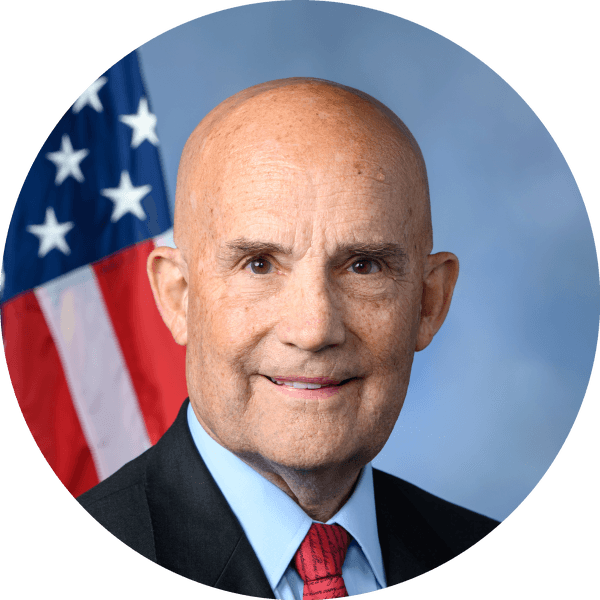
Keith Self
Republican · TX

Andrew Ogles
Republican · TN
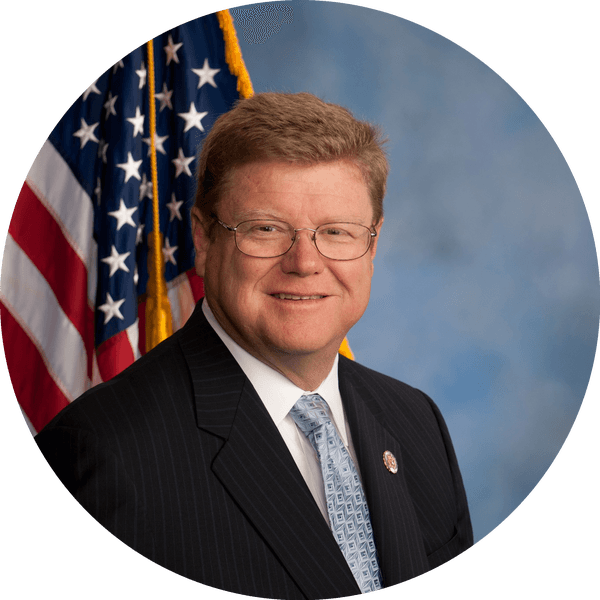
Mark Amodei
Republican · NV

Clay Higgins
Republican · LA

Eric Burlison
Republican · MO

Diana Harshbarger
Republican · TN

Scott Perry
Republican · PA

John McGuire
Republican · VA

Sheri Biggs
Republican · SC

Michael Rulli
Republican · OH
Committee Sponsors
Oversight and Government Reform Committee
12 of 47 committee members cosponsored


14 Republicans across this committee haven't cosponsored yet. Mobilize their constituents
H.R. 4788 Quick Facts
- Committee
- Oversight and Government Reform
- Chamber
- House
- Policy
- Crime and Law Enforcement
- Introduced
- Jul 29, 2025
Referred to the House Committee on Oversight and Government Reform.
Jul 29, 2025
Official Sources
Official congressional bill page with the full text, status, sponsor, cosponsors, and committee actions for H.R. 4788.
The D.C. Code section the bill amends — it inserts a new subsection (c) carving qualifying Members of Congress out of the District's pistol restriction.
The underlying D.C. pistol restriction the bill calls 'section 4(a)' — the prohibition qualifying Members would be exempted from.
The bill's eligibility test incorporates the federal definition of 'firearm' in section 921(a)(3) of this statute.
The Metropolitan Police Department gateway for how the District currently registers firearms and licenses concealed carry.
The District's concealed-carry licensing process that qualifying Members of Congress would no longer need to complete under the bill.
The District's top legal office, relevant to enforcement or litigation if Congress overrides D.C. firearm rules.
H.R. 4788 Common Questions
Can Members of Congress carry concealed guns in Washington, D.C. under H.R. 4788?
Yes. H.R. 4788 would lift D.C.'s pistol restrictions for a Member of Congress who meets all three of the bill's conditions, letting them carry a concealed handgun in the city.
What does a Member of Congress have to do to qualify under H.R. 4788?
Three things, all at once: not be barred by federal law from having a firearm, hold a valid state concealed-carry permit (or be legally able to carry without one in their home state), and carry valid photo ID.
Does H.R. 4788 change D.C. gun laws for regular residents and visitors?
No. The exemption applies only to Members of Congress. Anyone else carrying in D.C. — including a lawmaker's own constituents using an out-of-state permit — would still be subject to D.C.'s pistol restrictions.
Does H.R. 4788 take effect immediately if enacted?
Yes. The bill says it takes effect on the date it is enacted, with no waiting period, phase-in, or implementation deadline for D.C.
Which lawmakers count as a "Member of Congress" under H.R. 4788?
Senators, Representatives, the non-voting Delegates, and the Resident Commissioner from Puerto Rico. Non-voting members get the same treatment as full voting members if they meet the carry and ID conditions.
Could a Member of Congress with a felony or federal firearm ban still carry under H.R. 4788?
No. A Member barred by federal law from possessing, transporting, or receiving a firearm — the same disqualifiers that apply to anyone, like certain criminal convictions — cannot use the exemption.
Has H.R. 4788 passed?
No. It was referred to the House Committee on Oversight and Government Reform and has 45 cosponsors. It has not had a committee vote or a floor vote.
Based on H.R. 4788 bill text
H.R. 4788 Bill Text
“To require the District of Columbia to permit Members of Congress who have a valid license or permit which is issued pursuant to the law of a State which permits the Member to carry a concealed firearm, or who is otherwise entitled to carry a concealed firearm in the State in which the Member resides, to carry a concealed firearm in the District of Columbia, and for other purposes.”
Source: U.S. Government Publishing Office
Get notified when H.R. 4788 moves
Committee votes, floor action, cosponsor changes — straight to your inbox.
Bill alerts + Legisletter's monthly briefing. Unsubscribe anytime.
Crime and Law Enforcement Bills
9 related bills we're tracking
Crime Victims Fund Stabilization Act of 2025




Received in the Senate and Read twice and referred to the Committee on the Judiciary.
Jan 13, 2026
Bipartisan Background Checks Act of 2025



Referred to the House Committee on the Judiciary.
Jun 10, 2025
Combating Organized Retail Crime Act of 2025





Received in the Senate and Read twice and referred to the Committee on the Judiciary.
May 13, 2026
Ethan's Law



Referred to the House Committee on the Judiciary.
Feb 25, 2025
Assault Weapons Ban of 2025



Referred to the House Committee on the Judiciary.
Apr 30, 2025
Constitutional Concealed Carry Reciprocity Act of 2025




Placed on the Union Calendar, Calendar No. 289.
Oct 3, 2025
Honoring Our Fallen Heroes Act of 2025


Referred to the House Committee on the Judiciary.
Feb 12, 2025
Raise the Age Act of 2025


Referred to the House Committee on the Judiciary.
Mar 26, 2025
Born-Alive Abortion Survivors Protection Act


Received in the Senate and Read twice and referred to the Committee on the Judiciary.
Jan 24, 2025
Trending Right Now
Bills gaining momentum across Congress
America’s Olympic and Paralympic Games Commemorative Coins Act





Referred to the House Committee on Financial Services.
Jul 14, 2025
Fit to Serve Act





Referred to the House Committee on Armed Services.
May 21, 2025
ASAP Act





Ordered to be Reported in the Nature of a Substitute by the Yeas and Nays: 40 - 0.
Sep 16, 2026
Tracking Crime and Law Enforcement in Congress? Monitor bills, track cosponsor momentum, and launch advocacy campaigns — all from one advocacy platform.