H.R. 4710: No Surprises Act Enforcement Act
Sponsor

Gregory Murphy
Republican · NC-3
Triple damages for insurers that stiff surprise-bill rulings
Why it matters
Penalties jump from $100 a day to $10,000 per failure. Insurers that miss the 30-day deadline after an arbitration ruling would owe three times the unpaid gap, plus interest — and HHS would have to publish a public scoreboard of who broke the rules every six months.
H.R. 4710 doesn't add new patient protections. It raises the cost of breaking the No Surprises Act protections that already exist. The bill works through three statutes at once — the Public Health Service Act, ERISA, and the Internal Revenue Code — so the same rules apply whether your coverage is from your employer, the marketplace, or somewhere else.
The headline change is money. Civil penalties for plans and insurers that violate key surprise-billing provisions go from $100 a day to $10,000 per failure. Under the ERISA track, the Labor Secretary could assess up to $10,000 for each individual whose plan didn't comply.
The second change is a clock. After an independent dispute resolution arbitrator decides what an out-of-network service is worth, the responsible plan, insurer, provider, or facility has 30 days to pay the difference. Miss the deadline — or just don't pay — and you owe an additional penalty equal to three times the gap between the initial payment (or $0, if the claim was denied) and the out-of-network rate, minus cost-sharing. Interest accrues on top of that.
The third change is sunlight. HHS, in coordination with Labor and Treasury, would have to publish reports every six months listing how many audits were conducted, how many complaints came in from providers and patients, how many enforcement actions followed, the aggregate dollar amount of civil penalties issued, non-monetary corrective actions, and the three most commonly reported violations. Right now most of that data isn't public.
Bill Progress
Latest Action · Jul 23, 2025
Referred to Energy and Commerce, and in addition to the Committees on Education and Workforce, and Ways and Means, for a period to be subsequently determined by the Speaker, in each case for consideration of such provisions as fall within the jurisdiction of the committee concerned. for review
H.R. 4710 Bill Summary
What H.R. 4710 actually does.
Penalties jump from $100/day to $10,000 per failure
Civil penalties for plans and insurers that violate specified No Surprises Act provisions rise sharply. Under the Public Health Service Act and the tax code, fines move from $100 per day to $10,000 per failure. Under ERISA, the Labor Secretary could assess up to $10,000 for each individual whose plan didn't comply.
30-day deadline to pay after an arbitration ruling
Once an independent dispute resolution arbitrator decides what an out-of-network item or service is worth, the responsible plan, insurer, provider, or facility has 30 days from the determination to pay the difference between that ruling and the initial payment plus cost-sharing.
Triple damages for late or missing payment
If the responsible entity blows the 30-day deadline, it owes an additional penalty equal to three times the gap between the initial payment — or $0 if the claim was denied — and the out-of-network rate, minus cost-sharing. The triple penalty is on top of the original amount owed.
Interest stacks on unpaid penalties
Any amount owed under the late-payment penalty is also subject to interest, with terms set by the Secretary. The bill doesn't specify a rate.
HHS must publish enforcement reports every six months
Beginning the first calendar year after enactment, HHS — in coordination with Labor and Treasury — has to file reports by February 1 and every six months thereafter, covering audits, complaints, and enforcement during the prior six-month window. Reports for 2022 through the year of enactment must be filed annually.
Reports must list the three most commonly reported violations
Each report has to spell out the total number of audits, complaints from providers and patients, enforcement actions tied to those complaints, the aggregate dollar amount of civil penalties, non-monetary corrective actions, and a description of the three most commonly reported violations during the period.
Who benefits from H.R. 4710?
Out-of-network ER docs, anesthesiologists, and ambulance crews
These are the providers most often pulled into IDR fights — emergency physicians, anesthesiologists, radiologists, and ground/air ambulance services. The 30-day clock and triple damages give them leverage to actually collect on awards arbitrators have already issued.
Patients with employer or marketplace coverage
Patients benefit indirectly. The No Surprises Act already shields them from out-of-network balance bills; if insurers are penalized harder for non-compliance, providers have less reason to push back on the underlying rules.
Anyone filing a complaint to HHS, Labor, or Treasury
Complaints become visible. Federal reports must count complaints submitted by providers, participants, beneficiaries, and enrollees, and tally the enforcement actions that resulted — creating a public record every six months.
Federal regulators
HHS, Labor, and Treasury get clearer authority and public benchmarks for compliance, including audit totals, aggregate civil penalty dollars, and a recurring list of the top three most common violations.
Who is affected by H.R. 4710?
Group health plans (ERISA-governed)
Self-insured employer plans face Labor Department civil penalties of up to $10,000 per individual affected by noncompliance — a per-person multiplier rather than a flat per-failure amount.
Health insurance issuers
Issuers face $10,000 per-failure penalties under the Public Health Service Act and the tax code, and must meet the new 30-day deadline whenever they're the responsible payor on an IDR ruling.
Out-of-network providers and facilities
Providers and facilities involved in an IDR payment obligation must notify the Secretary when payment is made, and they're also on the hook for triple damages plus interest if they owe a balance to a plan and don't pay within 30 days.
HHS, Labor, and Treasury
The three agencies have to coordinate annual reports for 2022 through the year of enactment, then switch to twice-a-year reports starting the first calendar year after enactment — a meaningful new compliance and data-publishing workload.
HR4710 Legislative Journey
House: Committee Action
Jul 23, 2025
Referred to the Committee on Energy and Commerce, and in addition to the Committees on Education and Workforce, and Ways and Means, for a period to be subsequently determined by the Speaker, in each case for consideration of such provisions as fall within the jurisdiction of the committee concerned.
About the Sponsor
Gregory Murphy
Republican, North Carolina's 3rd congressional district · 7 years in Congress
Committees: Joint Committee on Printing, House Administration, Veterans' Affairs
View full profile →
Cosponsors (38)
This bill has 38 cosponsors: 17 Democrats, 21 Republicans, reflecting bipartisan support. Cosponsors represent 18 states: California, Florida, Illinois, and 15 more.
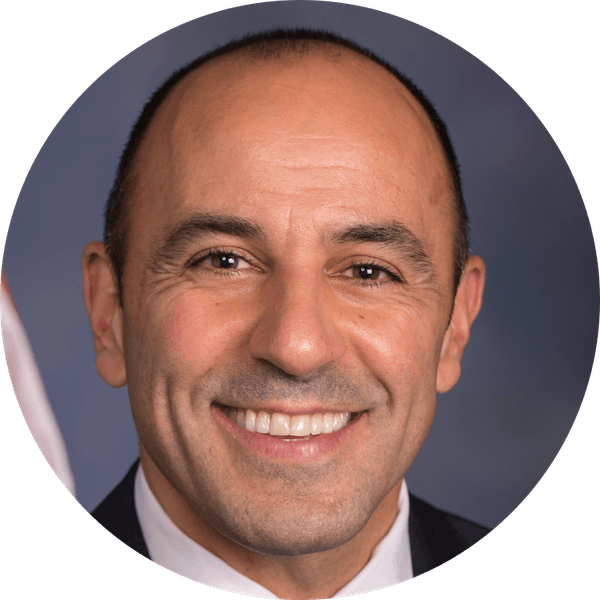
Jimmy Panetta
Democrat · CA
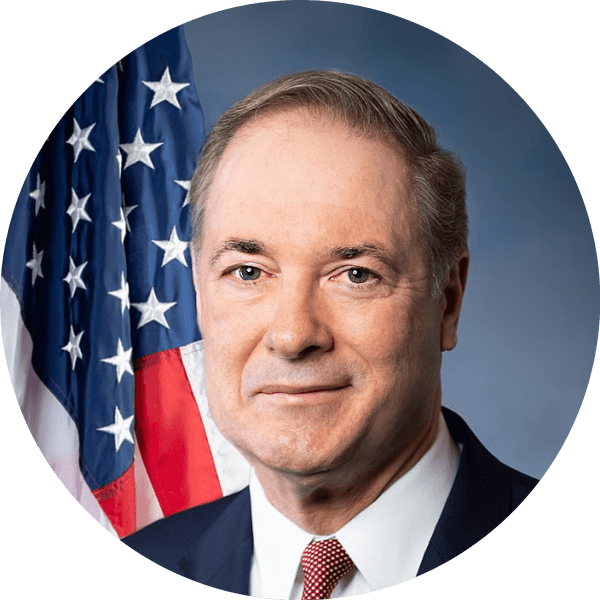
John Joyce
Republican · PA
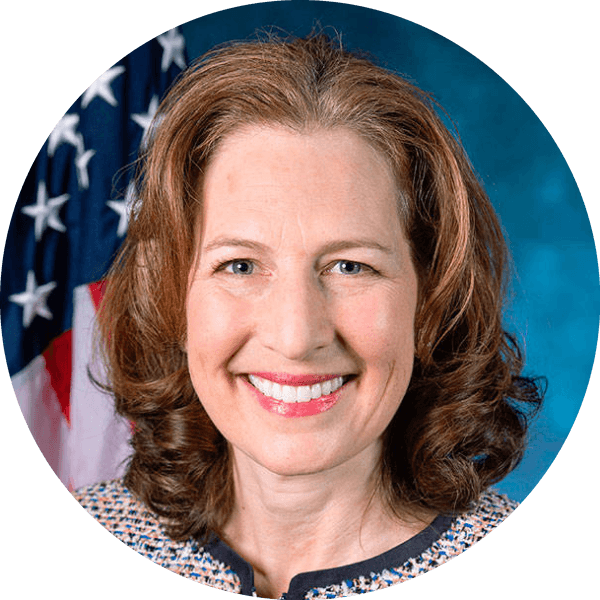
Kim Schrier
Democrat · WA

Robert Onder
Republican · MO

Raul Ruiz
Democrat · CA

Eugene Vindman
Democrat · VA

Beth Van Duyne
Republican · TX
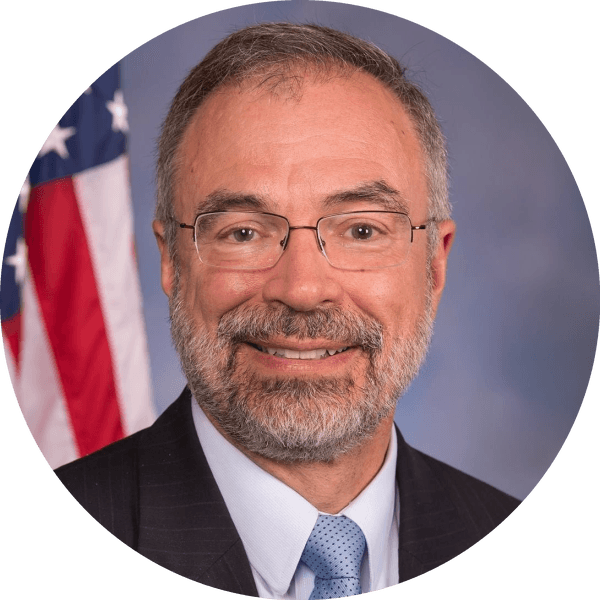
Andy Harris
Republican · MD
Joseph Morelle
Democrat · NY
Thomas Suozzi
Democrat · NY
Herbert Conaway
Democrat · NJ

Nathaniel Moran
Republican · TX
Committee Sponsors
Ways and Means Committee
8 of 45 committee members cosponsored


Education and Workforce Committee
2 of 37 committee members cosponsored


Energy and Commerce Committee
7 of 54 committee members cosponsored


63 Republicans across these committees haven't cosponsored yet. Mobilize their constituents
H.R. 4710 Quick Facts
- Committee
- Ways and Means
- Chamber
- House
- Policy
- Health
- Introduced
- Jul 23, 2025
Referred to Energy and Commerce, and in addition to the Committees on Education and Workforce, and Ways and Means, for a period to be subsequently determined by the Speaker, in each case for consideration of such provisions as fall within the jurisdiction of the committee concerned. for review
Jul 23, 2025
Official Sources
Official bill page with full text, cosponsors, actions, and committee referrals.
The Centers for Medicare & Medicaid Services landing page for the underlying No Surprises Act protections H.R. 4710 would beef up.
How the IDR process works — the arbitration system whose unpaid awards H.R. 4710 targets with a 30-day deadline and triple damages.
Current home for IDR operations data. H.R. 4710 would expand and accelerate these reports to twice a year.
Department of Labor's enforcement portal for ERISA-governed group health plans, which face up to $10,000 per individual under the bill.
Congressional Research Service analysis showing more than 1.46 million federal IDR disputes initiated in 2024 — the scale problem H.R. 4710 responds to.
HHS Office of the Assistant Secretary for Planning and Evaluation brief on the consumer-protection rationale behind the No Surprises Act.
Who is lobbying on H.R. 4710?
2 organizations lobbying on this bill
NSP MANAGEMENT SERVICES OF LONG ISLAND, INC. | 2 |
CAMBIA HEALTH SOLUTIONS (FORMERLY KNOWN AS THE REGENCE GROUP) | 1 |
Showing 1-2 of 2 organizations
H.R. 4710 Common Questions
What's the maximum penalty for breaking the No Surprises Act under H.R. 4710?
H.R. 4710 raises the cap from $100 a day to $10,000 per failure for plans and insurers under the Public Health Service Act and the tax code. Under the ERISA track, the Labor Secretary could also assess up to $10,000 for each individual whose plan didn't comply.
How long do health plans have to pay after a surprise-billing arbitration ruling?
Thirty days. Once an independent arbitrator decides what an out-of-network item or service is worth, H.R. 4710 gives the responsible plan, insurer, provider, or facility 30 days from the determination to pay the difference between that ruling and the initial payment plus cost-sharing.
What happens if an insurer pays late or refuses to pay an IDR award?
They owe more. H.R. 4710 adds a penalty equal to three times the gap between the initial payment (or $0, if the claim was denied) and the out-of-network rate, minus cost-sharing — on top of the original amount. Interest accrues on the penalty at a rate set by the Secretary.
Will H.R. 4710 stop me from getting a surprise medical bill?
No — the No Surprises Act already does that. H.R. 4710 doesn't add new patient protections; it raises penalties on plans, insurers, and out-of-network providers who don't follow the existing rules.
What problem is H.R. 4710 trying to solve?
Sponsors say arbitration awards aren't getting paid. The American Medical Association and other physician groups argue insurers are slow-walking or skipping the payments independent arbitrators order under the No Surprises Act. H.R. 4710 ties unpaid awards to triple damages and a 30-day clock.
What enforcement data would HHS have to publish under H.R. 4710?
Twice a year, HHS — coordinating with Labor and Treasury — would have to report audit counts, complaints from providers and patients, enforcement actions, the aggregate dollar amount of civil penalties, non-monetary corrective actions, and the three most commonly reported violations.
Does H.R. 4710 cover air ambulance bills too?
Yes. The bill amends the surprise-billing rules for both emergency/non-emergency services and air ambulance services across the Public Health Service Act, ERISA, and the tax code, so the same 30-day clock and triple-damages mechanic apply to ambulance IDR awards.
Who introduced H.R. 4710 and how much support does it have?
Republican Gregory Murphy of North Carolina introduced it on July 23, 2025 with five original cosponsors, including Democrats Jimmy Panetta, Kim Schrier, and Raul Ruiz. As of May 2026, the bill has 26 cosponsors, and a Senate companion is led by Senators Bennet (D-CO) and Marshall (R-KS).
Based on H.R. 4710 bill text
H.R. 4710 Bill Text
“To amend title XXVII of the Public Health Service Act, the Employee Retirement Income Security Act of 1974, and the Internal Revenue Code of 1986 to increase penalties for group health plans and health insurance issuers for practices that violate balance billing requirements, and for other purposes.”
Source: U.S. Government Publishing Office
Get notified when H.R. 4710 moves
Committee votes, floor action, cosponsor changes — straight to your inbox.
Bill alerts + Legisletter's monthly briefing. Unsubscribe anytime.
Health Bills
9 related bills we're tracking
Nancy Gardner Sewell Medicare Multi-Cancer Early Detection Screening Coverage Act



Reported (Amended) by the Committee on Ways and Means. H. Rept. 119-333, Part I.
Oct 3, 2025
Mikaela Naylon Give Kids a Chance Act




Received in the Senate.
Dec 2, 2025
Improving Seniors’ Timely Access to Care Act of 2025

Ordered to be Reported in the Nature of a Substitute by the Yeas and Nays: 42 - 0.
Jul 15, 2026
CONNECT for Health Act of 2025




Referred to the Committee on Energy and Commerce, and in addition to the Committee on Ways and Means, for a period to be subsequently determined by the Speaker, in each case for consideration of such provisions as fall within the jurisdiction of the committee concerned.
Jun 26, 2025
ASAP Act



Ordered to be Reported in the Nature of a Substitute by the Yeas and Nays: 40 - 0.
Sep 16, 2026
Momnibus Act




Referred to the Subcommittee on Health.
Apr 20, 2026
Ensuring Lasting Smiles Act



Referred to the Committee on Energy and Commerce, and in addition to the Committees on Education and Workforce, and Ways and Means, for a period to be subsequently determined by the Speaker, in each case for consideration of such provisions as fall within the jurisdiction of the committee concerned.
May 8, 2025
Right to Contraception Act



Referred to the House Committee on Energy and Commerce.
Feb 5, 2025
Women’s Health Protection Act of 2025



Referred to the Committee on Energy and Commerce, and in addition to the Committee on the Judiciary, for a period to be subsequently determined by the Speaker, in each case for consideration of such provisions as fall within the jurisdiction of the committee concerned.
Jun 24, 2025
Trending Right Now
Bills gaining momentum across Congress
Fit to Serve Act




Referred to the House Committee on Armed Services.
May 21, 2025
America’s Olympic and Paralympic Games Commemorative Coins Act




Referred to the House Committee on Financial Services.
Jul 14, 2025
Therapeutic Fraud Prevention Act of 2025




Referred to the House Committee on Energy and Commerce.
May 7, 2025
Tracking Health in Congress? Monitor bills, track cosponsor momentum, and launch advocacy campaigns — all from one advocacy platform.