H.R. 3562: DEFIANCE Act of 2025
Sponsor

Alexandria Ocasio-Cortez
Democrat · NY-14
Making a fake nude of someone should cost $150,000
Why it matters
Victims of sexually explicit deepfakes could sue the people who made, shared, or went looking for them for $150,000, or $250,000 when the fake is tied to stalking, harassment, or sexual assault, plus attorney fees. The bill has 63 cosponsors split almost evenly between the parties.
Since 2022, federal law has let people sue anyone who shares their real intimate images without consent. H.R. 3562 extends that right to AI-generated and digitally altered images: any explicit fake realistic enough that a reasonable person could not tell it from a real photo or video of you.
A disclaimer does not get anyone off the hook. The image counts as a forgery even if it is labeled fake, or posted somewhere everyone knows is fake. The bill's findings say the harm to victims is not lessened by labels that mark an image as fake.
The bill reaches more than the person who posted it. You could sue anyone who knowingly made the fake, held onto it planning to share it, shared it, or asked for and received it, as long as they knew you had not consented or recklessly ignored that. Creating one can be enough on its own if the maker knew you were harmed or likely to be.
You would not have to prove what the image cost you: the bill sets damages at $150,000, or $250,000 when the fake is connected to actual or attempted sexual assault, stalking, or harassment. You could instead claim your actual losses, including any money the defendant made from the image. Judges can also add punitive damages and order the content deleted.
You could file under a pseudonym, keep your name out of public records, and have the court hold the images during discovery. You would have 10 years to sue, counted from when you discover the image or turn 18, whichever comes later. States and tribes can keep or pass stronger laws.
Bill Progress
Latest Action · May 21, 2025
Referred to the House Committee on the Judiciary.
H.R. 3562 Bill Summary
What H.R. 3562 actually does.
You can sue over a fake, not only a real photo
Current federal law lets people sue over real intimate images shared without consent. The bill adds "intimate digital forgeries": explicit images made or altered with AI or other software that a reasonable person could not tell apart from a real image of you.
A "this is fake" label is not a defense
An image counts as a forgery regardless of any label, caption, or setting that says or implies it is not authentic.
Makers, sharers, and requesters all face liability
You could sue anyone who knowingly produced the fake, possessed it intending to share it, disclosed it, or solicited and received it, if they knew or recklessly ignored that you did not consent. A maker can be sued for creating it alone if they knew you were harmed or likely to be harmed.
Set damages of $150,000 or $250,000
You could recover $150,000 without proving specific losses, or $250,000 when the conduct was connected to actual or attempted sexual assault, stalking, or harassment. You could instead claim actual damages, including the defendant's profits. Attorney fees, court costs, and possible punitive damages come on top.
Courts can order the image deleted
Judges can issue emergency restraining orders and preliminary or permanent injunctions ordering a defendant to delete, destroy, or stop displaying or sharing the image.
Your name can stay out of the case
Courts can let you sue under a pseudonym, require your identifying information to be redacted or filed under seal, and keep the images themselves in the court's custody during discovery.
Ten years to file, and the clock waits for minors
You would have 10 years to sue, counted from when you reasonably discover the violation or turn 18, whichever is later. A guardian can sue for someone who is a minor, incapacitated, or deceased.
Who benefits from H.R. 3562?
People whose photos were turned into explicit fakes
Anyone whose face or likeness was used in a realistic sexual fake gains a federal lawsuit with set damages of $150,000 or $250,000, attorney fees, and court-ordered deletion.
Teenagers targeted by classmates
Students whose school photos are run through "undressing" apps can have a guardian sue on their behalf, or sue themselves years later: the 10-year window does not start before they turn 18.
Victims who would not sue under their own name
Pseudonyms, sealed filings, and court custody of the images mean pursuing a case does not require putting your name, or the image, into the public record.
Stalking and harassment survivors
When a fake is part of a pattern of stalking, harassment, or sexual assault, the set damages rise to $250,000.
Families of victims who have died or cannot act
A legal guardian can bring the case when the person depicted is deceased, incapacitated, or not legally competent.
Who is affected by H.R. 3562?
People who make explicit fakes of real people
Creating a realistic sexual fake of an identifiable person without consent could expose the maker to a $150,000 judgment, even before it is shared, if they knew the person was harmed or likely to be.
People who pass fakes along or ask for them
Sharing a fake, keeping one to share later, or requesting and receiving one can each bring a lawsuit when the person knew or recklessly ignored the lack of consent.
Apps and sites that profit from the images
Where a defendant earned money from the image, victims can go after those profits. The victim only has to show gross revenue; the defendant has to prove which expenses and earnings came from something else.
Federal district courts
Courts would handle these cases, including emergency takedown requests, pseudonym requests, sealed filings, and custody of the images during discovery.
HR3562 Legislative Journey
House: Committee Action
May 21, 2025
Referred to the House Committee on the Judiciary.
About the Sponsor
Alexandria Ocasio-Cortez
Democrat, New York's 14th congressional district · 7 years in Congress
Committees: Energy and Commerce
View full profile →
Cosponsors (63)
This bill has 63 cosponsors: 32 Democrats, 31 Republicans, reflecting bipartisan support. Cosponsors represent 26 states: Arizona, California, Colorado, and 23 more.

Laurel Lee
Republican · FL

Kat Cammack
Republican · FL

Christopher Deluzio
Democrat · PA

Debbie Dingell
Democrat · MI

Michael Lawler
Republican · NY

Ted Lieu
Democrat · CA

Nancy Mace
Republican · SC

Max Miller
Republican · OH
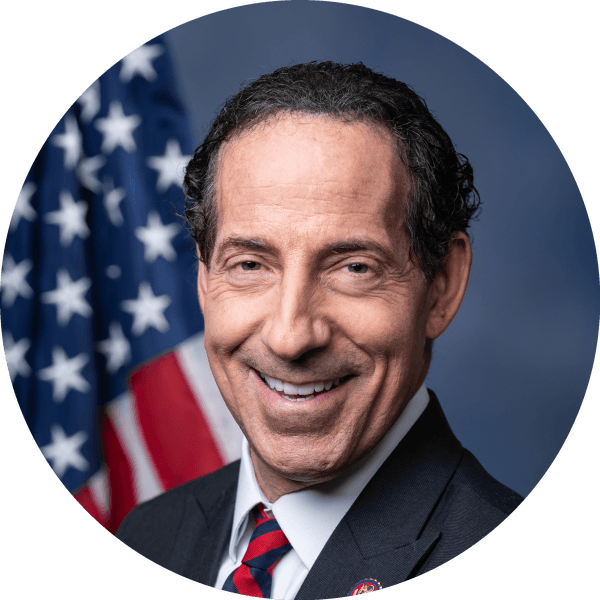
Jamie Raskin
Democrat · MD

Brittany Pettersen
Democrat · CO

Jefferson Van Drew
Republican · NJ

Nydia Velázquez
Democrat · NY
Committee Sponsors
Judiciary Committee
9 of 44 committee members cosponsored


13 Democrats across this committee haven't cosponsored yet. Mobilize their constituents
H.R. 3562 Quick Facts
- Committee
- Judiciary
- Chamber
- House
- Policy
- Crime and Law Enforcement
- Introduced
- May 21, 2025
Referred to the House Committee on the Judiciary.
May 21, 2025
Official Sources
Official bill page with full text, cosponsors, and actions for the House DEFIANCE Act, referred to the House Judiciary Committee.
The Senate companion bill, which passed the Senate by unanimous consent in January 2026.
The existing federal law letting people sue over real intimate images shared without consent, which this bill amends to cover digital forgeries.
The separate federal civil remedy the bill cross-references to bar double recovery for the same image.
The 2025 law that made publishing nonconsensual intimate images, including deepfakes, a federal crime and requires platforms to remove them.
How the FTC enforces platforms' 48-hour removal duty and where to report a platform that fails to take an image down.
Who is lobbying on H.R. 3562?
1 organization lobbying on this bill
VERIZON COMMUNICATIONS INC AND ITS SUBSIDIARIES | 4 |
Showing 1-1 of 1 organizations
H.R. 3562 Common Questions
How much can you sue for over a deepfake nude?
Under the DEFIANCE Act, $150,000 in set damages, with no need to prove a specific loss, or $250,000 if the fake was tied to actual or attempted sexual assault, stalking, or harassment. You could also recover attorney fees and court costs, and a judge could add punitive damages.
Is a deepfake still covered if it is labeled as fake?
Yes. If a reasonable person could not tell it from a real image of you, it counts, regardless of any caption, watermark, or setting that says it is fake.
Who can you sue besides the person who made it?
Anyone who knowingly shared it, kept it planning to share it, or asked for and received it, as long as they knew you had not consented or recklessly ignored that. The maker can be sued even if they never shared it, if they knew you were harmed or likely to be.
Can a teenager sue over an AI-generated nude made by a classmate?
Yes. A parent or guardian can sue on a minor's behalf. The minor can also wait: the 10-year filing window runs from when they discover the image or turn 18, whichever is later.
Would my name be public if I sued?
It does not have to be. Courts could let you use a pseudonym, redact your identifying information or seal filings, and keep the images in the court's custody during discovery.
Can a court force someone to delete a deepfake of me?
Yes. Judges could issue emergency restraining orders and preliminary or permanent injunctions ordering the defendant to delete or destroy the image and stop displaying or sharing it.
How is the DEFIANCE Act different from the Take It Down Act?
The Take It Down Act, signed in 2025, makes publishing these images a federal crime and requires platforms to remove them on request. The DEFIANCE Act is civil: it lets you sue the people involved for money damages yourself.
Would this override my state's deepfake or revenge porn law?
No. The bill does not limit existing federal, state, or tribal law, and states and tribes can keep or pass protections at least as strong.
Based on H.R. 3562 bill text
H.R. 3562 Bill Text
“To improve rights to relief for individuals affected by non-consensual activities involving intimate digital forgeries, and for other purposes. Be it enacted by the Senate and House of Representatives of the United States of America in Congress assembled, SECTION 1. SHORT TITLE. This Act may be cited as the “Disrupt Explicit Forged Images And Non-Consensual Edits Act of 2025” or the “DEFIANCE Act of 2025”.”
Source: U.S. Government Publishing Office
Get notified when H.R. 3562 moves
Committee votes, floor action, cosponsor changes — straight to your inbox.
Bill alerts + Legisletter's monthly briefing. Unsubscribe anytime.
Crime and Law Enforcement Bills
9 related bills we're tracking
Crime Victims Fund Stabilization Act of 2025



Received in the Senate and Read twice and referred to the Committee on the Judiciary.
Jan 13, 2026
Bipartisan Background Checks Act of 2025



Referred to the House Committee on the Judiciary.
Jun 10, 2025
Combating Organized Retail Crime Act of 2025





Received in the Senate and Read twice and referred to the Committee on the Judiciary.
May 13, 2026
Ethan's Law



Referred to the House Committee on the Judiciary.
Feb 25, 2025
Assault Weapons Ban of 2025



Referred to the House Committee on the Judiciary.
Apr 30, 2025
Constitutional Concealed Carry Reciprocity Act of 2025





Placed on the Union Calendar, Calendar No. 289.
Oct 3, 2025
Honoring Our Fallen Heroes Act of 2025


Referred to the House Committee on the Judiciary.
Feb 12, 2025
Raise the Age Act of 2025


Referred to the House Committee on the Judiciary.
Mar 26, 2025
Born-Alive Abortion Survivors Protection Act

Received in the Senate and Read twice and referred to the Committee on the Judiciary.
Jan 24, 2025
Trending Right Now
Bills gaining momentum across Congress
North Platte Canteen Congressional Gold Medal Act



Referred to the House Committee on Financial Services.
Feb 21, 2025
Fit to Serve Act





Referred to the House Committee on Armed Services.
May 21, 2025
ASAP Act





Ordered to be Reported in the Nature of a Substitute by the Yeas and Nays: 40 - 0.
Sep 16, 2026
Tracking Crime and Law Enforcement in Congress? Monitor bills, track cosponsor momentum, and launch advocacy campaigns — all from one advocacy platform.