H.R. 3261: VA Employee Fairness Act of 2025
Sponsor
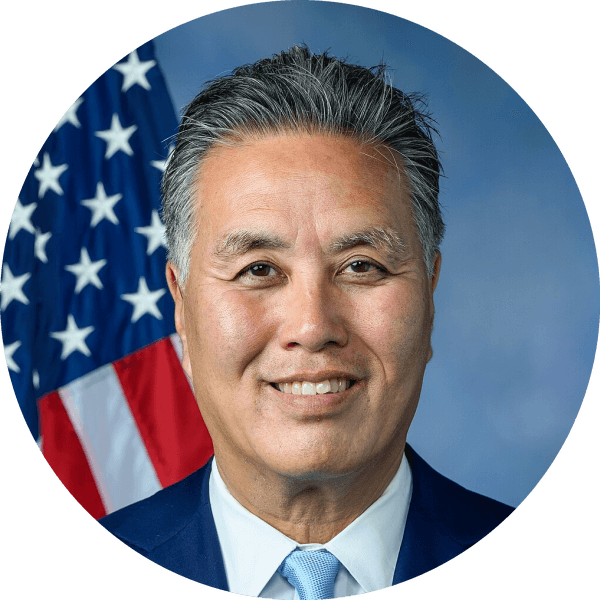
Mark Takano
Democrat · CA-39
At the VA, management decides what can't be bargained
Why it matters
The eight clinical professions that deliver most VA care — physicians, registered nurses, physician assistants, dentists and four others — cannot bargain over their pay, over peer review, or over anything the department classifies as patient care. H.R. 3261 removes all three limits, and with them the Secretary's power to decide what fits into them without review by any other agency. It has 118 cosponsors.
Current law excludes three subjects from collective bargaining for VA clinicians: professional conduct or competence, peer review, and the setting of their pay. The law defines the first of those as direct patient care and clinical competence.
The next step is what decides most disputes. When a union and the department disagree about whether a grievance falls into one of those three categories, the Secretary of Veterans Affairs decides — and the law says that decision cannot itself be bargained and may not be reviewed by any other agency. The department that sits on one side of the bargaining table also decides what may be placed on it.
H.R. 3261 strikes all three exclusions and the decision-making provision along with them. Disputes over staffing, workload, or working conditions that the department could previously classify as patient care would run through the same bargaining process that covers most of the federal workforce.
The bill leaves the VA's recruiting tools alone. It states explicitly that nothing in it touches the Secretary's authority over incentive pay and expedited hiring — the flexibilities the department uses to compete for clinicians against private hospitals.
No money changes hands and no one gets a raise from this bill. It changes who has leverage when a dispute starts, and who gets the final word on whether the dispute is allowed at all.
Bill Progress
Latest Action · May 29, 2025
Assigned to Subcommittee on Oversight and Investigations. for review
H.R. 3261 Bill Summary
What H.R. 3261 actually does.
Pay, peer review, and patient care return to the table
H.R. 3261 strikes the three provisions that currently exclude professional conduct or competence, peer review, and the setting of employee compensation from collective bargaining for covered VA clinicians.
The VA loses the final word on what counts
Current law gives the Secretary of Veterans Affairs sole authority to decide whether a dispute falls into one of the excluded categories, and bars review of that decision by any other agency — including the Federal Labor Relations Authority, which otherwise resolves federal-sector bargaining disputes. The bill repeals that provision.
Your job title decides whether this reaches you
The restrictions apply to physicians, dentists, podiatrists, optometrists, registered nurses, physician assistants, expanded-duty dental auxiliaries, and chiropractors. Other VA staff, including most administrative and support employees, bargain under different rules and are unaffected.
Hiring bonuses and incentive pay are untouched
A rule of construction states that the bill's changes may not be read to affect the Secretary's authorities over incentive pay and expedited hiring, or similar provisions of law.
Court challenges still go to Washington
The surviving provision routing petitions for judicial review to the U.S. Court of Appeals for the D.C. Circuit is kept and simply renumbered, so the venue for these cases does not change.
No new spending
H.R. 3261 authorizes no appropriations and creates no grant, bonus, or payment. It is a change to labor law inside the VA health system.
Who benefits from H.R. 3261?
VA registered nurses
The largest of the eight covered professions. Complaints about staffing levels, workload, or scheduling can currently be ruled out of bargaining as matters of direct patient care; under the bill they would not be.
VA physicians, physician assistants, and dentists
Their pay is set under the same title of law the bill amends, which is why pay is currently off the bargaining table for them. Removing that exclusion would let compensation questions be negotiated.
Unions representing VA clinical staff
Fewer grievances would be dismissed at the threshold, and disagreements about whether a subject is negotiable would no longer be settled solely by the agency on the other side of the dispute.
Veterans who depend on stable VA staffing
The VA says its health system serves 9.1 million enrolled Veterans each year. Sponsors argue that broader bargaining rights improve retention at the bedside; the bill itself contains no staffing requirement or guarantee.
Who is affected by H.R. 3261?
The eight covered clinical professions
Physicians, dentists, podiatrists, optometrists, registered nurses, physician assistants, expanded-duty dental auxiliaries, and chiropractors employed in the Veterans Health Administration are the workers the bill directly reaches.
VA medical center directors and managers
They would negotiate over a wider range of workplace disputes, and could no longer rely on a determination that a subject is outside bargaining to end the matter.
The Secretary of Veterans Affairs
The Secretary would lose the authority to decide, without review by another agency, whether a dispute concerns patient care, peer review, or compensation. Authority over incentive pay and expedited hiring is expressly preserved.
The Federal Labor Relations Authority
Disputes the agency is currently barred from reviewing would fall within the federal labor system's normal process, adding to the cases it handles.
Veterans receiving VA care
Patients are not regulated by the bill. They would encounter its effects only indirectly, through how staffing and workplace disputes are resolved at the facilities where they get care.
HR3261 Legislative Journey
House: Committee Action
May 29, 2025
Referred to the Subcommittee on Oversight and Investigations.
House: Committee Action
May 7, 2025
Referred to the House Committee on Veterans' Affairs.
About the Sponsor
Mark Takano
Democrat, California's 39th congressional district · 13 years in Congress
Committees: Veterans' Affairs, Education and Workforce
View full profile →
Cosponsors (118)
All 118 cosponsors are Democrats. Cosponsors represent 35 states: Alabama, Arizona, California, and 32 more.

Terri Sewell
Democrat · AL

Jimmy Gomez
Democrat · CA

Linda Sánchez
Democrat · CA

Maxine Waters
Democrat · CA

Scott Peters
Democrat · CA
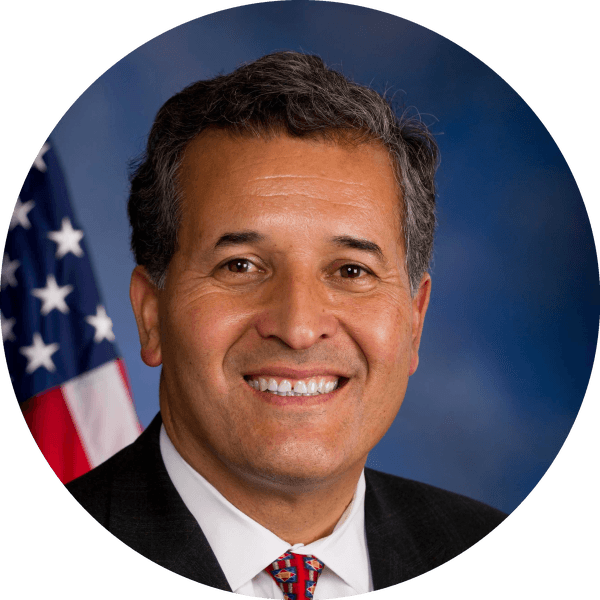
Juan Vargas
Democrat · CA

Diana DeGette
Democrat · CO

John Larson
Democrat · CT

Eleanor Norton
Democrat · DC

Maxwell Frost
Democrat · FL

Sheila Cherfilus-McCormick
Democrat · FL
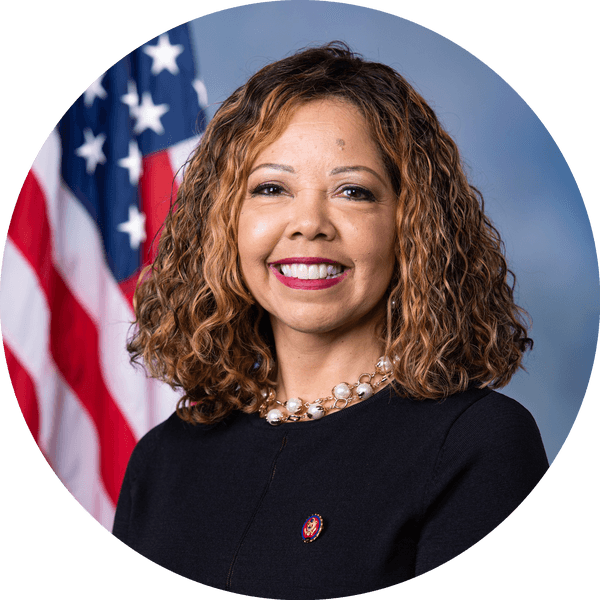
Lucy McBath
Democrat · GA
Cosponsor Coverage Map
Committee Sponsors
Veterans' Affairs Committee
10 of 25 committee members cosponsored


1 Democrats across this committee haven't cosponsored yet. Mobilize their constituents
H.R. 3261 Quick Facts
- Committee
- Veterans' Affairs
- Chamber
- House
- Policy
- Armed Forces and National Security
- Introduced
- May 7, 2025
Assigned to Subcommittee on Oversight and Investigations. for review
May 29, 2025
Official Sources
Official bill page with the text, status, actions, cosponsors, and committee referral for the VA Employee Fairness Act of 2025.
The statute H.R. 3261 amends. Subsections (b), (c), and (d) are the three bargaining exclusions the bill strikes.
The incentive pay and expedited hiring authorities the bill expressly leaves untouched in its rule of construction.
The VA component that employs the eight clinical professions the bill reaches.
How the Federal Labor Relations Authority resolves disputes over whether a subject can be bargained — the process VA clinicians are currently shut out of.
The VA office that negotiates national collective bargaining agreements and would handle the widened scope of bargaining.
The recruiting channel that uses the incentive pay and expedited hiring tools the bill preserves.
The committee holding H.R. 3261, where a markup decision determines whether the bill moves.
H.R. 3261 Common Questions
What does H.R. 3261 actually change?
It removes three subjects that current law keeps out of collective bargaining for VA clinicians: professional conduct or competence, peer review, and pay. It also repeals the provision letting the Secretary of Veterans Affairs decide, with no outside review, whether a dispute falls into those categories.
Which VA employees does H.R. 3261 cover?
Eight clinical professions: physicians, dentists, podiatrists, optometrists, registered nurses, physician assistants, expanded-duty dental auxiliaries, and chiropractors. Most administrative and support staff at the VA bargain under different rules and are not affected.
Can VA nurses bargain over pay right now?
No. The setting and adjusting of compensation for these clinicians is one of the three subjects current law places outside bargaining. H.R. 3261 would remove that restriction, making pay a negotiable subject.
Who decides if a VA dispute is off-limits today?
The Secretary of Veterans Affairs. Current law says that determination cannot itself be bargained and may not be reviewed by any other agency — including the Federal Labor Relations Authority, which otherwise handles federal-sector bargaining disputes.
Would H.R. 3261 affect VA hiring bonuses?
No. The bill states that its changes cannot be read to affect the Secretary's authority over incentive pay and expedited hiring. Those recruiting tools stay as they are.
Does H.R. 3261 give VA workers a raise?
Not by itself. The bill authorizes no money and sets no pay amount. It makes compensation something that can be negotiated for covered clinicians; any actual increase would still have to be agreed at the bargaining table.
Is H.R. 3261 bipartisan?
Not so far. All 118 cosponsors are Democrats, as is the sponsor, Representative Mark Takano of California. No Republican has signed on.
Has H.R. 3261 passed?
No. It was introduced in May 2025 and referred to the House Veterans' Affairs Committee's Subcommittee on Oversight and Investigations, where it remains. An earlier version introduced in 2019 got a subcommittee hearing in March 2020 and went no further.
Based on H.R. 3261 bill text
H.R. 3261 Bill Text
“To amend title 38, United States Code, to modify authorities relating to the collective bargaining of employees in the Veterans Health Administration.”
Source: U.S. Government Publishing Office
Get notified when H.R. 3261 moves
Committee votes, floor action, cosponsor changes — straight to your inbox.
Bill alerts + Legisletter's monthly briefing. Unsubscribe anytime.
Armed Forces and National Security Bills
9 related bills we're tracking
Major Richard Star Act



Referred to the Subcommittee on Disability Assistance and Memorial Affairs.
Apr 4, 2025
Pay Our Troops Act of 2026




Referred to the House Committee on Appropriations.
Sep 16, 2025
Fit to Serve Act




Referred to the House Committee on Armed Services.
May 21, 2025
Love Lives On Act of 2025




Forwarded by Subcommittee to Full Committee by Voice Vote.
Mar 26, 2026
Air America Act of 2025
Referred to the House Committee on Intelligence (Permanent Select).
Mar 18, 2025
Veteran Burial Timeliness and Death Certificate Accountability Act



Subcommittee Hearings Held
Jun 30, 2026
Reproductive Freedom for Veterans Act



Committee Hearings Held
Mar 18, 2026
GUARD VA Benefits Act




Committee Hearings Held
Mar 18, 2026
Caring for Survivors Act of 2025



Subcommittee Hearings Held
Jun 24, 2025
Trending Right Now
Bills gaining momentum across Congress
America’s Olympic and Paralympic Games Commemorative Coins Act




Referred to the House Committee on Financial Services.
Jul 14, 2025
ASAP Act


Ordered to be Reported in the Nature of a Substitute by the Yeas and Nays: 40 - 0.
Sep 16, 2026
Therapeutic Fraud Prevention Act of 2025

Referred to the House Committee on Energy and Commerce.
May 7, 2025
Tracking Armed Forces and National Security in Congress? Monitor bills, track cosponsor momentum, and launch advocacy campaigns — all from one advocacy platform.