H.R. 1004: Love Lives On Act of 2025
Sponsor

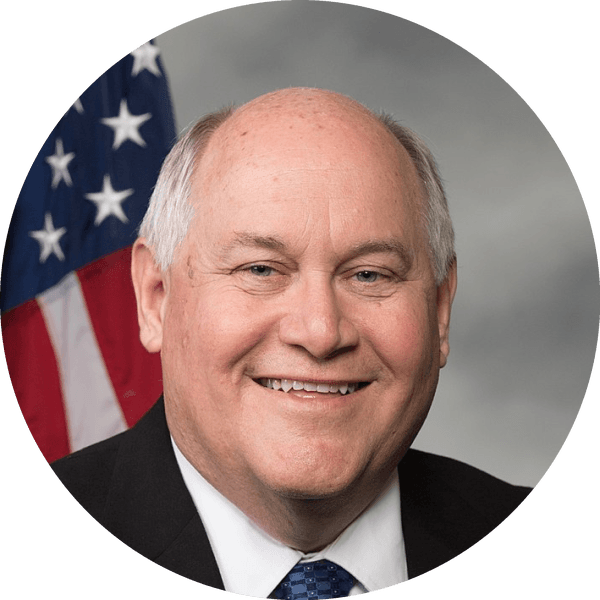
Richard Hudson
Republican · NC-9
The government made Gold Star spouses choose between love and a paycheck
Why it matters
Right now, a military widow who remarries before age 55 loses up to $1,699 a month in DIC payments and can be cut off from the Survivor Benefit Plan entirely. Less than 5% of eligible surviving spouses have remarried because the financial penalty is too steep. This bill ends that choice.
There are roughly 506,000 surviving spouses receiving Dependency and Indemnity Compensation from the VA. About 35,000 of them are under 55 — the age at which remarriage currently triggers a benefits cutoff. The monthly DIC payment is $1,699.36 as of December 2025, and for many survivors, it is the difference between stability and crisis.
The Love Lives On Act attacks this from three directions. Section 2 amends Title 38 so that remarriage no longer bars DIC or special pension benefits — period. Section 3 amends Title 10 so the Defense Department cannot terminate Survivor Benefit Plan annuities — which pay up to 55% of a service member's retirement pay — just because the surviving spouse remarries. And Section 4 expands TRICARE eligibility to include remarried widows and widowers whose subsequent marriage ends in death, divorce, or annulment.
The SBP provision has a retroactive component. Surviving spouses who remarried before age 55 and before the bill's enactment date would have their annuity payments resumed — within one year for most, or immediately if they had previously transferred the benefit to a surviving child.
The bill has 135 bipartisan cosponsors — led by Rep. Richard Hudson (R-NC) with original cosponsors Joe Neguse (D-CO), Derrick Van Orden (R-WI), Kelly Morrison (D-MN), Morgan Luttrell (R-TX), and Ro Khanna (D-CA). A companion bill, S. 410, sits in the Senate Veterans' Affairs Committee, where hearings were held in March 2025.
More than 50 veterans service organizations back the bill, including TAPS, the American Legion, MOAA, and the Gold Star Wives of America. The House Veterans' Affairs Subcommittee on Disability Assistance and Memorial Affairs held hearings on February 3, 2026, with Chairman Morgan Luttrell voicing support.
This bill has been introduced across multiple Congresses and has never reached a floor vote. The policy is not controversial — nobody defends the remarriage penalty on its merits. The obstacle is procedural: whether it gets folded into a larger veterans package or authorized as a standalone bill, and whether the cost estimate (which CBO has not yet published) creates budget objections.
Bill Progress
Latest Action · Mar 26, 2026
Forwarded by Subcommittee to Full Committee by Voice Vote.
H.R. 1004 Bill Summary
What H.R. 1004 actually does.
DIC payments continue after remarriage
Amends 38 U.S.C. 103(d) so that remarriage no longer bars Dependency and Indemnity Compensation ($1,699.36/month as of 2026) or special pension benefits. This eliminates the financial penalty that has kept fewer than 5% of eligible surviving spouses from remarrying.
Survivor Benefit Plan annuities protected
Amends 10 U.S.C. 1450(b)(2) so the Defense Department cannot terminate SBP annuities — worth up to 55% of retirement pay — solely because a surviving spouse of a member who died on active duty remarries.
Retroactive restoration for spouses who already remarried
Surviving spouses who remarried before age 55 and before enactment get their SBP annuity restored within one year. Those who had transferred the benefit to a surviving child get payments resumed immediately — on the first day of the first month after enactment.
TRICARE coverage restored after a second marriage ends
Adds a new dependent category under 10 U.S.C. 1072(2): remarried widows and widowers whose subsequent marriage ended by death, divorce, or annulment regain TRICARE eligibility. This closes a gap where survivors who tried to move on lost military health coverage permanently.
Who benefits from H.R. 1004?
Surviving spouses under 55 who want to remarry
An estimated 35,000 surviving spouses under 55 currently face losing DIC, SBP, and TRICARE if they remarry. This bill removes the penalty entirely — no age threshold, no benefit reduction.
Survivors who already remarried and lost benefits
The retroactive SBP provision means spouses who remarried before 55 under the old rules would have annuity payments resumed within a year of enactment, without having to reapply or re-qualify.
Children in surviving-spouse households
When a surviving parent avoids remarriage to keep benefits, the entire household absorbs that financial calculation. Removing the penalty means family decisions are no longer shaped by benefit eligibility.
Remarried survivors whose second marriage ended
Under current law, a survivor who remarried, lost TRICARE, and then divorced or was widowed again has no path back to military health coverage. Section 4 creates that path.
Who is affected by H.R. 1004?
The VA and Department of Defense
Both agencies must update eligibility systems, payment processing, and regulatory guidance. The VA handles DIC; the DoD handles SBP and TRICARE. The retroactive SBP provision adds a claims-processing workload for cases that may go back years.
Surviving children currently receiving transferred SBP
Some surviving spouses transferred their annuity to children under prior law. If the parent's benefit is restored, the child's transferred annuity would end — though the bill provides for immediate restoration rather than the standard one-year delay in these cases.
Federal budget
Continuing benefits for survivors who remarry increases outlays. CBO has not published a score, but the universe is bounded: roughly 35,000 surviving spouses under 55, with fewer than 5% currently choosing to remarry. Even if all remarried, the per-person cost is the existing DIC and SBP rates, not new spending.
HR1004 Legislative Journey
House: Vote Held
Mar 26, 2026
Forwarded by Subcommittee to Full Committee by Voice Vote.
House: Committee Action
Feb 3, 2026
Subcommittee Hearings Held
House: Committee Action
Mar 6, 2025
Referred to the Subcommittee on Disability Assistance and Memorial Affairs.
House: Committee Action
Feb 5, 2025
Referred to the Committee on Armed Services, and in addition to the Committee on Veterans' Affairs, for a period to be subsequently determined by the Speaker, in each case for consideration of such provisions as fall within the jurisdiction of the committee concerned.
About the Sponsor
Richard Hudson
Republican, North Carolina's 9th congressional district · 13 years in Congress
Committees: Energy and Commerce
View full profile →
Cosponsors (182)
This bill has 182 cosponsors: 129 Democrats, 52 Republicans, 1 Independent, reflecting bipartisan support. Cosponsors represent 45 states: Alaska, Alabama, Arkansas, and 42 more.

Joe Neguse
Democrat · CO

Derrick Van Orden
Republican · WI

Kelly Morrison
Democrat · MN

Morgan Luttrell
Republican · TX

Ro Khanna
Democrat · CA

Gabe Amo
Democrat · RI

Salud Carbajal
Democrat · CA

Nikki Budzinski
Democrat · IL

Sharice Davids
Democrat · KS

Angie Craig
Democrat · MN

André Carson
Democrat · IN

Morgan McGarvey
Democrat · KY
Cosponsor Coverage Map
Committee Sponsors
Veterans' Affairs Committee
19 of 25 committee members cosponsored


Armed Services Committee
35 of 57 committee members cosponsored


22 Republicans across these committees haven't cosponsored yet. Mobilize their constituents
H.R. 1004 Quick Facts
- Committee
- Veterans' Affairs
- Chamber
- House
- Policy
- Armed Forces and National Security
- Introduced
- Feb 5, 2025
Forwarded by Subcommittee to Full Committee by Voice Vote.
Mar 26, 2026
Official Sources
Full bill text, 135 cosponsors, and legislative history for the Love Lives On Act of 2025
Identical Senate version introduced by Sens. Moran (R-KS) and Warnock (D-GA), referred to Senate Veterans' Affairs Committee
Current DIC payment rates — $1,699.36/month base rate for surviving spouses, effective December 1, 2025
VA overview of DIC eligibility, requirements, and how to apply — the primary benefit program H.R. 1004 protects from remarriage penalties
Tragedy Assistance Program for Survivors statement with statistics on the 506,000 DIC recipients and remarriage penalty impact
Military Officers Association of America explainer on how current remarriage rules affect DIC, SBP, and TRICARE eligibility
The statute Section 3 of H.R. 1004 amends — current law allows termination of SBP annuities upon remarriage before age 55
The statute Section 2 of H.R. 1004 amends — current law bars DIC and pension benefits upon remarriage
H.R. 1004 Common Questions
Can military widows keep DIC benefits if they remarry under the Love Lives On Act?
Yes. H.R. 1004 amends 38 U.S.C. 103(d) so that remarriage no longer bars Dependency and Indemnity Compensation. The current DIC rate is $1,699.36 per month (as of December 2025). Under existing law, surviving spouses who remarry before age 55 lose this payment entirely. The Love Lives On Act eliminates that cutoff.
Does the Love Lives On Act protect Survivor Benefit Plan payments after remarriage?
Yes. Section 3 amends 10 U.S.C. 1450(b)(2) so the Department of Defense cannot terminate a Survivor Benefit Plan annuity — worth up to 55% of a service member's retirement pay — solely because a surviving spouse of a member who died on active duty remarries. This applies regardless of the spouse's age at remarriage.
When would SBP payments restart for surviving spouses who already remarried before age 55?
The bill is retroactive. Surviving spouses who remarried before age 55 and before the bill becomes law would have their SBP annuity payments resumed within one year of enactment. There is one exception: spouses who transferred the annuity to a surviving child under prior law get payments restored immediately — on the first day of the first month after enactment.
Can a remarried military widow get TRICARE coverage back after a divorce?
Yes, but only under specific circumstances. Section 4 adds a new category to TRICARE's dependent definition: remarried widows and widowers whose subsequent marriage ended by death, divorce, or annulment. This means a survivor who remarried, lost TRICARE, and then divorced can regain military health coverage. It does not apply while the subsequent marriage is still active.
How many military surviving spouses are affected by the remarriage penalty?
According to TAPS testimony, roughly 506,000 surviving spouses receive DIC from the VA. About 35,000 of them are under age 55 — the threshold where remarriage triggers a benefits cutoff. Fewer than 5% of eligible surviving spouses under 55 have chosen to remarry because the financial penalty is too steep.
Does the Love Lives On Act apply to surviving spouses of veterans who died after service, or only active-duty deaths?
It depends on the benefit. The DIC protection in Section 2 applies broadly to surviving spouses of veterans — including those who died from service-connected causes after leaving the military. The SBP protection in Section 3 specifically covers surviving spouses of members who died on active duty, as defined in 10 U.S.C. 1448(d)(1). The TRICARE expansion in Section 4 applies to any remarried widow or widower who qualifies as a dependent.
Is there a Senate version of the Love Lives On Act?
Yes. S. 410, introduced by Senators Jerry Moran (R-KS) and Raphael Warnock (D-GA), is an identical companion bill in the Senate. It was referred to the Senate Veterans' Affairs Committee, where hearings were held in March 2025. Both chambers would need to pass the bill for it to reach the president's desk.
Does remarriage still block education or pension benefits for surviving spouses under this bill?
No. Section 2 specifically covers both DIC (under 38 U.S.C. 1311) and special pension benefits (under 38 U.S.C. 1562). Remarriage would not bar either benefit after enactment.
Based on H.R. 1004 bill text
H.R. 1004 Bill Text
“To amend titles 10 and 38, United States Code, to improve benefits and services for surviving spouses, and for other purposes.”
Source: U.S. Government Publishing Office
Get notified when H.R. 1004 moves
Committee votes, floor action, cosponsor changes — straight to your inbox.
Bill alerts + Legisletter's monthly briefing. Unsubscribe anytime.
Armed Forces and National Security Bills
9 related bills we're tracking
Major Richard Star Act





Referred to the Subcommittee on Disability Assistance and Memorial Affairs.
Apr 4, 2025
Pay Our Troops Act of 2026





Referred to the House Committee on Appropriations.
Sep 16, 2025
Fit to Serve Act





Referred to the House Committee on Armed Services.
May 21, 2025
Air America Act of 2025


Referred to the House Committee on Intelligence (Permanent Select).
Mar 18, 2025
Veteran Burial Timeliness and Death Certificate Accountability Act




Subcommittee Hearings Held
Jun 30, 2026
Reproductive Freedom for Veterans Act




Committee Hearings Held
Mar 18, 2026
GUARD VA Benefits Act




Committee Hearings Held
Mar 18, 2026
Caring for Survivors Act of 2025



Subcommittee Hearings Held
Jun 24, 2025
VA Employee Fairness Act of 2025




Referred to the Subcommittee on Oversight and Investigations.
May 29, 2025
Trending Right Now
Bills gaining momentum across Congress
ASAP Act



Ordered to be Reported in the Nature of a Substitute by the Yeas and Nays: 40 - 0.
Sep 16, 2026
Federal Firearms Licensee Protection Act of 2025




Referred to the House Committee on the Judiciary.
Mar 3, 2025
Therapeutic Fraud Prevention Act of 2025



Referred to the House Committee on Energy and Commerce.
May 7, 2025
Tracking Armed Forces and National Security in Congress? Monitor bills, track cosponsor momentum, and launch advocacy campaigns — all from one advocacy platform.