H.R. 2701: Fallen Servicemembers Religious Heritage Restoration Act
Sponsor
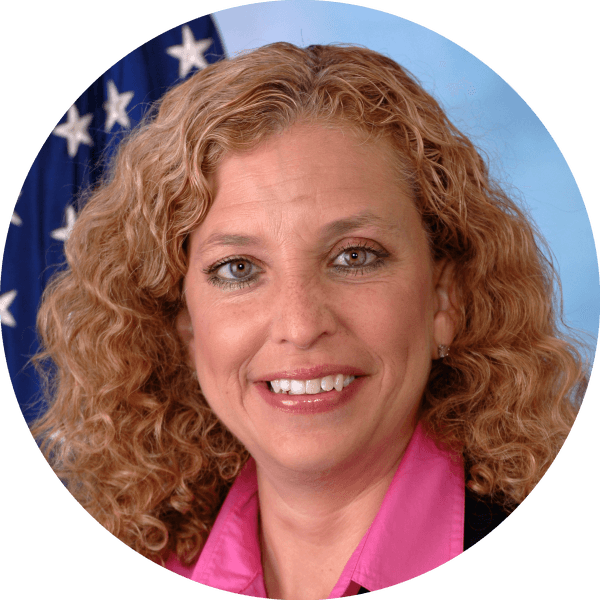
Debbie Wasserman Schultz
Democrat · FL-25
900 Jewish war dead, buried under the wrong cross
Why it matters
The bill's findings estimate that about 900 American-Jewish servicemembers killed in World War I and World War II were buried overseas under Latin crosses instead of markers showing their faith — and that more than 2 million people a year now walk past those graves. H.R. 2701 orders a five-year program, run through the agency that maintains America's overseas cemeteries, to track down those cases, reach surviving families, and correct the record. It has already cleared the House with 41 bipartisan cosponsors and is waiting on the Senate.
This bill hands a specific assignment to the American Battle Monuments Commission, the agency that maintains America's military cemeteries overseas: build a program to find Jewish servicemembers who were buried abroad under a marker indicating they were not Jewish, then reach their surviving relatives. In Congress it's called the Fallen Servicemembers Religious Heritage Restoration Act.
The work is time-boxed. The program runs for the first five fiscal years after the bill becomes law. Each of those years, the Commission is directed to seek a one-year, $500,000 contract with a nonprofit to do the actual research and family outreach — up to $2.5 million over the full five years if a contract is signed every year.
Not just any nonprofit qualifies. It has to be a registered tax-exempt charity, and the Commission is told to give priority to groups that have already proven they can track down these cases and find descendants. The bill draws a tight box around who counts: a deceased service member who was Jewish, buried in a U.S. military cemetery outside the country, under a marker indicating they were not Jewish. Graves inside the United States, and markers that are already correct, are out of scope.
There's also a piece of H.R. 2701 that has nothing to do with cemeteries. The bill pushes back a deadline on certain veterans' pension payment limits by two months, from late November 2031 to the end of January 2032. It's a small, technical rider attached to the larger memorial bill.
Bill Progress
Latest Action · Dec 9, 2025
Passed the House, received in Senate
H.R. 2701 Bill Summary
What H.R. 2701 actually does.
A five-year search for graves marked wrong
The bill directs the American Battle Monuments Commission to establish the Fallen Servicemembers Religious Heritage Restoration Program for the first five fiscal years after enactment. Its purpose is to identify covered servicemembers and contact their survivors and descendants.
Who counts: Jewish, buried overseas, wrong marker
A covered member is a deceased member of the Armed Forces who was Jewish, buried in a U.S. military cemetery located outside the United States, under a marker indicating the member was not Jewish. Domestic cemeteries, and markers that are already correct, are excluded.
$500,000 a year to a single nonprofit
For each year of the program, the Commission must seek a one-year contract set at $500,000 with one nonprofit organization to carry out the research and outreach. Across five years, that points to up to $2.5 million in contracts if one is secured each year.
Only proven, tax-exempt charities are eligible
Eligible organizations must be registered 501(c)(3) tax-exempt nonprofits. The bill tells the Commission to give priority to groups that have already demonstrated capability and expertise in identifying these cases and contacting survivors and descendants.
An unrelated veterans' pension deadline slips two months
Separately from the cemetery work, the bill amends an existing limit on certain pension payments under federal veterans law, moving the date from November 30, 2031, to January 31, 2032 — a two-month extension riding along with the memorial bill.
A correction the public would actually see
The bill's findings state that in 2022, more than 2 million people visited U.S. World War I and World War II cemeteries in foreign countries, framing the marker errors as a matter of public memory at heavily visited sites, not only of private grief.
Who benefits from H.R. 2701?
Families and descendants of roughly 900 fallen servicemembers
The program's core purpose is to identify covered members and reach their survivors and descendants. For families who may never have known a relative's grave was marked wrong, this is the first formal federal effort to find the case and correct it.
Jewish American military families and faith communities
The bill puts the federal government on record that some Jewish World War I and World War II servicemembers were buried under markers indicating they were not Jewish, and commits the government to restoring religious identity on those graves.
Veterans-focused historical nonprofits with a track record
A qualifying 501(c)(3) charity with proven expertise stands to receive a one-year, $500,000 contract each fiscal year the program runs — up to five contracts and $2.5 million in total if it is selected every year.
Veterans affected by the pension payment deadline
Veterans subject to the pension-payment limit covered by the rider get an additional two months under the existing rule, with the cutoff moving from November 30, 2031, to January 31, 2032.
Who is affected by H.R. 2701?
American Battle Monuments Commission
The Commission carries the workload: standing up the program, and for each of the first five fiscal years after enactment, seeking a one-year, $500,000 contract with a qualified nonprofit and overseeing the identification and outreach work.
The estimated 900 fallen American-Jewish servicemembers
These are the individuals the program is built to find — service members the bill's findings say were killed in World War I and World War II and buried overseas under markers indicating they were not Jewish.
Survivors and descendants who get contacted
Once a case is identified, reaching the family is part of the program's stated purpose. For some relatives, that contact may be the first they hear that a grave was marked incorrectly.
Visitors to overseas U.S. military cemeteries
The bill's findings cite more than 2 million visitors to U.S. World War cemeteries abroad in 2022. Corrected markers would change what large numbers of visitors read about who is buried there.
Cost & Funding
Authorization
$500,000 per one-year nonprofit contract; up to $2.5 million over five fiscal years if a contract is signed each year
- For each of the first five fiscal years after enactment, the Commission must seek to enter into one contract with a nonprofit organization.
- Each contract is fixed at one year and $500,000.
- Five years at $500,000 works out to a ceiling of $2.5 million if a contract is secured every year — less if some years go uncontracted.
- The bill text sets no broader authorization figure beyond this contract structure.
- Only registered 501(c)(3) tax-exempt nonprofits are eligible to receive the contracts.
What Congress Is Saying
H.R. 2701 has come up 20 times in the Congressional Record so far.
Madam Speaker, I rise to include in the Record the following letter of support for H.R. 2701 from National Commander Scott P. Stevens, CW04, USA, (R). The Jewish War Veterans of the USA supports H.R. 2701, the Fallen Servicemembers Religious Heritage Restoration Act. JWV appreciates the leadership of Rep. Debbie Wasserman Schultz (D-FL) and Rep. Max Miller (R-OH) for their bipartisan introduction, as well as the support of the House Veterans Affairs Subcommittee on Disability and Memorial Affairs and the Full Committee in moving this critical legislation to the House floor.
H.R. 2701 also appeared in 13 routine cosponsor filings.
HR2701 Legislative Journey
Action Taken
Dec 9, 2025
Read twice. Placed on Senate Legislative Calendar under General Orders. Calendar No. 292.
Sent to Senate
Sep 16, 2025
Received in the Senate.
House: Vote Held
Sep 15, 2025
On motion to suspend the rules and pass the bill, as amended Agreed to by voice vote. (text: CR H4294)
House: Committee Action
Sep 9, 2025
Reported (Amended) by the Committee on Veterans' Affairs. H. Rept. 119-258.
House: Vote Held
Jul 23, 2025
Ordered to be Reported (Amended) by Voice Vote.
House: Committee Action
Jul 3, 2025
Subcommittee on Disability Assistance and Memorial Affairs Discharged
House: Committee Action
Jun 24, 2025
Subcommittee Hearings Held
House: Committee Action
Apr 21, 2025
Referred to the Subcommittee on Disability Assistance and Memorial Affairs.
House: Committee Action
Apr 7, 2025
Referred to the House Committee on Veterans' Affairs.
About the Sponsor
Debbie Wasserman Schultz
Democrat, Florida's 25th congressional district · 21 years in Congress
Committees: Appropriations, Foreign Affairs
View full profile →
Cosponsors (41)
This bill has 41 cosponsors: 20 Democrats, 21 Republicans, reflecting bipartisan support. Cosponsors represent 22 states: Arizona, California, District of Columbia, and 19 more.

Max Miller
Republican · OH

Daniel Goldman
Democrat · NY
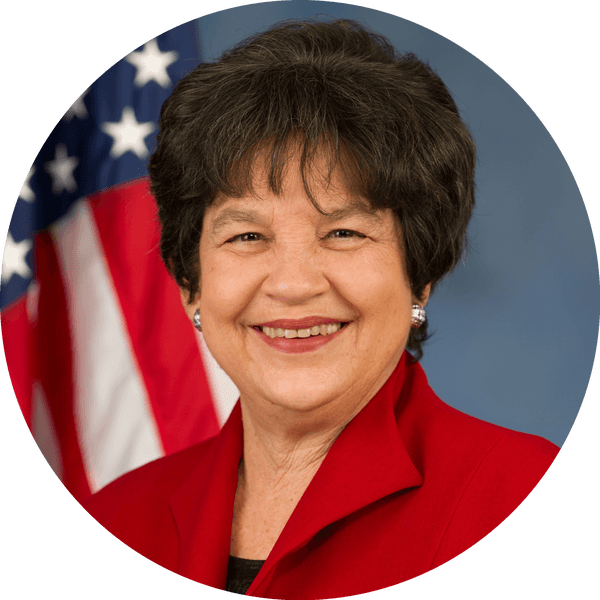
Lois Frankel
Democrat · FL

Bradley Schneider
Democrat · IL

Laura Friedman
Democrat · CA
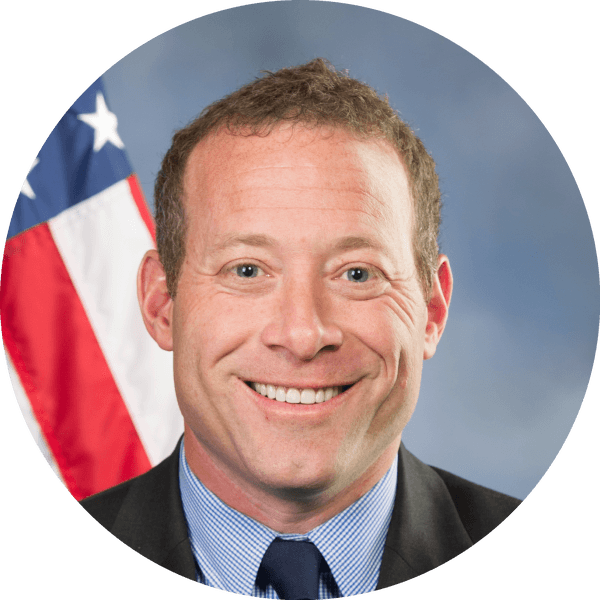
Josh Gottheimer
Democrat · NJ
Brian Fitzpatrick
Republican · PA
Craig Goldman
Republican · TX
Thomas Suozzi
Democrat · NY

Earl Carter
Republican · GA

Eleanor Norton
Democrat · DC

Sarah McBride
Democrat · DE
Committee Sponsors
Veterans' Affairs Committee
5 of 25 committee members cosponsored


10 Democrats across this committee haven't cosponsored yet. Mobilize their constituents
H.R. 2701 Quick Facts
- Committee
- Veterans' Affairs
- Chamber
- House
- Policy
- Armed Forces and National Security
- Introduced
- Apr 7, 2025
Passed the House, received in Senate
Dec 9, 2025
Official Sources
Official Congress.gov page for the Fallen Servicemembers Religious Heritage Restoration Act, with full bill text, status, and the legislative action history.
Official House Committee on Veterans' Affairs report accompanying H.R. 2701, with the committee's findings and section-by-section explanation.
ABMC is the federal agency the bill directs to establish and run the restoration program for overseas military cemeteries.
Official ABMC directory of the overseas U.S. military cemeteries and memorials where the bill's grave-marker identification work would occur.
Official overview of the American Battle Monuments Commission's mission as guardian of America's overseas commemorative cemeteries.
Official U.S. Code text for 38 U.S.C. 5503, the veterans' pension payment provision amended by Section 4 of the bill.
Official U.S. Code text for section 501, which defines the 501(c)(3) tax-exempt status a nonprofit must hold to be eligible for the program's contracts.
H.R. 2701 Common Questions
What does H.R. 2701 do?
It orders the American Battle Monuments Commission to run a five-year program that finds Jewish servicemembers buried in overseas U.S. military cemeteries under a marker indicating they were not Jewish, then contacts their families to correct the record.
How many Jewish soldiers were buried under the wrong marker?
The bill's findings estimate about 900 American-Jewish servicemembers killed in World War I and World War II were mistakenly buried overseas under Latin crosses. That is the figure Congress cites; confirming the actual cases is the program's job.
Why were Jewish servicemembers buried under crosses?
According to the bill's findings, the markers were placed in error, and Congress says that in most cases the mistakes were inadvertent rather than deliberate. The program is meant to find and fix those graves, not to assign blame.
Will families be contacted if a relative was buried under the wrong marker?
Yes. Reaching survivors and descendants is written into the program's core purpose. Once the nonprofit identifies a covered case, contacting the family to correct the record is part of the job, not an optional extra.
Does H.R. 2701 cover military cemeteries inside the United States?
No. It applies only to U.S. military cemeteries located outside the United States — the overseas sites the American Battle Monuments Commission maintains. Graves on domestic soil, and markers that are already correct, fall outside the program.
How much does the H.R. 2701 program cost?
Each year for five years, the Commission seeks a one-year, $500,000 contract with one nonprofit to do the work — up to $2.5 million total if a contract is signed every year. The bill text sets no larger funding figure beyond that.
Has H.R. 2701 passed?
The House passed it by voice vote in September 2025, and it now sits on the Senate Legislative Calendar. It still needs Senate passage and the President's signature to become law. It has 41 bipartisan cosponsors.
What's the unrelated pension change in H.R. 2701?
Beyond the cemetery program, the bill nudges one veterans' pension payment deadline back about two months — from late November 2031 to the end of January 2032. It is a small technical rider unrelated to the grave-marker work.
Based on H.R. 2701 bill text
H.R. 2701 Bill Text
“To direct the American Battle Monuments Commission to establish a program to identify American-Jewish servicemembers buried in United States military cemeteries overseas under markers that incorrectly represent their religion and heritage, and for other purposes.”
Source: U.S. Government Publishing Office
Get notified when H.R. 2701 moves
Committee votes, floor action, cosponsor changes — straight to your inbox.
Bill alerts + Legisletter's monthly briefing. Unsubscribe anytime.
Armed Forces and National Security Bills
9 related bills we're tracking
Major Richard Star Act




Referred to the Subcommittee on Disability Assistance and Memorial Affairs.
Apr 4, 2025
Pay Our Troops Act of 2026



Referred to the House Committee on Appropriations.
Sep 16, 2025
Fit to Serve Act





Referred to the House Committee on Armed Services.
May 21, 2025
Love Lives On Act of 2025


Forwarded by Subcommittee to Full Committee by Voice Vote.
Mar 26, 2026
Air America Act of 2025
Referred to the House Committee on Intelligence (Permanent Select).
Mar 18, 2025
Veteran Burial Timeliness and Death Certificate Accountability Act


Subcommittee Hearings Held
Jun 30, 2026
Reproductive Freedom for Veterans Act



Committee Hearings Held
Mar 18, 2026
GUARD VA Benefits Act



Committee Hearings Held
Mar 18, 2026
Caring for Survivors Act of 2025



Subcommittee Hearings Held
Jun 24, 2025
Trending Right Now
Bills gaining momentum across Congress
America’s Olympic and Paralympic Games Commemorative Coins Act



Referred to the House Committee on Financial Services.
Jul 14, 2025
ASAP Act


Ordered to be Reported in the Nature of a Substitute by the Yeas and Nays: 40 - 0.
Sep 16, 2026
Therapeutic Fraud Prevention Act of 2025




Referred to the House Committee on Energy and Commerce.
May 7, 2025
Tracking Armed Forces and National Security in Congress? Monitor bills, track cosponsor momentum, and launch advocacy campaigns — all from one advocacy platform.