H.R. 1493: To reauthorize and make improvements to Federal programs relating to the prevention, detection, and treatment of traumatic brain injuries, and for other purposes.
Sponsor

Frank Pallone
Democrat · NJ-6
Brain injuries from abuse and police work deserve a count
Why it matters
$22.4 million a year, about 7 cents per American, would restart federal brain injury tracking and state grants whose funding authority ran out after 2024. H.R. 1493 also requires HHS to report within 2 years on who the data still misses, naming domestic violence survivors and public safety officers.
The federal government runs two small brain injury efforts: a CDC surveillance and registry program, and a grant program that helps states build services and fund legal advocacy for people with brain injuries. The funding authority for both ran through fiscal 2024. H.R. 1493 extends them through 2030 and changes what they are asked to look for.
CDC tracking would expand from counting injuries to asking who gets hurt, how, and what happens to them years later. That includes populations at higher risk because of their job or circumstances, the causes and risk factors behind each injury, the person's occupation when it bears on how the injury happened, and short- and long-term outcomes such as related mental health conditions.
The CDC would also have to post aggregated brain injury and concussion data on its website, including, where feasible, data on higher-risk groups and prevention strategies aimed at them. The national program would carry the name of the late Rep. Bill Pascrell Jr. of New Jersey.
On the state side, outreach programs would have to take higher-risk populations into account, and Tribal outreach is added alongside State programs. States and American Indian consortia that take the grants must keep their own spending at the prior year's level. HHS could waive up to half of the required match for one year if the full match would keep a program from operating.
The bill also writes a definition of traumatic brain injury into the grant program: an acquired injury to the brain, which can include oxygen loss from trauma and damage from infection, toxicity, surgery, or vascular disorders not tied to aging. Congenital and degenerative conditions and birth trauma stay outside it. HHS could revise the definition after consulting states.
Within 2 years, HHS would owe Congress two reports: one on the higher-risk groups that current surveys miss, and a public study of long-term symptoms and possible links to dementia and mental health conditions. The first report can draw on surveys such as the National Intimate Partner and Sexual Violence Survey to fill in brain injury data.
Bill Progress
Latest Action · Jul 21, 2026
Passed the House, received in Senate
H.R. 1493 Bill Summary
What H.R. 1493 actually does.
Brain injury tracking funded through 2030
Authorizes $9.25 million a year for fiscal years 2026 through 2030 for the CDC's national traumatic brain injury surveillance and registries program, whose prior authorization ended with fiscal 2024.
Hidden high-risk groups get counted
CDC data collection would cover populations at higher risk because of occupational or circumstantial factors, the causes and risk factors behind injuries, and the injured person's occupation when relevant to how the injury happened.
Long-term effects become part of the record
Tracking would include short- and long-term outcomes, which may include related mental health conditions, plus evidence-based practices to identify and address concussion.
Brain injury data posted for the public
The CDC must publish aggregated traumatic brain injury and concussion information on its website, including, where feasible, data on higher-risk populations and prevention strategies tailored to them.
State programs funded, with strings
Authorizes $13.118 million a year through 2030 for state brain injury programs and protection and advocacy services. Grantees must maintain their prior-year non-federal spending; HHS can waive up to 50% of the match for one year.
A clear line on what counts as a brain injury
Defines traumatic brain injury as an acquired injury to the brain, including trauma-related oxygen loss and certain infection, toxicity, surgical, or vascular damage, and excludes congenital, degenerative, and birth-trauma conditions.
Two reports on who is being missed
Within 2 years HHS must report to Congress on higher-risk populations and CDC data gaps, and complete a public study of chronic symptoms, dementia and mental health links, available services, and research gaps.
Who benefits from H.R. 1493?
Domestic violence and sexual assault survivors
Named first in the required HHS report on higher-risk populations. The report must describe CDC data gaps for these groups and may use the National Intimate Partner and Sexual Violence Survey to collect brain injury data.
Police officers, firefighters, and other first responders
Public safety officers are named as a higher-risk group, and registries would record a person's occupation when it relates to how the injury happened.
People living with symptoms years after a concussion
Headaches, memory problems, or depression that outlast the injury would be studied directly, including possible links to dementia, along with what services exist and where the research runs thin.
State and Tribal brain injury programs
Five more years of authorized funding, $13.118 million annually, plus a one-year waiver of up to half the match for programs that could not otherwise operate.
Who is affected by H.R. 1493?
CDC and HHS
Must collect broader data, publish aggregated information online, and deliver a report and a study to Congress within 2 years of enactment.
State and Tribal grant recipients
Must keep their own spending at the prior year's level and meet matching requirements, unless HHS grants a partial one-year waiver.
Researchers, clinicians, and advocates
Would gain public, aggregated federal data on brain injury, concussion, higher-risk groups, and prevention strategies.
People whose conditions fall outside the definition
Brain dysfunction caused by congenital or degenerative disorders, or by birth trauma, is excluded from the grant program's definition unless HHS later revises it.
Cost & Funding
Authorization
$22.368 million a year for fiscal years 2026 through 2030: $9.25 million for CDC surveillance and registries plus $13.118 million for state programs and protection and advocacy services. About $111.8 million over five years.
- $22.368 million a year x 5 years = about $111.8 million.
- Spread across roughly 340 million Americans, that is about 7 cents per person per year.
- These are authorizations, not appropriations. Congress still has to provide the money in annual spending bills.
- The prior authorizations for both programs ran through fiscal 2024.
- Grantees must maintain prior-year non-federal spending; HHS may waive up to 50% of the matching requirement for a single fiscal year.
What Congress Is Saying
H.R. 1493 has come up 9 times in the Congressional Record so far.
Mr. Speaker, I rise today in strong support of H.R. 1493, led by my colleagues Representatives Pallone and Bacon, which would reauthorize HHS programs that allocate resources for traumatic brain injury prevention, improving access to TBI rehabilitation and TBI patient advocacy systems. TBI is a significant public health burden and a major driver of death and disability. In 2021 alone, there were over 69,000 TBI-related deaths.
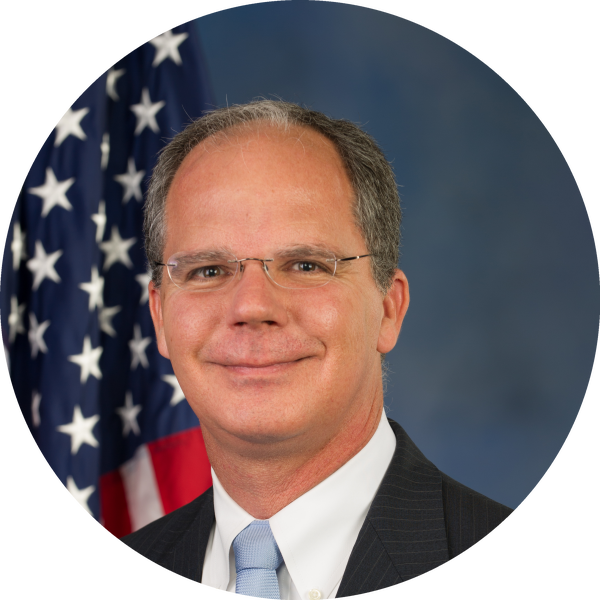
H.R. 1493 also appeared in 4 routine cosponsor filings.
HR1493 Legislative Journey
Committee Action
Jul 21, 2026
Received in the Senate and Read twice and referred to the Committee on Health, Education, Labor, and Pensions.
House: Vote: 4646-4647
Jul 20, 2026
On motion to suspend the rules and pass the bill, as amended Agreed to by voice vote. (text: CR H4646-4647)
House: Committee Action
Jul 2, 2026
Reported by the Committee on Energy and Commerce. H. Rept. 119-720.
House: Vote: 43-0
May 21, 2026
Ordered to be Reported by the Yeas and Nays: 43 - 0.
House: Committee Action
Feb 21, 2025
Referred to the House Committee on Energy and Commerce.
About the Sponsor
Frank Pallone
Democrat, New Jersey's 6th congressional district · 39 years in Congress
Committees: Energy and Commerce
View full profile →
Cosponsors (6)
This bill has 6 cosponsors: 3 Democrats, 3 Republicans, reflecting bipartisan support. Cosponsors represent 6 states: Florida, Nebraska, New Jersey, and 3 more.

Committee Sponsors
Health, Education, Labor, and Pensions Committee
0 of 23 committee members cosponsored
No committee members have cosponsored this bill
Energy and Commerce Committee
2 of 54 committee members cosponsored


33 Democrats across these committees haven't cosponsored yet. Mobilize their constituents
What laws does H.R. 1493 change?
1 changes
Sections Amended
Section 1253 of Public Health Service Act (42 U.S.C. 300d- 53)
striking subsection (l)
H.R. 1493 Quick Facts





- Committee
- Health, Education, Labor, and Pensions
- Chamber
- House
- Policy
- Health
- Introduced
- Feb 21, 2025
Passed the House, received in Senate
Jul 21, 2026
Official Sources
Official bill text, House passage record, and Senate committee referral for H.R. 1493.
The CDC brain injury data the bill would expand to cover higher-risk groups, causes, and long-term outcomes.
The statute for the national brain injury surveillance program that the bill renames for Rep. Bill Pascrell Jr. and funds at $9.25 million a year.
HHS runs the state partnership grants and protection and advocacy services the bill funds at $13.118 million a year through ACL.
The state grant statute H.R. 1493 amends to add Tribal outreach, a maintenance-of-effort rule, and a one-year match waiver.
The survey the bill names as a source for filling brain injury data gaps among domestic violence survivors.
The CDC concussion tracking effort that sits alongside the surveillance program H.R. 1493 reauthorizes through 2030.
H.R. 1493 Common Questions
What does H.R. 1493 do?
It extends federal traumatic brain injury tracking and state grant programs through 2030, widens CDC data collection to higher-risk groups and long-term effects, and requires two HHS reports within 2 years.
How much does H.R. 1493 cost?
It authorizes $22.368 million a year from 2026 through 2030, about $111.8 million total: $9.25 million a year for CDC tracking and $13.118 million for state programs. Congress still has to appropriate the money.
Does H.R. 1493 give money directly to brain injury patients?
No. It funds public health tracking and state grants. States can use those grants for services and for protection and advocacy help, but the bill creates no direct payment to individuals.
Why does the bill focus on domestic violence survivors?
The bill names people affected by domestic violence or sexual assault as a higher-risk group. HHS must report on CDC data gaps for them and may use the National Intimate Partner and Sexual Violence Survey to collect brain injury data.
Does H.R. 1493 cover concussions in police and firefighters?
Public safety officers, a federal category that includes police, firefighters, and ambulance crews, are named as a higher-risk group in the HHS report. CDC registries would also record a person's occupation when it relates to how the injury happened.
Does H.R. 1493 study the link between concussions and dementia?
Yes. HHS must study long-term symptoms after a brain injury, including any correlation with dementia and mental health conditions, and publish the findings within 2 years if it runs the study itself.
Will I be able to see CDC brain injury data online?
Yes, in aggregate. The CDC would have to post brain injury and concussion data on its website, including, where feasible, data on higher-risk groups and prevention strategies for them. No individual records.
What counts as a traumatic brain injury under H.R. 1493?
An acquired injury to the brain, which can include oxygen loss from trauma and damage from infection, toxicity, surgery, or vascular disorders not tied to aging. Congenital or degenerative conditions and birth trauma are excluded.
Has H.R. 1493 passed?
It passed the House by voice vote on July 20, 2026, and was sent to the Senate Health, Education, Labor, and Pensions Committee. It needs Senate passage and a presidential signature to become law.
Based on H.R. 1493 bill text
H.R. 1493 Bill Text
“To reauthorize and make improvements to Federal programs relating to the prevention, detection, and treatment of traumatic brain injuries, and for other purposes.”
Source: U.S. Government Publishing Office
Get notified when H.R. 1493 moves
Committee votes, floor action, cosponsor changes — straight to your inbox.
Bill alerts + Legisletter's monthly briefing. Unsubscribe anytime.
Health Bills
9 related bills we're tracking
Nancy Gardner Sewell Medicare Multi-Cancer Early Detection Screening Coverage Act





Reported (Amended) by the Committee on Ways and Means. H. Rept. 119-333, Part I.
Oct 3, 2025
Mikaela Naylon Give Kids a Chance Act





Received in the Senate.
Dec 2, 2025
Improving Seniors’ Timely Access to Care Act of 2025



Ordered to be Reported in the Nature of a Substitute by the Yeas and Nays: 42 - 0.
Jul 15, 2026
CONNECT for Health Act of 2025




Referred to the Committee on Energy and Commerce, and in addition to the Committee on Ways and Means, for a period to be subsequently determined by the Speaker, in each case for consideration of such provisions as fall within the jurisdiction of the committee concerned.
Jun 26, 2025
ASAP Act



Ordered to be Reported in the Nature of a Substitute by the Yeas and Nays: 40 - 0.
Sep 16, 2026
Momnibus Act




Referred to the Subcommittee on Health.
Apr 20, 2026
Ensuring Lasting Smiles Act



Referred to the Committee on Energy and Commerce, and in addition to the Committees on Education and Workforce, and Ways and Means, for a period to be subsequently determined by the Speaker, in each case for consideration of such provisions as fall within the jurisdiction of the committee concerned.
May 8, 2025
Right to Contraception Act



Referred to the House Committee on Energy and Commerce.
Feb 5, 2025
Women’s Health Protection Act of 2025



Referred to the Committee on Energy and Commerce, and in addition to the Committee on the Judiciary, for a period to be subsequently determined by the Speaker, in each case for consideration of such provisions as fall within the jurisdiction of the committee concerned.
Jun 24, 2025
Trending Right Now
Bills gaining momentum across Congress
Fit to Serve Act




Referred to the House Committee on Armed Services.
May 21, 2025
America’s Olympic and Paralympic Games Commemorative Coins Act




Referred to the House Committee on Financial Services.
Jul 14, 2025
Therapeutic Fraud Prevention Act of 2025





Referred to the House Committee on Energy and Commerce.
May 7, 2025
Tracking Health in Congress? Monitor bills, track cosponsor momentum, and launch advocacy campaigns — all from one advocacy platform.