S. 494: National Plan for Epilepsy Act
Sponsor
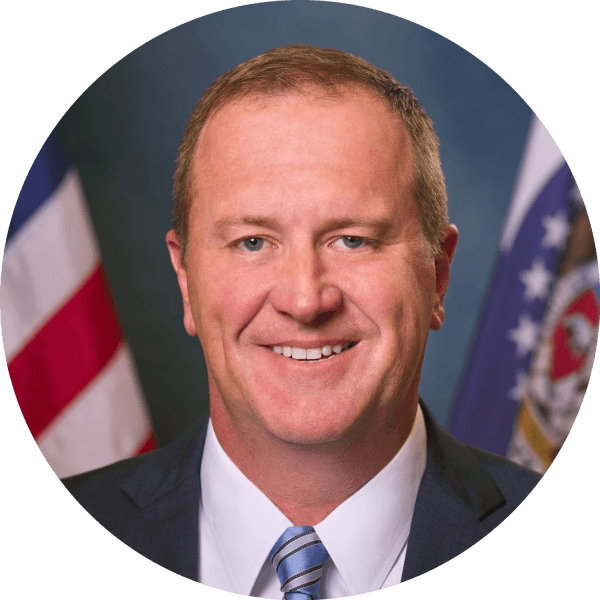
Eric Schmitt
Republican · MO
Make HHS put its epilepsy strategy on paper
Why it matters
More than 3 million Americans live with epilepsy, by CDC estimates, and federal work on it is spread across multiple agencies. S. 494 passed the Senate by unanimous consent and would give HHS 2 years to review all of it, name the gaps, and send Congress a list of fixes.
S. 494, the National Plan for Epilepsy Act, is a review-and-report bill. It creates no new benefit, grant program, or funding. Within 2 years, HHS would have to tell Congress where federal epilepsy efforts fall short and what should change.
The review covers a lot of ground. HHS would look at what the research already shows, what federally funded studies are underway, which questions remain unanswered, and which groups of patients have worse outcomes. It would also tally how much the government currently spends to prevent, diagnose, treat, and cure epilepsy.
From there, HHS has to weigh specific opportunities: faster diagnosis, better-coordinated care, stronger tracking of cases, new treatments, and support for caregivers. Preventing sudden unexpected death in epilepsy, known as SUDEP, is written into the review as its own item.
HHS can't do this alone behind closed doors. It must regularly bring in other federal agencies, patient advocates, and outside experts, and the final report has to describe that outreach and summarize what those groups said.
The report goes to the Senate health committee and the House Energy and Commerce Committee. It must include recommended changes to federal programs, ideas for putting them in place, and any legal or practical barriers standing in the way.
The bill got narrower on its way through the Senate. As introduced in February 2025, it called for a standing national plan and a federal advisory council running through 2035. The Senate health committee replaced that with the one-time review, and that version is what passed.
Bill Progress
Latest Action · Aug 10, 2026
Passed the Senate, received in House
S. 494 Bill Summary
What S. 494 actually does.
A 2-year deadline for a full epilepsy review
HHS must review federal epilepsy research, prevention, diagnosis, and treatment programs and report its findings and recommendations to Congress within 2 years of enactment.
The government has to name what it doesn't know
The review must cover research findings, ongoing federally funded studies, unanswered research questions, and differences in outcomes across patient populations.
A count of what Washington already spends
HHS must assess the current level of federal investment in preventing, diagnosing, treating, and curing epilepsy, along with gaps in coordination between programs.
SUDEP prevention gets its own line
HHS must consider ways to better prevent sudden unexpected death in epilepsy and other epilepsy-related deaths, alongside improving surveillance of the condition.
Faster diagnosis and better-coordinated care
The review must weigh opportunities to improve early diagnosis, coordinate care and treatment, and support new treatments that improve quality of life for patients and caregivers.
Patients and outside experts get a regular hearing
HHS must regularly convene and gather input from patient advocates, non-federal experts, and other agencies, then summarize that feedback in its report.
Congress gets a fix list, not just a status update
The report must recommend changes to federal programs or strategic plans, propose how to implement them, and identify legal or other barriers blocking those changes.
Who benefits from S. 494?
People living with epilepsy
More than 3 million Americans, by CDC estimates. The review targets the places they most often run into trouble: slow diagnosis, fragmented care, and gaps in treatment research.
Parents and caregivers
The bill directs HHS to examine how epilepsy affects the health and well-being of caregivers, not only patients, and to look at ways to improve their quality of life.
Families who have lost someone to SUDEP
Sudden unexpected death in epilepsy is written into the review as a specific prevention priority, giving an often-overlooked cause of death a formal place in federal planning.
Patient advocates and independent experts
HHS must consult them regularly and report back what they said, giving outside voices a documented role in shaping federal recommendations.
Epilepsy researchers
A government-wide map of funded studies, open questions, and spending levels gives researchers and funders a shared starting point for setting priorities.
Who is affected by S. 494?
Department of Health and Human Services
HHS would run the review, convene agencies and stakeholders on a regular basis, and deliver the report to Congress within 2 years.
Federal agencies with epilepsy programs
Agencies involved in epilepsy research, prevention, diagnosis, treatment, or data collection would be asked for input and have their programs reviewed for gaps and overlap.
Senate HELP and House Energy and Commerce Committees
These two committees receive the report and would decide whether to act on HHS's recommended changes.
Patients hoping for direct help now
The bill creates no new service, coverage, or grant. Any change in care would depend on later action by HHS or Congress after the report arrives.
S494 Legislative Journey
House: Action Taken
Aug 10, 2026
Held at the desk.
Passed 4426-4427
Aug 4, 2026
Passed Senate with an amendment by Unanimous Consent. (consideration: CR S4426-4427; text: CR S4426-4427)
+1 more action this day
Committee Action
Jul 28, 2026
Committee on Health, Education, Labor, and Pensions. Reported by Senator Cassidy with an amendment in the nature of a substitute. Without written report.
Passed Committee
Jul 22, 2026
Committee on Health, Education, Labor, and Pensions. Ordered to be reported with an amendment in the nature of a substitute favorably.
Committee Action
Feb 10, 2025
Read twice and referred to the Committee on Health, Education, Labor, and Pensions.
About the Sponsor
Eric Schmitt
Republican, MO · 3 years in Congress
Committees: Joint Economic Committee, Commerce, Science, and Transportation, the Judiciary
View full profile →
Cosponsors (27)
This bill has 27 cosponsors: 19 Democrats, 8 Republicans, reflecting bipartisan support. Cosponsors represent 21 states: Arkansas, California, Colorado, and 18 more.

Amy Klobuchar
Democrat · MN
John Boozman
Republican · AR

Maggie Hassan
Democrat · NH

Jon Husted
Republican · OH

Edward Markey
Democrat · MA

Cory Booker
Democrat · NJ

Joni Ernst
Republican · IA

Alex Padilla
Democrat · CA

Shelley Capito
Republican · WV

Jeanne Shaheen
Democrat · NH

Christopher Coons
Democrat · DE

Raphael Warnock
Democrat · GA
Committee Sponsors
Health, Education, Labor, and Pensions Committee
8 of 23 committee members cosponsored


9 Republicans across this committee haven't cosponsored yet. Mobilize their constituents
S. 494 Quick Facts
- Committee
- Health, Education, Labor, and Pensions
- Chamber
- Senate
- Policy
- Health
- Introduced
- Feb 10, 2025
Passed the Senate, received in House
Aug 10, 2026
Official Sources
Bill text, sponsors, cosponsors, and every action from introduction through Senate passage and the House desk.
CDC runs federal epilepsy surveillance and public health programs, one of the areas HHS would review under the bill.
CDC counts about 2.9 million U.S. adults and 456,000 children with active epilepsy, the population the review is meant to serve.
The bill names SUDEP prevention as a specific item HHS must weigh in its review.
The existing NIH-led working group that brings together NIH institutes, other federal agencies, and patient advocates on epilepsy research, the same kind of coordination the bill asks HHS to assess.
Tracks federally funded epilepsy research across agencies, a starting point for the bill's required tally of federal investment.
NIH's lead neurology institute explains epilepsy diagnosis and treatment, the areas where the bill directs HHS to find gaps.
S. 494 Common Questions
What does the National Plan for Epilepsy Act do?
S. 494 orders HHS to review every federal effort on epilepsy — research, prevention, diagnosis, treatment, and data — and send Congress a report within 2 years with recommended changes and the barriers blocking them.
Does S. 494 add new epilepsy funding or services?
No. It creates no grant program, benefit, or new money. It requires a review and recommendations, and any new funding or services would need separate action by Congress.
Has S. 494 passed?
It passed the Senate by unanimous consent on August 4, 2026, and is being held at the desk in the House. It still needs a House vote and the President's signature to become law.
Why is it called a national plan if it's only a review?
As introduced in February 2025, the bill called for a standing national plan and a federal advisory council through 2035. The Senate health committee replaced that with a one-time review and report, and that narrower version passed the Senate.
What does S. 494 do about SUDEP?
It requires HHS to consider ways to better prevent sudden unexpected death in epilepsy and other epilepsy-related deaths, as a specific item in the federal review.
Do patients and families get a say?
Yes. HHS must regularly gather input from patient advocates and outside experts, and the final report has to summarize their feedback. The review also looks at how epilepsy affects caregivers.
Will we find out how much the government spends on epilepsy?
Yes. The review must assess the current level of federal investment in preventing, diagnosing, treating, and curing epilepsy.
Would S. 494 speed up epilepsy diagnosis?
Not directly. HHS must look for ways to improve early diagnosis and coordinate care, then recommend changes. Faster diagnosis would depend on what HHS and Congress do with those recommendations.
Based on S. 494 bill text
S. 494 Bill Text
“To establish a national plan to coordinate research on epilepsy, and for other purposes.”
Source: U.S. Government Publishing Office
Get notified when S. 494 moves
Committee votes, floor action, cosponsor changes — straight to your inbox.
Bill alerts + Legisletter's monthly briefing. Unsubscribe anytime.
Health Bills
9 related bills we're tracking
Nancy Gardner Sewell Medicare Multi-Cancer Early Detection Screening Coverage Act





Reported (Amended) by the Committee on Ways and Means. H. Rept. 119-333, Part I.
Oct 3, 2025
Mikaela Naylon Give Kids a Chance Act





Received in the Senate.
Dec 2, 2025
Improving Seniors’ Timely Access to Care Act of 2025




Ordered to be Reported in the Nature of a Substitute by the Yeas and Nays: 42 - 0.
Jul 15, 2026
CONNECT for Health Act of 2025





Referred to the Committee on Energy and Commerce, and in addition to the Committee on Ways and Means, for a period to be subsequently determined by the Speaker, in each case for consideration of such provisions as fall within the jurisdiction of the committee concerned.
Jun 26, 2025
ASAP Act



Ordered to be Reported in the Nature of a Substitute by the Yeas and Nays: 40 - 0.
Sep 16, 2026
Momnibus Act




Referred to the Subcommittee on Health.
Apr 20, 2026
Ensuring Lasting Smiles Act



Referred to the Committee on Energy and Commerce, and in addition to the Committees on Education and Workforce, and Ways and Means, for a period to be subsequently determined by the Speaker, in each case for consideration of such provisions as fall within the jurisdiction of the committee concerned.
May 8, 2025
Right to Contraception Act




Referred to the House Committee on Energy and Commerce.
Feb 5, 2025
Women’s Health Protection Act of 2025



Referred to the Committee on Energy and Commerce, and in addition to the Committee on the Judiciary, for a period to be subsequently determined by the Speaker, in each case for consideration of such provisions as fall within the jurisdiction of the committee concerned.
Jun 24, 2025
Trending Right Now
Bills gaining momentum across Congress
Fit to Serve Act




Referred to the House Committee on Armed Services.
May 21, 2025
America’s Olympic and Paralympic Games Commemorative Coins Act





Referred to the House Committee on Financial Services.
Jul 14, 2025
Therapeutic Fraud Prevention Act of 2025





Referred to the House Committee on Energy and Commerce.
May 7, 2025
Tracking Health in Congress? Monitor bills, track cosponsor momentum, and launch advocacy campaigns — all from one advocacy platform.