H.R. 8163: Provider Reimbursement Stability Act of 2026
Sponsor

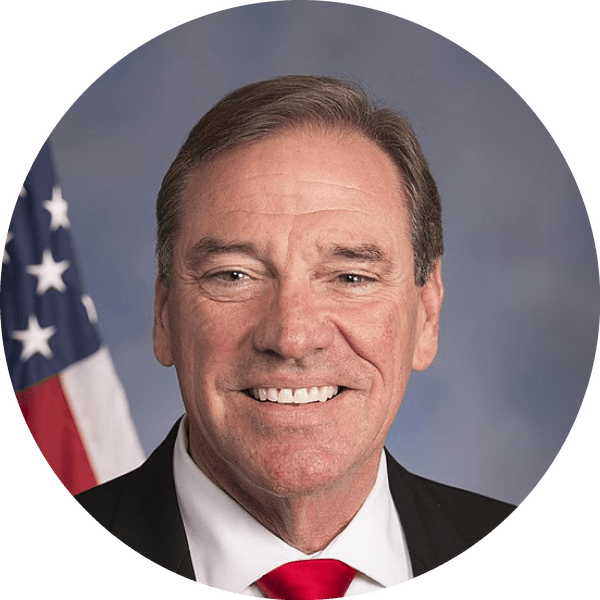
Gregory Murphy
Republican · NC-3
Medicare doctor pay swings get a 2.5% cap
Why it matters
A single Medicare payment formula could no longer swing by more than 2.5% year to year starting in 2027. If your doctor depends heavily on Medicare, this bill aims to make payment changes more predictable and force Medicare to fix bigger forecasting misses.
H.R. 8163 would limit one major source of year-to-year Medicare physician pay volatility by capping budget-neutrality-driven conversion factor swings at 2.5% starting in 2027.
The bill also replaces Medicare's long-standing $20 million budget neutrality threshold with a yearly amount set by the Health and Human Services Secretary. Starting in 2032, and every fifth year after that, that amount would be increased based on five years of Medicare Economic Index growth for physicians' services.
Another change targets bad utilization estimates. If Medicare's projected use of certain services is off by more than 0.1% of total estimated spending for physician-fee-schedule services in a year, the agency would have to reconcile the difference later by adjusting the conversion factor up or down.
That means forecast errors would no longer just sit in the system if they cross the bill's trigger — Medicare would have to true them up in the second year after the miss.
The bill also tells Medicare to refresh direct practice-expense cost inputs at least once every five years, all at the same time. That includes clinical staff wages, medical supplies, equipment prices, and any other direct cost category the Secretary uses.
For patients, the bill does not change your Medicare benefits directly — it changes how stable physician payment updates are behind the scenes.
Bill Progress
Latest Action · May 21, 2026
Committee approved bill for floor consideration in the Nature of a Substitute by the Yeas and Nays: 44 - 0.
H.R. 8163 Bill Summary
What H.R. 8163 actually does.
Annual Medicare pay swings get a 2.5% limit
Starting in 2027, Medicare could not use budget neutrality adjustments to push the physician conversion factor more than 2.5% above or below the prior year's level, excluding certain other annual adjustments.
Big forecasting misses must be corrected
If Medicare's estimated versus actual use of specified services is off by more than 0.1% of total estimated spending for physician-fee-schedule services in a year, the agency would have to reconcile that difference with a later payment adjustment that can be positive or negative.
Payment corrections happen two years later
The bill sets the correction window as the second year after the year with the forecasting miss, creating a defined timeline for Medicare to adjust payments.
A decades-old $20 million trigger is replaced
Instead of relying on a fixed $20 million budget neutrality threshold, Medicare would use a yearly threshold set by the Secretary.
That threshold rises with medical practice costs
Beginning in 2032, and every fifth year after that, the Secretary would increase the yearly threshold based on five years of Medicare Economic Index growth for physicians' services.
Practice-expense cost data must be refreshed
Medicare would have to update direct cost inputs at least once every five years, with clinical staff wages, medical supplies, equipment, and other direct cost categories all updated in the same year after consulting stakeholders.
Who benefits from H.R. 8163?
Doctors and clinicians paid under Medicare's physician fee schedule
They would face fewer abrupt year-to-year payment swings because one major adjustment could not move the conversion factor by more than 2.5% starting in 2027.
Medical practices built around Medicare patients
Practices that need steadier revenue to plan staffing and expenses could benefit from more predictable updates and from required corrections when Medicare's utilization estimates miss the mark.
Clinics dealing with outdated cost assumptions
The bill would require Medicare to refresh direct cost data at least every five years, including staff wages, supply prices, and equipment costs that can drift away from real-world practice expenses.
Medicare patients who rely on participating physicians
Patients are not paid directly, but steadier physician payment rules could help support continued provider participation in Medicare, especially in practices where Medicare is a large share of the business.
Who is affected by H.R. 8163?
The Health and Human Services Secretary and Medicare payment officials
They would have to set a yearly budget neutrality threshold, increase it every fifth year starting in 2032, monitor utilization misses, apply later corrections, and update direct cost inputs on a regular schedule.
Providers whose payments rise or fall after utilization corrections
If Medicare overestimates or underestimates service use beyond the bill's 0.1% trigger, later payment updates could be adjusted upward or downward to reconcile the difference.
Clinicians affected by budget neutrality changes
The bill limits how sharply one adjustment can move annual payment rates, but it does not end budget neutrality overall, so providers would still operate within Medicare's broader payment constraints.
Budget scorekeepers and lawmakers weighing Medicare costs
Because the bill changes payment formulas rather than creating a grant program, its real impact depends on how the new threshold is set and how often reconciliation adjustments are triggered.
HR8163 Legislative Journey
House: Vote: 44-0
May 21, 2026
Ordered to be Reported in the Nature of a Substitute by the Yeas and Nays: 44 - 0.
House: Committee Action
Mar 30, 2026
Referred to the Committee on Energy and Commerce, and in addition to the Committee on Ways and Means, for a period to be subsequently determined by the Speaker, in each case for consideration of such provisions as fall within the jurisdiction of the committee concerned.
About the Sponsor
Gregory Murphy
Republican, North Carolina's 3rd congressional district · 7 years in Congress
Committees: Joint Committee on Printing, House Administration, Veterans' Affairs
View full profile →
Cosponsors (87)
This bill has 87 cosponsors: 58 Democrats, 29 Republicans, reflecting bipartisan support. Cosponsors represent 33 states: Alabama, Arizona, California, and 30 more.

Bradley Schneider
Democrat · IL

John Joyce
Republican · PA

Thomas Suozzi
Democrat · NY

Robert Onder
Republican · MO
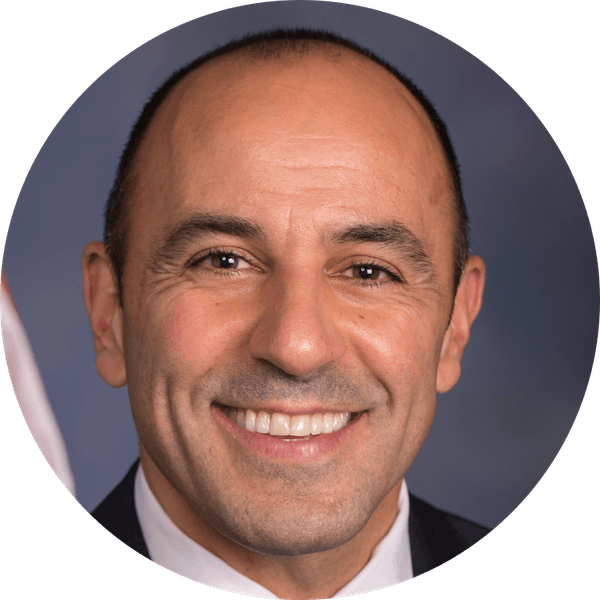
Jimmy Panetta
Democrat · CA

Mariannette Miller-Meeks
Republican · IA

Kim Schrier
Democrat · WA

Robin Kelly
Democrat · IL

Herbert Conaway
Democrat · NJ

Raja Krishnamoorthi
Democrat · IL

Carol Miller
Republican · WV

Donald Davis
Democrat · NC
Committee Sponsors
Ways and Means Committee
14 of 45 committee members cosponsored


Energy and Commerce Committee
6 of 54 committee members cosponsored


44 Republicans across these committees haven't cosponsored yet. Mobilize their constituents
H.R. 8163 Quick Facts
- Committee
- Ways and Means
- Chamber
- House
- Policy
- Health
- Introduced
- Mar 30, 2026
Committee approved bill for floor consideration in the Nature of a Substitute by the Yeas and Nays: 44 - 0.
May 21, 2026
Official Sources
Official bill page with status, text, actions, and committee information for the Provider Reimbursement Stability Act of 2026.
CMS overview page for the Medicare Physician Fee Schedule, the payment system H.R. 8163 modifies.
Official statutory text for Section 1848 of the Social Security Act, which governs the physician fee schedule and is directly amended by H.R. 8163.
Official U.S. Code page for 42 U.S.C. 1395w-4, the codified physician fee schedule statute referenced throughout the bill text.
CMS page hosting physician fee schedule relative value files and related materials relevant to practice expense inputs and RVU methodology updated by the bill.
Congressional Budget Office cost estimate index where an official score for H.R. 8163 would appear if one is published.
H.R. 8163 Common Questions
What does H.R. 8163 do in plain English?
It tries to make Medicare doctor pay less jumpy from year to year. H.R. 8163 caps one key annual payment swing at 2.5%, requires fixes for bigger forecasting errors, and updates stale cost data.
Would this change my Medicare benefits or premiums?
Not directly. H.R. 8163 changes how Medicare calculates physician payment updates behind the scenes, not what benefits you have or what services Medicare covers.
How much could Medicare doctor pay change each year under H.R. 8163?
Starting in 2027, one budget neutrality adjustment could not make the physician conversion factor move by more than 2.5% from the prior year, excluding certain other adjustments.
When would Medicare have to fix bad utilization forecasts?
Beginning in 2027, Medicare would have to reconcile bigger misses between projected and actual service use. The correction would show up in the second year after the forecast year.
What counts as a big enough forecasting miss?
H.R. 8163 sets the trigger at 0.1% of total estimated spending for services paid under the physician fee schedule in that year.
Does H.R. 8163 get rid of Medicare budget neutrality?
No. The bill keeps budget neutrality in place. It limits one kind of annual swing and requires separate reconciliation for larger utilization misses.
What happens to the old $20 million threshold?
H.R. 8163 replaces the fixed $20 million trigger with a yearly amount set by the Health and Human Services Secretary. Starting in 2032, that amount would rise every five years with medical practice cost growth.
How often would Medicare update practice expense cost data?
At least once every five years. The bill says Medicare must update clinical staff wages, medical supplies, equipment prices, and other direct cost categories in the same year.
Based on H.R. 8163 bill text
H.R. 8163 Bill Text
“To amend title XVIII of the Social Security Act to ensure stability for provider payments under the Medicare program.”
Source: U.S. Government Publishing Office
Get notified when H.R. 8163 moves
Committee votes, floor action, cosponsor changes — straight to your inbox.
Bill alerts + Legisletter's monthly briefing. Unsubscribe anytime.
Health Bills
9 related bills we're tracking
Nancy Gardner Sewell Medicare Multi-Cancer Early Detection Screening Coverage Act




Reported (Amended) by the Committee on Ways and Means. H. Rept. 119-333, Part I.
Oct 3, 2025
Mikaela Naylon Give Kids a Chance Act




Received in the Senate.
Dec 2, 2025
Improving Seniors’ Timely Access to Care Act of 2025



Ordered to be Reported in the Nature of a Substitute by the Yeas and Nays: 42 - 0.
Jul 15, 2026
CONNECT for Health Act of 2025





Referred to the Committee on Energy and Commerce, and in addition to the Committee on Ways and Means, for a period to be subsequently determined by the Speaker, in each case for consideration of such provisions as fall within the jurisdiction of the committee concerned.
Jun 26, 2025
ASAP Act




Ordered to be Reported in the Nature of a Substitute by the Yeas and Nays: 40 - 0.
Sep 16, 2026
Momnibus Act




Referred to the Subcommittee on Health.
Apr 20, 2026
Ensuring Lasting Smiles Act



Referred to the Committee on Energy and Commerce, and in addition to the Committees on Education and Workforce, and Ways and Means, for a period to be subsequently determined by the Speaker, in each case for consideration of such provisions as fall within the jurisdiction of the committee concerned.
May 8, 2025
Right to Contraception Act




Referred to the House Committee on Energy and Commerce.
Feb 5, 2025
Women’s Health Protection Act of 2025




Referred to the Committee on Energy and Commerce, and in addition to the Committee on the Judiciary, for a period to be subsequently determined by the Speaker, in each case for consideration of such provisions as fall within the jurisdiction of the committee concerned.
Jun 24, 2025
Trending Right Now
Bills gaining momentum across Congress
Fit to Serve Act




Referred to the House Committee on Armed Services.
May 21, 2025
America’s Olympic and Paralympic Games Commemorative Coins Act





Referred to the House Committee on Financial Services.
Jul 14, 2025
Therapeutic Fraud Prevention Act of 2025





Referred to the House Committee on Energy and Commerce.
May 7, 2025
Tracking Health in Congress? Monitor bills, track cosponsor momentum, and launch advocacy campaigns — all from one advocacy platform.