Mr. Speaker, I rise today in support of my bipartisan legislation, the Safe Cloud Storage Act. Every day, law enforcement officers across this country confront some of the most disturbing crimes imaginable. They work to identify children who are being sexually exploited, rescue victims from ongoing abuse, and find and prosecute the predators who are responsible. I know something about that work firsthand. Before coming to Congress, I served as a Federal prosecutor, where I worked on cases involving the exploitation of children.
H.R. 7834: Safe Cloud Storage Act
Introduced Mar 5, 20265 cosponsors
Sponsor

Laurel Lee
Republican · FL-15
Child-abuse evidence needs protection in the cloud
4 min readLast updated November 18, 2026
Why it matters
Evidence depicting child sexual abuse is among the most sensitive material police can hold, yet agencies may entrust it to private cloud vendors. H.R. 7834 would require encryption, annual independent audits and limited employee access while giving compliant vendors legal protection for their contract work.
If evidence of a child’s abuse is outsourced to a private cloud, the vendor would have to encrypt it, restrict access and undergo an independent security audit every year. The rules would cover vendors hired by federal, state or local police and prosecutors to store or analyze child sexual abuse material or child obscenity.
Vendors would have to follow the latest NIST Cybersecurity Framework and federal criminal-justice security standards. They would also have to record which employees accessed the evidence, correct every problem identified by an annual audit and obtain the agency’s consent before employees access files for maintenance, technical support or forensic processing.
In return, covered vendors would generally be protected from lawsuits and criminal charges for work performed under the contract. That protection would not apply to negligence, intentional misconduct, actual malice, unjustified reckless disregard of a substantial injury risk or conduct unrelated to the contract.
The evidence would generally have to remain in the United States. Vendors would have 30 days to report new contracts and 30 days to report a breach or termination, and they would have to preserve the files until a lawful transfer could be completed.
Agency rules would set the retention period when those rules exist. Otherwise, the evidence would remain stored through the relevant prosecution deadline or the defendant’s sentence, including post-conviction review; the bill would not authorize cybersecurity audits of government systems or reduce existing agency and victim-request duties.
What to watch
The Senate has acted and sent a message back to the House. Watch whether both chambers have agreed to identical text; if differences remain, the House must address them before the measure can go to the President. None of the vendor protections or security requirements takes effect unless H.R. 7834 becomes law.
Bill Progress
IntroducedMar 5
Committee
Pass HouseSep 16
Pass SenateNov 16
Signed
Law
Latest Action · Nov 17, 2026
1/4
Message on Senate action sent to the House.
H.R. 7834 Bill Summary
What H.R. 7834 actually does.
1
Sensitive evidence must be encrypted
Covered vendors would have to use end-to-end encryption or an equivalent safeguard and comply with the latest NIST Cybersecurity Framework and federal criminal-justice security standards.
2
Every vendor faces a yearly security review
An independent audit would be required every year using NIST’s federal security controls. Vendors would have to promptly correct every issue the audit identifies.
3
Fewer employees can view the files
Vendors would have to minimize the number of employees with access and keep a record of everyone who accessed the evidence. Agency consent would be required for maintenance, technical assistance or forensic processing.
4
Evidence generally stays inside the United States
Covered files could leave the country only when the contracting agency expressly approves a transfer for investigative purposes.
5
Evidence remains available through later court review
Agency law or policy would control retention when a rule exists. Without one, vendors would preserve the evidence through the prosecution deadline or the sentence imposed, including post-conviction review.
6
Contract work receives limited legal protection
Vendors generally could not be sued or prosecuted for performing covered contracts. The protection would not extend to negligence, intentional misconduct, actual malice, specified reckless conduct or activity unrelated to the contract.
7
Agencies receive notice within 30 days
Vendors would have 30 days to notify the Justice Department of a new contract. A breach or termination would trigger a separate 30-day notice to the Justice Department or the relevant state attorney general.
8
The same baseline reaches agencies nationwide
The proposal would cover contracts involving federal agencies and agencies across all 50 states, the District of Columbia and five U.S. territories, including their local political subdivisions.
Who benefits from H.R. 7834?
Children and survivors depicted in stored evidence
Their files would be encrypted, generally kept inside the United States and accessible to a minimized group of employees whose access must be recorded.
Investigators in all 50 states and U.S. territories
Federal, state and local agencies would receive a common security baseline when they hire private companies to store or process sensitive evidence.
Prosecutors handling lengthy cases and appeals
Evidence would have to remain intact for the agency’s required period or, when no rule exists, through the prosecution deadline or sentence, including post-conviction review.
Cloud and forensic vendors serving law enforcement
Vendors meeting the bill’s requirements would gain protection from many civil claims and criminal charges arising from their contract work, subject to listed misconduct exceptions.
Who is affected by H.R. 7834?
Cloud storage and forensic-service companies
Companies seeking covered contracts would take on encryption, annual audit, remediation, access-recording, domestic-storage and long-term preservation obligations.
Employees who maintain or process the evidence
Access would require the contracting agency’s consent, be limited to specified work and be recorded by the vendor.
Police departments and prosecutors’ offices
Agencies would decide who may access the evidence, approve any investigative transfer abroad and set retention periods through their applicable laws or policies.
People bringing claims against covered vendors
Claims tied to properly performed contract work would generally be barred. Cases alleging negligence, intentional misconduct, actual malice, specified reckless conduct or unrelated activity could still proceed.
Justice Department and state attorneys general
The Justice Department would receive notices of new contracts and federal contract problems. State attorneys general would receive notices when state or local contracts are breached or terminated.
On the Record
What Congress Is Saying
H.R. 7834 has come up 15 times in the Congressional Record so far.
Mr. Speaker, I rise in support of the bipartisan Safe Cloud Storage Act, and I salute the gentlewoman from Florida for her leadership on this legislation. For more than a decade, we have seen exponential growth in the volume of child sexual abuse images and videos, or CSAM, and child obscenity material that offenders distribute and share online, and our law enforcement agencies have struggled to keep up with it all. This legislation will allow cloud service providers to work with law enforcement to maintain and store relevant evidence in a safe and secure way.
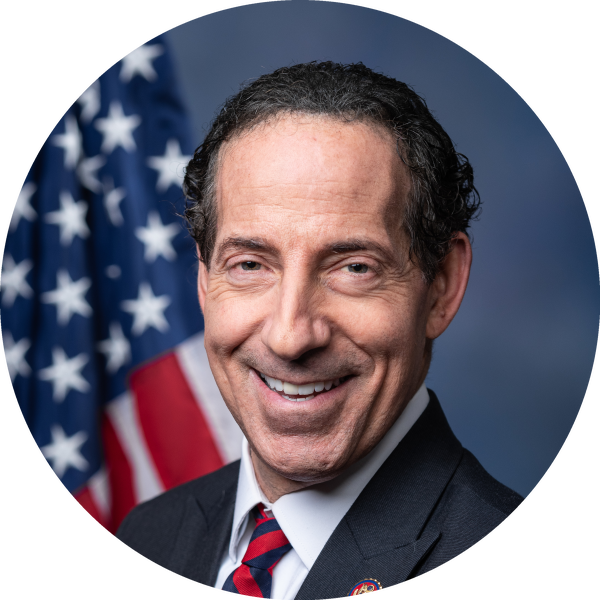

Mr. Speaker, I again thank my colleagues on the Judiciary Committee, specifically the chairman, the ranking member, and Representatives Cohen, Dean, and Knott for their partnership in bringing forward this important legislation. I am also very grateful to the men and women of law enforcement who come to us and share with us the things that they need to help them bring these important cases, to bring more children to safety, and to bring more predators to justice.
H.R. 7834 also appeared in 1 more Senate floor reference and 5 routine cosponsor filings.
HR7834 Legislative Journey
Action Taken
Nov 17, 2026
Message on Senate action sent to the House.
Passed
Nov 16, 2026
Passed Senate without amendment by Unanimous Consent. (consideration: CR S5701)
+1 more action this day
Sent to Senate
Sep 17, 2026
Received in the Senate, read twice.
House: Vote: 5936-5937
Sep 16, 2026
On motion to suspend the rules and pass the bill, as amended Agreed to by voice vote. (text: CR H5936-5937)
House: Committee Action
Sep 8, 2026
Reported (Amended) by the Committee on Judiciary. H. Rept. 119-804.
House: Vote: 24-0
Jul 15, 2026
Ordered to be Reported (Amended) by the Yeas and Nays: 24 - 0.
House: Committee Action
Mar 5, 2026
Referred to the House Committee on the Judiciary.
About the Sponsor
Laurel Lee
Republican, Florida's 15th congressional district · 3 years in Congress
Committees: House Administration, the Judiciary, Energy and Commerce
View full profile →
Cosponsors (5)
This bill has 5 cosponsors: 2 Democrats, 3 Republicans, reflecting bipartisan support. Cosponsors represent 5 states: North Carolina, Pennsylvania, Tennessee, and 2 more.
2Democrats3Republicans·5 statesBipartisan
Committee Sponsors
Judiciary Committee
19D24R1I
|3 signed41 not yet3 of 44 committee members cosponsored


22 Republicans across this committee haven't cosponsored yet. Mobilize their constituents
What laws does H.R. 7834 change?
1 changes
Sections Amended
Section 1(b) of PROTECT Our Children Act of 2008 (Public Law 110-401; 122 Stat. 4229)
inserting after the item relating to section 201 the following: ``Sec
H.R. 7834 Quick Facts
Cosponsors
5




- Committee
- Judiciary
- Chamber
- House
- Policy
- Crime and Law Enforcement
- Introduced
- Mar 5, 2026
Message on Senate action sent to the House.
Nov 17, 2026
Official Sources
H.R. 7834 on Congress.gov
The official bill page provides H.R. 7834's text, legislative actions, sponsors, committees, and current status.
Official Text of H.R. 7834
GovInfo provides the official reported House text establishing the proposed security, retention, notification, and vendor-liability rules.
House Report 119-804
The official House Judiciary Committee report explains the legislation and the committee's consideration of H.R. 7834.
NIST Cybersecurity Framework
H.R. 7834 would require covered cloud and forensic vendors to comply with the latest version of the NIST Cybersecurity Framework.
NIST Security and Privacy Controls (SP 800-53)
The bill uses NIST federal security controls as the baseline for vendors' required annual independent security audits.
Justice Department Child Pornography Information
The Justice Department explains the federal legal framework governing child sexual abuse material that covered agencies and vendors would handle under the bill.
NIST Cryptographic Standards and Guidelines
NIST's cryptographic guidance is relevant to the bill's requirement for end-to-end encryption or an equivalent protection for stored evidence.
H.R. 7834 Common Questions
Is the Safe Cloud Storage Act law yet?
No. The Senate has acted and sent a message to the House, but H.R. 7834 still needs final congressional approval and the President’s signature before its rules take effect.
Which cloud storage contracts would H.R. 7834 cover?
It would cover private vendors hired by federal, state or local police and prosecutors to store or process child sexual abuse material or child obscenity. The coverage extends across all 50 states, D.C. and five U.S. territories.
Can a cloud vendor be sued for storing child-abuse evidence?
Generally not for properly performing a covered contract. A vendor could still face a claim involving negligence, intentional misconduct, actual malice, specified reckless conduct or activity unrelated to the contract.
What cybersecurity rules would cloud evidence vendors follow?
They would need end-to-end encryption or an equivalent safeguard, the latest NIST Cybersecurity Framework and an independent security audit every year. Every issue found by the audit would have to be addressed promptly.
Who could access child sexual abuse evidence at a vendor?
Only a minimized group of employees. The vendor would have to record who accessed the files, and the agency would have to approve access for maintenance, technical assistance or forensic processing.
Could the evidence be stored outside the United States?
Generally, no. A transfer abroad would require the contracting agency’s express consent and would have to serve an investigative purpose.
How long would a vendor have to retain the evidence?
The agency’s law or policy would set the period. If no rule applies, the vendor would retain the evidence through the prosecution deadline or the sentence imposed, including post-conviction review.
What happens after a cloud contract is breached or ends?
The vendor would have 30 days to notify the Justice Department or the relevant state attorney general. It would also have to preserve the evidence and its integrity until the files could be lawfully transferred.
Based on H.R. 7834 bill text
H.R. 7834 Bill Text
“To limit liability for certain entities storing child sexual abuse material for law enforcement agencies, and for other purposes.”
Source: U.S. Government Publishing Office
Bill Alerts
Get notified when H.R. 7834 moves
Committee votes, floor action, cosponsor changes — straight to your inbox.
Bill alerts + Legisletter's monthly briefing. Unsubscribe anytime.
Crime and Law Enforcement Bills
9 related bills we're tracking
H.R. 909
Crime Victims Fund Stabilization Act of 2025

Ann WagnerR-MO



+323
327 cosponsors
Received in the Senate and Read twice and referred to the Committee on the Judiciary.
Jan 13, 2026
HouseCrime and Law Enforcement
H.R. 18
Bipartisan Background Checks Act of 2025
Mike ThompsonD-CA


+211
215 cosponsors
+1 this monthReferred to the House Committee on the Judiciary.
Jun 10, 2025
HouseCrime and Law Enforcement
H.R. 2853
Combating Organized Retail Crime Act of 2025

David JoyceR-OH



+202
206 cosponsors
Received in the Senate and Read twice and referred to the Committee on the Judiciary.
May 13, 2026
HouseCrime and Law Enforcement
H.R. 1564
Ethan's Law

Rosa DeLauroD-CT


+198
202 cosponsors
+1 this monthReferred to the House Committee on the Judiciary.
Feb 25, 2025
HouseCrime and Law Enforcement
H.R. 3115
Assault Weapons Ban of 2025
Lucy McBathD-GA


+192
196 cosponsors
+2 this monthReferred to the House Committee on the Judiciary.
Apr 30, 2025
HouseCrime and Law Enforcement
H.R. 38
Constitutional Concealed Carry Reciprocity Act of 2025

Richard HudsonR-NC



+185
189 cosponsors
Placed on the Union Calendar, Calendar No. 289.
Oct 3, 2025
HouseCrime and Law Enforcement
H.R. 1269
Honoring Our Fallen Heroes Act of 2025

Mary ScanlonD-PA

+176
180 cosponsors
Referred to the House Committee on the Judiciary.
Feb 12, 2025
HouseCrime and Law Enforcement
H.R. 2368
Raise the Age Act of 2025

Glenn IveyD-MD

+172
176 cosponsors
Referred to the House Committee on the Judiciary.
Mar 26, 2025
HouseCrime and Law Enforcement
H.R. 21
Born-Alive Abortion Survivors Protection Act
Ann WagnerR-MO


+159
163 cosponsors
Received in the Senate and Read twice and referred to the Committee on the Judiciary.
Jan 24, 2025
HouseCrime and Law Enforcement
Trending Right Now
Bills gaining momentum across Congress
H.R. 1502Surging+40
North Platte Canteen Congressional Gold Medal Act

Adrian SmithR-NE


+295
299 cosponsors
+40 this monthReferred to the House Committee on Financial Services.
Feb 21, 2025
HouseArmed Forces and National Security
H.R. 2102Active+2
Major Richard Star Act

Gus BilirakisR-FL




+338
342 cosponsors
+2 this monthReceived in the Senate and Read twice and referred to the Committee on Armed Services.
Nov 12, 2026
HouseArmed Forces and National Security
H.R. 3277Surging+13
Ensuring Lasting Smiles Act
Neal DunnR-FL




+220
224 cosponsors
+13 this monthReferred to the Committee on Energy and Commerce, and in addition to the Committees on Education and Workforce, and Ways and Means, for a period to be subsequently determined by the Speaker, in each case for consideration of such provisions as fall within the jurisdiction of the committee concerned.
May 8, 2025
HouseHealth
Tracking Crime and Law Enforcement in Congress? Monitor bills, track cosponsor momentum, and launch advocacy campaigns — all from one advocacy platform.