H.R. 7562: Office of Small Farms Establishment Act of 2026
Sponsor

Marilyn Strickland
Democrat · WA-10
Small farms deserve their own front door at USDA
Why it matters
Up to $25,000 in direct grants for small farms, ranches, and forest operations: money for repairs, uninsured losses, land down payments, and conservation work. H.R. 7562 would also create a permanent Office of Small Farms at USDA, put a small-farm coordinator in every state, and open an anonymous hotline for reporting when USDA programs don't work for small operators.
H.R. 7562 would give operations under 180 acres and under $350,000 in yearly gross cash farm income a dedicated Office of Small Farms at USDA, plus grants of up to $25,000 each.
USDA already runs dozens of loan, cost-share, and insurance programs. The bill aims at who ends up using them. It tells the new office to hunt down the rules, policies, and guidance that put small operations at a disadvantage and recommend fixes.
The grants cover the costs that sink a small operation in one bad year: equipment and infrastructure repairs, losses insurance didn't cover, business planning, market development, conservation practices, and down payments on land. USDA can approve other uses too.
The office wouldn't work alone. Nine USDA agencies, from the Farm Service Agency to the Risk Management Agency, would each name a liaison to it. Every state would get a small farms coordinator who spends at least half their time on small operations and writes a state plan covering each county office.
If you run into a wall with a USDA program, you could report it through an anonymous hotline, and the department would have to report to Congress every year on whether small-farm participation is actually improving.
The 180-acre line isn't rigid. USDA can set a different acreage cutoff based on your region or what you produce, since 180 acres of vegetables and 180 acres of rangeland are very different businesses. The $350,000 income cap applies either way.
Bill Progress
Latest Action · Mar 20, 2026
Assigned to Subcommittee on General Farm Commodities, Risk Management, and Credit. for review
H.R. 7562 Bill Summary
What H.R. 7562 actually does.
Small operations get their own office at USDA
Creates a permanent Office of Small Farms within USDA's farm production and conservation mission area, run by a director who coordinates small-farm support across every department agency.
Grants of up to $25,000 per operator
Eligible operators could receive grants for equipment and infrastructure repairs, uninsured losses, business planning, market development, conservation practices, and down payments on land. State coordinators could also award these grants.
A small-farm coordinator in every state
Each state gets a coordinator drawn from existing Farm Service Agency, conservation, rural development, or crop insurance staff. At least 50% of their duties must involve small operations, and they write a state plan covering every county and area office.
Nine USDA agencies must name a liaison
The Farm Service Agency, Natural Resources Conservation Service, Risk Management Agency, Rural Development, and five other agencies each appoint a liaison to coordinate outreach and education for small operations.
An anonymous line to report USDA problems
The office runs a hotline where small operators can report, without giving their names, problems they hit when trying to use USDA programs.
USDA has to find the rules that shut small farms out
The office reviews department programs and policies, identifies provisions that disadvantage small operations, and recommends changes. USDA reports to Congress each year on participation results, program by program.
Who benefits from H.R. 7562?
Small farms, ranches, and forest operations
If you farm under 180 acres (or under a regional cutoff USDA sets) and gross less than $350,000 a year, you'd have a dedicated office, a state coordinator, and grants of up to $25,000.
Operators hit by a loss insurance didn't cover
A flooded barn, a failed well, or storm damage outside your policy could qualify for a grant, which may be the difference between repairing and selling.
People trying to buy their first land
Grants can go toward a land down payment, and the office also covers succession planning, which matters for families trying to keep a small farm from being sold off.
Producers who've given up on USDA paperwork
State coordinators and technical assistance are meant to walk operators through USDA's grant, cost-share, and loan programs, from applying to carrying out the work.
Who is affected by H.R. 7562?
USDA and its agencies
The department would stand up a new office, appoint liaisons across nine agencies, train state coordinators, run a hotline, and report to Congress every year.
State USDA staff
One existing employee per state would spend at least half their time on small operations. That can be the same person already serving as the state's beginning farmer and rancher coordinator.
Larger farm operations
Operations above the acreage and $350,000 income limits can't get the grants, and some USDA staff time and outreach would shift toward smaller producers.
Taxpayers and appropriators
The bill authorizes $25 million a year but doesn't spend it on its own. Congress would have to appropriate the money each year for the office and grants to operate.
Cost & Funding
Authorization
H.R. 7562 authorizes $25 million per year from fiscal years 2027 through 2031: $15 million annually to run the Office of Small Farms and $10 million annually for technical assistance and grants.
- Fully funded for five years, that totals $125 million.
- If the entire $10 million went to maximum $25,000 grants, it would fund 400 a year. Technical assistance comes out of the same bucket, so the real number of grants would be lower.
- More of the money goes to running the office than to grants: $15 million versus $10 million a year.
HR7562 Legislative Journey
House: Committee Action
Mar 20, 2026
Referred to the Subcommittee on General Farm Commodities, Risk Management, and Credit.
House: Committee Action
Feb 12, 2026
Referred to the House Committee on Agriculture.
About the Sponsor
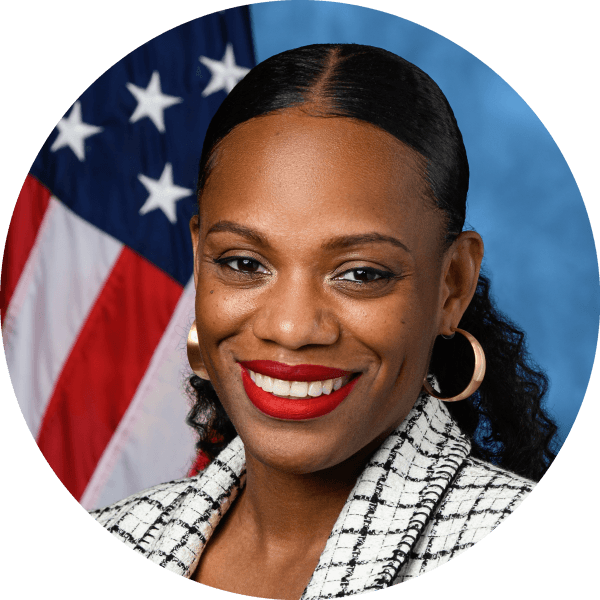
Marilyn Strickland
Democrat, Washington's 10th congressional district · 5 years in Congress
Committees: Armed Services, Transportation and Infrastructure
View full profile →
Cosponsors (5)
All 5 cosponsors are Democrats. Cosponsors represent 5 states: Connecticut, Florida, Massachusetts, and 2 more.
Committee Sponsors
Agriculture Committee
4 of 53 committee members cosponsored


20 Democrats across this committee haven't cosponsored yet. Mobilize their constituents
What laws does H.R. 7562 change?
1 changes
Sections Amended
Section 296(b) of Department of Agriculture Reorganization Act of 1994 (7 U.S.C. 7014(b))
adding at the end the following: ``(11) The authority of the Secretary to carry out section 229
H.R. 7562 Quick Facts


- Committee
- Agriculture
- Chamber
- House
- Policy
- Agriculture and Food
- Introduced
- Feb 12, 2026
Assigned to Subcommittee on General Farm Commodities, Risk Management, and Credit. for review
Mar 20, 2026
Official Sources
Official bill text, sponsor and cosponsors, and committee actions for the Office of Small Farms Establishment Act of 2026.
The loans, conservation help, disaster aid, and safety-net programs available to small operations today, which the new office would help producers navigate.
The existing state coordinator network the bill models its small farms coordinators on; the same employee can hold both roles.
The statute creating state beginning farmer and rancher coordinators, which H.R. 7562 cites when setting up state small farms coordinators.
Finds the county Farm Service Agency, NRCS, and Rural Development offices that each state small farms coordinator's plan would have to cover.
The crop insurance agency required to name a liaison to the Office of Small Farms, relevant to the bill's grants for uninsured losses.
USDA's statistics on U.S. farms by size, including production and household finances, for context on who the bill's small-farm definition covers.
H.R. 7562 Common Questions
What counts as a small farm under H.R. 7562?
Under 180 acres and under $350,000 a year in gross cash farm income. USDA can swap in a different acreage cutoff based on your region or what you produce, but the income cap always applies. Ranches and forest operations qualify on the same terms.
How much grant money could my farm get?
Up to $25,000 per grant. The money can cover equipment and infrastructure repairs, uninsured losses, business planning, market development, conservation practices, down payments on land, and other uses USDA approves.
Could a small farm grant help me buy land?
Yes. Down payments for land acquisition are one of the listed uses. The office would also offer technical assistance with farmland preservation and succession planning.
Who would I actually talk to at USDA?
Your state small farms coordinator. Every state gets one, drawn from existing USDA state office staff, who must spend at least half their time on small operations and can award grants directly.
Can I report USDA problems without giving my name?
Yes. The new Office of Small Farms would run a hotline where small operators can anonymously report problems they run into trying to use USDA programs.
Is this the same as USDA beginning farmer programs?
No, it covers operations by size, not experience, so a farm run for 30 years can qualify. The bill does allow one employee to serve as both a state beginning farmer coordinator and the state small farms coordinator.
How much would H.R. 7562 cost?
It authorizes $25 million a year for fiscal years 2027 through 2031, or $125 million total: $15 million a year to run the office and $10 million for grants and technical assistance. Congress would still have to appropriate the money.
Based on H.R. 7562 bill text
H.R. 7562 Bill Text
“To amend the Department of Agriculture Reorganization Act of 1994 to establish an Office of Small Farms, and for other purposes.”
Source: U.S. Government Publishing Office
Get notified when H.R. 7562 moves
Committee votes, floor action, cosponsor changes — straight to your inbox.
Bill alerts + Legisletter's monthly briefing. Unsubscribe anytime.
Agriculture and Food Bills
9 related bills we're tracking
SAFE Act of 2025


Referred to the Subcommittee on Livestock, Dairy, and Poultry.
Mar 28, 2025
Restoring Food Security for American Families and Farmers Act of 2025

Referred to the Subcommittee on Nutrition and Foreign Agriculture.
Jan 13, 2026
EATS Act of 2025


Referred to the House Committee on Agriculture.
Jul 29, 2025
Hot Foods Act of 2025


Referred to the Subcommittee on Nutrition and Foreign Agriculture.
Apr 18, 2025
Whole Milk for Healthy Kids Act of 2025
Placed on the Union Calendar, Calendar No. 111.
Jun 5, 2025
Keep SNAP and WIC Funded Act of 2025

Referred to the House Committee on Appropriations.
Nov 7, 2025
WIC Benefits Protection Act


Referred to the House Committee on Education and Workforce.
Oct 10, 2025
Food Secure Strikers Act of 2025



Referred to the Subcommittee on Nutrition and Foreign Agriculture.
Apr 18, 2025
Improving Access to Nutrition Act of 2026
Referred to the Subcommittee on Nutrition and Foreign Agriculture.
Mar 20, 2026
Trending Right Now
Bills gaining momentum across Congress
America’s Olympic and Paralympic Games Commemorative Coins Act



Referred to the House Committee on Financial Services.
Jul 14, 2025
Fit to Serve Act


Referred to the House Committee on Armed Services.
May 21, 2025
ASAP Act

Ordered to be Reported in the Nature of a Substitute by the Yeas and Nays: 40 - 0.
Sep 16, 2026
Tracking Agriculture and Food in Congress? Monitor bills, track cosponsor momentum, and launch advocacy campaigns — all from one advocacy platform.