H.R. 6876: Protecting Children from Foreign Mutilation Act
Sponsor
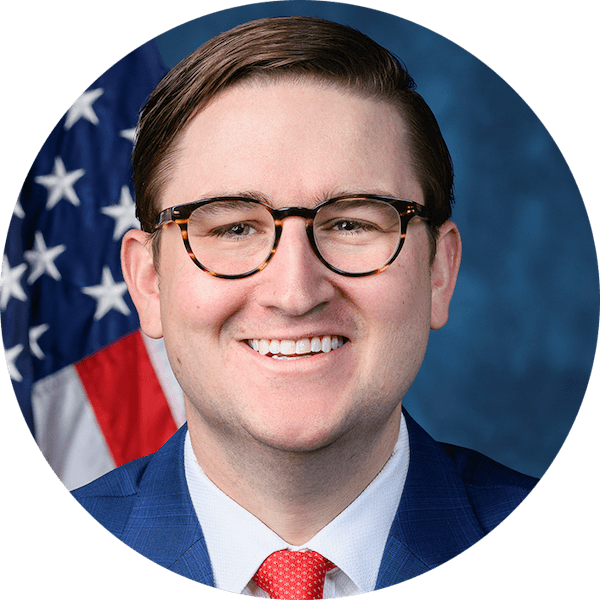
Addison McDowell
Republican · NC-6
Foreign providers of trans care for U.S. minors would lose visas
Why it matters
H.R. 6876 would use immigration law to bar a wide circle of foreign people from U.S. visas: not only the doctors and clinics that treat American minors, but every member of the World Professional Association for Transgender Health (WPATH) worldwide. A covered person would be barred from entering the country, and any visa they already hold would be canceled on the spot. The bill has 10 cosponsors, all Republicans, and sits in the House Judiciary Committee.
H.R. 6876, the Protecting Children from Foreign Mutilation Act, would order the President to impose visa sanctions on three groups of foreign people: members of WPATH, licensed physicians who perform, prescribe, or facilitate the treatments the bill targets, and the owners or operators of clinics, hospitals, pharmacies, or other medical institutions that do the same.
The trigger is care for what the bill calls a "United States person" — defined here as a U.S. citizen, national, or green card holder under the age of 18. So the sanctions are aimed at treatment of minors, not adults.
The penalty is broad. A covered foreign person would be inadmissible to the country, ineligible for a visa, and shut out of admission, parole, or any other benefit under immigration law. Any visa or entry document they already hold would be revoked immediately and automatically.
The bill spells out what it labels "chemical or surgical mutilation." The definition covers puberty blockers such as GnRH agonists, sex hormones including androgen blockers, estrogen, progesterone, and testosterone, and surgeries that change appearance or alter or remove sexual organs. The bill defines sex as an immutable biological classification fixed at conception as either male or female.
The definition carves out exceptions: care for verifiable disorders of sexual development (the bill lists 46 XX with virilization, 46 XY with undervirilization, or having both ovarian and testicular tissue), treatment for injury, infection, congenital anomalies, or acute high-mortality illness, and detransition treatment.
There are a few off-ramps. Sanctions wouldn't apply when admission is required by the 1947 UN Headquarters Agreement or other international obligations. A physician can seek a waiver if they have left the entity doing the work and either name another sanctionable person to the State Department or report a violation to a federal official. The President can also waive sanctions for national security reasons. A severability clause keeps the rest of the law in force if a court strikes down any single piece.
Bill Progress
Latest Action · Dec 18, 2025
Referred to the House Committee on the Judiciary.
H.R. 6876 Bill Summary
What H.R. 6876 actually does.
Foreign providers lose U.S. visa eligibility
A covered foreign person becomes inadmissible to the United States and ineligible for a visa, entry document, admission, parole, or any other immigration benefit if they perform, prescribe, or facilitate the targeted treatments for a U.S. citizen, national, or green card holder under age 18.
Visas already issued are canceled immediately
A sanctioned person's existing visa or entry documentation is revoked the moment the sanction applies, regardless of when it was issued. This goes beyond denying future paperwork — it cancels travel documents already in hand.
Sanctions reach every WPATH member, not just treating doctors
The bill names three categories: members of WPATH, licensed physicians involved in the targeted care, and the owners or operators of clinics, hospitals, pharmacies, or other medical institutions involved in it. Membership in the association alone is enough to qualify.
What the bill defines as covered treatment
The bill defines "chemical or surgical mutilation" to include puberty blockers such as GnRH agonists, sex hormones including androgen blockers, estrogen, progesterone, and testosterone, and surgeries that change appearance or alter or remove sexual organs. It defines sex as fixed at conception as male or female.
Medical and detransition care are carved out
The bill excludes care for verifiable disorders of sexual development — it lists 46 XX with virilization, 46 XY with undervirilization, and having both ovarian and testicular tissue — plus treatment for injury, infection, congenital anomalies, acute high-mortality illness, and detransition treatment.
State Department report due within 180 days
If enacted, the Secretary of State would have 180 days to report to Congress on actions taken, how many people were sanctioned, and what additional steps the department recommends to discourage foreign providers.
Who benefits from H.R. 6876?
Supporters who want to limit access to this care
The bill's sponsors and 10 cosponsors, all Republicans, frame it as a way to keep foreign providers from offering gender-transition treatment to U.S. minors by putting their ability to enter the country at risk.
Foreign physicians who report others
A foreign physician can avoid sanctions if they have left the entity doing the work and either give the State Department information identifying another sanctionable person or report a legal or regulatory violation to a federal official.
Patients covered by the carve-outs
The bill excludes detransition treatment and care for verifiable disorders of sexual development, injury, infection, congenital anomalies, and acute high-mortality illness — so providers offering only that care would not face sanctions.
Who is affected by H.R. 6876?
Foreign members of WPATH
Any non-citizen who belongs to the World Professional Association for Transgender Health could be sanctioned, becoming inadmissible and losing any visa they hold — even if they never treated a U.S. minor.
Foreign doctors who treat U.S. minors
Physicians outside the United States who perform, prescribe, or facilitate puberty blockers, hormones, or the covered surgeries for a U.S. citizen, national, or green card holder under 18 could lose visas and eligibility for admission or parole.
Foreign clinic, hospital, and pharmacy owners
Owners or operators of medical institutions involved in the covered care for U.S. minors could face the same immigration penalties, even if they are not the treating physician.
U.S. families weighing care abroad
Families with a U.S. minor seeking this care overseas could find fewer foreign providers willing to offer it, since participating could cost those providers their ability to enter the United States.
HR6876 Legislative Journey
House: Committee Action
Dec 18, 2025
Referred to the House Committee on the Judiciary.
About the Sponsor
Addison McDowell
Republican, North Carolina's 6th congressional district · 1 years in Congress
Committees: the Budget, Natural Resources, Transportation and Infrastructure
View full profile →
Cosponsors (10)
All 10 cosponsors are Republicans. Cosponsors represent 8 states: Arizona, Illinois, Indiana, and 5 more.


Committee Sponsors
Judiciary Committee
0 of 44 committee members cosponsored
No committee members have cosponsored this bill
24 Republicans across this committee haven't cosponsored yet. Mobilize their constituents
H.R. 6876 Quick Facts
- Committee
- Judiciary
- Chamber
- House
- Policy
- Immigration
- Introduced
- Dec 18, 2025
Referred to the House Committee on the Judiciary.
Dec 18, 2025
Official Sources
Official Congress.gov page for the Protecting Children from Foreign Mutilation Act with bill text, status, sponsors, and actions.
The bill draws its definitions of admission, admitted, and alien from section 101 of the Immigration and Nationality Act, codified at 8 U.S.C. 1101.
The bill's core penalty makes a covered foreign person inadmissible to the United States; this is the statute that governs who is ineligible for a visa or admission.
Explains the visa ineligibility grounds and waiver procedures that frame the bill's sanctions, including who is barred from receiving a visa and how waivers work.
Describes how and why visa applicants are denied under the Immigration and Nationality Act, the mechanism the bill would use to bar covered foreign providers.
H.R. 6876 Common Questions
Can a foreign doctor lose their U.S. visa for treating an American minor abroad?
Yes. Under H.R. 6876, a foreign physician who performs, prescribes, or facilitates the covered treatment for a U.S. citizen, national, or green card holder under 18 would become inadmissible, and any visa they already hold would be revoked automatically.
Does the bill cover all WPATH members, or only doctors who treated a U.S. minor?
Both. H.R. 6876 names three groups: every member of the World Professional Association for Transgender Health, licensed physicians involved in the covered care, and owners or operators of clinics, hospitals, or pharmacies that provide it. WPATH membership alone is enough to qualify.
Does H.R. 6876 apply to adults or only minors?
Only minors. The bill defines a "United States person" as a U.S. citizen, national, or green card holder who is under the age of 18, so care for adults does not trigger the sanctions.
What treatments does H.R. 6876 target?
The bill's definition of "chemical or surgical mutilation" covers puberty blockers such as GnRH agonists, sex hormones including androgen blockers, estrogen, progesterone, and testosterone, and surgeries that change appearance or alter or remove sexual organs.
What medical care does the bill exclude from sanctions?
H.R. 6876 carves out care for verifiable disorders of sexual development (it lists 46 XX with virilization, 46 XY with undervirilization, and having both ovarian and testicular tissue), plus treatment for injury, infection, congenital anomalies, acute high-mortality illness, and detransition treatment.
Can a foreign physician avoid sanctions by reporting another provider?
Yes. The bill grants a waiver to a physician who has left the entity doing the work and either gives the State Department information identifying another sanctionable person or reports a legal violation to a federal official.
Are there any other exceptions to the visa sanctions?
Two. Sanctions would not apply when admission is required by the 1947 UN Headquarters Agreement or other international obligations, and the President can waive them for national security reasons.
Has H.R. 6876 passed, and where does it stand?
No. The bill was introduced on December 18, 2025 and referred to the House Judiciary Committee, where it remains. It has 10 cosponsors, all Republicans. If it became law, the State Department would owe Congress a report within 180 days.
Based on H.R. 6876 bill text
H.R. 6876 Bill Text
“To require the imposition of visa sanctions with respect to each foreign person the President determines has performed or otherwise facilitated chemical or surgical mutilations of United States minors, and for other purposes.”
Source: U.S. Government Publishing Office
Get notified when H.R. 6876 moves
Committee votes, floor action, cosponsor changes — straight to your inbox.
Bill alerts + Legisletter's monthly briefing. Unsubscribe anytime.
Immigration Bills
9 related bills we're tracking
American Dream and Promise Act of 2025



Sponsor introductory remarks on measure. (CR H884)
Feb 27, 2025
Protecting Sensitive Locations Act

Referred to the House Committee on the Judiciary.
Feb 6, 2025
Born in the USA Act of 2025


Referred to the House Committee on the Judiciary.
May 13, 2025
Dignity for Detained Immigrants Act




Referred to the Subcommittee on Oversight, Investigations, and Accountability.
Dec 4, 2025
No Secret Police Act of 2025


Referred to the Subcommittee on Border Security and Enforcement.
Jun 27, 2025
NO BAN Act


Referred to the Subcommittee on Border Security and Enforcement.
Feb 4, 2025
Stop Excessive Force in Immigration Act of 2025


Referred to the House Committee on the Judiciary.
Nov 7, 2025
REMAIN in Mexico Act of 2025

Referred to the House Committee on the Judiciary.
Jan 9, 2025
Humanitarian Standards for Individuals in ICE and CBP Custody Act


Sponsor introductory remarks on measure. (CR H2018)
Feb 4, 2026
Trending Right Now
Bills gaining momentum across Congress
North Platte Canteen Congressional Gold Medal Act



Referred to the House Committee on Financial Services.
Feb 21, 2025
America’s Olympic and Paralympic Games Commemorative Coins Act




Referred to the House Committee on Financial Services.
Jul 14, 2025
Fit to Serve Act


Referred to the House Committee on Armed Services.
May 21, 2025
Tracking Immigration in Congress? Monitor bills, track cosponsor momentum, and launch advocacy campaigns — all from one advocacy platform.