H.R. 683: Combat Veterans Pre-Enrollment Act of 2025
Sponsor

Young Kim
Republican · CA-40
Start your VA health care enrollment before you leave the military
Why it matters
12 bipartisan cosponsors. Right now combat veterans can't start VA enrollment until after discharge — creating a gap where you're out of the military but not yet in the VA system. H.R. 683 lets eligible veterans begin the process up to 365 days before separation.
HR683 creates a pilot program, not a permanent nationwide change. The Secretary of Veterans Affairs would have to establish the program no later than October 1, 2027, and the authority to run it would end three years after the date the act is enacted. That means Congress is setting up a time-limited test to see whether earlier enrollment makes the transition from military to veteran status smoother.
The bill is tightly targeted. To qualify, a person must be a member of the Armed Forces who is performing active military, naval, air, or space service, would be eligible for enrollment in the annual patient enrollment system under section 1705 of title 38 upon separation, and is described in section 1710(e)(1)(D) of title 38. Eligible members could choose to pre-enroll only during the 180-day period before their separation date.
Implementation would require coordination across multiple departments. The pre-enrollment mechanism must be carried out by the Secretary of Veterans Affairs in conjunction with the Secretary of Defense and the Secretary of Homeland Security. That matters because separating service members can come from different uniformed services and systems, and the bill is clearly trying to force agencies to work together before people leave active service.
Congress also builds in oversight from the start. Not later than 180 days after enactment, and annually afterward for the life of the program, the Joint Executive Committee must brief the appropriate congressional committees on implementation efforts by VA and DoD. On the same 180-day-and-annual schedule, the Secretary of Veterans Affairs must report how many eligible members elected to participate, how many were later enrolled or denied, how many chose not to participate, and aggregated demographic data including age, ethnicity, duration of service, grade, and Armed Force. Then the Government Accountability Office must deliver an independent report no later than two years after the pilot authority ends, assessing effectiveness and recommending improvements.
Bill Progress
Latest Action · Mar 4, 2025
Assigned to Subcommittee on Health. for review
H.R. 683 Bill Summary
What H.R. 683 actually does.
Pilot must launch by October 1, 2027
The bill requires the Secretary of Veterans Affairs to establish the pre-enrollment pilot program not later than October 1, 2027. This creates a firm implementation deadline instead of leaving the program open-ended.
Eligible members get a 180-day pre-enrollment window
An eligible member of the Armed Forces may elect to pre-enroll during the 180-day period preceding the date of separation from service. The bill limits this option to a specific six-month window before discharge.
Program applies only to narrowly defined eligible members
To use the pilot, a person must be performing active military, naval, air, or space service; must be someone who would be eligible for enrollment under section 1705 of title 38 upon separation; and must be described in section 1710(e)(1)(D) of title 38. The bill also defines 'active military, naval, air, or space service' by cross-reference to section 101 of title 38, United States Code.
VA, DoD, and Homeland Security must coordinate
The pre-enrollment mechanism must be developed by the Secretary of Veterans Affairs in conjunction with the Secretary of Defense and the Secretary of Homeland Security. Naming all three agencies in section 2(c)(1) is significant because it makes this a cross-department transition effort, not just a VA task.
Congress gets updates within 180 days and every year
Not later than 180 days after enactment, and annually thereafter for the duration of the program, the Joint Executive Committee must brief the appropriate congressional committees on implementation efforts. Those committees are specifically the House and Senate Committees on Veterans’ Affairs and the House and Senate Committees on Armed Services.
VA and GAO must track outcomes over time
Also not later than 180 days after enactment, and annually afterward, the Secretary of Veterans Affairs must report the number of eligible members who elected to participate, how many were subsequently enrolled or denied, how many declined to participate, and aggregated demographic data on age, ethnicity, duration of service, grade, and Armed Force. Then GAO must issue a separate effectiveness report with recommendations no later than two years after the program authority ends.
Who benefits from H.R. 683?
Separating combat-eligible service members covered by section 1710(e)(1)(D)
These members could begin the VA enrollment process during the 180-day period before separation, which may reduce delays in accessing care after leaving active military, naval, air, or space service.
Veterans likely to qualify for VA annual patient enrollment under section 1705
People who would be eligible for VA enrollment upon separation get a chance to line up that enrollment before discharge, rather than waiting until after they are already out of uniform.
Families of transitioning service members
A smoother handoff into VA care can reduce uncertainty during the final 180 days before separation, a period when families are often also dealing with moves, job changes, and new insurance arrangements.
Congress and oversight bodies
Lawmakers get structured data not later than 180 days after enactment and annually thereafter, including participation, denials, and demographic breakdowns such as age, ethnicity, duration of service, grade, and Armed Force.
Who is affected by H.R. 683?
Department of Veterans Affairs
VA would have to stand up the pilot by October 1, 2027, coordinate with DoD and DHS, produce reports not later than 180 days after enactment and annually thereafter, and track enrollments, denials, and demographic data.
Department of Defense
DoD must work with VA on the pre-enrollment mechanism and would be part of the implementation effort briefed to Congress not later than 180 days after enactment and every year during the pilot.
Department of Homeland Security
DHS is specifically named alongside VA and DoD in the implementation of the pre-enrollment mechanism, meaning it would have an operational role for affected service members under its umbrella.
House and Senate Veterans’ Affairs and Armed Services Committees
These four committees are the 'appropriate congressional committees' that must receive the Joint Executive Committee briefing not later than 180 days after enactment and annually thereafter.
HR683 Legislative Journey
House: Committee Action
Mar 4, 2025
Referred to the Subcommittee on Health.
House: Committee Action
Jan 23, 2025
Referred to the House Committee on Veterans' Affairs.
About the Sponsor
Young Kim
Republican, California's 40th congressional district · 5 years in Congress
Committees: Foreign Affairs, House Select Committee on the Strategic Competition Between the United States and the Chinese Communist Party, Financial Services
View full profile →
Cosponsors (12)
This bill has 12 cosponsors: 8 Democrats, 4 Republicans, reflecting bipartisan support. Cosponsors represent 7 states: Arizona, California, Hawaii, and 4 more.

Salud Carbajal
Democrat · CA

Juan Ciscomani
Republican · AZ

Jill Tokuda
Democrat · HI

Michael Lawler
Republican · NY
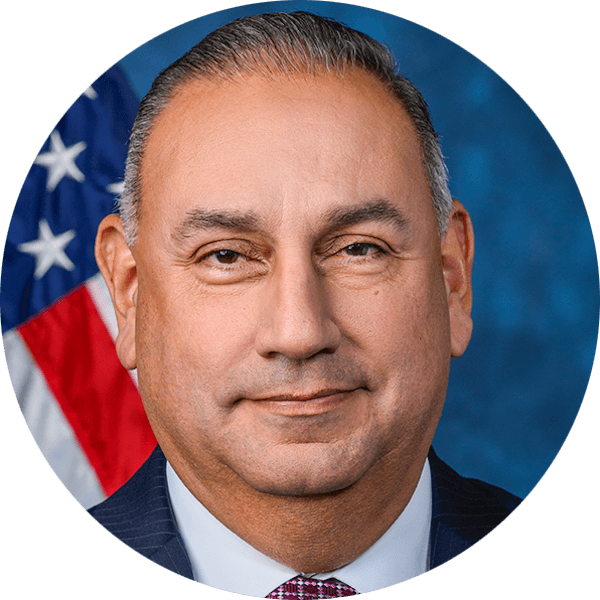
Gilbert Cisneros
Democrat · CA

Susie Lee
Democrat · NV

Josh Gottheimer
Democrat · NJ

Nicole Malliotakis
Republican · NY

Josh Harder
Democrat · CA

David Joyce
Republican · OH

George Whitesides
Democrat · CA

Jimmy Panetta
Democrat · CA
Committee Sponsors
Veterans' Affairs Committee
1 of 25 committee members cosponsored

13 Republicans across this committee haven't cosponsored yet. Mobilize their constituents
H.R. 683 Quick Facts
- Committee
- Veterans' Affairs
- Chamber
- House
- Policy
- Armed Forces and National Security
- Introduced
- Jan 23, 2025
Assigned to Subcommittee on Health. for review
Mar 4, 2025
Official Sources
Official Congress.gov page for the Combat Veterans Pre-Enrollment Act of 2025 with bill text, actions, and status updates.
VA’s official eligibility page helps explain who may qualify for enrollment in VA health care after separation, which is central to the bill’s pre-enrollment pilot.
Official VA application pathway for health care enrollment, relevant because the bill would let eligible service members start the enrollment process before discharge.
VA guidance for recently separated and returning service members is directly relevant to the bill’s focus on transition from active duty into VA care.
The electronic Code of Federal Regulations for VA medical regulations provides official regulatory context for VA health care enrollment and administration.
Official U.S. Code page for 38 U.S.C. 1705, the annual patient enrollment system section explicitly referenced in the bill text.
Official U.S. Code page for 38 U.S.C. 1710, including the combat-veteran-related provision referenced by the bill’s eligibility criteria.
GAO’s official veterans health care topic page is relevant because the bill requires the Comptroller General to issue an effectiveness review of the pilot program.
H.R. 683 Common Questions
Can combat veterans enroll in VA health care before discharge under HR683?
Yes. Under the Combat Veterans Pre-Enrollment Act of 2025, eligible service members could elect VA patient pre-enrollment before leaving active duty, with enrollment effective on their separation date (Section 2(a)).
How many days before separation can a service member pre-enroll in VA health care?
Eligible members may choose pre-enrollment during the 180-day period before their separation date under the Combat Veterans Pre-Enrollment Act of 2025 (Section 2(c)).
Does the Combat Veterans Pre-Enrollment Act of 2025 create a permanent VA enrollment change?
No. HR683 creates a pilot program, and the authority ends 3 years after enactment under the Combat Veterans Pre-Enrollment Act of 2025 (Section 2(e)).
When would the VA have to start the pre-enrollment pilot for separating combat veterans?
The Secretary of Veterans Affairs must establish the pilot no later than October 1, 2027, according to HR683 Section 2(a).
Which service members qualify for VA pre-enrollment before separation under HR683?
Only members on active military, naval, air, or space service who would be eligible under 38 U.S.C. 1705 after separation and are described in 38 U.S.C. 1710(e)(1)(D) qualify under HR683 Section 2(b).
Does HR683 apply to Space Force members leaving active duty?
Yes. The bill covers members performing active military, naval, air, or space service, so Space Force members are included if they meet the other eligibility rules in HR683 Section 2(b).
Which federal agencies have to coordinate the VA pre-enrollment process under the bill?
The pre-enrollment mechanism must be carried out by the VA in conjunction with the Department of Defense and the Department of Homeland Security under the Combat Veterans Pre-Enrollment Act of 2025 (Section 2(c)).
What data would the VA have to report on the combat veteran pre-enrollment pilot?
According to HR683 Section 2(d), VA must report participant counts, later enrollments, denials, nonparticipants, and aggregated data on age, ethnicity, duration of service, grade, and Armed Force.
How often would Congress get updates on the VA pre-enrollment pilot?
Under the Combat Veterans Pre-Enrollment Act of 2025, Congress must be briefed within 180 days after enactment and annually after that for the life of the program (Section 2(c)).
Does GAO have to review the VA combat veteran pre-enrollment pilot?
Yes. HR683 requires the Comptroller General to issue a report on the pilot's effectiveness with recommendations no later than 2 years after the program authority ends (Section 2(f)).
Based on H.R. 683 bill text
H.R. 683 Bill Text
“To direct the Secretary of Veterans Affairs to establish a pilot program to permit certain members of the Armed Forces to pre-enroll in the system of annual patient enrollment established and operated under section 1705 of title 38, United States Code.”
Source: U.S. Government Publishing Office
Get notified when H.R. 683 moves
Committee votes, floor action, cosponsor changes — straight to your inbox.
Bill alerts + Legisletter's monthly briefing. Unsubscribe anytime.
Armed Forces and National Security Bills
9 related bills we're tracking
Major Richard Star Act





Referred to the Subcommittee on Disability Assistance and Memorial Affairs.
Apr 4, 2025
North Platte Canteen Congressional Gold Medal Act





Referred to the House Committee on Financial Services.
Feb 21, 2025
Pay Our Troops Act of 2026





Referred to the House Committee on Appropriations.
Sep 16, 2025
Fit to Serve Act





Referred to the House Committee on Armed Services.
May 21, 2025
Love Lives On Act of 2025





Forwarded by Subcommittee to Full Committee by Voice Vote.
Mar 26, 2026
Air America Act of 2025




Referred to the House Committee on Intelligence (Permanent Select).
Mar 18, 2025
Veteran Burial Timeliness and Death Certificate Accountability Act





Subcommittee Hearings Held
Jun 30, 2026
Reproductive Freedom for Veterans Act





Committee Hearings Held
Mar 18, 2026
GUARD VA Benefits Act




Committee Hearings Held
Mar 18, 2026
Trending Right Now
Bills gaining momentum across Congress
America’s Olympic and Paralympic Games Commemorative Coins Act





Referred to the House Committee on Financial Services.
Jul 14, 2025
ASAP Act



Ordered to be Reported in the Nature of a Substitute by the Yeas and Nays: 40 - 0.
Sep 16, 2026
Therapeutic Fraud Prevention Act of 2025




Referred to the House Committee on Energy and Commerce.
May 7, 2025
Tracking Armed Forces and National Security in Congress? Monitor bills, track cosponsor momentum, and launch advocacy campaigns — all from one advocacy platform.