H.R. 6356: Artificial Intelligence Civil Rights Act of 2025
Sponsor

Yvette Clarke
Democrat · NY-9
Make AI hiring and lending tools prove they don't discriminate
Why it matters
Software now helps decide who gets hired, who gets an apartment, who gets a loan, and who gets flagged by police. H.R. 6356 would make the companies behind those tools test them for discrimination, disclose how they work, and face lawsuits worth $15,000 per violation — or 4% of annual revenue — when the tools discriminate.
H.R. 6356, the Artificial Intelligence Civil Rights Act of 2025, would build a federal civil rights rulebook around the algorithms that increasingly make decisions about people's lives. It kicks in whenever a "covered algorithm" is used for a "consequential action" — the bill's term for choices that materially affect employment, education, housing, utilities, health care, credit and banking, insurance, criminal justice, elections, government benefits, and public accommodations.
At its core, the bill says these systems can't discriminate. A company couldn't use a covered algorithm in a way that causes a disparate impact or otherwise blocks access based on protected traits — including race, ethnicity, national origin or immigration status, religion, sex (covering sexual orientation and gender identity), disability, age, veteran status, source of income, and genetic or medical information.
Enforcement leans on testing and recordkeeping. Before deploying a covered algorithm, a company would have to evaluate whether harm is plausible; if it is, an independent auditor must run a full review. After launch, deployers run annual impact assessments, and any assessment that finds harm triggers another independent audit. Completed evaluations go to the Federal Trade Commission within 30 days, and records are kept for at least 10 years.
The bill also sets transparency rules. Companies would publish how they use these systems and give people a short-form notice — capped at 500 words — when they first interact with an algorithm. The FTC would stand up a consumer rights web page within 90 days of enactment, study within 18 months whether AI decisions can be meaningfully explained, and eventually build a public, searchable repository of submitted audits.
What gives the bill force is how it can be enforced. Violations would count as unfair or deceptive practices under existing FTC law. State attorneys general could sue for $15,000 per violation or 4% of a company's average annual revenue over the prior three years, whichever is larger. Individuals could sue too — for triple their damages or $15,000 per violation, whichever is greater, plus punitive damages and attorney's fees. The bill also voids pre-dispute arbitration clauses, so companies couldn't force these claims out of court.
Bill Progress
Latest Action · Dec 2, 2025
Referred to Energy and Commerce, and in addition to the Committee on Oversight and Government Reform, for a period to be subsequently determined by the Speaker, in each case for consideration of such provisions as fall within the jurisdiction of the committee concerned. for review
H.R. 6356 Bill Summary
What H.R. 6356 actually does.
AI can't discriminate where the law already protects you
The bill prohibits developers and deployers from using covered algorithms in ways that cause a disparate impact or otherwise discriminate in consequential actions — employment, education, housing, utilities, health care, credit or banking, insurance, criminal justice, elections, government benefits, and public accommodations. Enforcement runs through the Federal Trade Commission.
Companies must test AI before and after they launch it
Before deploying a covered algorithm, a company must assess whether harm is plausible, and if it is, hire an independent auditor for a full evaluation. Deployers must also run annual impact assessments, submit completed evaluations to the FTC within 30 days, and keep records for at least 10 years.
You could opt out and demand a human decision
The bill directs the FTC, within two years of enactment, to write rules letting people opt out of an algorithmic decision and have a human make the call instead, along with a mechanism to appeal a consequential action to a human reviewer.
Companies must tell you when AI is judging you
Deployers must provide a short-form notice of no more than 500 words either at a person's first interaction with the system or on their website. Public disclosures must also include contact information, the categories of data collected, and a disclaimer noting that an audit does not guarantee the algorithm is safe or legal.
You can sue — and so can your state attorney general
State attorneys general and data protection authorities could seek civil penalties of $15,000 per violation or 4% of a company's average gross annual revenue over the preceding three years, whichever is greater. Individuals could sue for treble damages or $15,000 per violation, whichever is greater, plus nominal damages, punitive damages, and attorney's fees. The bill also voids pre-dispute arbitration agreements for these disputes.
The government builds its own AI auditing workforce
The Office of Personnel Management would have 270 days to create a new federal occupational series for algorithm auditing. The bill also authorizes the FTC to hire up to 500 additional personnel to carry out the law.
Who benefits from H.R. 6356?
Workers and job applicants
Anyone screened by hiring, scheduling, promotion, or termination software would gain protections when those tools shape employment decisions. They would also benefit from the annual assessments and, once the FTC writes its rules, the right to opt out and appeal to a human.
Renters, borrowers, and insurance customers
People subject to algorithmic decisions about housing, mortgages, credit, and insurance claims would get a legal path to challenge a system that harms them — and could recover treble damages or $15,000 per violation, whichever is greater, plus attorney's fees.
People in protected classes
The bill explicitly targets AI-driven disparate impact based on race, color, ethnicity, national origin or immigration status, religion, sex including sexual orientation and gender identity, disability, age, veteran status, source of income, and genetic or medical information.
People with limited English proficiency
The bill defines "covered language" as the 10 most-spoken languages in the United States, based on Census Bureau data, and requires disclosures and consumer materials to be made available in those languages where a company operates.
Who is affected by H.R. 6356?
AI developers
Any person who designs, codes, customizes, produces, or substantially modifies an algorithm intended for consequential use would have to support compliance, help mitigate identified harms, and certify that the system is not likely to cause harm or deceptive practices.
Businesses deploying automated decision tools
Companies using covered algorithms commercially would have to run pre-deployment evaluations, conduct annual impact assessments, submit reports to the FTC within 30 days of completion, retain records for at least 10 years, and provide public notices capped at 500 words.
State attorneys general and data protection authorities
State enforcers would gain authority to bring civil actions under the bill and seek penalties of $15,000 per violation or 4% of average gross annual revenue over the preceding three years, whichever is greater.
Federal agencies, especially the FTC and OPM
The FTC would take on new rulemaking, disclosure, repository, and enforcement duties, including a consumer rights web page due within 90 days and a report to Congress within 18 months on whether AI decisions can be explained. OPM would have 270 days to create a new algorithm-auditing job series.
HR6356 Legislative Journey
House: Committee Action
Dec 2, 2025
Referred to the Committee on Energy and Commerce, and in addition to the Committee on Oversight and Government Reform, for a period to be subsequently determined by the Speaker, in each case for consideration of such provisions as fall within the jurisdiction of the committee concerned.
About the Sponsor
Yvette Clarke
Democrat, New York's 9th congressional district · 19 years in Congress
Committees: Energy and Commerce
View full profile →
Cosponsors (29)
All 29 cosponsors are Democrats. Cosponsors represent 21 states: Arizona, California, Connecticut, and 18 more.

Summer Lee
Democrat · PA

Ayanna Pressley
Democrat · MA

Pramila Jayapal
Democrat · WA

Wesley Bell
Democrat · MO

André Carson
Democrat · IN

Judy Chu
Democrat · CA

Danny Davis
Democrat · IL

Christopher Deluzio
Democrat · PA
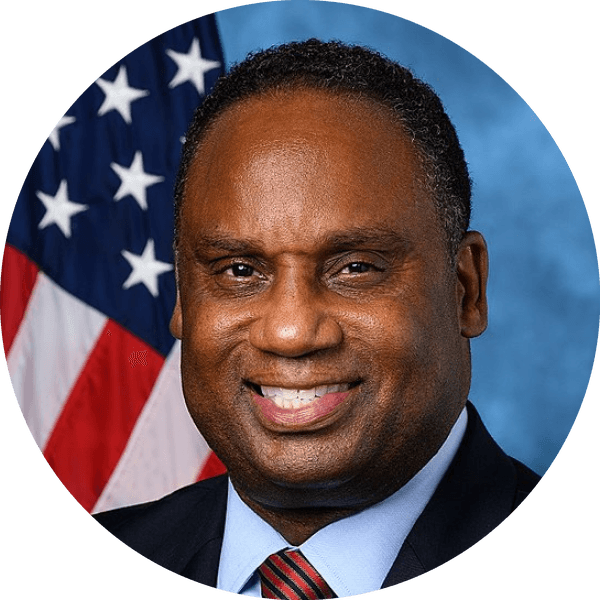
Jonathan Jackson
Democrat · IL

Robin Kelly
Democrat · IL

James McGovern
Democrat · MA

Eleanor Norton
Democrat · DC
Committee Sponsors
Oversight and Government Reform Committee
6 of 47 committee members cosponsored


Energy and Commerce Committee
3 of 54 committee members cosponsored


36 Democrats across these committees haven't cosponsored yet. Mobilize their constituents
H.R. 6356 Quick Facts
- Committee
- Oversight and Government Reform
- Chamber
- House
- Policy
- Science, Technology, Communications
- Introduced
- Dec 2, 2025
Referred to Energy and Commerce, and in addition to the Committee on Oversight and Government Reform, for a period to be subsequently determined by the Speaker, in each case for consideration of such provisions as fall within the jurisdiction of the committee concerned. for review
Dec 2, 2025
Official Sources
The official bill page, with full text, sponsor and cosponsor list, and committee status.
The Federal Trade Commission is the agency that would enforce H.R. 6356, write its rules, and run the consumer rights web page the bill requires.
The bill treats any violation as an unfair or deceptive practice under Section 18(a)(1)(B) of the Federal Trade Commission Act, codified here.
The bill cites this 2021 GAO report by name when directing OPM to create a federal algorithm-auditing job series.
NIST is named as a consulting agency for the bill's study on explaining algorithmic decisions; its framework is the federal baseline for evaluating AI risk.
H.R. 6356 Common Questions
What does H.R. 6356 do?
H.R. 6356, the Artificial Intelligence Civil Rights Act of 2025, would ban AI systems from discriminating in major life decisions — hiring, housing, credit, insurance, and more — and force companies to test those tools and disclose how they work.
Can I sue a company over a discriminatory AI decision?
Yes. H.R. 6356 would let an individual — or a group — sue in court and win triple their damages or $15,000 per violation, whichever is greater, plus punitive damages and attorney's fees.
How big are the penalties under H.R. 6356?
State attorneys general could seek $15,000 per violation or 4% of a company's average annual revenue over the prior three years, whichever is greater. For a large company, the revenue figure would be the bigger number.
What decisions does H.R. 6356 cover?
The bill applies to "consequential actions" — algorithmic decisions that materially affect employment, education, housing, utilities, health care, credit and banking, insurance, criminal justice, elections, and government benefits.
Can I opt out of an AI decision and get a human review?
Eventually, likely yes. H.R. 6356 directs the FTC to write rules — within two years of enactment — letting people opt out of an algorithmic decision and request that a human handle it, plus a way to appeal.
Does H.R. 6356 require companies to audit their AI?
Yes. Before launching a covered algorithm, a company must check whether harm is plausible and, if so, hire an independent auditor. After launch, deployers run annual impact assessments and send completed audits to the FTC.
Does H.R. 6356 ban forced-arbitration clauses?
For disputes under this Act, yes. The bill voids pre-dispute arbitration agreements and joint-action waivers, so companies couldn't use fine print to keep AI discrimination claims out of court.
Has H.R. 6356 passed?
No. H.R. 6356 was introduced in December 2025 and referred to the House Energy and Commerce and Oversight committees. It has 26 cosponsors, all Democrats, and has not received a committee vote.
Based on H.R. 6356 bill text
H.R. 6356 Bill Text
“To establish protections for individual rights with respect to computational algorithms, and for other purposes.”
Source: U.S. Government Publishing Office
Get notified when H.R. 6356 moves
Committee votes, floor action, cosponsor changes — straight to your inbox.
Bill alerts + Legisletter's monthly briefing. Unsubscribe anytime.
Science, Technology, Communications Bills
9 related bills we're tracking
AM Radio for Every Vehicle Act of 2025




Received in the Senate. Read twice. Placed on Senate Legislative Calendar under General Orders. Calendar No. 622.
Sep 16, 2026
Scientific Integrity Act





Referred to the House Committee on Science, Space, and Technology.
Feb 6, 2025
Kids Online Safety Act




Committee on Commerce, Science, and Transportation. Ordered to be reported with an amendment in the nature of a substitute favorably.
Aug 5, 2026
Sunshine Protection Act of 2025





Received in the Senate and Read twice and referred to the Committee on Commerce, Science, and Transportation.
Jul 15, 2026
GUARDRAILS Act




Referred to the Committee on Energy and Commerce, and in addition to the Committee on the Judiciary, for a period to be subsequently determined by the Speaker, in each case for consideration of such provisions as fall within the jurisdiction of the committee concerned.
Mar 20, 2026
TAKE IT DOWN Act



Became Public Law No: 119-12.
May 19, 2025
States' Right to Regulate AI Act





Read twice and referred to the Committee on Commerce, Science, and Transportation.
Dec 17, 2025
ACERO Act




Received in the Senate and Read twice and referred to the Committee on Commerce, Science, and Transportation.
Feb 24, 2026
ASCEND Act



Received in the Senate. Read twice. Placed on Senate Legislative Calendar under General Orders. Calendar No. 344.
Feb 24, 2026
Trending Right Now
Bills gaining momentum across Congress
North Platte Canteen Congressional Gold Medal Act




Referred to the House Committee on Financial Services.
Feb 21, 2025
Fit to Serve Act



Referred to the House Committee on Armed Services.
May 21, 2025
ASAP Act


Ordered to be Reported in the Nature of a Substitute by the Yeas and Nays: 40 - 0.
Sep 16, 2026
Tracking Science, Technology, Communications in Congress? Monitor bills, track cosponsor momentum, and launch advocacy campaigns — all from one advocacy platform.