H.R. 5862: American Energy Independence and Affordability Act
Sponsor

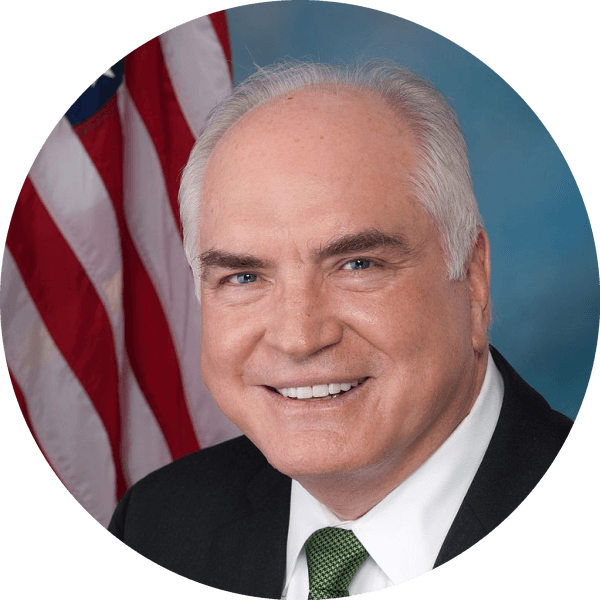
Mike Thompson
Democrat · CA-4
Bring back the EV and solar credits that expired
Why it matters
The $7,500 credit for a new EV and the $4,000 credit for a used one ended on September 30, 2025. The 30% home solar credit ended three months later, and the charger credit ended in June 2026. H.R. 5862 would restore all of them and run them through 2032, and it is written to reach back to the dates they lapsed rather than starting fresh.
H.R. 5862 is a reversal. A tax law enacted in July 2025 ended or pulled forward the expiration date on most federal clean energy credits. This bill walks through them one at a time and restores the longer timelines.
For households, the residential clean energy credit is the largest piece. It would run through the end of 2034: 30% of qualifying costs through 2032, then 26% in 2033 and 22% in 2034, with no dollar ceiling. On a $20,000 rooftop solar or home battery installation, the 30% rate is a $6,000 credit.
The vehicle credits return through the end of 2032 — the credit for buying a new EV, the credit for a used one, and the credit for commercial and fleet vehicles. The bill also rebuilds the domestic sourcing schedule attached to the new-vehicle credit, requiring battery components to be 80% North American for vehicles placed in service in 2027, 90% in 2028, and 100% after that. Charging and refueling equipment, at a house or a business, qualifies again through 2032.
On the business side, the bill removes the hard 2032 stop on the clean electricity production credit and restores an emissions-based trigger instead: the phase-out would begin the year U.S. power-sector greenhouse gas emissions fall to 25% of their 2022 level, or 2032, whichever comes later. It restores credits for wind and solar leasing arrangements, moves the deadline for hydrogen developers to start construction from January 1, 2028 to January 1, 2033, and raises the sustainable aviation fuel credit from 20 cents to 35 cents in one tier and from $1.00 to $1.75 in another.
One provision runs the other direction. The July 2025 law added metallurgical coal to the list of critical minerals eligible for the advanced manufacturing production credit. H.R. 5862 strikes it back off.
Every section is written to take effect as if it had been part of the July 2025 law, which would treat the cutoff dates as though they never took hold rather than restarting the credits on the day this bill passes.
Bill Progress
Latest Action · Oct 28, 2025
Referred to the House Committee on Ways and Means.
H.R. 5862 Bill Summary
What H.R. 5862 actually does.
The 30% home clean energy credit runs through 2034
The residential clean energy credit would apply to property placed in service through December 31, 2034. The rate stays at 30% through 2032, then drops to 26% in 2033 and 22% in 2034. Under current law the credit ended for expenditures made after December 31, 2025.
New, used, and commercial EV credits return through 2032
The credits for new clean vehicles, previously owned clean vehicles, and qualified commercial clean vehicles would run through December 31, 2032. Current law cut them off for vehicles acquired after September 30, 2025.
EV battery sourcing requirements ratchet up over time
The bill restores the escalating domestic content schedule for the new clean vehicle credit. Critical minerals would face an 80% threshold for vehicles placed in service after 2026. Battery components would need to be 80% North American in 2027, 90% in 2028, and 100% after 2028.
Charging and refueling equipment qualifies again through 2032
The alternative fuel vehicle refueling property credit, which covers EV charging equipment at homes and businesses, would run through December 31, 2032 instead of ending June 30, 2026.
Wind and solar lose their 2032 hard stop
The clean electricity production credit phase-out would be tied to emissions again: it begins the year U.S. power-sector greenhouse gas emissions reach 25% or less of their 2022 level, or 2032, whichever is later. The bill also removes the termination of wind and solar eligibility and restores the credits for leasing arrangements.
Hydrogen developers get five more years to break ground
The construction-start deadline for the clean hydrogen production credit moves from January 1, 2028 to January 1, 2033.
Metallurgical coal loses its manufacturing credit eligibility
The bill removes metallurgical coal from the list of applicable critical minerals under the advanced manufacturing production credit, and strikes the 2.5% rate written for it. It also repeals the termination date for wind energy components under the same credit.
Sustainable aviation fuel credits increase
The special rate for sustainable aviation fuel rises from 20 cents to 35 cents for fuel from one category of qualified facility, and from $1.00 to $1.75 for fuel from another.
Home efficiency claims need a product ID number again
For eligible property placed in service after December 31, 2024, a taxpayer claiming the energy efficient home improvement credit would have to report a qualified product identification number. Manufacturers would have to sign an agreement with Treasury, assign a unique number to each item, label it, and file periodic reports.
Who benefits from H.R. 5862?
Homeowners who put off solar, a battery, or geothermal
The 30% credit has no dollar cap and would apply to installations through 2032. A $20,000 system is a $6,000 credit; a $40,000 system is $12,000. The rate then steps down to 26% in 2033 and 22% in 2034.
Anyone who bought an EV after September 30, 2025
Because the vehicle sections are written to apply as if they had been in the July 2025 law, a purchase made in the window after the credit lapsed would fall inside the restored period. That is worth up to $7,500 on a qualifying new EV and up to $4,000 on a used one.
Fleet operators and charging site developers
The commercial clean vehicle credit and the refueling property credit would both run through 2032, which changes the payback math on depot charging and fleet replacement schedules that are planned years out.
Hydrogen and clean electricity developers
A hydrogen project would have until January 1, 2033 to start construction instead of January 1, 2028 — a difference that matters for projects still working through permitting and offtake agreements. Wind and solar projects would no longer face a fixed 2032 cutoff.
Homebuilders and commercial building owners
The new energy efficient home credit would apply to homes acquired through 2032 rather than ending June 30, 2026, and the energy efficient commercial buildings deduction would have its termination repealed outright.
Sustainable aviation fuel producers
Per-gallon credit rates rise to 35 cents and $1.75 depending on the facility category, on fuel that already qualifies.
Who is affected by H.R. 5862?
Metallurgical coal producers
Metallurgical coal would be removed from the critical minerals list under the advanced manufacturing production credit, and the 2.5% rate written for it would be struck. Producers that qualified under the July 2025 law would no longer qualify.
Manufacturers of qualifying home efficiency products
They would have to enter an agreement with Treasury, assign a unique identification number to every qualifying item, label the product with it, and file periodic reports. Without that, buyers cannot claim the credit.
Taxpayers claiming the home improvement credit
For eligible property placed in service after 2024, the return would need to carry the product identification number for the item installed. The claim fails without it.
Dealers, automakers, and installers
Longer credit timelines would support demand through 2032, but the restored domestic sourcing schedule tightens each year, so which specific vehicles qualify would shift over the life of the credit.
Federal budget writers
The bill restores and extends a long list of tax credits with no offset in the text, and the retroactive effective dates would reopen claims back to 2025. Both raise the revenue cost relative to keeping the current cutoffs.
HR5862 Legislative Journey
House: Committee Action
Oct 28, 2025
Referred to the House Committee on Ways and Means.
About the Sponsor
Mike Thompson
Democrat, California's 4th congressional district · 27 years in Congress
Committees: Ways and Means
View full profile →
Cosponsors (128)
All 128 cosponsors are Democrats. Cosponsors represent 38 states: Alabama, Arizona, California, and 35 more.




Cosponsor Coverage Map
Committee Sponsors
Ways and Means Committee
18 of 45 committee members cosponsored


1 Democrats across this committee haven't cosponsored yet. Mobilize their constituents
What laws does H.R. 5862 change?
12 changes
Sections Amended
Section 70513 of Public Law 119-21. SEC. 103. ADVANCED MANUFACTURING PRODUCTION CREDIT. (a) Repeal of Inclusion of Metallurgical Coal as an Applicable Critical Mineral.--Section 45X(c)(6)
striking subparagraph (R) and by redesignating subparagraphs (S) through (AA) as subparagraphs (R) through (ZZ), respectively
Section 70514 of Public Law 119-21. SEC. 104. REPEAL OF RESTRICTION ON THE EXTENSION OF ADVANCE ENERGY PROJECT CREDIT PROGRAM. (a) In General.--Section 48C(e)(3)(C)
striking ``shall not be increased'' and inserting ``shall be increased''
Section 70515 of Public Law 119-21. SEC. 105. REVERSION OF CONSTRUCTION DATE FOR CLEAN HYDROGEN PRODUCTION CREDIT. (a) In General.--Section 45V(c)(3)(C)
striking ``January 1, 2028'' and inserting ``January 1, 2033''
Section 70511 of Public Law 119-21. SEC. 106. REVERSION OF TERMINATION FOR RESIDENTIAL CLEAN ENERGY CREDIT. (a) In General.--Section 25D(h)
striking ``with respect to any expenditures made after December 31, 2025'' and inserting ``to property placed in service after December 31, 2034''
Section 70506 of Public Law 119-21. SEC. 107. REINSTATEMENT OF SPECIAL RATE FOR SUSTAINABLE AVIATION FUEL. (a) In General.--Section 45Z(a)(3)
read as follows: ``(3) Special rate for sustainable aviation fuel
Section 70521 of Public Law 119-21. TITLE II--LOWERING ENERGY COSTS THROUGH ENERGY EFFICIENCY SEC. 201. ENERGY EFFICIENT HOME IMPROVEMENT CREDIT. (a) Restoring Product Identification Number Requirement.--Section 25C(h)
read as follows: ``(h) Product Identification Number Requirement
H.R. 5862 Quick Facts





- Committee
- Ways and Means
- Chamber
- House
- Policy
- Taxation
- Introduced
- Oct 28, 2025
Referred to the House Committee on Ways and Means.
Oct 28, 2025
Official Sources
Official status, text, sponsors, cosponsors, and committee actions for the bill.
The July 2025 reconciliation law whose early termination dates every section of H.R. 5862 rolls back.
IRS page covering the new, previously owned, and commercial clean vehicle credits the bill would extend through 2032.
The 30% home solar, battery, and geothermal credit the bill would hold at 30% through 2032 before stepping down.
The section 25C credit the bill would condition on reporting a manufacturer-assigned product identification number.
The EV charging equipment credit whose end date the bill moves from June 30, 2026 to December 31, 2032.
The section 45V credit whose construction-start deadline the bill pushes from January 1, 2028 to January 1, 2033.
The section 45Y credit the bill restores for wind and solar facilities, along with its emissions-based phase-out.
H.R. 5862 Common Questions
Did the EV tax credit expire, and would H.R. 5862 bring it back?
It expired for vehicles acquired after September 30, 2025. H.R. 5862 would restore the new, used, and commercial clean vehicle credits through December 31, 2032 — up to $7,500 on a qualifying new EV and $4,000 on a used one.
Would the 30% home solar tax credit come back?
Yes. The residential clean energy credit would run through 2034, holding at 30% of qualifying costs through 2032, then 26% in 2033 and 22% in 2034. There is no dollar cap, so a $20,000 solar or battery installation is a $6,000 credit at the 30% rate.
Would the restored credits apply retroactively?
That is how the bill is written. Each provision takes effect as if it had been part of the July 2025 tax law, which would treat the 2025 and 2026 cutoff dates as though they never took hold — rather than restarting the credits on the day the bill passes.
Does H.R. 5862 bring back the EV charger tax credit?
Yes. The refueling property credit, which covers EV charging equipment at homes and businesses, ended June 30, 2026. The bill would extend it through December 31, 2032.
Would the rules for which EVs qualify change?
Yes. The bill restores a domestic sourcing schedule that tightens each year. Battery components would have to be 80% North American for vehicles placed in service in 2027, 90% in 2028, and 100% after 2028. Critical minerals face an 80% threshold after 2026.
Does H.R. 5862 take away any tax credits?
One. The July 2025 law made metallurgical coal eligible for the advanced manufacturing production credit. H.R. 5862 removes it from that list and strikes the 2.5% rate written for it.
What changes for hydrogen projects?
Developers would get five more years to qualify. The deadline to begin construction on a clean hydrogen production facility moves from January 1, 2028 to January 1, 2033.
Does H.R. 5862 have bipartisan support?
Not so far. Mike Thompson of California introduced it on October 28, 2025 with 128 cosponsors, all Democrats. It was referred to the House Ways and Means Committee, which the majority party controls.
Based on H.R. 5862 bill text
H.R. 5862 Bill Text
“To amend the Internal Revenue Code of 1986 to restore certain energy-related provisions as in effect prior to the enactment of Public Law 119–21.”
Source: U.S. Government Publishing Office
Get notified when H.R. 5862 moves
Committee votes, floor action, cosponsor changes — straight to your inbox.
Bill alerts + Legisletter's monthly briefing. Unsubscribe anytime.
Taxation Bills
9 related bills we're tracking
American Family Act





Referred to the House Committee on Ways and Means.
Apr 9, 2025
Freedom to Invest in Tomorrow’s Workforce Act




Referred to the House Committee on Ways and Means.
Feb 7, 2025
Main Street Tax Certainty Act




Referred to the House Committee on Ways and Means.
Jan 23, 2025
Death Tax Repeal Act




Referred to the House Committee on Ways and Means.
Feb 13, 2025
To amend the Internal Revenue Code of 1986 to modify the railroad track maintenance credit.



Referred to the House Committee on Ways and Means.
Jan 16, 2025
Tax Fairness for Workers Act





Referred to the House Committee on Ways and Means.
Apr 7, 2025
Health Care Affordability Act of 2025





Referred to the House Committee on Ways and Means.
Jan 9, 2025
Affordable Housing Credit Improvement Act of 2025

Referred to the House Committee on Ways and Means.
Apr 8, 2025
More Homes on the Market Act




Referred to the House Committee on Ways and Means.
Feb 13, 2025
Trending Right Now
Bills gaining momentum across Congress
North Platte Canteen Congressional Gold Medal Act





Referred to the House Committee on Financial Services.
Feb 21, 2025
ASAP Act



Ordered to be Reported in the Nature of a Substitute by the Yeas and Nays: 40 - 0.
Sep 16, 2026
Fit to Serve Act





Referred to the House Committee on Armed Services.
May 21, 2025
Tracking Taxation in Congress? Monitor bills, track cosponsor momentum, and launch advocacy campaigns — all from one advocacy platform.