H.R. 5457: Strengthening Agency Management and Oversight of Software Assets Act
Sponsor

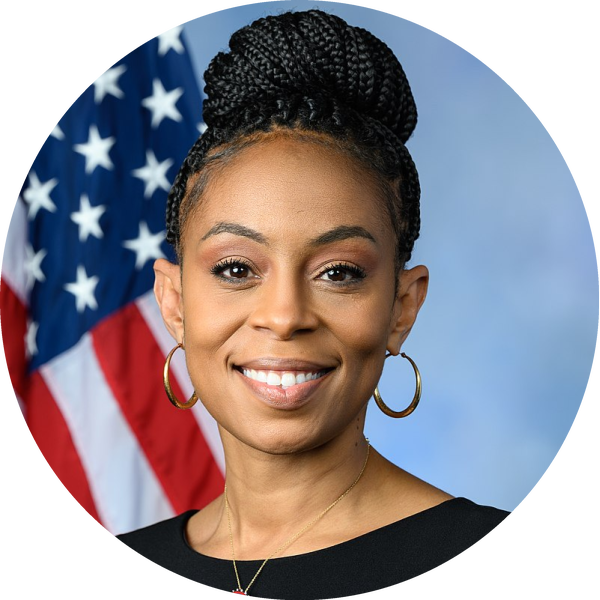
Shontel Brown
Democrat · OH-11
Washington pays for software nobody uses — Congress wants receipts
Why it matters
Federal agencies spend billions of dollars a year on software — money that sponsors say too often pays for unused licenses, duplicate purchases, and cloud fees that never showed up in the original contract. H.R. 5457 gives every agency 18 months to produce a complete accounting of its software, then a deadline to turn that audit into a cost-cutting plan. It passed the House by voice vote, and it authorizes zero new spending to get the job done.
The federal government runs on software — some of it from vendors you know, plus thousands of contracts for tools you've never heard of. The problem, according to the bill's sponsors, is that agencies often can't say what they own, what they actually use, or what each deal really costs once cloud charges and add-on fees pile up.
H.R. 5457 starts with a deadline. Within 18 months, every agency's chief information officer must finish a complete accounting of the agency's software: every license and contract, the costs beyond the sticker price, what's sitting unused, what's been bought twice, and which contract terms restrict how the software can run or who controls the data.
The audit is step one. Within a year of finishing it, each agency must turn the findings into a plan: consolidate licenses, shift to enterprise-wide deals where they save money, train staff to negotiate better contract terms, and stop individual bureaus from buying software without sign-off from the agency's top technology official.
Then the results leave the building. Assessments and plans go to the White House budget office, the General Services Administration, Congress's audit agency, and the oversight committees in both chambers. Within two years, the budget office must recommend government-wide procurement fixes — and within three, the Government Accountability Office reports on how well agencies actually followed through. Intelligence agencies run a separate version of the process designed to protect classified information.
Bill Progress
Latest Action · Dec 16, 2025
Passed the House, received in Senate
H.R. 5457 Bill Summary
What H.R. 5457 actually does.
Every agency must open its software books
Within 18 months of enactment, each agency's chief information officer — working with the agency's finance, acquisition, data, and legal chiefs — must complete a comprehensive assessment of all software the agency pays for, uses, or deploys.
Unused licenses and duplicate purchases get flagged
The assessment must identify software the agency pays for but doesn't use, purchases that duplicate each other, and any fees or cloud costs that weren't part of the original contract price.
Vendor lock-in comes out of the fine print
Agencies must list every contract term that restricts how software can be deployed, accessed, or used — including ties to specific hardware or cloud providers and limits on the agency's ownership of or access to its own data.
Audits become cost-cutting plans
Within a year of finishing its assessment, each agency must produce a plan to consolidate licenses, adopt enterprise-wide buying strategies, automate license tracking, train staff in contract negotiation, and estimate the projected savings.
No more software shopping without sign-off
Agency plans must restrict bureaus, programs, and components from acquiring, building, or using software without approval from the agency's chief information officer.
Congress and watchdogs see everything
Assessments and plans go to the Office of Management and Budget, the General Services Administration, the Government Accountability Office, and congressional oversight committees. OMB must recommend government-wide fixes within two years; GAO reports on the results within three.
Who benefits from H.R. 5457?
Taxpayers
Every unused license is money already out the door. If agencies cut duplicate contracts and negotiate enterprise deals, the savings come straight out of budgets your taxes fund.
Agency chief information officers
They gain both the data and the authority to manage software across the whole agency, instead of discovering purchases after individual bureaus have already signed the contracts.
Congressional oversight committees
For the first time, they would get standardized software-spending assessments from every agency — making it possible to compare practices and spot waste government-wide.
Smaller software vendors
Agency purchases must be based on publicly available criteria that aren't structured to favor a specific vendor — a potential opening for companies competing against entrenched incumbents.
Who is affected by H.R. 5457?
Federal civilian agencies
They take on a significant new workload — a comprehensive audit, a modernization plan, and ongoing reporting — without any new funding to pay for it.
Agency bureaus and program offices
Their ability to buy or build software independently would be restricted; purchases would need approval from the agency's chief information officer.
Major software vendors and cloud providers
Their pricing, add-on fees, and license restrictions would face line-by-line scrutiny, and agencies would be directed to push back on lock-in terms at renewal time.
Federal contractors performing assessments
Agencies can hire contractors to help with the audits, but firms with conflicts of interest are barred and contractors must stay operationally independent from the software they review.
What Congress Is Saying
H.R. 5457 has come up 3 times in the Congressional Record so far.
Mr. Speaker, I rise in support of H.R. 5457, the Strengthening Agency Management and Oversight of Software Assets Act. The SAMOSA Act is a straightforward, good-government bill that has strong bipartisan support from members of the Oversight Committee. I reintroduced this legislation earlier this year with Congresswoman Mace, the chair of the Oversight Committee's Subcommittee on Cybersecurity, Information Technology, and Government Innovation; Congressman Pat Fallon; and Congresswoman April McClain Delaney as co- leads. I thank them for their support.
HR5457 Legislative Journey
Committee Action
Dec 16, 2025
Received in the Senate and Read twice and referred to the Committee on Homeland Security and Governmental Affairs.
House: Vote: 5862-5864
Dec 15, 2025
On motion to suspend the rules and pass the bill, as amended Agreed to by voice vote. (text: CR H5862-5864)
House: Vote: 43-0
Dec 2, 2025
Ordered to be Reported (Amended) by the Yeas and Nays: 43 - 0.
House: Committee Action
Sep 18, 2025
Referred to the House Committee on Oversight and Government Reform.
About the Sponsor
Shontel Brown
Democrat, Ohio's 11th congressional district · 5 years in Congress
Committees: Agriculture, Oversight and Government Reform, House Select Committee on the Strategic Competition Between the United States and the Chinese Communist Party
View full profile →
Cosponsors (3)
This bill has 3 cosponsors: 1 Democrat, 2 Republicans, reflecting bipartisan support. Cosponsors represent 3 states: Maryland, South Carolina, Texas.
Committee Sponsors
Homeland Security and Governmental Affairs Committee
0 of 15 committee members cosponsored
No committee members have cosponsored this bill
Oversight and Government Reform Committee
2 of 47 committee members cosponsored


28 Democrats across these committees haven't cosponsored yet. Mobilize their constituents
H.R. 5457 Quick Facts



- Committee
- Homeland Security and Governmental Affairs
- Chamber
- House
- Policy
- Government Operations and Politics
- Introduced
- Sep 18, 2025
Passed the House, received in Senate
Dec 16, 2025
Official Sources
Official bill page with full text, all House and Senate actions, and cosponsor list for the Strengthening Agency Management and Oversight of Software Assets Act.
The January 2024 GAO report documenting that none of nine major agencies could fully determine whether their most widely used software licenses were over- or under-purchased — the oversight gap this bill targets.
The General Services Administration's government-wide purchasing vehicle for commercial software licenses; GSA receives agency assessments and plans under the bill.
The 2016 software license management law this bill builds on — H.R. 5457 references its inventory requirements and extends them into full agency-wide audits and modernization plans.
OMB receives every agency's assessment and plan and must recommend government-wide software procurement fixes to Congress within two years of enactment.
The Senate committee where H.R. 5457 has been pending since the House passed it by voice vote in December 2025.
H.R. 5457 Common Questions
How long do federal agencies have to complete the software audit under H.R. 5457?
18 months from the day the bill becomes law. Each agency's chief information officer leads the assessment, working with the agency's finance, acquisition, data, and legal chiefs. After that, the agency gets one more year to turn the findings into a cost-cutting plan.
Does H.R. 5457 make agencies report software they pay for but don't use?
Yes. The assessment must flag licenses the agency pays for but hasn't deployed, purchases that duplicate each other, and anything the chief information officer determines the agency doesn't need.
What hidden software costs does H.R. 5457 require agencies to disclose?
Any fees not included in the original contract price — cloud usage charges, upgrade costs over the life of a contract, and maintenance fees. The point is the total cost of each software deal, not just the sticker price.
Can an agency bureau still buy software on its own under H.R. 5457?
Not without sign-off. Agency plans must restrict bureaus, programs, and components from acquiring, building, or using software unless the agency's chief information officer approves.
How does H.R. 5457 address vendor lock-in?
Agencies must list every contract term that restricts how software can be deployed — ties to specific hardware or cloud providers, or limits on the agency's own data — then identify ways to minimize those restrictions in future deals.
Do intelligence agencies have to comply with H.R. 5457?
They run a separate track. Each intelligence community element conducts its own assessment, performed in a way that protects classified information, and submits a summary to the budget office and the congressional intelligence committees.
Does H.R. 5457 come with new funding for agencies?
No. The bill explicitly authorizes no new money, so agencies must absorb the audit and planning work within existing budgets. Supporters argue the savings from cutting unused licenses will more than cover the cost.
Has H.R. 5457 passed Congress?
Halfway. The House passed it by voice vote on December 15, 2025, after a unanimous 43–0 committee vote. It's now pending before the Senate Homeland Security and Governmental Affairs Committee.
Based on H.R. 5457 bill text
H.R. 5457 Bill Text
“To improve the visibility, accountability, and oversight of agency software asset management practices, and for other purposes.”
Source: U.S. Government Publishing Office
Get notified when H.R. 5457 moves
Committee votes, floor action, cosponsor changes — straight to your inbox.
Bill alerts + Legisletter's monthly briefing. Unsubscribe anytime.
Government Operations and Politics Bills
9 related bills we're tracking
Protect Our Letter Carriers Act of 2025





Referred to the Committee on the Judiciary, and in addition to the Committee on Oversight and Government Reform, for a period to be subsequently determined by the Speaker, in each case for consideration of such provisions as fall within the jurisdiction of the committee concerned.
Feb 6, 2025
John R. Lewis Voting Rights Advancement Act of 2025

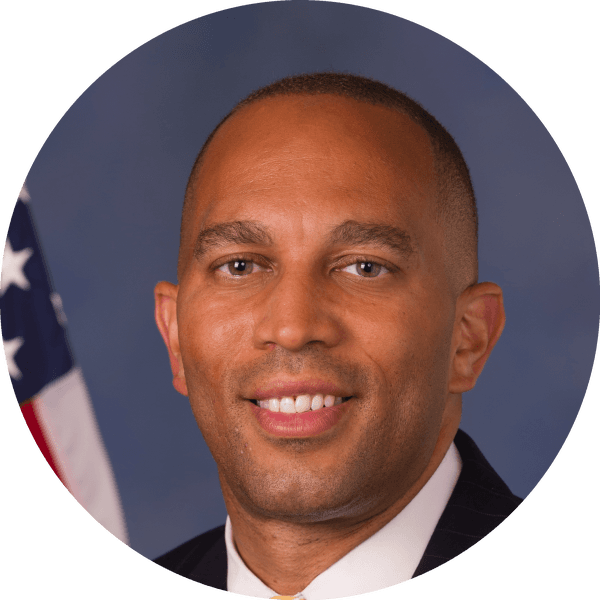

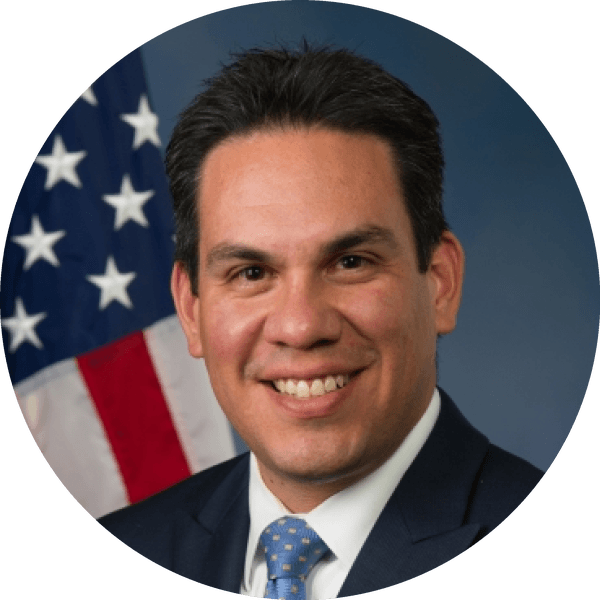

Referred to the House Committee on the Judiciary.
Mar 5, 2025
Washington, D.C. Admission Act


Referred to the Committee on Oversight and Government Reform, and in addition to the Committees on Rules, Armed Services, the Judiciary, and Energy and Commerce, for a period to be subsequently determined by the Speaker, in each case for consideration of such provisions as fall within the jurisdiction of the committee concerned.
Jan 3, 2025
Rights for the TSA Workforce Act





Referred to the Subcommittee on Transportation and Maritime Security.
Mar 11, 2025
DISCLOSE Act of 2026

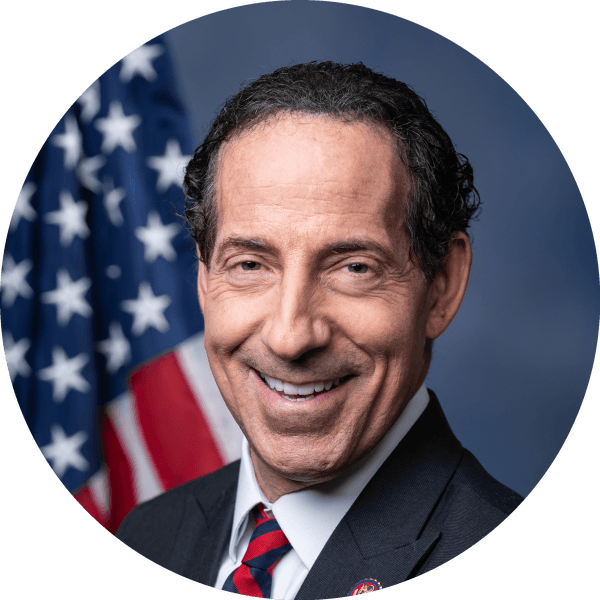


Referred to the Committee on House Administration, and in addition to the Committees on Ways and Means, and the Judiciary, for a period to be subsequently determined by the Speaker, in each case for consideration of such provisions as fall within the jurisdiction of the committee concerned.
Mar 4, 2026
Federal Retirement Fairness Act




ASSUMING FIRST SPONSORSHIP - Ms. Randall asked unanimous consent that she may hereafter be considered as the first sponsor of H.R. 1522, a bill originally introduced by Representative Connolly, for the purpose of adding cosponsors and requesting reprintings pursuant to clause 7 of rule XII. Agreed to without objection.
Jul 22, 2025
FIND Act





Referred to the House Committee on Oversight and Government Reform.
Jan 3, 2025
Fair Pay for Federal Contractors Act of 2025


Referred to the Committee on Appropriations, and in addition to the Committee on Oversight and Government Reform, for a period to be subsequently determined by the Speaker, in each case for consideration of such provisions as fall within the jurisdiction of the committee concerned.
Sep 30, 2025
Saving the Civil Service Act

ASSUMING FIRST SPONSORSHIP - Mr. Walkinshaw asked unanimous consent that he may hereafter be considered as the first sponsor of H.R. 492, a bill originally introduced by Representative Connolly, for the purpose of adding cosponsors and requesting reprintings pursuant to clause 7 of rule XII. Agreed to without objection.
Sep 16, 2025
Trending Right Now
Bills gaining momentum across Congress
North Platte Canteen Congressional Gold Medal Act


Referred to the House Committee on Financial Services.
Feb 21, 2025
Fit to Serve Act





Referred to the House Committee on Armed Services.
May 21, 2025
ASAP Act



Ordered to be Reported in the Nature of a Substitute by the Yeas and Nays: 40 - 0.
Sep 16, 2026
Tracking Government Operations and Politics in Congress? Monitor bills, track cosponsor momentum, and launch advocacy campaigns — all from one advocacy platform.