H.R. 3294: Justice for Victims of Illegal Alien Murders Act
Sponsor

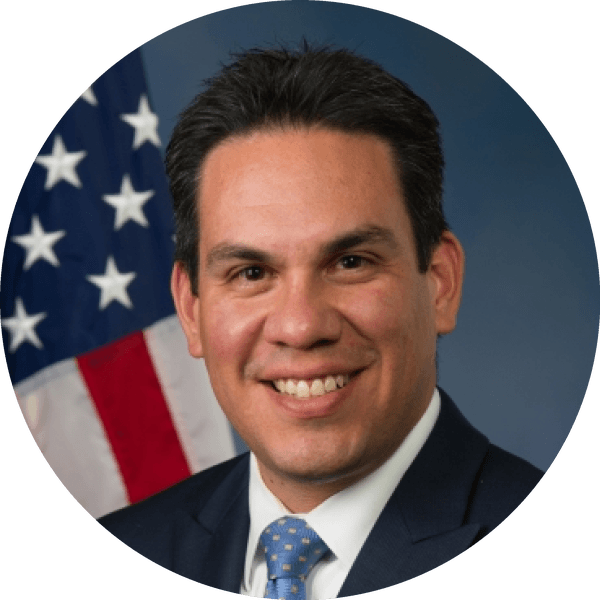
Morgan Luttrell
Republican · TX-8
A federal murder charge that turns on immigration status
Why it matters
Murder is almost always a state crime, and federal prosecutors can usually only step in when the killing happens on federal property. H.R. 3294 would change that for one group of people: it would let federal prosecutors bring a murder charge — and seek the death penalty — whenever the accused falls into one of five immigration categories, anywhere in the country. First-degree murder would carry only two sentences: death or life in prison.
H.R. 3294, officially titled the Justice for Victims of Illegal Alien Murders Act, is short but severe. It adds a new provision to the federal murder statute that creates a murder offense tied to specific immigration categories. It does not rewrite murder law for everyone — it applies only to certain noncitizens.
The biggest practical shift is jurisdiction. Today, federal murder charges generally reach a killing only when it occurs on federal land or in federal waters. The bill says its new rule applies anywhere in the United States, regardless of where the crime happened. That gives federal prosecutors a far broader basis to bring covered cases.
The immigration categories are spelled out precisely. The bill covers people who are inadmissible because they entered without being admitted or paroled, lacked required entry documents, or are tied to misrepresentation. It also covers people who are deportable because they are present in violation of immigration law or violated the terms of a temporary visa.
The penalties match the most serious in federal criminal law. First-degree murder would be punishable only by death or life in prison, with no lesser option listed. Second-degree murder could bring any term of years up to life.
Sponsors frame the bill as accountability for victims and a way to close gaps in federal jurisdiction. Critics are likely to argue it ties homicide punishment to immigration status and pulls federal prosecutors into cases that states already handle.
Bill Progress
Latest Action · May 8, 2025
Referred to the House Committee on the Judiciary.
H.R. 3294 Bill Summary
What H.R. 3294 actually does.
Federal murder charges based on immigration status
The bill adds a new provision to the federal murder statute that lets prosecutors charge murder when the accused is in one of five immigration categories. It does not create a general new murder law for everyone — it applies only to those specific groups.
Federal reach extends nationwide
Federal murder charges normally apply only on federal property, like military bases, national parks, or at sea. The bill would let this charge apply anywhere in the United States, regardless of where the killing happened.
Five immigration categories trigger the charge
The bill covers people who are inadmissible or deportable for specific reasons: present without admission or parole, lacking required entry documents, tied to misrepresentation, present in violation of immigration law, or in violation of a temporary visa's terms.
First-degree murder: death or life, with no lesser option
For first-degree murder, the bill authorizes only two sentences: death or imprisonment for life. It lists no lower sentencing option for covered cases.
Second-degree murder: up to life
For second-degree murder, the bill allows any term of years up to life imprisonment, giving federal courts a wide sentencing range in covered cases.
Who benefits from H.R. 3294?
Families of victims in covered cases
When the accused falls into one of the bill's immigration categories, federal prosecutors could bring murder charges and pursue the harshest federal penalties, including the death penalty for first-degree murder.
Federal prosecutors
The bill gives them an explicit new way to charge murder and extends federal reach nationwide, rather than limiting it to crimes committed on federal property.
Supporters of immigration-linked penalties
The bill directly ties murder punishment to immigration status and sets the maximum at death or life for first-degree murder. Sponsors frame it as accountability for victims of crimes committed by people in the country illegally.
State and local authorities seeking federal backup
In some cases, local prosecutors could gain a federal partner on murder cases when the accused falls into one of the listed categories, with second-degree murder carrying any term of years up to life.
Who is affected by H.R. 3294?
Noncitizens in the five covered categories
People in any of the bill's listed immigration categories would face this added federal murder exposure if accused of a covered killing, with first-degree murder punishable by death or life imprisonment.
Noncitizens accused of misrepresentation or lacking documents
The bill reaches people tied to misrepresentation at entry or who lacked required documents, meaning they could face federal murder charges under the new provision in addition to any state charges.
Courts and defense lawyers handling homicide cases
They would have to litigate not just the murder charge but also whether the accused fits one of the exact immigration categories, since that status is what triggers the new federal jurisdiction.
State prosecutors
Local prosecutors could find federal authorities sharing or taking over murder cases that states would otherwise handle alone, since the bill adds a federal track without removing state authority.
HR3294 Legislative Journey
House: Committee Action
May 8, 2025
Referred to the House Committee on the Judiciary.
About the Sponsor
Morgan Luttrell
Republican, Texas's 8th congressional district · 3 years in Congress
Committees: Homeland Security, Veterans' Affairs, Armed Services
View full profile →
Cosponsors (11)
All 11 cosponsors are Republicans. Cosponsors represent 9 states: Alabama, Georgia, Indiana, and 6 more.

August Pfluger
Republican · TX

Troy Nehls
Republican · TX

Mike Collins
Republican · GA

Brian Babin
Republican · TX

Marlin Stutzman
Republican · IN

Mike Ezell
Republican · MS

Jack Bergman
Republican · MI

Dale Strong
Republican · AL

John McGuire
Republican · VA

Derrick Van Orden
Republican · WI

Daniel Meuser
Republican · PA
Committee Sponsors

23 Republicans across this committee haven't cosponsored yet. Mobilize their constituents
H.R. 3294 Quick Facts
- Committee
- Judiciary
- Chamber
- House
- Policy
- Crime and Law Enforcement
- Introduced
- May 8, 2025
Referred to the House Committee on the Judiciary.
May 8, 2025
Official Sources
Official bill page with status, full text, sponsors, and actions for the Justice for Victims of Illegal Alien Murders Act.
The federal murder statute the bill amends, adding a new subsection (d) covering certain inadmissible or deportable noncitizens.
INA section 212; its paragraphs (6)(A), (6)(C), and (7) define three of the immigration categories that trigger the bill's murder charge.
INA section 237; its subparagraphs (B) and (C)(i) define the deportability grounds that also trigger the bill's murder charge.
The federal capital-sentencing statute governing the death penalty the bill authorizes for covered first-degree murder.
H.R. 3294 Common Questions
Could someone get the death penalty under H.R. 3294?
Yes. If a covered noncitizen is convicted of first-degree murder, the bill allows only two sentences: the death penalty or life in prison. It lists no lesser option for those cases.
How much prison time does H.R. 3294 set for second-degree murder?
For second-degree murder, the bill allows any term of years up to life in prison — the same wide range federal courts already use for that charge.
Does H.R. 3294 apply outside federal land?
Yes. The bill would apply anywhere in the United States, not just on federal property like military bases or national parks where federal murder charges normally reach. That nationwide scope is one of its biggest changes.
Which immigrants would H.R. 3294 cover?
Five groups: people present without being admitted or paroled, those who lacked required entry documents, those tied to misrepresentation, people present in violation of immigration law, and those who violated the terms of a temporary visa.
How is this different from current federal murder law?
Federal murder law already exists, but it mostly applies on federal property. H.R. 3294 adds a new path that turns on the accused person's immigration status instead of where the killing happened. Most murders are otherwise prosecuted by states.
Would states still prosecute these murders?
Yes. The bill adds a federal option on top of state murder charges rather than replacing them. States keep their own murder laws, so a covered case could be handled at either level.
Does the government have to prove immigration status to bring the charge?
Yes. The federal charge applies only if the accused falls into one of the bill's listed immigration categories, so prosecutors would have to establish both the murder and the person's immigration status.
Who introduced H.R. 3294 and where does it stand?
Representative Morgan Luttrell of Texas introduced the bill in May 2025 with 11 Republican cosponsors. It was referred to the House Judiciary Committee and has not advanced since.
Based on H.R. 3294 bill text
H.R. 3294 Bill Text
“To amend title 18, United States Code, to assert jurisdiction over murders committed by certain inadmissible or deportable aliens.”
Source: U.S. Government Publishing Office
Get notified when H.R. 3294 moves
Committee votes, floor action, cosponsor changes — straight to your inbox.
Bill alerts + Legisletter's monthly briefing. Unsubscribe anytime.
Crime and Law Enforcement Bills
9 related bills we're tracking
Crime Victims Fund Stabilization Act of 2025





Received in the Senate and Read twice and referred to the Committee on the Judiciary.
Jan 13, 2026
Bipartisan Background Checks Act of 2025




Referred to the House Committee on the Judiciary.
Jun 10, 2025
Combating Organized Retail Crime Act of 2025





Received in the Senate and Read twice and referred to the Committee on the Judiciary.
May 13, 2026
Ethan's Law





Referred to the House Committee on the Judiciary.
Feb 25, 2025
Assault Weapons Ban of 2025



Referred to the House Committee on the Judiciary.
Apr 30, 2025
Constitutional Concealed Carry Reciprocity Act of 2025





Placed on the Union Calendar, Calendar No. 289.
Oct 3, 2025
Honoring Our Fallen Heroes Act of 2025



Referred to the House Committee on the Judiciary.
Feb 12, 2025
Raise the Age Act of 2025


Referred to the House Committee on the Judiciary.
Mar 26, 2025
Born-Alive Abortion Survivors Protection Act



Received in the Senate and Read twice and referred to the Committee on the Judiciary.
Jan 24, 2025
Trending Right Now
Bills gaining momentum across Congress
America’s Olympic and Paralympic Games Commemorative Coins Act





Referred to the House Committee on Financial Services.
Jul 14, 2025
Fit to Serve Act





Referred to the House Committee on Armed Services.
May 21, 2025
ASAP Act





Ordered to be Reported in the Nature of a Substitute by the Yeas and Nays: 40 - 0.
Sep 16, 2026
Tracking Crime and Law Enforcement in Congress? Monitor bills, track cosponsor momentum, and launch advocacy campaigns — all from one advocacy platform.