 Christopher Coons
 John Fetterman
 Ruben Gallego
 Martin Heinrich
 John Hickenlooper
 Amy Klobuchar
 Gary Peters
 Jack Reed
 Jacky Rosen
 Brian Schatz
 Chuck Schumer
 Elissa Slotkin
 Mark Warner
 Sheldon Whitehouse
 Josh Hawley
 Mike Rounds
Mr. Speaker, I rise in support of H.R. 2347, the Survivor Justice Tax Prevention Act, bipartisan legislation introduced by Representatives Lloyd Smucker and Gwen Moore. Survivors of sexual assault face a long road to recovery without having to battle with the IRS over keeping the compensatory damages or settlements that they receive.
H.R. 2347: Bipartisan American Affordability and Jobs Act of 2026
Introduced Mar 25, 20253 cosponsors
Sponsor

Lloyd Smucker
Republican · PA-11
Survivors shouldn’t owe taxes on abuse damages
3 min readLast updated November 15, 2026
Why it matters
For every $100,000 of qualifying damages that would otherwise fall in the 22% tax bracket, the federal tax difference could reach roughly $22,000. H.R. 2347 would remove nonpunitive damages tied to sexual acts or sexual contact from taxable income.
Federal law generally excludes damages tied to physical injuries or sickness from taxable income. H.R. 2347 would create an additional exclusion for nonpunitive damages received because of a qualifying sexual act or sexual contact.
A survivor would not need medical records or an observable injury to claim the exclusion. Punitive damages would remain outside it and could still be taxable.
The wording of a court decision or settlement would also matter. If the document says the damages were awarded because of a qualifying act or contact, the statement would count as credible evidence in a dispute with the IRS, and the taxpayer would be treated as having met related recordkeeping and cooperation requirements for that issue.
The change would generally apply to court awards and agreements that qualify after the bill becomes law. A court award could qualify when its first payment arrives after enactment, even if the decision came earlier. Merely revising or replacing an older settlement would not turn it into a newly eligible agreement.
Treasury would also have to publicize the exclusion in consultation with the Justice Department’s Office on Violence Against Women and other relevant agencies. The bill sets no funding amount or deadline for that effort.
What to watch
The Senate must first agree to end debate before it can vote on H.R. 2347. If senators change the text, the House would have to approve the same version before it could go to the president. If enacted, Treasury and the IRS would then need to explain how survivors document qualifying damages and how settlement language affects tax disputes.
Bill Progress
IntroducedMar 25
Committee
Pass HouseApr 27
Pass SenateNov 19
Signed
Law
Latest Action · Nov 19, 2026
1/4
Passed Senate with an amendment by Yea-Nay Vote. 62 - 33. Record Vote Number: 270.
How the Senate voted
Passed · November 19, 202614 Democrats broke with their party to vote yes
2 Republicans broke with their party to vote no
On Passage of the Bill H.R. 2347 · Record vote 270 · Official record
H.R. 2347 Bill Summary
What H.R. 2347 actually does.
1
Qualifying survivor damages become tax-free
Nonpunitive damages received because of a qualifying sexual act or sexual contact would be excluded from federal taxable income.
2
Invisible injuries still qualify
A survivor could claim the exclusion without medical records or observable injuries connected to the act or contact.
3
Clear settlement language supports your tax claim
A court decision or agreement that connects the damages to a qualifying act or contact would count as credible evidence if the IRS disputes the exclusion.
4
Some payments after enactment qualify
The bill would generally cover new decisions and agreements. A court award would count as new if its first payment arrives after enactment.
5
Punitive damages remain taxable
The new exclusion would not cover punitive damages, even when they arise from the same lawsuit or settlement.
6
Federal agencies must explain the change
Treasury would lead a public-awareness effort with the Justice Department’s Office on Violence Against Women and other relevant agencies.
Who benefits from H.R. 2347?
Survivors receiving compensatory damages
People receiving nonpunitive damages tied to a qualifying sexual act or sexual contact could keep those amounts out of federal taxable income.
Survivors whose injuries are not visible
Medical records and observable injuries would not be required, addressing cases in which the harm cannot be documented through a physical examination.
People with clearly written settlements
Survivors whose agreements or court decisions expressly identify why the damages were paid would have evidence supporting the exclusion in an IRS dispute.
Recipients awaiting their first court-award payment
A person whose first payment arrives after enactment could qualify even if the court issued its decision earlier.
Who is affected by H.R. 2347?
Recipients of punitive damages
Punitive damages would remain outside the exclusion and could still produce a federal income tax bill.
People with existing settlements
An older agreement would not become eligible merely because the parties revise, replace, or supersede it after enactment.
Attorneys and courts documenting awards
They would need to consider whether decisions and agreements clearly state that damages are tied to a qualifying act or contact.
Treasury, the IRS, and partner agencies
The agencies would administer the new tax treatment, handle disputes, and conduct the required public-awareness effort.
On the Record
What Congress Is Saying
22 legislators have weighed in on H.R. 2347 — 11 Democrats, 11 Republicans.
I think the chairman and Ms. Moore both have described it really well. The core problem here, first of all, we believe our current law already says that any victim of physical abuse and any victim of sexual abuse who receives a settlement does not owe tax on that settlement, which makes complete sense. If you think of the trauma that these individuals have gone through, Mr. Speaker, if you think of the work they are doing to rebuild their lives, the last thing we should be doing is taking a portion of that settlement that they so desperately need to rebuild their lives for tax purposes.


Mr. Speaker, I want to start out by thanking Chairman Smith and Ranking Member Neal for bringing this important bill to the floor for consideration during Sexual Assault Awareness Month. As a survivor of sexual assault, I thank Mr. Smucker for teaming up with me to develop this important legislation that supports victims of sexual abuse who so often have no voice. Mr. Speaker, at its core, this bill is about fairness, dignity, and justice for survivors.

H.R. 2347 also appeared in 66 more Senate floor references and 7 routine cosponsor filings.
HR2347 Legislative Journey
Passed 62-33
Nov 19, 2026
Passed Senate with an amendment by Yea-Nay Vote. 62 - 33. Record Vote Number: 270.
+2 more actions this day
Floor Action
Nov 18, 2026
Considered by Senate. (consideration: CR S5729-5730, S5735-5736)
Floor Action
Nov 17, 2026
Considered by Senate. (consideration: CR S5705)
Floor Action
Nov 16, 2026
Considered by Senate. (consideration: CR S5679)
Floor Action
Nov 11, 2026
Considered by Senate. (consideration: CR S5567-5568)
Committee Action
Nov 10, 2026
Motion by Senator Thune to commit to Senate Committee on Finance with instructions to report back forthwith with the following amendment (SA 6888) made in Senate.
Floor Action
Nov 9, 2026
Motion to proceed to measure considered in Senate. (CR S5337)
Action Taken
Sep 30, 2026
Cloture motion on the motion to proceed to the measure presented in Senate. (CR S5241)
Action Taken
Jul 14, 2026
Read the second time. Placed on Senate Legislative Calendar under General Orders. Calendar No. 453.
Action Taken
Jul 13, 2026
Read the first time. Placed on Senate Legislative Calendar under Read the First Time.
Sent to Senate
Apr 28, 2026
Received in the Senate.
House: Vote Held
Apr 27, 2026
On motion to suspend the rules and pass the bill, as amended Agreed to by voice vote. (text: CR H3110)
House: Committee Action
Apr 9, 2026
Reported (Amended) by the Committee on Ways and Means. H. Rept. 119-599.
House: Vote: 41-0
Mar 25, 2026
Ordered to be Reported in the Nature of a Substitute by the Yeas and Nays: 41 - 0.
House: Committee Action
Mar 25, 2025
Referred to the House Committee on Ways and Means.
About the Sponsor
Lloyd Smucker
Republican, Pennsylvania's 11th congressional district · 9 years in Congress
Committees: Joint Economic Committee, the Budget, Ways and Means
View full profile →
Cosponsors (3)
This bill has 3 cosponsors: 2 Democrats, 1 Republican, reflecting bipartisan support. Cosponsors represent 2 states: New York, Wisconsin.
2Democrats1Republican·2 statesBipartisan
Committee Sponsors
Ways and Means Committee
19D26R
|2 signed43 not yet2 of 45 committee members cosponsored


25 Republicans across this committee haven't cosponsored yet. Mobilize their constituents
What laws does H.R. 2347 change?
34 changes
Sections Amended
Section 111 of NEPA (42 U.S.C. 4336e)'' and inserting ``section 3 of NEPA''. (3) Section 4(l)(2)(F)(i) of the Good Samaritan Remediation of Abandoned Hardrock Mines Act of 2024 (30 U.S.C. 1245 note; Public Law 118-155)
striking ``section 111 of the National Environmental Policy Act of 1969 (42 U
Section 3 of National Environmental Policy Act of 1969''. (4) Section 2232(a) of the Economic Development Reauthorization Act of 2024 (42 U.S.C. 3211 note; Public Law 118-272)
striking ``section 111 of the National Environmental Policy Act of 1969 (42 U
Section 109 of National Environmental Policy Act of 1969 (42 U.S.C. 4336c)
read as follows: ``SEC
Section 110 of National Environmental Policy Act of 1969 (42 U.S.C. 4336d)
read as follows: ``SEC
Section 304(a) of Federal Water Pollution Control Act (33 U.S.C. 1314(a))
adding at the end the following: ``(10) Administrative procedure
Section 401 of Federal Water Pollution Control Act (33 U.S.C. 1341)
adding at the end the following: ``(e) Certification Procedures, Requirements, and Limitations
H.R. 2347 Quick Facts
Cosponsors
3



- Committee
- Ways and Means
- Chamber
- House
- Policy
- Taxation
- Introduced
- Mar 25, 2025
Passed Senate with an amendment by Yea-Nay Vote. 62 - 33. Record Vote Number: 270.
Nov 19, 2026
Official Sources
H.R. 2347 on Congress.gov
The official bill page provides H.R. 2347's text, legislative actions, sponsors, and committee information.
House Report 119-599 on H.R. 2347
The official House committee report explains the bill's provisions, rationale, and legislative consideration.
H.R. 2347 Reported Bill Text on GovInfo
GovInfo provides the official reported version of H.R. 2347 containing the proposed tax exclusion and effective-date rules.
IRS Publication 4345 — Settlements: Taxability
This IRS publication explains the existing federal tax treatment of lawsuit settlements, including compensatory and punitive damages.
IRS Tax Implications of Settlements and Judgments
This IRS guidance describes how settlement wording, the nature of the underlying claim, and allocations among damages affect federal taxation.
Justice Department Office on Violence Against Women
H.R. 2347 directs Treasury to consult with the Office on Violence Against Women when publicizing the new tax exclusion.
Treasury Office of Tax Policy
Treasury would oversee implementation and public awareness of the bill's proposed federal income-tax exclusion.
H.R. 2347 Common Questions
Would sexual abuse settlement damages be tax-free under H.R. 2347?
Qualifying nonpunitive damages would be excluded from federal taxable income if they were paid because of a covered sexual act or sexual contact.
Would punitive damages from a sexual assault case still be taxable?
Yes. H.R. 2347 would not extend the new exclusion to punitive damages, even when they arise from the same case as qualifying compensatory damages.
Would a survivor need medical records or visible injuries?
No. The exclusion would apply whether or not the survivor has medical records or observable injuries connected to the act or contact.
What conduct would qualify under H.R. 2347?
The bill would use existing federal definitions of sexual acts and sexual contact, fixed as those definitions read when the bill becomes law.
How should a settlement describe qualifying damages?
It should clearly state that the damages are tied to a qualifying sexual act or sexual contact. That statement would count as credible evidence if the IRS challenges the exclusion.
Could an earlier court award qualify if payment comes later?
Yes. A court award could qualify if its first payment is received after enactment, even when the decision itself came earlier.
Would revising an old settlement make it eligible?
No. Replacing, superseding, or revising an agreement made on or before enactment would not turn it into a newly eligible agreement.
Would H.R. 2347 change other injury-related tax cases?
The bill says its no-documentation rule should not be used to draw conclusions about the tax treatment of other physical injury or sickness claims.
Based on H.R. 2347 bill text
H.R. 2347 Bill Text
“To amend the Internal Revenue Code of 1986 to exclude from gross income any damages, other than punitive damages, received on account of any sexual acts or sexual contact.”
Source: U.S. Government Publishing Office
Bill Alerts
Get notified when H.R. 2347 moves
Committee votes, floor action, cosponsor changes — straight to your inbox.
Bill alerts + Legisletter's monthly briefing. Unsubscribe anytime.
Taxation Bills
9 related bills we're tracking
H.R. 2763
American Family Act

Rosa DeLauroD-CT




+211
215 cosponsors
+1 this monthReferred to the House Committee on Ways and Means.
Apr 9, 2025
HouseTaxation
H.R. 1151
Freedom to Invest in Tomorrow’s Workforce Act

Robert WittmanR-VA




+199
203 cosponsors
Referred to the House Committee on Ways and Means.
Feb 7, 2025
HouseTaxation
H.R. 703
Main Street Tax Certainty Act
Lloyd SmuckerR-PA




+188
192 cosponsors
Referred to the House Committee on Ways and Means.
Jan 23, 2025
HouseTaxation
H.R. 1301
Death Tax Repeal Act

Randy FeenstraR-IA



+179
183 cosponsors
Referred to the House Committee on Ways and Means.
Feb 13, 2025
HouseTaxation
H.R. 516
To amend the Internal Revenue Code of 1986 to modify the railroad track maintenance credit.
Mike KellyR-PA



+179
183 cosponsors
Referred to the House Committee on Ways and Means.
Jan 16, 2025
HouseTaxation
H.R. 2671
Tax Fairness for Workers Act

Brendan BoyleD-PA




+172
176 cosponsors
Referred to the House Committee on Ways and Means.
Apr 7, 2025
HouseTaxation
H.R. 247
Health Care Affordability Act of 2025

Lauren UnderwoodD-IL




+161
165 cosponsors
Referred to the House Committee on Ways and Means.
Jan 9, 2025
HouseTaxation
H.R. 2725
Affordable Housing Credit Improvement Act of 2025
Darin LaHoodR-IL

+160
164 cosponsors
Referred to the House Committee on Ways and Means.
Apr 8, 2025
HouseTaxation
H.R. 1340
More Homes on the Market Act
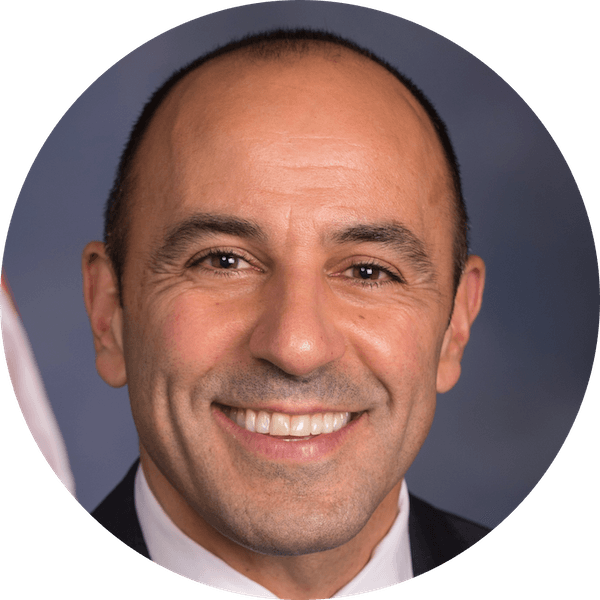
Jimmy PanettaD-CA



+156
160 cosponsors
+1 this monthReferred to the House Committee on Ways and Means.
Feb 13, 2025
HouseTaxation
Trending Right Now
Bills gaining momentum across Congress
H.R. 1502Surging+43
North Platte Canteen Congressional Gold Medal Act

Adrian SmithR-NE




+298
302 cosponsors
+43 this monthReferred to the House Committee on Financial Services.
Feb 21, 2025
HouseArmed Forces and National Security
H.R. 3277Surging+13
Ensuring Lasting Smiles Act

Neal DunnR-FL




+223
227 cosponsors
+13 this monthReferred to the Committee on Energy and Commerce, and in addition to the Committees on Education and Workforce, and Ways and Means, for a period to be subsequently determined by the Speaker, in each case for consideration of such provisions as fall within the jurisdiction of the committee concerned.
May 8, 2025
HouseHealth
H.R. 5490Active+2
Dismantle Foreign Scam Syndicates Act

Jefferson ShreveR-IN



+70
74 cosponsors
+2 this monthReceived in the Senate and Read twice and referred to the Committee on Foreign Relations.
Nov 19, 2026
HouseInternational Affairs
Tracking Taxation in Congress? Monitor bills, track cosponsor momentum, and launch advocacy campaigns — all from one advocacy platform.