S. 2938: Artificial Intelligence Risk Evaluation Act of 2025
Sponsor

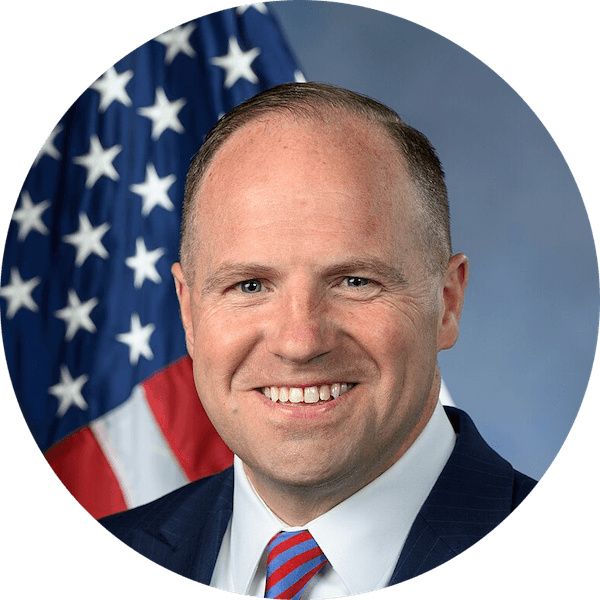
Josh Hawley
Republican · MO
Frontier AI would face a federal safety test before release
Why it matters
The most powerful AI models would have to pass government testing at the Department of Energy before they could ship, and companies that skip it would face fines of at least $1,000,000 a day. The bill even tells the government to study nationalizing AI if a system starts looking like superintelligence.
S. 2938, the Artificial Intelligence Risk Evaluation Act of 2025, puts the Department of Energy in charge of stress-testing the most powerful AI systems before they reach the public. The Secretary of Energy would have 90 days after the bill becomes law to stand up an Advanced Artificial Intelligence Evaluation Program.
The program only targets the frontier. The bill defines a covered "advanced" system as one trained with more than 10^26 computing operations — a threshold aimed at the largest models, not everyday apps or smaller open models. The Secretary could later propose a new threshold, but it can't take effect unless Congress passes a joint resolution approving it.
The core obligation is blunt. If you build a covered system, you have to participate in the program and turn over what the government asks for: the underlying code, the training data, the model weights, the interface engine, and detailed architecture information. And you can't deploy the model until you comply. "Deploy" is defined broadly — selling it, providing API access, or releasing it open-source all count.
The testing itself goes well beyond a checklist. It includes classified evaluations, blind model tests, independent third-party assessments, and red-teaming meant to match or exceed real-world jailbreaking. The program is specifically directed to assess whether a system could reach "artificial superintelligence" — which the bill defines as AI that can run autonomously for long stretches, match or beat humans across most tasks, and potentially rewrite its own code to slip human control.
The risks the program hunts for are spelled out as "adverse AI incidents": loss-of-control scenarios, weaponization by foreign adversaries or terrorist groups, threats to critical infrastructure, erosion of civil liberties and labor markets, and "scheming behavior" where a model deceives its operators or hides what it can do. Within 360 days, the Secretary has to send Congress a permanent oversight framework — covering everything from licensing to monitoring AI hardware and cloud usage — and update it at least once a year. The whole program sunsets 7 years after enactment unless Congress renews it.
Bill Progress
Latest Action · Sep 30, 2026
Committee on Homeland Security and Governmental Affairs. Hearings held.
S. 2938 Bill Summary
What S. 2938 actually does.
No release until your model passes federal testing
A covered developer can't deploy an advanced AI system in interstate or foreign commerce until it complies with the program. "Deploy" includes selling, providing access, or releasing the system open-source.
$1,000,000-a-day fine for skipping the program
A developer that refuses to participate, or deploys a covered system without complying, faces a fine of not less than $1,000,000 for each day the violation continues.
Only frontier models are covered
The rules apply to systems trained with more than 10^26 computing operations, a threshold set at the largest models. The Secretary could propose a different threshold, but it takes effect only if Congress approves it by joint resolution.
Developers hand over code, weights, and training data
On request, covered developers must give the Department of Energy the underlying code, training data, model weights, interface engine, and detailed architecture information for the system.
The program studies superintelligence — and how to contain it
The program must assess whether a system could reach artificial superintelligence, develop containment and mitigation protocols, and propose oversight options for extreme cases, including potential nationalization.
DOE stands it up in 90 days, reports to Congress in 360
The Secretary of Energy must establish the program within 90 days of enactment and send Congress a permanent oversight framework within 360 days, updated at least once a year. The program ends after 7 years unless Congress renews it.
Who benefits from S. 2938?
National security agencies
They would get a formal federal program for testing the most powerful AI against risks the bill names directly — weaponization by foreign adversaries or terrorist organizations, threats to critical infrastructure, and loss-of-control scenarios.
Workers worried about AI disruption
The bill counts significant erosion of labor markets and economic competition as an "adverse AI incident," which means the program has to evaluate those harms, not just safety failures.
Civil liberties advocates
Significant erosion of civil liberties is listed as a reportable risk, so it has to be tested for, planned around, and reported to Congress.
Congress
Lawmakers would receive a detailed oversight framework within 360 days and at least yearly updates for the life of the program, giving them a steady stream of empirical data on frontier AI for up to 7 years.
Who is affected by S. 2938?
Frontier AI developers
Companies that design, code, produce, own, or substantially modify a system above the 10^26-compute threshold would have to enroll in the program and turn over their code, weights, and training data on request.
Open-source AI publishers
The bill defines "deploy" to include open-source release, so publishing a covered model openly would trigger the same compliance rules as selling it.
Compute and cloud providers
The required framework plan must propose continuous monitoring of AI hardware usage and cloud-computing deployments, signaling future scrutiny for the companies that supply the infrastructure.
Developers of highly autonomous systems
Projects pushing toward systems that can act autonomously, match human cognition across most tasks, or self-modify would draw the closest attention, since the program is built to assess exactly those capabilities.
S2938 Legislative Journey
Committee Action
Sep 30, 2026
Committee on Homeland Security and Governmental Affairs. Hearings held.
Committee Action
Sep 29, 2025
Read twice and referred to the Committee on Commerce, Science, and Transportation.
About the Sponsor
Josh Hawley
Republican, MO · 7 years in Congress
Committees: Homeland Security and Governmental Affairs, Small Business and Entrepreneurship, the Judiciary
View full profile →
Cosponsors (2)
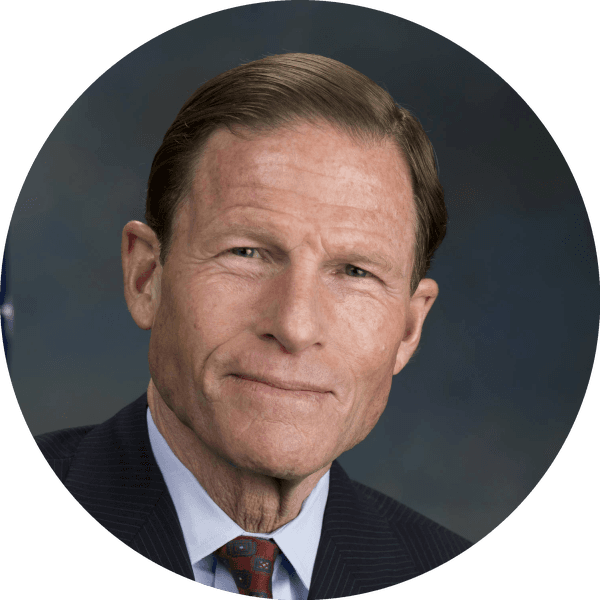
This bill has 2 cosponsors: 1 Democrat, 1 Republican, reflecting bipartisan support. Cosponsors represent 2 states: Connecticut, Tennessee.
Committee Sponsors
Homeland Security and Governmental Affairs Committee
1 of 15 committee members cosponsored

Commerce, Science, and Transportation Committee
1 of 28 committee members cosponsored

21 Republicans across these committees haven't cosponsored yet. Mobilize their constituents
S. 2938 Quick Facts

- Committee
- Homeland Security and Governmental Affairs
- Chamber
- Senate
- Policy
- Science, Technology, Communications
- Introduced
- Sep 29, 2025
Committee on Homeland Security and Governmental Affairs. Hearings held.
Sep 30, 2026
Official Sources
The official Congress.gov page tracking the Artificial Intelligence Risk Evaluation Act of 2025, its sponsors, and its status in committee.
The official government publishing record for the introduced text of the bill, in PDF, text, and XML formats.
The bill puts the Department of Energy in charge of testing frontier AI; this is DOE's hub for its AI work, including responsible-AI and adversarial testing.
DOE's published AI strategy, the framework the agency would build on to stand up the Advanced Artificial Intelligence Evaluation Program.
The bill's 'adverse AI incident' definition borrows its meaning of critical infrastructure from this statute.
The bill defines 'foreign terrorist organization' by reference to this statute, which authorizes the Secretary of State to make such designations.
S. 2938 Common Questions
What AI models would S. 2938 actually cover?
Only the largest. S. 2938 covers "advanced" systems trained with more than 10^26 computing operations — a threshold aimed at frontier models, not everyday apps or smaller open models. The Secretary of Energy could propose a new threshold, but Congress has to approve it.
Could the government block an AI model from launching?
Yes. Under S. 2938, no one can deploy a covered advanced AI system in interstate or foreign commerce until they've complied with the testing program. That covers selling it, giving API access, or releasing it open-source.
How big is the fine for skipping the program?
S. 2938 sets the penalty at not less than $1,000,000 for each day a developer is in violation — either refusing to participate or deploying a covered model without complying.
Does S. 2938 apply to open-source AI?
Yes. The bill defines "deploy" to include releasing a model open-source, so publishing a covered advanced AI system openly triggers the same compliance rules as selling it.
What would AI developers have to hand over to the Department of Energy?
On request, covered developers must provide their underlying code, the data used to train the model, the model weights, the interface engine, and detailed information about the training and architecture.
Does S. 2938 really let the government consider nationalizing AI?
Yes. The bill directs the Department of Energy to develop oversight options for extreme cases — including potential nationalization — if a system seems likely to reach artificial superintelligence.
What counts as an "adverse AI incident"?
S. 2938 defines it as loss-of-control scenarios, weaponization by foreign adversaries or terrorist groups, threats to critical infrastructure, erosion of civil liberties or labor markets, or "scheming behavior" — a model deceiving its operators or hiding what it can do.
When would the program start, and does it expire?
The Department of Energy would have 90 days after enactment to launch the program and 360 days to send Congress a permanent oversight framework, updated yearly. The whole program sunsets 7 years after enactment unless Congress renews it.
Based on S. 2938 bill text
S. 2938 Bill Text
“To require the Secretary of Energy to establish the Advanced Artificial Intelligence Evaluation Program, and for other purposes.”
Source: U.S. Government Publishing Office
Get notified when S. 2938 moves
Committee votes, floor action, cosponsor changes — straight to your inbox.
Bill alerts + Legisletter's monthly briefing. Unsubscribe anytime.
Science, Technology, Communications Bills
9 related bills we're tracking
AM Radio for Every Vehicle Act of 2025



Received in the Senate. Read twice. Placed on Senate Legislative Calendar under General Orders. Calendar No. 622.
Sep 16, 2026
Scientific Integrity Act



Referred to the House Committee on Science, Space, and Technology.
Feb 6, 2025
Kids Online Safety Act

Committee on Commerce, Science, and Transportation. Ordered to be reported with an amendment in the nature of a substitute favorably.
Aug 5, 2026
Sunshine Protection Act of 2025



Received in the Senate and Read twice and referred to the Committee on Commerce, Science, and Transportation.
Jul 15, 2026
GUARDRAILS Act



Referred to the Committee on Energy and Commerce, and in addition to the Committee on the Judiciary, for a period to be subsequently determined by the Speaker, in each case for consideration of such provisions as fall within the jurisdiction of the committee concerned.
Mar 20, 2026
Artificial Intelligence Civil Rights Act of 2025





Referred to the Committee on Energy and Commerce, and in addition to the Committee on Oversight and Government Reform, for a period to be subsequently determined by the Speaker, in each case for consideration of such provisions as fall within the jurisdiction of the committee concerned.
Dec 2, 2025
TAKE IT DOWN Act


Became Public Law No: 119-12.
May 19, 2025
States' Right to Regulate AI Act





Read twice and referred to the Committee on Commerce, Science, and Transportation.
Dec 17, 2025
ACERO Act



Received in the Senate and Read twice and referred to the Committee on Commerce, Science, and Transportation.
Feb 24, 2026
Trending Right Now
Bills gaining momentum across Congress
North Platte Canteen Congressional Gold Medal Act



Referred to the House Committee on Financial Services.
Feb 21, 2025
Fit to Serve Act



Referred to the House Committee on Armed Services.
May 21, 2025
ASAP Act


Ordered to be Reported in the Nature of a Substitute by the Yeas and Nays: 40 - 0.
Sep 16, 2026
Tracking Science, Technology, Communications in Congress? Monitor bills, track cosponsor momentum, and launch advocacy campaigns — all from one advocacy platform.