S. 2666: Foreign Robocall Elimination Act
Sponsor
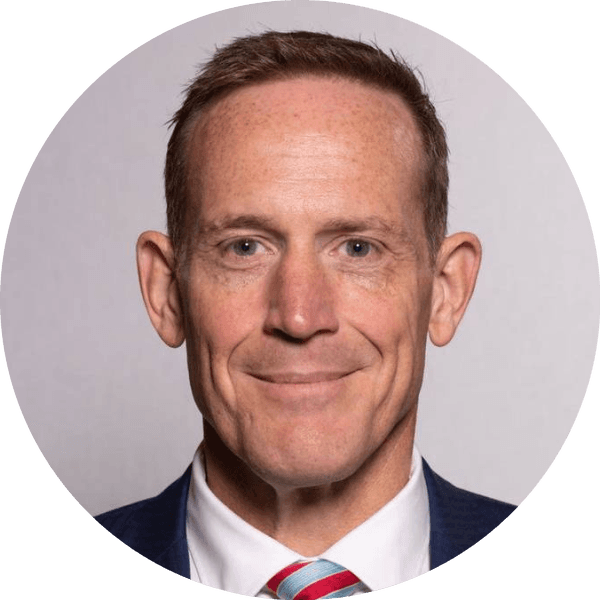
Ted Budd
Republican · NC
Scam calls from overseas need a paper trail and a price
Why it matters
A voice provider that can't prove it is a real, accountable business could have to post up to $100,000 before it can carry calls into the U.S. network. S. 2666 passed the Senate by unanimous consent and now sits in the House. It would also let the FCC publicly name carriers that stonewall scam-call investigations, and send a federal taskforce after the foreign routes those calls take.
Every robocall that reaches your phone got there through voice providers that agreed to carry it. When investigators follow a scam call backward — a process called traceback — they often hit a carrier that won't answer, or a small reseller with no real address that vanishes once it's caught. S. 2666, the Foreign Robocall Elimination Act, targets those gaps.
The first piece is a price of entry. Any provider that wants to carry calls in the U.S. has to file a certification with the FCC's Robocall Mitigation Database. Under this bill, a provider that can't show legitimate ongoing operations, real regulatory oversight, or the ability to pay FCC fines could be required to post a bond of up to $100,000 before it files. Established carriers are meant to be exempt: the FCC has to create blanket exemptions for providers registered with the agency, licensed by a state utility commission, or publicly traded.
The second piece is exposure. The FCC, or the industry group that runs traceback, could publish a list of providers that refuse to cooperate with investigations or that carry substantial amounts of unlawful robocalls. The FCC could then act against them based on that list. The traceback group would also be shielded from lawsuits over receiving, sharing, or publishing call records and provider names, which removes a legal risk that can make it cautious about naming carriers.
The third piece looks abroad. Within 270 days, the FCC has to set up a temporary taskforce with the FTC and the Justice Department, plus seven private-sector members. It gets 360 days to tell Congress which countries send the most scam calls into the U.S., how much money and how many identities Americans lose to them each year, and whether the Justice Department should have an office dedicated to robocall enforcement.
The bill doesn't block any calls on its own; what it changes is how easy it is for a provider to stay anonymous while carrying them. It also makes one small administrative change: the FCC would pick the official traceback group once every three years instead of every year.
Bill Progress
Latest Action · Aug 10, 2026
Passed the Senate, received in House
S. 2666 Bill Summary
What S. 2666 actually does.
Unproven carriers pay up to $100,000 to get in
The FCC must write rules requiring a bond of up to $100,000 from providers filing Robocall Mitigation Database certifications when the agency decides it is needed to protect the database. The bond applies to providers that cannot show legitimate ongoing operations, adequate regulatory oversight, or the ability to pay fines.
Established providers are exempt
The FCC must create categorical exemptions and weigh whether a provider is registered with the FCC and pays into universal service, holds a state utility license, is publicly traded, or otherwise looks like an established business. The bill tells the FCC to minimize burdens on compliant, regulated providers.
Carriers that stonewall investigators can be named
The FCC, or the traceback consortium in consultation with the FCC, may publish a list of providers that refuse to take part in traceback or are found to originate or carry substantial amounts of unlawful robocalls. The FCC may take enforcement action based on that information.
Traceback investigators can't be sued for naming names
No lawsuit could be brought against the registered traceback consortium for receiving, sharing, or publishing call detail records, provider names, or information about the callers behind suspected illegal or spoofed calls.
A taskforce maps where foreign scam calls come from
Within 270 days of enactment, the FCC, after consulting the FTC and the Attorney General, must set up a taskforce of federal agency representatives and seven private-sector members: three anti-robocall experts, one traceback consortium representative, one telemarketer, one business or nonprofit that calls customers for other reasons, and one consumer advocate.
Congress gets answers on losses and enforcement
Within 360 days of forming, the taskforce must report on which countries send the most unlawful robocalls, annual financial and identity-theft losses, whether STIR/SHAKEN caller-ID authentication works on foreign calls, whether DOJ needs a dedicated robocall office, and whether traceback results should be made public. It dissolves 90 days after reporting.
Traceback group chosen every three years
The FCC would seek applications for the official traceback consortium once every three years instead of every year.
Who benefits from S. 2666?
Anyone who picks up a call from a number they don't recognize
The bill's target is the scam call that looks local but starts overseas. Making anonymous carriers post a bond or face public listing is meant to shrink the number of routes those calls can take to reach you.
Older Americans and others targeted by impostor scams
The taskforce must estimate how much money and how many stolen identities Americans lose each year to robocalls from abroad, a figure Congress would then have on record when deciding on further action.
The traceback consortium and investigators
The group that follows scam calls back to their source would get legal protection for sharing and publishing what it finds, and the FCC could act directly on the providers it identifies.
Established carriers
Registered, licensed, or publicly traded providers are meant to be exempt from the bond, while shell competitors that carry illegal traffic would face new costs.
Who is affected by S. 2666?
Small and newer voice providers
A provider without state licensing, FCC registration, or a clear track record could have to post up to $100,000 before filing its certification. How many legitimate small carriers get caught depends on the exemptions the FCC writes.
Carriers that don't answer traceback requests
They could be named on a public list and face FCC enforcement based on it. Many foreign-originated calls enter the U.S. through gateway providers, which would feel this most.
Providers named in traceback records
A provider that believes it was wrongly identified could not sue the consortium over publishing that information, though it could still contest any FCC enforcement action.
Telemarketers and businesses that call customers
Each gets one seat on the taskforce. Any recommendations on stricter blocking or authentication could later affect how their legitimate calls get through.
S2666 Legislative Journey
House: Action Taken
Aug 10, 2026
Held at the desk.
Passed 4412-4414
Aug 3, 2026
Passed Senate with an amendment by Unanimous Consent. (consideration: CR S4412-4414; text: CR S4412-4414)
+1 more action this day
Committee Action
Jun 1, 2026
Committee on Commerce, Science, and Transportation. Reported by Senator Cruz with an amendment in the nature of a substitute. With written report No. 119-122.
Passed Committee
Oct 21, 2025
Committee on Commerce, Science, and Transportation. Ordered to be reported with an amendment in the nature of a substitute favorably.
Committee Action
Aug 1, 2025
Read twice and referred to the Committee on Commerce, Science, and Transportation.
About the Sponsor
Ted Budd
Republican, NC · 9 years in Congress
Committees: Joint Economic Committee, Small Business and Entrepreneurship, Commerce, Science, and Transportation
View full profile →
Cosponsors (3)
This bill has 3 cosponsors: 2 Democrats, 1 Republican, reflecting bipartisan support. Cosponsors represent 3 states: Georgia, Ohio, Vermont.
Committee Sponsors
Commerce, Science, and Transportation Committee
0 of 28 committee members cosponsored
No committee members have cosponsored this bill
15 Republicans across this committee haven't cosponsored yet. Mobilize their constituents
What laws does S. 2666 change?
2 changes
Sections Amended
Section 13(d) of Pallone-Thune TRACED Act (Public Law 116-105; 133 Stat. 3287)
adding at the end the following: ``(3) Immunity for receiving, sharing, and publishing trace back information
Section 13(e) of Pallone-Thune TRACED Act (Public Law 116-105; 133 Stat. 3287)
read as follows: ``(e) List of Voice Service Providers
S. 2666 Quick Facts

- Committee
- Commerce, Science, and Transportation
- Chamber
- Senate
- Policy
- Science, Technology, Communications
- Introduced
- Aug 1, 2025
Passed the Senate, received in House
Aug 10, 2026
Official Sources
Bill text, cosponsors, and the full action history, including Senate passage by unanimous consent and the House hold at the desk.
CBO finds the net cost to the FCC negligible and flags the $100,000 bond and the traceback lawsuit shield as private-sector mandates.
The official engrossed text of the bill as it passed the Senate and went to the House.
The 2019 law that set up the traceback consortium. S. 2666 amends its section 13 to add the lawsuit shield, the public provider list, and the three-year selection cycle.
The federal robocall statute. The bill defines an unlawful robocall as a call that violates subsection (b) or (e) of this section.
The FTC is one of the three agencies that would jointly appoint the taskforce. This page explains how its robocall scams work and where to report them.
S. 2666 Common Questions
What is the Foreign Robocall Elimination Act?
S. 2666 targets scam calls that start overseas. It creates a federal taskforce on foreign robocalls, lets the FCC publicly name carriers tied to illegal call traffic, and lets the FCC require some unproven providers to post up to $100,000 before carrying U.S. calls.
Has S. 2666 passed?
It passed the Senate by unanimous consent on August 3, 2026. The House received it on August 10 and is holding it at the desk, meaning it could get a floor vote without first going through committee. It becomes law only if the House passes it and the President signs it.
Which phone providers would have to post a $100,000 bond?
Only providers that can't show legitimate ongoing operations, real regulatory oversight, or the ability to pay fines. The FCC must exempt established carriers, weighing FCC registration, state utility licenses, and whether the company is publicly traded. Up to $100,000 is a ceiling; the FCC sets the actual amount.
Will this bill stop robocalls on my phone?
Not directly. It doesn't block calls or change your carrier's filters. It makes it costlier and riskier for anonymous providers to carry scam traffic into the U.S., which is where many of these calls enter.
Could the FCC publicly name carriers that help scam calls?
Yes. The FCC, or the industry traceback group working with it, could publish a list of providers that refuse to help trace calls or that carry substantial amounts of unlawful robocalls, and the FCC could take enforcement action based on it.
What is robocall traceback, and what changes for it?
Traceback follows a scam call hop by hop back to the carrier that let it in. An FCC-designated industry group does this work. The bill shields that group from lawsuits over sharing or publishing call records and provider names, and the FCC would re-select the group every three years instead of yearly.
What would the robocall taskforce have to find out?
Which countries send the most illegal robocalls into the U.S., how much money and how many identities Americans lose to them each year, whether STIR/SHAKEN caller-ID authentication works on foreign calls, and whether the Justice Department needs a dedicated robocall enforcement office.
Who sits on the taskforce, and how long does it last?
Federal agency representatives plus seven private-sector members, including a consumer advocate, a telemarketer, and the traceback group. The FCC has 270 days to form it, it has 360 days to report, and it ends 90 days after reporting.
Based on S. 2666 bill text
S. 2666 Bill Text
“To direct the Federal Communications Commission to establish a taskforce on unlawful robocalls, and for other purposes.”
Source: U.S. Government Publishing Office
Get notified when S. 2666 moves
Committee votes, floor action, cosponsor changes — straight to your inbox.
Bill alerts + Legisletter's monthly briefing. Unsubscribe anytime.
Science, Technology, Communications Bills
9 related bills we're tracking
AM Radio for Every Vehicle Act of 2025


Received in the Senate. Read twice. Placed on Senate Legislative Calendar under General Orders. Calendar No. 622.
Sep 16, 2026
Scientific Integrity Act

Referred to the House Committee on Science, Space, and Technology.
Feb 6, 2025
Kids Online Safety Act

Committee on Commerce, Science, and Transportation. Ordered to be reported with an amendment in the nature of a substitute favorably.
Aug 5, 2026
Sunshine Protection Act of 2025

Received in the Senate and Read twice and referred to the Committee on Commerce, Science, and Transportation.
Jul 15, 2026
GUARDRAILS Act


Referred to the Committee on Energy and Commerce, and in addition to the Committee on the Judiciary, for a period to be subsequently determined by the Speaker, in each case for consideration of such provisions as fall within the jurisdiction of the committee concerned.
Mar 20, 2026
Artificial Intelligence Civil Rights Act of 2025


Referred to the Committee on Energy and Commerce, and in addition to the Committee on Oversight and Government Reform, for a period to be subsequently determined by the Speaker, in each case for consideration of such provisions as fall within the jurisdiction of the committee concerned.
Dec 2, 2025
TAKE IT DOWN Act
Became Public Law No: 119-12.
May 19, 2025
States' Right to Regulate AI Act
Read twice and referred to the Committee on Commerce, Science, and Transportation.
Dec 17, 2025
ACERO Act

Received in the Senate and Read twice and referred to the Committee on Commerce, Science, and Transportation.
Feb 24, 2026
Trending Right Now
Bills gaining momentum across Congress
North Platte Canteen Congressional Gold Medal Act


Referred to the House Committee on Financial Services.
Feb 21, 2025
ASAP Act
Ordered to be Reported in the Nature of a Substitute by the Yeas and Nays: 40 - 0.
Sep 16, 2026
Fit to Serve Act
Referred to the House Committee on Armed Services.
May 21, 2025
Tracking Science, Technology, Communications in Congress? Monitor bills, track cosponsor momentum, and launch advocacy campaigns — all from one advocacy platform.