S. 1216: Taiwan Allies Fund Act
Sponsor

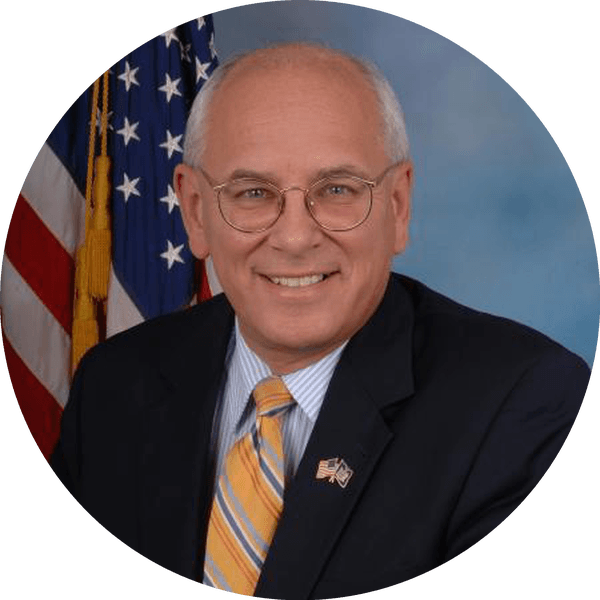
Chris Van Hollen
Democrat · MD
$120M to keep Taiwan's allies from defecting
Why it matters
Eleven countries dropped Taiwan for the People's Republic of China between 2013 and 2024, according to the bill's findings — from Panama and the Dominican Republic to Nauru. S. 1216 would put up $120,000,000 over three years to help the holdouts resist that pressure and stay with Taiwan.
S. 1216, the Taiwan Allies Fund Act, sets up a U.S. fund for countries that stick with Taiwan and get pressured for it. The bill's findings describe Taiwan as a democracy of more than 23,000,000 people and name 11 countries — including Panama, El Salvador, the Solomon Islands, Honduras, and most recently Nauru in 2024 — that switched recognition from Taiwan to the People's Republic of China over the past decade.
The money is capped and targeted. Congress would authorize $40,000,000 a year for 2026, 2027, and 2028 — $120,000,000 total if every year is funded. No single country could draw more than $5,000,000 in a year, so even at the ceiling the fund would have to spread across at least eight countries annually.
To qualify, a country has to clear all three tests. It has to keep official ties with Taiwan or meaningfully deepen unofficial ones, face pressure from the People's Republic of China because of that relationship, and lack the economic or political muscle to push back on its own.
The State Department gets wide latitude on how to spend it. The fund could pay for health projects, prop up independent media and civil society, help countries move supply chains out of China, offer alternatives to Chinese development financing, push for Taiwan's seat at international organizations, or fund non-Chinese telecom and tech infrastructure.
The bill also wants Taiwan to chip in. The State Department would be expected to tell Taiwan it should provide comparable assistance, then report to Congress each year on how much Taiwan actually contributed and whether it matched the U.S. share.
Bill Progress
Latest Action · Feb 10, 2026
Placed on Senate floor schedule under General Orders. Calendar No. 321.
S. 1216 Bill Summary
What S. 1216 actually does.
$120,000,000 for countries under pressure over Taiwan
S. 1216 authorizes $40,000,000 a year for 2026 through 2028 from the Countering PRC Influence Fund, for up to $120,000,000 total if Congress fully funds it.
No country gets more than $5,000,000 a year
The bill caps support at $5,000,000 per country per fiscal year, which spreads the fund across multiple countries instead of concentrating it in one place.
Only countries facing Taiwan-related pressure qualify
A country must have ties with Taiwan, face pressure from the People’s Republic of China because of those ties, and lack the political or economic capacity to push back without U.S. help.
Funds can back media, health, supply chains, and tech alternatives
Money could support health projects, civil society and media, supply chain diversification, alternatives to Chinese financing, Taiwan’s participation in international bodies, and non-Chinese communications infrastructure.
State leads, with USAID and the American Institute in Taiwan
The Secretary of State would run the program in consultation with USAID, the American Institute in Taiwan, and other federal agencies.
Taiwan is expected to share the cost
The bill says the State Department should tell relevant Taiwan parties to provide commensurate assistance, then report to Congress on how much Taiwan contributed.
Congress gets annual scorecards for 3 years
Within 1 year of enactment, and annually for the next 2 years, the State Department would have to report funding amounts, goals, outcomes, and Taiwan’s share of support.
Who benefits from S. 1216?
Countries that still officially recognize Taiwan
Governments that keep formal diplomatic ties with Taiwan could get up to $5,000,000 a year if they are facing pressure from the People’s Republic of China and cannot absorb it alone.
Countries expanding unofficial ties with Taiwan
S. 1216 is not limited to formal allies. Countries that deepen unofficial relations with Taiwan could also qualify, which gives governments room to move closer to Taiwan without first making a full diplomatic break.
Taiwan’s shrinking circle of partners
The bill is designed to slow further diplomatic losses after 11 countries cut ties with Taiwan between 2013 and 2024, according to the bill’s findings.
Independent media, civil society, and local institutions
The fund can pay for resilience projects inside eligible countries, including support for media and nongovernmental groups the bill says are vulnerable to influence and propaganda from the People’s Republic of China.
Who is affected by S. 1216?
The State Department
State would have to decide which countries qualify, coordinate projects with USAID and the American Institute in Taiwan, encourage Taiwan to contribute, and send annual reports to Congress.
Taiwan officials and related institutions
The bill does not legally force Taiwan to match U.S. aid, but it says the State Department should push for comparable assistance and publicly assess whether Taiwan’s contribution was commensurate.
Countries seeking Chinese financing or infrastructure
Eligible governments could be offered alternatives to development financing, health projects, and communications infrastructure tied to the People’s Republic of China.
The People’s Republic of China
The bill is aimed at countries the bill says face coercion or pressure from the People’s Republic of China because of ties with Taiwan, and it funds alternatives to Chinese influence in those places.
Cost & Funding
Authorization
$40,000,000 a year for 2026, 2027, and 2028
- If Congress fully funds all 3 years, the total authorization is $120,000,000.
- Each country is capped at $5,000,000 per fiscal year.
- At the annual cap, $40,000,000 could cover up to 8 countries in a single year.
- Money comes from the Countering PRC Influence Fund.
- Funds stay available until spent.
- The bill says this new fund would not limit other U.S. foreign assistance outside the program.
S1216 Legislative Journey
Committee Action
Feb 10, 2026
Committee on Foreign Relations. Reported by Senator Risch with an amendment in the nature of a substitute. Without written report.
Passed Committee
Jan 29, 2026
Committee on Foreign Relations. Ordered to be reported with an amendment in the nature of a substitute favorably.
Committee Action
Mar 31, 2025
Read twice and referred to the Committee on Foreign Relations.
About the Sponsor
Chris Van Hollen
Democrat, MD · 23 years in Congress
Committees: Banking, Housing, and Urban Affairs, Foreign Relations, the Budget
View full profile →
Cosponsors (3)
This bill has 3 cosponsors: 2 Democrats, 1 Republican, reflecting bipartisan support. Cosponsors represent 3 states: Colorado, New Jersey, Utah.
Committee Sponsors
Foreign Relations Committee
1 of 22 committee members cosponsored

10 Democrats across this committee haven't cosponsored yet. Mobilize their constituents
S. 1216 Quick Facts



- Committee
- Foreign Relations
- Chamber
- Senate
- Policy
- International Affairs
- Introduced
- Mar 31, 2025
Placed on Senate floor schedule under General Orders. Calendar No. 321.
Feb 10, 2026
Official Sources
Official Congress.gov page for the Taiwan Allies Fund Act with bill text, status, and related actions.
The bill ties its implementation authorities to the Foreign Assistance Act of 1961, making this compilation the core statutory reference for how funds could be administered.
The bill cites 22 U.S.C. 2151 et seq. for the administrative authorities used to make the fund available as foreign assistance.
The bill’s findings cite the Taiwan Relations Act of 1979 (Public Law 96-8) as a foundation for U.S. policy toward Taiwan.
The bill’s findings directly reference the Taiwan Allies International Protection and Enhancement Initiative (TAIPEI) Act of 2019 (Public Law 116-135).
The committee that reported S. 1216 with a substitute amendment and one of the bill’s designated reporting committees.
S. 1216 Common Questions
How much money does S. 1216 provide?
It authorizes $40,000,000 a year for 2026, 2027, and 2028 — up to $120,000,000 total, but only if Congress actually appropriates the money each year.
Who can get money under S. 1216?
Countries that keep official ties with Taiwan or meaningfully strengthen unofficial ties can qualify if they also face PRC pressure because of that relationship and cannot respond effectively on their own.
Does a country need formal diplomatic ties with Taiwan to qualify?
No. S. 1216 also covers countries that have meaningfully strengthened unofficial relations with Taiwan, as long as they meet the other eligibility tests.
Is there a limit on how much one country can receive?
Yes. The bill caps aid at $5,000,000 per country per fiscal year, so the fund is meant to be spread across multiple partners.
What can the money be used for?
The fund could support health projects, independent media and civil society, supply chain shifts away from the PRC, alternatives to Chinese financing, Taiwan’s international participation, and non-PRC tech infrastructure.
Does S. 1216 require Taiwan to match U.S. funding?
Not formally. The bill says the State Department should tell relevant Taiwan parties to provide commensurate assistance, then report to Congress on what Taiwan contributed.
Why does the bill say this fund is needed?
The bill's findings cite 11 countries — from Panama to Nauru — that dropped Taiwan for the PRC between 2013 and 2024, and say others like Lithuania faced pressure over Taiwan ties.
Who would run the program and report back to Congress?
The Secretary of State would lead it with USAID, the American Institute in Taiwan, and other agencies. Reports would start within 1 year of enactment and continue annually for 2 more years.
Based on S. 1216 bill text
S. 1216 Bill Text
“To support Taiwan's international space, and for other purposes.”
Source: U.S. Government Publishing Office
Get notified when S. 1216 moves
Committee votes, floor action, cosponsor changes — straight to your inbox.
Bill alerts + Legisletter's monthly briefing. Unsubscribe anytime.
International Affairs Bills
9 related bills we're tracking
Enhanced Iran Sanctions Act of 2025



Motion to place bill on Consensus Calendar filed by Mr. Lawler.
Jan 12, 2026
United States-Israel Defense Partnership Act of 2025


Referred to the Committee on Armed Services, and in addition to the Committee on Foreign Affairs, for a period to be subsequently determined by the Speaker, in each case for consideration of such provisions as fall within the jurisdiction of the committee concerned.
Feb 12, 2025
West Bank Violence Prevention Act of 2025


Referred to the Committee on Foreign Affairs, and in addition to the Committee on the Judiciary, for a period to be subsequently determined by the Speaker, in each case for consideration of such provisions as fall within the jurisdiction of the committee concerned.
Apr 28, 2025
Global Respect Act



Referred to the Committee on Foreign Affairs, and in addition to the Committee on the Judiciary, for a period to be subsequently determined by the Speaker, in each case for consideration of such provisions as fall within the jurisdiction of the committee concerned.
Nov 19, 2025
Sanctioning Russia Act of 2025



Referred to the Committee on Foreign Affairs, and in addition to the Committees on the Judiciary, Financial Services, Ways and Means, and Oversight and Government Reform, for a period to be subsequently determined by the Speaker, in each case for consideration of such provisions as fall within the jurisdiction of the committee concerned.
Apr 1, 2025
International Human Rights Defense Act of 2025



Referred to the House Committee on Foreign Affairs.
Nov 17, 2025
Global Health, Empowerment and Rights Act


Referred to the House Committee on Foreign Affairs.
Jan 28, 2025
Pakistan Freedom and Accountability Act




Referred to the Committee on Foreign Affairs, and in addition to the Committee on the Judiciary, for a period to be subsequently determined by the Speaker, in each case for consideration of such provisions as fall within the jurisdiction of the committee concerned.
Sep 10, 2025
Baltic Security Assessment Act of 2025




Ordered to be Reported by the Yeas and Nays: 41 - 3.
Apr 22, 2026
Trending Right Now
Bills gaining momentum across Congress
America’s Olympic and Paralympic Games Commemorative Coins Act




Referred to the House Committee on Financial Services.
Jul 14, 2025
Fit to Serve Act


Referred to the House Committee on Armed Services.
May 21, 2025
ASAP Act


Ordered to be Reported in the Nature of a Substitute by the Yeas and Nays: 40 - 0.
Sep 16, 2026
Tracking International Affairs in Congress? Monitor bills, track cosponsor momentum, and launch advocacy campaigns — all from one advocacy platform.