H.R. 9125: Sectoral AI Governance Act of 2026
Sponsor
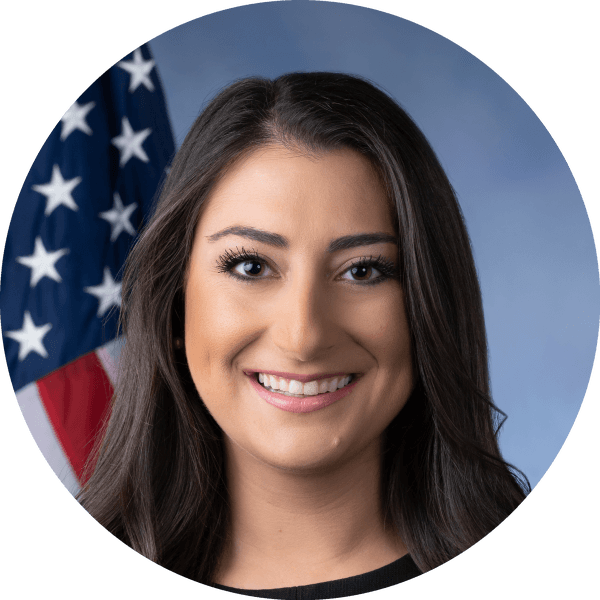
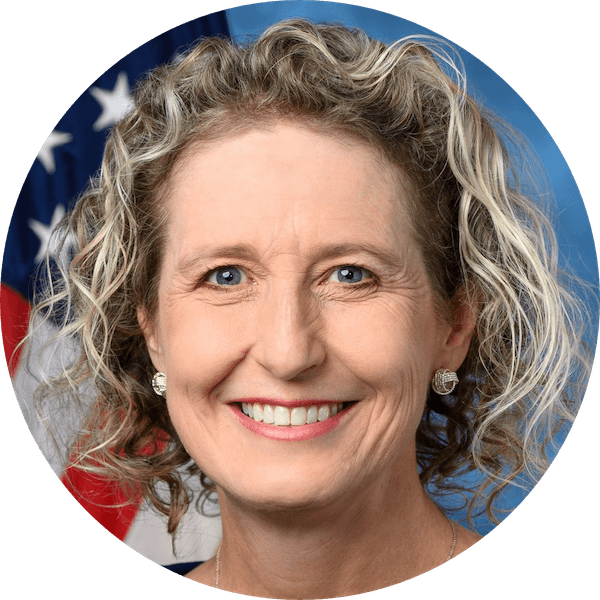
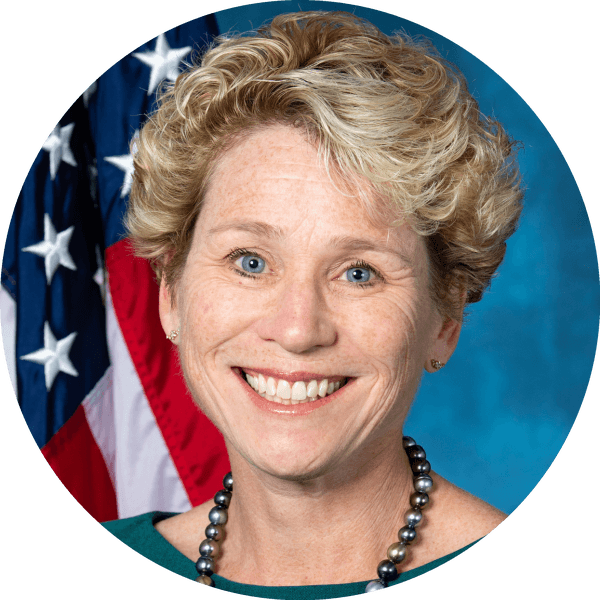
Sara Jacobs
Democrat · CA-51
Laws that bind people should bind their algorithms too
Why it matters
Software now screens job applicants, prices loans, and flags benefit claims, but most federal agencies have no explicit power to write rules for it. H.R. 9125 gives every agency that enforces a federal law the authority to regulate AI tools likely to materially contribute to breaking that law, and makes violating those rules a violation of the law itself.
H.R. 9125, the Sectoral AI Governance Act of 2026, starts from a premise its own findings state plainly: existing federal laws may already prohibit certain harmful uses of AI, but uncertainty about how those laws apply to automated systems may be getting in the way of clear rules.
The fix is a single grant of power. Any agency that enforces a federal law could write rules for an AI or algorithmic system once it finds, based on evidence, that the system is likely to materially contribute to violating that law. Breaking one of those rules would count as breaking the underlying law, with the same administrative and civil enforcement behind it.
The bar is meant to be meaningful. "Materially contribute" means playing a significant role in a violation, not minimal or incidental support. And the systems covered are ones that make a decision, carry one out, or help make one in a way that can change the result. Web hosting, networking, data storage, caching, and cybersecurity tools are excluded.
Rules would go through standard public notice and comment, even for agencies whose own statutes normally require a longer process. Before proposing a rule, an agency generally must publish an early notice at least 60 days ahead, describing the system, the law involved, and the evidence it wants from the public. It must check with the White House regulatory office for overlap with other agencies' rules, and consult the Office of Science and Technology Policy and the National Institute of Standards and Technology on the technical side.
Agencies would also have to weigh whether a rule could disrupt a public benefit or government service, including one run by a contractor, and limit unnecessary harm to its delivery. Every rule must be reviewed within 3 years and at least every 5 years after that, and amended or repealed if it no longer fits.
The bill leaves states free to keep writing their own AI laws, unless a state rule conflicts with this act or a rule issued under it.
Bill Progress
Latest Action · Jun 3, 2026
Referred to the Judiciary, and in addition to the Committee on Oversight and Government Reform, for a period to be subsequently determined by the Speaker, in each case for consideration of such provisions as fall within the jurisdiction of the committee concerned. for review
H.R. 9125 Bill Summary
What H.R. 9125 actually does.
Regulators can write rules for AI that breaks the laws they enforce
The head of any agency with authority to enforce a federal law could issue rules governing an algorithmic decision-making system if the agency finds, based on available evidence, that the system is likely to materially contribute to violations of that law. Rules must aim at mitigating those violations.
Breaking an AI rule means breaking the law behind it
A violation of one of these rules would be treated as a violation of the underlying federal law for the agency's administrative and civil enforcement. Companies would face the same consequences that law already carries.
The public gets 60 days' warning before a rule is proposed
Agencies generally must publish an advance notice at least 60 days before a formal proposal, describing the system or category of systems, the law involved, and the evidence and comments sought. They can skip it if an earlier rulemaking record or prior advance notice is already sufficient.
Agencies must check each other's work
Before proposing a rule, agencies consult the Office of Information and Regulatory Affairs on conflicts with other agencies' AI rules, and consult the Office of Science and Technology Policy and NIST on technical evaluation. The Office of Management and Budget must issue guidance to keep rules consistent across government.
Public benefits are shielded from disruption
When a covered system is used to run a government service or public benefit, including through a contractor, the agency must consider that and, where practicable, limit unnecessary effects on the service's delivery, accessibility, timeliness, integrity, or continuity.
Rules get rechecked as the technology changes
Each rule must be reviewed within 3 years of being issued and at least every 5 years after, and repealed or amended if it is no longer appropriate or tailored. A rule finalized in 2027 would face review by 2030, then again by 2035 at the latest.
Agencies report every two years, including when they choose not to act
Agencies that write rules must publicly report every 2 years on staffing, enforcement actions, penalty ranges, and comments on discriminatory effects. Agencies that identify a risky AI use but decline to regulate must report why and what evidence they relied on.
Who benefits from H.R. 9125?
Job seekers, borrowers, tenants, and patients
If an automated system that decides whether you get hired, approved, housed, or covered is found likely to materially contribute to violating a federal law, the agency enforcing that law could write rules specifically for it, backed by that law's existing penalties.
People who depend on public benefits
Anyone whose benefits run through an automated system, from eligibility screening to claims processing, gains a requirement that agencies consider and limit unnecessary disruption to those services when they regulate the software behind them.
Enforcement agencies
Agencies that already police lending, hiring, housing, health, and consumer protection would get explicit authority to write AI rules without waiting for Congress to pass a separate statute for each area, along with coordinated technical support from NIST and OSTP.
States writing their own AI laws
State legislatures and attorneys general keep their authority to regulate automated decision systems. Only state rules that conflict with this act or a rule under it would give way.
Who is affected by H.R. 9125?
Companies that use AI to make decisions
Businesses using algorithmic tools in regulated areas could face new rules from any agency that enforces a law those tools touch. A violation would carry the penalties of the underlying law, not a separate, smaller AI penalty.
AI developers and vendors
Firms whose products make or shape decisions fall within the definition. Providers of only hosting, networking, storage, caching, or cybersecurity are excluded, as long as their tools do not score, evaluate, or influence outcomes.
Businesses operating nationally
Different agencies could write different AI rules under their own laws, alongside state laws that remain in force. OMB guidance and mandatory consultation are meant to limit conflicts, but a company could still answer to several regulators for the same tool.
Federal agencies
Agencies that use the authority take on new procedural work: advance notices, interagency consultation, recurring reviews, and public reports every 2 years. Agencies that spot a risky AI use and decline to act must explain that choice publicly too.
HR9125 Legislative Journey
House: Committee Action
Jun 3, 2026
Referred to the Committee on the Judiciary, and in addition to the Committee on Oversight and Government Reform, for a period to be subsequently determined by the Speaker, in each case for consideration of such provisions as fall within the jurisdiction of the committee concerned.
About the Sponsor
Sara Jacobs
Democrat, California's 51st congressional district · 5 years in Congress
Committees: Foreign Affairs, Armed Services
View full profile →
Cosponsors (3)
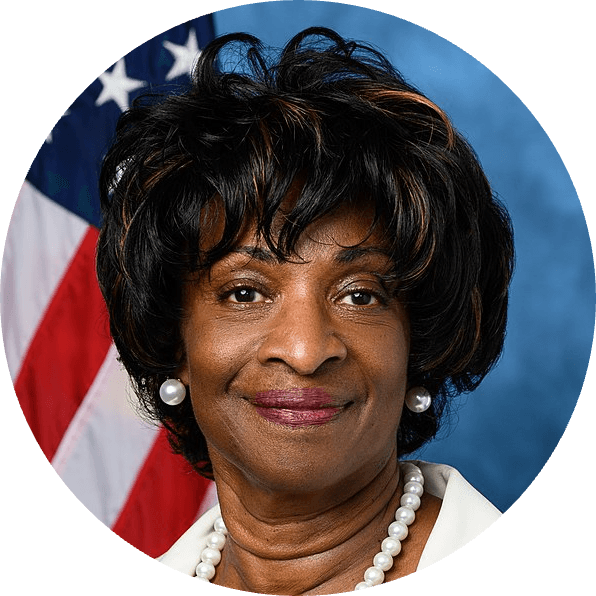
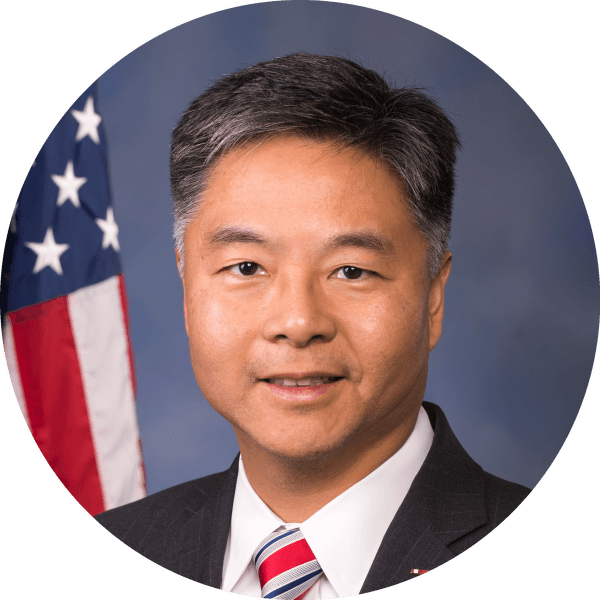
All 3 cosponsors are Democrats. Cosponsors represent 3 states: California, North Carolina, Virginia.
Committee Sponsors
Oversight and Government Reform Committee
1 of 47 committee members cosponsored


37 Democrats across these committees haven't cosponsored yet. Mobilize their constituents
H.R. 9125 Quick Facts

- Committee
- Oversight and Government Reform
- Chamber
- House
- Policy
- Government Operations and Politics
- Introduced
- Jun 3, 2026
Referred to the Judiciary, and in addition to the Committee on Oversight and Government Reform, for a period to be subsequently determined by the Speaker, in each case for consideration of such provisions as fall within the jurisdiction of the committee concerned. for review
Jun 3, 2026
Official Sources
Official bill page for the Sectoral AI Governance Act of 2026 with text, sponsors, cosponsors, and committee referrals.
The standard notice-and-comment process the bill requires every agency to use when writing AI rules, even where its own statute calls for a longer process.
The National AI Initiative Act definition of artificial intelligence that the bill cross-references.
Explains the Office of Information and Regulatory Affairs, which agencies must consult on conflicts with other agencies' AI rules and which issues consistency guidance under the bill.
NIST's framework for evaluating AI system trustworthiness, relevant to the technical consultation agencies must seek before proposing a rule.
NIST's AI research, testing, and standards work, the technical expertise the bill directs agencies to draw on.
Who is lobbying on H.R. 9125?
2 organizations lobbying on this bill
NATIONAL ASSOCIATION OF LONG TERM HOSPITALS | 2 |
THE ASSOCIATION FOR THE ADVANCEMENT OF ARTIFICIAL INTELLIGENCE | 1 |
Showing 1-2 of 2 organizations
H.R. 9125 Common Questions
What does H.R. 9125, the Sectoral AI Governance Act, do?
It lets any federal agency that enforces a law write rules for AI or algorithmic systems likely to materially contribute to violating that law. Breaking one of those rules counts as breaking the underlying law. It does not create a new AI agency.
What kinds of AI systems would H.R. 9125 cover?
Software using statistics, machine learning, AI, or other data processing to make or carry out a decision, or to help make one when it can change the outcome. Think hiring screens, credit models, or eligibility tools.
Does the bill regulate web hosting, cloud storage, or cybersecurity tools?
No. Web hosting, domain registration, networking, caching, data storage, and cybersecurity are excluded, as long as they do not score, evaluate, or influence a decision.
What penalties would a company face for breaking an AI rule?
Whatever the underlying federal law already carries. The bill treats a violation of an AI rule as a violation of the law the agency enforces, for administrative and civil enforcement. It creates no separate AI penalty.
How much does an AI system have to contribute before an agency can regulate it?
It has to be likely to play a significant role in bringing about or enabling a violation, based on evidence available to the agency. Minimal or incidental support unrelated to the violation does not count.
Would H.R. 9125 override state AI laws?
Generally no. States keep their power to regulate automated decision systems. A state rule gives way only if it conflicts with this act or a rule issued under it.
Can the public weigh in before an AI rule is written?
Yes. Agencies generally must publish an advance notice at least 60 days before proposing a rule, asking for evidence and comment, and then run a standard public comment period on the proposal itself.
Could an AI rule disrupt my benefits or government services?
The bill tries to prevent that. When an automated system helps run a public benefit or service, including through a contractor, the agency must consider that and, where practicable, limit unnecessary disruption.
Based on H.R. 9125 bill text
Full Bill Text
Get notified when H.R. 9125 moves
Committee votes, floor action, cosponsor changes — straight to your inbox.
Bill alerts + Legisletter's monthly briefing. Unsubscribe anytime.
Government Operations and Politics Bills
9 related bills we're tracking
Protect Our Letter Carriers Act of 2025

Referred to the Committee on the Judiciary, and in addition to the Committee on Oversight and Government Reform, for a period to be subsequently determined by the Speaker, in each case for consideration of such provisions as fall within the jurisdiction of the committee concerned.
Feb 6, 2025
John R. Lewis Voting Rights Advancement Act of 2025

Referred to the House Committee on the Judiciary.
Mar 5, 2025
Washington, D.C. Admission Act


Referred to the Committee on Oversight and Government Reform, and in addition to the Committees on Rules, Armed Services, the Judiciary, and Energy and Commerce, for a period to be subsequently determined by the Speaker, in each case for consideration of such provisions as fall within the jurisdiction of the committee concerned.
Jan 3, 2025
Rights for the TSA Workforce Act


Referred to the Subcommittee on Transportation and Maritime Security.
Mar 11, 2025
DISCLOSE Act of 2026

Referred to the Committee on House Administration, and in addition to the Committees on Ways and Means, and the Judiciary, for a period to be subsequently determined by the Speaker, in each case for consideration of such provisions as fall within the jurisdiction of the committee concerned.
Mar 4, 2026
Federal Retirement Fairness Act

ASSUMING FIRST SPONSORSHIP - Ms. Randall asked unanimous consent that she may hereafter be considered as the first sponsor of H.R. 1522, a bill originally introduced by Representative Connolly, for the purpose of adding cosponsors and requesting reprintings pursuant to clause 7 of rule XII. Agreed to without objection.
Jul 22, 2025
FIND Act


Referred to the House Committee on Oversight and Government Reform.
Jan 3, 2025
Fair Pay for Federal Contractors Act of 2025
Referred to the Committee on Appropriations, and in addition to the Committee on Oversight and Government Reform, for a period to be subsequently determined by the Speaker, in each case for consideration of such provisions as fall within the jurisdiction of the committee concerned.
Sep 30, 2025
Saving the Civil Service Act
ASSUMING FIRST SPONSORSHIP - Mr. Walkinshaw asked unanimous consent that he may hereafter be considered as the first sponsor of H.R. 492, a bill originally introduced by Representative Connolly, for the purpose of adding cosponsors and requesting reprintings pursuant to clause 7 of rule XII. Agreed to without objection.
Sep 16, 2025
Trending Right Now
Bills gaining momentum across Congress
North Platte Canteen Congressional Gold Medal Act

Referred to the House Committee on Financial Services.
Feb 21, 2025
ASAP Act

Ordered to be Reported in the Nature of a Substitute by the Yeas and Nays: 40 - 0.
Sep 16, 2026
Fit to Serve Act

Referred to the House Committee on Armed Services.
May 21, 2025
Tracking Government Operations and Politics in Congress? Monitor bills, track cosponsor momentum, and launch advocacy campaigns — all from one advocacy platform.