H.R. 7871: MVP Act
Sponsor

Brett Guthrie
Republican · KY-2
Medicaid should get its money back when costly drugs fail
Why it matters
One-time gene therapies can carry price tags in the millions, and Medicaid often pays in full whether or not the treatment works. H.R. 7871 writes money-back, outcome-based drug deals into federal law and removes the pricing penalty that the bill's sponsors say keeps drugmakers from offering those deals to state Medicaid programs.
A value-based purchasing arrangement is a drug deal with a performance clause: the manufacturer refunds part of the price, or gets paid less, if the patient doesn't reach agreed health outcomes. Commercial insurers already use these contracts. Medicaid has had a harder time, largely because of a pricing rule called "best price."
Under that rule, Medicaid is entitled to the lowest price a drugmaker gives nearly any buyer. Picture a hypothetical $2 million therapy with an 80% refund if it fails: for the patient it didn't help, the effective price is $400,000. Under a single best-price standard, that one refund could set the benchmark for Medicaid rebates nationwide — which is why manufacturers have been wary of offering refunds at all.
H.R. 7871 lets a drugmaker report more than one best price for the same drug when the price depends on whether patients got results, as long as it offers the same arrangement to every state. Federal regulators created a version of this option by regulation; the bill writes it into law and ties the definition to that existing rule.
The bill also sets how these deals are counted in the government's price reports. Refunds, rebates, and withheld payments triggered by a failed outcome must be reflected in the drug's average manufacturer price, the figure that drives Medicaid rebates. A therapy paid in installments — say $3 million spread over five years — must be reported as if the full $3 million were paid up front, so the reported price can't be shrunk by stretching payments out. A matching change keeps those refunds from lowering the average sales price Medicare uses to pay doctors for drugs they administer.
Two practical barriers get addressed. First, refunds from a drugmaker to a state when a patient misses outcomes would be exempt from the federal anti-kickback law, removing a legal question that has hung over these contracts. Second, HHS must tell state Medicaid agencies how to set up these deals for drugs given during a hospital stay, including how states can transfer money among themselves so a patient treated in another state's hospital is handled as if they were treated at home.
HHS and its Inspector General would each have 180 days after enactment to issue the rules and guidance, so the effect would arrive quickly if the bill becomes law. The Government Accountability Office would then report to Congress by June 30, 2029, on whether these deals actually improve access and outcomes, what they do to state Medicaid spending and to the 340B and Medicare Part B programs, and whether states that sit out end up paying more.
Bill Progress
Latest Action · Mar 9, 2026
Referred to Energy and Commerce, and in addition to the Committee on Ways and Means, for a period to be subsequently determined by the Speaker, in each case for consideration of such provisions as fall within the jurisdiction of the committee concerned. for review
H.R. 7871 Bill Summary
What H.R. 7871 actually does.
Refund deals no longer set Medicaid's floor price
A manufacturer may report multiple best prices for one dosage form and strength of a drug sold under a value-based purchasing arrangement, but only if it offers that arrangement to all states. The bill also confirms a manufacturer can still treat such an arrangement as a bundled sale.
Money-back payments count in the reported price
Refunds, rebates, reimbursements, free goods, and withheld or reduced payments triggered when a patient fails to reach the contract's outcomes must be included in the drug's average manufacturer price. This explicitly covers infused, injected, and implanted drugs that aren't usually dispensed at retail pharmacies. HHS must issue rules within 180 days.
Installment deals reported at full price up front
When a contract spreads payment for a drug over several years, the price is calculated as if the full contract amount were paid in the first installment during the rebate period.
Medicare payment rates stay aligned
For drugs sold under these arrangements where the manufacturer uses multiple best prices, outcome-triggered amounts excluded from the Medicaid price calculation are also kept out of the average sales price Medicare Part B uses to set payment.
Hospital-given drugs and out-of-state patients
Within 180 days, HHS must issue guidance to state Medicaid agencies on outcome-based deals for drugs given during inpatient hospital stays and paid for separately, including how states can agree to transfer funds so a patient treated in another state is treated as if they received the drug in their home state.
Outcome refunds exempt from the anti-kickback law
Payments from a manufacturer, or a third party acting for it, to a state when a Medicaid patient fails to reach defined outcomes would be excepted from the federal anti-kickback law. The HHS Inspector General must implement the exception through rulemaking within 180 days.
Independent check on whether it works
GAO must study how these arrangements affect access to transformative therapies including rare disease gene therapies, socioeconomic disparities, patient outcomes, state Medicaid spending, the Medicaid rebate and 340B programs, Medicare Part B, and prices in states that don't participate, and report to Congress by June 30, 2029.
Who benefits from H.R. 7871?
Medicaid patients who need one-time or high-cost therapies
Children and adults with rare genetic conditions, sickle cell disease, and similar diagnoses where a single treatment is priced in the six or seven figures. The bill aims to give state programs a way to cover these therapies without absorbing the full cost when a treatment doesn't work.
State Medicaid budgets
States gain a federally backed way to recover money when an expensive drug fails a patient, plus legal clarity that those refunds aren't kickbacks. GAO is directed to study the potential long-term savings for states that sign on.
Families who cross state lines for care
Specialized treatment is often available only at a handful of hospitals. The required HHS guidance covers how states can move funds between them so a patient treated out of state keeps the terms of their home state's deal.
Drugmakers offering outcome-based pricing
Manufacturers can offer refund-if-it-fails contracts to Medicaid without that one discounted price resetting their rebates across the program, and with a clear exemption from anti-kickback liability.
Who is affected by H.R. 7871?
Drug manufacturers
Companies using multiple best prices must offer the same arrangement to every state, count outcome-triggered refunds in their reported average manufacturer price, and report installment contracts at the full contract value in the first period.
States that don't sign up
Participation is voluntary for states. GAO is directed to examine what happens to Medicaid drug prices in states that don't enter these arrangements, a question the bill leaves open until the 2029 report.
340B hospitals and Medicare Part B providers
Changes to how drug prices are calculated can ripple into 340B discounts and Medicare Part B payment rates for drugs given in doctors' offices and outpatient clinics. GAO must study the effect on both programs, including compliance.
HHS and its Inspector General
Both face 180-day deadlines: HHS for pricing rules and state guidance on hospital-given drugs, the Inspector General for rules implementing the anti-kickback exception.
HR7871 Legislative Journey
House: Committee Action
Mar 9, 2026
Referred to the Committee on Energy and Commerce, and in addition to the Committee on Ways and Means, for a period to be subsequently determined by the Speaker, in each case for consideration of such provisions as fall within the jurisdiction of the committee concerned.
About the Sponsor
Brett Guthrie
Republican, Kentucky's 2nd congressional district · 17 years in Congress
Committees: Energy and Commerce
View full profile →
Cosponsors (17)
This bill has 17 cosponsors: 6 Democrats, 11 Republicans, reflecting bipartisan support. Cosponsors represent 11 states: California, Florida, Georgia, and 8 more.

Jake Auchincloss
Democrat · MA

Mariannette Miller-Meeks
Republican · IA

John Joyce
Republican · PA

Scott Peters
Democrat · CA

Donald Davis
Democrat · NC

Kevin Mullin
Democrat · CA

Glenn Ivey
Democrat · MD

Beth Van Duyne
Republican · TX

Earl Carter
Republican · GA
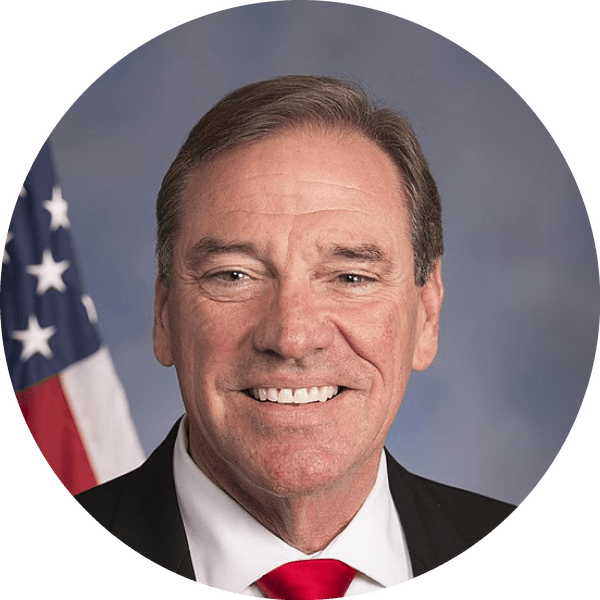
Neal Dunn
Republican · FL

Kat Cammack
Republican · FL

Ted Lieu
Democrat · CA
Committee Sponsors
Ways and Means Committee
2 of 45 committee members cosponsored


Energy and Commerce Committee
10 of 54 committee members cosponsored


47 Republicans across these committees haven't cosponsored yet. Mobilize their constituents
What laws does H.R. 7871 change?
1 changes
Sections Amended
Section 1927(k) of Social Security Act (42 U.S.C. 1396r-8(k))
adding at the end the following paragraph: ``(12) Value-based purchasing arrangement
H.R. 7871 Quick Facts
- Committee
- Ways and Means
- Chamber
- House
- Policy
- Health
- Introduced
- Mar 9, 2026
Referred to Energy and Commerce, and in addition to the Committee on Ways and Means, for a period to be subsequently determined by the Speaker, in each case for consideration of such provisions as fall within the jurisdiction of the committee concerned. for review
Mar 9, 2026
Official Sources
Official bill record with full text, cosponsors, committee referrals, and latest actions.
CMS technical guidance to drugmakers on reporting multiple best prices for value-based purchasing arrangements offered to all states, the practice this bill writes into statute.
The December 2020 regulation that created the multiple best price option and the value-based purchasing definition the bill ties its terms to.
The Section 1927 program whose best price and average manufacturer price rules the bill amends.
How Medicare Part B sets payment for administered drugs, the price figure the bill keeps aligned with Medicaid changes.
The HHS Inspector General exceptions to the anti-kickback law, where the bill directs new rules for outcome-based refunds to states.
The existing CMS model in which states use outcomes-based agreements for sickle cell gene therapies, the kind of deal the bill aims to make easier.
H.R. 7871 Common Questions
What is a value-based purchasing arrangement in Medicaid?
It's a drug deal with a performance clause. The manufacturer refunds part of the price, or gets paid less, if the patient doesn't reach agreed health outcomes. H.R. 7871 writes these arrangements into federal Medicaid law.
Why don't drugmakers already offer Medicaid money-back guarantees?
Medicaid's best-price rule entitles it to the lowest price a drugmaker gives nearly any buyer. A big refund on one failed treatment could become that benchmark nationwide. H.R. 7871 lets manufacturers report multiple best prices for these deals if they offer them to every state.
Do states have to join these outcome-based drug deals?
No. Participation is optional for states, but a manufacturer using multiple best prices must offer the same arrangement to all of them. GAO must study what happens to drug prices in states that don't sign up.
What if my child gets a gene therapy at a hospital in another state?
The bill requires HHS guidance within 180 days on how states can transfer funds among themselves so a Medicaid patient treated in another state's hospital is handled as if they received the drug in their home state.
Are refunds from drugmakers to states legal under anti-kickback law?
The bill makes them explicitly legal. Payments from a manufacturer to a state when a Medicaid patient misses defined outcomes would be exempt from the federal anti-kickback law, with the HHS Inspector General writing rules within 180 days.
Does H.R. 7871 change what Medicare pays for drugs?
Indirectly. For drugs sold under these deals with multiple best prices, outcome-triggered refunds are kept out of the average sales price Medicare Part B uses to pay doctors for administered drugs, so the two programs' price figures stay aligned.
Who sponsors the MVP Act, and is it bipartisan?
Rep. Brett Guthrie (R-KY), chair of the Energy and Commerce Committee, introduced it on March 9, 2026. It has 17 cosponsors: 11 Republicans and 6 Democrats. It was referred to Energy and Commerce and Ways and Means.
When would the MVP Act take effect?
HHS and its Inspector General would each have 180 days after enactment to issue rules and guidance. GAO's review of whether the deals improve access, outcomes, and costs is due to Congress by June 30, 2029.
Based on H.R. 7871 bill text
H.R. 7871 Bill Text
“To amend title XIX of the Social Security Act to codify value-based purchasing arrangements under the Medicaid program and reforms related to price reporting under such arrangements, and for other purposes. Be it enacted by the Senate and House of Representatives of the United States of America in Congress assembled, SECTION 1.”
Source: U.S. Government Publishing Office
Get notified when H.R. 7871 moves
Committee votes, floor action, cosponsor changes — straight to your inbox.
Bill alerts + Legisletter's monthly briefing. Unsubscribe anytime.
Health Bills
9 related bills we're tracking
Nancy Gardner Sewell Medicare Multi-Cancer Early Detection Screening Coverage Act




Reported (Amended) by the Committee on Ways and Means. H. Rept. 119-333, Part I.
Oct 3, 2025
Mikaela Naylon Give Kids a Chance Act





Received in the Senate.
Dec 2, 2025
Improving Seniors’ Timely Access to Care Act of 2025


Ordered to be Reported in the Nature of a Substitute by the Yeas and Nays: 42 - 0.
Jul 15, 2026
CONNECT for Health Act of 2025




Referred to the Committee on Energy and Commerce, and in addition to the Committee on Ways and Means, for a period to be subsequently determined by the Speaker, in each case for consideration of such provisions as fall within the jurisdiction of the committee concerned.
Jun 26, 2025
ASAP Act



Ordered to be Reported in the Nature of a Substitute by the Yeas and Nays: 40 - 0.
Sep 16, 2026
Momnibus Act




Referred to the Subcommittee on Health.
Apr 20, 2026
Ensuring Lasting Smiles Act



Referred to the Committee on Energy and Commerce, and in addition to the Committees on Education and Workforce, and Ways and Means, for a period to be subsequently determined by the Speaker, in each case for consideration of such provisions as fall within the jurisdiction of the committee concerned.
May 8, 2025
Right to Contraception Act




Referred to the House Committee on Energy and Commerce.
Feb 5, 2025
Women’s Health Protection Act of 2025



Referred to the Committee on Energy and Commerce, and in addition to the Committee on the Judiciary, for a period to be subsequently determined by the Speaker, in each case for consideration of such provisions as fall within the jurisdiction of the committee concerned.
Jun 24, 2025
Trending Right Now
Bills gaining momentum across Congress
North Platte Canteen Congressional Gold Medal Act



Referred to the House Committee on Financial Services.
Feb 21, 2025
Fit to Serve Act



Referred to the House Committee on Armed Services.
May 21, 2025
Accelerating Access to Critical Therapies for ALS Reauthorization Act of 2026




Message on Senate action sent to the House.
Oct 14, 2026
Tracking Health in Congress? Monitor bills, track cosponsor momentum, and launch advocacy campaigns — all from one advocacy platform.