H.R. 7786: AI Fraud Accountability Act
Sponsor

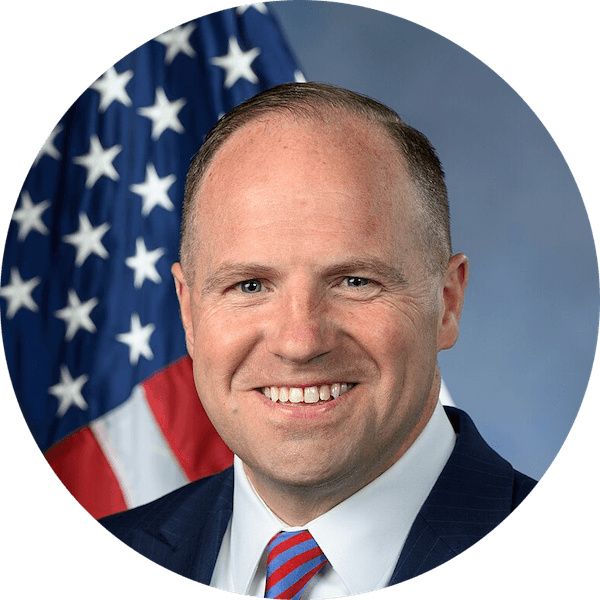
Vern Buchanan
Republican · FL-16
Cloning a voice to scam you would be a federal crime
Why it matters
Scammers can fake a loved one's voice or a boss's face well enough to fool you in seconds. H.R. 7786 would make using one of those AI fakes to defraud you a federal crime carrying up to 3 years in prison, and it would hand the FTC its own power to sue.
H.R. 7786, the AI Fraud Accountability Act, targets a specific weapon: AI-generated audio or video realistic enough that a reasonable person can't tell it's fake. The bill calls this a "digital impersonation," and it covers both clones of real people and invented people made to seem real. The trigger is recognizability — a face, a likeness, a voice, even a unique birthmark.
The core rule is short. Use one of these fakes in interstate or foreign communications to pose as someone, with intent to defraud a person of money, papers, documents, or anything of value, and you've broken the law. The penalty is a federal fine, up to 3 years in prison, or both. Threatening to pull off this kind of scam to intimidate, coerce, extort, or cause mental distress carries the same punishment.
A conviction also forces forfeiture: courts must order anyone convicted to hand over the proceeds and any property used to run the scheme. And because so many of these operations sit overseas, the bill claims extraterritorial jurisdiction, letting cases reach conduct outside the United States.
Criminal charges aren't the only lever. The bill gives the Federal Trade Commission authority to enforce a parallel civil ban, treating violations as unfair or deceptive practices under the FTC Act. The bill also carves out lawful law-enforcement and intelligence work, and adds a savings clause stating that parody, satire, journalism, and other First Amendment-protected speech are not restricted.
The rest of the bill builds a long-term response. Within 30 days of enactment, NIST would convene a working group with the DOJ, FTC, law enforcement, and companies in finance, health care, retail, telecom, and digital platforms to develop detection best practices, due within 1 year and updated yearly. Within 90 days, the FTC must name the top 10 foreign countries where these scams originate. The whole working-group effort sunsets 10 years after enactment.
Bill Progress
Latest Action · Mar 4, 2026
Referred to Energy and Commerce, and in addition to the Committees on the Judiciary, Science, Space, and Technology, and Foreign Affairs, for a period to be subsequently determined by the Speaker, in each case for consideration of such provisions as fall within the jurisdiction of the committee concerned. for review
H.R. 7786 Bill Summary
What H.R. 7786 actually does.
Using an AI fake to defraud becomes a crime
It would be unlawful to use a digital impersonation in interstate or foreign communications to pose as a real or invented person with intent to defraud someone of money, papers, documents, or anything of value. The penalty is a federal fine, up to 3 years in prison, or both.
Threats carry the same penalty as the scam
Intentionally threatening to commit this offense to intimidate, coerce, extort, or cause mental distress is punished the same as carrying it out: up to 3 years in prison, a fine, or both.
The FTC gets its own power to sue
The bill lets the Federal Trade Commission enforce a civil ban on digital impersonation fraud, treating violations as unfair or deceptive acts under the FTC Act. That gives regulators a tool beyond criminal prosecution for scams that hit many people at once.
Convictions trigger forfeiture
A court sentencing someone convicted under this law must order forfeiture of the proceeds of the scam and any property used or intended to facilitate it. The bill borrows the forfeiture procedures used in drug-trafficking cases.
Cases can reach scammers overseas
The bill claims extraterritorial federal jurisdiction, so prosecutors could pursue qualifying conduct that happens outside the United States. The FTC must also name the top 10 foreign countries where these scams originate within 90 days of enactment.
NIST builds detection standards within a year
Within 30 days of enactment, NIST must convene a working group with the DOJ, FTC, law enforcement, and private-sector companies to develop best practices for spotting and tracing these fakes. The practices are due within 1 year, updated yearly, and the effort sunsets after 10 years.
Who benefits from H.R. 7786?
Anyone targeted by a fake-voice or fake-video scam
If a fraudster uses an AI clone of a voice or face to steal money or documents from you, the bill creates both criminal penalties and FTC enforcement aimed at the people running the scheme. The threat of up to 3 years in prison raises the cost of pulling these scams off.
People whose voice or face gets cloned
The bill specifically protects an "identifiable individual" recognized by a face, likeness, voice, or other distinguishing feature. If scammers mimic you to fool someone else, there would be a clear federal crime attached to it.
Banks, hospitals, retailers, and telecoms
These sectors get a seat at the NIST working group shaping anti-fraud best practices within the first year and updates every year after. They are also frequent targets of impersonation scams, so clearer detection standards cut their exposure.
Prosecutors and the FTC
The DOJ gets a criminal statute with forfeiture authority and reach over conduct abroad, while the FTC gets express civil enforcement power. The two-track design is meant to help agencies respond to scams that cross state lines and borders.
Who is affected by H.R. 7786?
People running AI impersonation scams
Anyone who uses a digital impersonation to pose as a real or invented person and defraud someone could face a federal fine, up to 3 years in prison, and mandatory forfeiture of proceeds and any property used to run the scheme.
People who make threats using these fakes
The bill reaches beyond completed scams. Intentionally threatening to commit the offense to intimidate, coerce, extort, or cause mental distress carries the same penalty as the scam itself, including up to 3 years in prison.
NIST, the FTC, DOJ, and State Department
These agencies take on new duties with hard deadlines: NIST convenes its working group within 30 days, the FTC names the top 10 source countries within 90 days and reports yearly, and DOJ reviews international agreements within 1 year and every 5 years after.
Digital platforms and other companies handling fraud
Social media platforms, telecoms, financial firms, and health care and retail companies would face pressure to adopt the detection best practices the working group must publish within 1 year and update each year.
HR7786 Legislative Journey
House: Committee Action
Mar 4, 2026
Referred to the Committee on Energy and Commerce, and in addition to the Committees on the Judiciary, Science, Space, and Technology, and Foreign Affairs, for a period to be subsequently determined by the Speaker, in each case for consideration of such provisions as fall within the jurisdiction of the committee concerned.
About the Sponsor
Vern Buchanan
Republican, Florida's 16th congressional district · 19 years in Congress
Committees: Joint Committee on Taxation, Ways and Means
View full profile →
Cosponsors (2)
This bill has 2 cosponsors: 1 Democrat, 1 Republican, reflecting bipartisan support. Cosponsors represent 2 states: Florida, New Jersey.
Committee Sponsors
Foreign Affairs Committee
0 of 53 committee members cosponsored
No committee members have cosponsored this bill
Science, Space, and Technology Committee
0 of 40 committee members cosponsored
No committee members have cosponsored this bill

Energy and Commerce Committee
1 of 54 committee members cosponsored

91 Republicans across these committees haven't cosponsored yet. Mobilize their constituents
H.R. 7786 Quick Facts

- Committee
- Foreign Affairs
- Chamber
- House
- Policy
- Commerce
- Introduced
- Mar 4, 2026
Referred to Energy and Commerce, and in addition to the Committees on the Judiciary, Science, Space, and Technology, and Foreign Affairs, for a period to be subsequently determined by the Speaker, in each case for consideration of such provisions as fall within the jurisdiction of the committee concerned. for review
Mar 4, 2026
Official Sources
The official bill page with full text, sponsors, committee referrals, and status.
The FTC's consumer guidance on the exact fake-relative-in-trouble scam this bill targets, including AI voice cloning.
FTC consumer alert on AI voice-clone fraud and the agency's work to detect it — the harm the bill criminalizes.
NIST's program for evaluating deepfake detection — the kind of detection best practices the bill's NIST working group must develop.
The federal statute the bill amends to add the criminal prohibition on digital impersonation fraud.
The FTC Act provision the bill uses to let the FTC treat digital impersonation fraud as an unfair or deceptive practice.
The forfeiture procedures (from the Controlled Substances Act) the bill borrows to seize the proceeds of a conviction.
H.R. 7786 Common Questions
What's the prison sentence for an AI voice-clone scam under H.R. 7786?
Using a digital impersonation to defraud someone could bring a federal fine, up to 3 years in prison, or both.
Can you be charged just for threatening an AI impersonation scam?
Yes. H.R. 7786 punishes intentionally threatening this kind of fraud to intimidate, coerce, extort, or cause mental distress the same as the scam itself: up to 3 years, a fine, or both.
Does H.R. 7786 let the FTC sue over AI impersonation scams?
Yes. The bill lets the FTC enforce a civil ban on digital impersonation fraud, treating it as an unfair or deceptive practice under the FTC Act — separate from any criminal case.
Does the bill cover fake people who don't actually exist?
Yes. H.R. 7786 covers scams that pose as a real person or an invented person made to seem real, as long as the fake is convincing enough to fool a reasonable person.
What counts as a digital impersonation under H.R. 7786?
Audio or video made with software, AI, or machine learning that would look or sound authentic to a reasonable person — including a cloned face, likeness, voice, or a distinguishing feature like a birthmark.
Would the government seize money from an AI fraud conviction?
Yes. A court must order anyone convicted to forfeit the proceeds of the scam plus any property used or meant to be used to run it.
Does H.R. 7786 reach scams run from outside the United States?
Yes. The bill claims extraterritorial jurisdiction, so it can reach qualifying conduct abroad. The FTC must also name the top 10 foreign countries where these scams originate within 90 days of enactment.
Does H.R. 7786 ban parody, satire, or deepfake jokes?
No. The bill includes a savings clause stating that nothing in it restricts parody, satire, journalism, or other First Amendment-protected speech. It targets fakes used to defraud.
Based on H.R. 7786 bill text
H.R. 7786 Bill Text
“To establish protections against digital impersonation fraud, and for other purposes.”
Source: U.S. Government Publishing Office
Get notified when H.R. 7786 moves
Committee votes, floor action, cosponsor changes — straight to your inbox.
Bill alerts + Legisletter's monthly briefing. Unsubscribe anytime.
Commerce Bills
9 related bills we're tracking
Therapeutic Fraud Prevention Act of 2025





Referred to the House Committee on Energy and Commerce.
May 7, 2025
Algorithmic Accountability Act of 2025





Referred to the House Committee on Energy and Commerce.
Sep 19, 2025
Protecting Circuit Boards and Substrates Act





Referred to the Committee on Ways and Means, and in addition to the Committees on Energy and Commerce, and Science, Space, and Technology, for a period to be subsequently determined by the Speaker, in each case for consideration of such provisions as fall within the jurisdiction of the committee concerned.
May 23, 2025
Children and Teens’ Online Privacy Protection Act




Held at the desk.
Mar 16, 2026
Competition and Antitrust Law Enforcement Reform Act of 2025




Read twice and referred to the Committee on the Judiciary.
Jan 16, 2025
NO FAKES Act of 2025



Read twice and referred to the Committee on the Judiciary.
Apr 9, 2025
Made in America Manufacturing Finance Act



Committee on Small Business and Entrepreneurship. Hearings held.
May 13, 2026
Antitrust Accountability and Transparency Act

Read twice and referred to the Committee on the Judiciary.
Mar 17, 2026
Algorithmic Accountability Act of 2025



Read twice and referred to the Committee on Commerce, Science, and Transportation.
Jun 25, 2025
Trending Right Now
Bills gaining momentum across Congress
North Platte Canteen Congressional Gold Medal Act



Referred to the House Committee on Financial Services.
Feb 21, 2025
Fit to Serve Act





Referred to the House Committee on Armed Services.
May 21, 2025
ASAP Act



Ordered to be Reported in the Nature of a Substitute by the Yeas and Nays: 40 - 0.
Sep 16, 2026
Tracking Commerce in Congress? Monitor bills, track cosponsor momentum, and launch advocacy campaigns — all from one advocacy platform.