H.R. 4975: TOO LATE Act
Sponsor
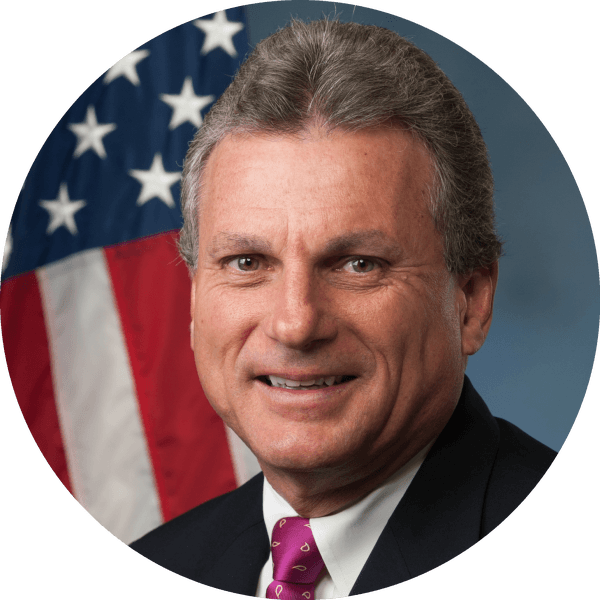
Earl Carter
Republican · GA-1
A President could fire the Fed Chair over rate decisions
Why it matters
The Federal Reserve sets the interest rates behind your mortgage, your credit card, and your savings account — and for now it does that independently of the White House. H.R. 4975 would change the dynamic, handing the President a numerical trigger to remove the Fed Chair: a target rate that misses key economic benchmarks by more than 200 basis points for two consecutive quarters.
H.R. 4975, the TOO LATE Act, adds one new trigger to the Federal Reserve Act: a President could remove the Fed Chair when interest rates stray too far from where a few economic gauges say they should be.
The test is specific. Take the upper bound of the Fed's target rate. Compare it to the average of any two of three benchmarks — an inflation gauge, a market-based inflation signal pulled from Treasury bonds, and the gap between the Fed's job-market forecasts and the Congressional Budget Office's. If the rate is off by more than 200 basis points — two full percentage points — for two quarters in a row, the President can act.
Firing the Chair wouldn't be quiet. The President would have to publish a written justification, send it to Congress, and lay out the benchmark data behind the decision. Within 30 days, the House Financial Services Committee and the Senate Banking Committee would have to hold hearings reviewing it.
Bill Progress
Latest Action · Aug 15, 2025
Referred to Financial Services, and in addition to the Committee on Rules, for a period to be subsequently determined by the Speaker, in each case for consideration of such provisions as fall within the jurisdiction of the committee concerned. for review
H.R. 4975 Bill Summary
What H.R. 4975 actually does.
A 200-basis-point miss becomes grounds to remove the Chair
The President could remove the Fed Chair if the federal funds target rate deviates by more than 200 basis points from the average of any two of three listed benchmarks, and the deviation lasts two consecutive quarters.
Three benchmarks decide whether the rate 'missed'
The test draws on any two of three measures: the inflation gauge known as the PCE price deflator; the spread between a 5-year Treasury bond and a 5-year inflation-protected Treasury; and the gap between the Fed's unemployment estimates and Congressional Budget Office projections.
The President has to show the work, in public
Before or when removing the Chair, the President must issue a statement justifying it — citing the benchmark data and discussing the conduct of monetary policy — then submit it to Congress and make it publicly available.
Congress gets mandatory hearings within 30 days
Within 30 days of the President's justification statement, the House Committee on Financial Services and the Senate Committee on Banking, Housing, and Urban Affairs must hold hearings reviewing the reasons for removal.
Only the upper bound of the rate range counts
The bill defines the federal funds target rate as the upper bound of the target range set by the Federal Open Market Committee, narrowing the removal test to that single figure rather than the full range.
Who benefits from H.R. 4975?
Presidents seeking more leverage over Fed leadership
The bill gives the President a defined legal pathway to remove the Fed Chair once a measurable threshold is met: a deviation of more than 200 basis points for two consecutive quarters.
Lawmakers who favor rules-based monetary accountability
It converts a broad debate about Fed performance into a concrete test tied to three named benchmarks, a 200-basis-point threshold, and a two-quarter duration.
The public and market watchers
Any removal would require a public justification statement with benchmark data and an explanation of the Fed's monetary policy decisions, adding a layer of transparency around the firing.
Congressional oversight committees
The House Financial Services Committee and the Senate Banking Committee would gain a guaranteed review role, with hearings required within 30 days of any removal justification.
Who is affected by H.R. 4975?
The Chair of the Federal Reserve
The Chair would face a new statutory removal risk whenever the upper bound of the target rate diverges by more than 200 basis points from the benchmark average for two straight quarters.
The Federal Open Market Committee and Board staff
Because the test leans on the Fed's own unemployment estimates and market-based inflation signals, internal forecasting and rate-setting decisions would come under sharper political scrutiny.
Borrowers, savers, and investors
They could be indirectly affected if the threat of removal shifts how the Fed sets rates — the test centers on the federal funds target rate and on Treasury signals that ripple into broader borrowing costs.
The Congressional Budget Office
CBO projections would become part of a statutory removal benchmark, since one of the three tests compares the Fed's unemployment estimates against CBO's projections.
HR4975 Legislative Journey
House: Committee Action
Aug 15, 2025
Referred to the Committee on Financial Services, and in addition to the Committee on Rules, for a period to be subsequently determined by the Speaker, in each case for consideration of such provisions as fall within the jurisdiction of the committee concerned.
About the Sponsor
Earl Carter
Republican, Georgia's 1st congressional district · 11 years in Congress
Committees: Energy and Commerce, the Budget
View full profile →
Committee Sponsors
Rules Committee
0 of 13 committee members cosponsored
No committee members have cosponsored this bill
Financial Services Committee
0 of 53 committee members cosponsored
No committee members have cosponsored this bill
38 Republicans across these committees haven't cosponsored yet. Mobilize their constituents
H.R. 4975 Quick Facts
- Committee
- Rules
- Chamber
- House
- Policy
- Finance and Financial Sector
- Introduced
- Aug 15, 2025
Referred to Financial Services, and in addition to the Committee on Rules, for a period to be subsequently determined by the Speaker, in each case for consideration of such provisions as fall within the jurisdiction of the committee concerned. for review
Aug 15, 2025
Official Sources
Official Congress.gov page for the TOO LATE Act with bill text, actions, and status.
Official Federal Reserve page explaining the Board of Governors, including the Chair role this bill targets for removal.
Official FOMC page; the bill defines the federal funds target rate as the upper bound of the range set by the FOMC.
Official Federal Reserve explanation of the monetary policy tools behind the federal funds rate at the center of the removal test.
Official daily Federal Reserve release showing Treasury bond, inflation-indexed (TIPS), and federal funds rates used in the bill's benchmark calculations.
Official BEA page for PCE price data, the basis for the bill's Implicit Price Deflator for Personal Consumption Expenditures benchmark.
Official CBO data hub; the bill uses CBO unemployment projections as part of one of its three removal benchmarks.
Official U.S. Code text for the Federal Reserve Act, which the bill amends at Section 10 (12 U.S.C. 241 et seq.).
H.R. 4975 Common Questions
Can the President fire the Fed Chair for keeping interest rates too high or too low?
Only if a specific number is hit. H.R. 4975 would let the President remove the Chair when the Fed's target rate misses a benchmark by more than 200 basis points for two straight quarters. Today, no such rate-based trigger exists.
What does a 200-basis-point miss actually mean?
A basis point is one-hundredth of a percentage point, so 200 of them equal two full percentage points. The bill compares the upper bound of the Fed's target rate to economic benchmarks — if the gap tops two points for two quarters, the trigger is met.
Which benchmarks decide whether the Fed 'missed'?
Any two of three: an inflation gauge called the PCE price deflator, a market signal from the gap between 5-year Treasury bonds and inflation-protected versions, and the difference between the Fed's unemployment estimates and the Congressional Budget Office's projections.
Would this take away the Federal Reserve's independence?
That's the core dispute. Critics say tying the Chair's job to rate levels would pull monetary policy into politics; the sponsor frames it as accountability. The bill itself doesn't strip the Fed's powers — it adds one removal trigger for the Chair.
Would the President have to explain firing the Chair?
Yes. The President would have to publish a written justification, point to the benchmark data, discuss the Fed's monetary policy, and send it all to Congress. The House and Senate banking committees would then hold hearings within 30 days.
Why is it called the TOO LATE Act?
It's an acronym — Timely Oversight of Operations, Liquidity, Accountability, Targeting, and Effectiveness. The name echoes a recurring presidential complaint that the Fed moves too slowly on cutting interest rates.
What are the odds H.R. 4975 becomes law?
Low for now. Introduced in August 2025 by Rep. Earl Carter of Georgia, it has zero cosponsors and sits in the House Financial Services and Rules Committees with no further action taken.
Based on H.R. 4975 bill text
H.R. 4975 Bill Text
“To amend the Federal Reserve Act to establish procedures for removal of the Chairman of the Board of Governors of the Federal Reserve System, and for other purposes.”
Source: U.S. Government Publishing Office
Get notified when H.R. 4975 moves
Committee votes, floor action, cosponsor changes — straight to your inbox.
Bill alerts + Legisletter's monthly briefing. Unsubscribe anytime.
Finance and Financial Sector Bills
9 related bills we're tracking
America’s Olympic and Paralympic Games Commemorative Coins Act




Referred to the House Committee on Financial Services.
Jul 14, 2025
761st Tank Battalion Congressional Gold Medal Act


Referred to the Committee on Financial Services, and in addition to the Committee on House Administration, for a period to be subsequently determined by the Speaker, in each case for consideration of such provisions as fall within the jurisdiction of the committee concerned.
Feb 26, 2025
Taxpayer Data Protection Act



Sponsor introductory remarks on measure. (CR H625-626)
Feb 11, 2025
Repealing Big Brother Overreach Act


Placed on the Union Calendar, Calendar No. 609.
Jun 18, 2026
Rosie the Riveter Commemorative Coin Act


Referred to the House Committee on Financial Services.
Jan 15, 2025
HELPER Act of 2025


Referred to the House Committee on Financial Services.
Mar 14, 2025
Anti-CBDC Surveillance State Act





Motion to reconsider laid on the table Agreed to without objection.
Jul 17, 2025
Protecting Privacy in Purchases Act


Received in the Senate and Read twice and referred to the Committee on Banking, Housing, and Urban Affairs.
Jul 15, 2026
Veterans Member Business Loan Act


Referred to the House Committee on Financial Services.
Jan 16, 2025
Trending Right Now
Bills gaining momentum across Congress
Fit to Serve Act





Referred to the House Committee on Armed Services.
May 21, 2025
ASAP Act


Ordered to be Reported in the Nature of a Substitute by the Yeas and Nays: 40 - 0.
Sep 16, 2026
Therapeutic Fraud Prevention Act of 2025




Referred to the House Committee on Energy and Commerce.
May 7, 2025
Tracking Finance and Financial Sector in Congress? Monitor bills, track cosponsor momentum, and launch advocacy campaigns — all from one advocacy platform.