S. 3308: Artificial Intelligence Civil Rights Act of 2025
Sponsor

Edward Markey
Democrat · MA
Algorithms that decide your life should obey civil-rights law
Why it matters
Software now screens job applicants, prices insurance, sets rent, and flags benefit claims. S. 3308 would make it illegal to use that software in a way that discriminates by race, disability, age, income, or a dozen other traits, require testing before it goes live, and let you sue for $15,000 per violation or triple damages.
The bill targets what it calls consequential actions: decisions about your job, schooling, housing, utilities, health care, credit, insurance, government benefits, elections, and dealings with police, courts, and immigration authorities. If an AI or other complex algorithm plays a material part in one of those decisions, the bill's rules apply.
Companies could not use an algorithm that discriminates, or produces an unjustified disparate impact, based on a protected trait. The list goes well past current civil-rights law: race, national origin or immigration status, religion, sex (including sexual orientation, gender identity, and pregnancy), disability, age, veteran status, limited English proficiency, biometric and genetic information, marital status, source of income, and income level.
Before a covered system goes live, the company that built it and the company using it would each run a preliminary evaluation. If harm looks plausible, an independent auditor must do a full review. Once the system is running, the deployer would assess its real-world effects every year. Summaries go on the company's website and to the Federal Trade Commission within 30 days, and records stay on file for 10 years.
You would get a short notice, 500 words or fewer, explaining how the system is used, offered in the 10 most-spoken languages in the country. Within 2 years, the FTC would write rules for when you can opt out and have a human decide instead, and when you can appeal an automated decision to a person. Companies could not retaliate against you for using those rights or for reporting a violation.
If a company breaks these rules, the FTC, your state attorney general, or you personally could take it to court. State attorneys general could seek $15,000 per violation or 4% of the company's average annual revenue over three years, whichever is greater. For a firm averaging $1 billion a year, that floor is $40 million. Individuals could recover triple damages or $15,000 per violation, plus punitive damages and legal fees, after giving the FTC and state attorney general 60 days to decide whether to join.
Arbitration clauses and class-action waivers signed in advance would not be enforceable for these claims, so a company's terms of service could not keep a dispute out of court. The FTC could hire up to 500 more staff, and the federal personnel office would create a new job category for algorithm auditors within 270 days.
Bill Progress
Latest Action · Dec 2, 2025
Read twice and Referred to Commerce, Science, and Transportation. for review
S. 3308 Bill Summary
What S. 3308 actually does.
Discriminatory AI becomes illegal in major life decisions
Developers and deployers could not sell or use an algorithm that discriminates, or causes an unjustified disparate impact, based on a protected characteristic in decisions about employment, education, housing, health care, credit, insurance, utilities, government benefits, elections, or the justice system. Self-testing for bias, good-faith security research, and efforts to widen applicant pools for diversity are exempt.
Systems get tested before they touch you
Every covered algorithm needs a preliminary evaluation before deployment. If harm is plausible, an independent auditor with no stake in the product must conduct a full review. Deployers must then run annual impact assessments, send summaries to the FTC and post them publicly within 30 days, and keep records for 10 years.
Companies must certify the benefits outweigh the harms
Before deploying, a company must consult affected communities and certify that the system is not likely to cause harm or disparate impact, that its benefits to affected people likely outweigh its harms, and that it is not deceptive. Using a system for a purpose it was never evaluated for is prohibited.
A right to a human decision and a human appeal
Within 2 years, the FTC must write rules setting when companies must let you opt out of an automated decision and have a person decide, and when you can appeal an automated decision to a human reviewer. Appeals must be free, accessible to people with disabilities, and allow you to correct your personal data where appropriate.
Plain notice in the languages people speak
People affected by a covered algorithm get a short-form notice capped at 500 words, available in the 10 most-spoken languages in the United States. Material changes must be disclosed before they take effect. The FTC would launch a consumer-rights web page within 90 days of enactment.
Three routes to court, no forced arbitration
The FTC can treat violations as unfair or deceptive practices. State attorneys general can seek $15,000 per violation or 4% of average annual revenue, whichever is greater. Individuals and classes can sue for triple damages or $15,000 per violation, plus punitive damages and fees, and pre-dispute arbitration clauses and class-action waivers are unenforceable.
Protection for people who speak up
Companies cannot retaliate against anyone for exercising rights under the bill, refusing to waive them, or reporting a violation. Employees and contractors who raise concerns are covered by whistleblower protections.
Who benefits from S. 3308?
Job seekers screened by software
Applicants whose résumés, video interviews, or assessments are scored by AI would get notice, a path to a human reviewer under future FTC rules, and the right to sue if a hiring tool filters them out because of age, disability, race, or another protected trait.
Renters, borrowers, and people buying insurance
Tenant screening, home appraisals, mortgage underwriting, credit decisions, and insurance claim reviews all count as consequential actions. A system that disadvantages applicants by source of income or zip-code proxies for race would have to be caught in testing or face liability.
People with limited English or disabilities
Notices must be offered in the 10 most-spoken languages in the country, and appeal mechanisms must be accessible to people with disabilities. Limited English proficiency itself is listed as a protected characteristic.
Workers inside AI companies
Engineers, auditors, and contractors who flag a biased system or report a violation would be protected from firing, demotion, or harassment. The bill also creates a federal job category for algorithm auditors.
Who is affected by S. 3308?
Companies that build AI decision tools
Developers, including those building for government agencies, would owe pre-deployment evaluations, independent audits when harm is plausible, public summaries, and 10-year recordkeeping. Selling a tool for uses it was not evaluated for would be illegal. The bill contains no small-business exemption.
Employers, landlords, lenders, insurers, and hospitals using AI
Any business using a covered algorithm for a commercial purpose becomes a deployer. It must consult affected communities, certify the system is unlikely to cause harm, run annual impact assessments, give notice, and eventually offer human alternatives and appeals. Arbitration clauses in its contracts would not block lawsuits under the bill.
The Federal Trade Commission
The FTC becomes the lead regulator, with rulemaking due in 2 years, a report to Congress on algorithmic explanations within 18 months, annual trend reports, a public repository of evaluations, and authority to hire up to 500 additional staff.
State attorneys general
Attorneys general in every state, D.C., and the territories could sue on behalf of residents, seek revenue-based penalties, and intervene in private lawsuits filed by people in their state.
S3308 Legislative Journey
Committee Action
Dec 2, 2025
Read twice and referred to the Committee on Commerce, Science, and Transportation.
About the Sponsor
Edward Markey
Democrat, MA · 49 years in Congress
Committees: Small Business and Entrepreneurship, Commerce, Science, and Transportation, Environment and Public Works
View full profile →
Cosponsors (4)
All 4 cosponsors are Democrats. Cosponsors represent 4 states: Hawaii, Massachusetts, New Jersey, and 1 more.
Committee Sponsors
Commerce, Science, and Transportation Committee
0 of 28 committee members cosponsored
No committee members have cosponsored this bill
13 Democrats across this committee haven't cosponsored yet. Mobilize their constituents
S. 3308 Quick Facts
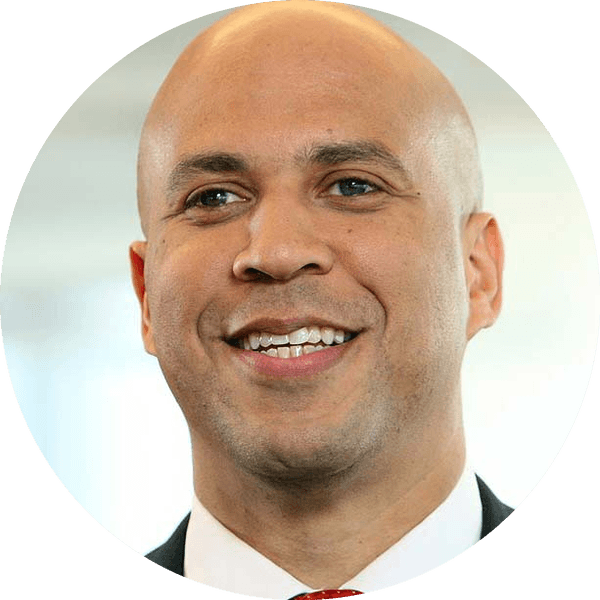



- Committee
- Commerce, Science, and Transportation
- Chamber
- Senate
- Policy
- Science, Technology, Communications
- Introduced
- Dec 2, 2025
Read twice and Referred to Commerce, Science, and Transportation. for review
Dec 2, 2025
Official Sources
Official status, full text, sponsors, and committee referral for the Artificial Intelligence Civil Rights Act in the Senate.
The matching House version of the Artificial Intelligence Civil Rights Act, which would need to move alongside S. 3308.
The committee S. 3308 was referred to; any hearing or markup would be scheduled here.
The FTC would be the lead regulator under the bill; this page collects its current AI enforcement actions and policy work.
The bill treats violations as unfair or deceptive acts or practices under this section, which is how the FTC would enforce it.
The law that normally makes arbitration clauses enforceable; the bill would carve its claims out, voiding pre-dispute arbitration and class-action waivers.
Current federal job-discrimination protections, which the bill would extend to algorithmic hiring and add traits like income level and source of income.
State attorneys general could sue on behalf of residents and must be notified before an individual lawsuit under the bill.
S. 3308 Common Questions
What decisions does the AI Civil Rights Act cover?
Decisions with a real effect on your life: hiring, pay and firing, school admissions and discipline, housing and mortgages, utilities, health care, credit, insurance, government benefits, elections, and policing, courts, and immigration. The FTC could add comparable decisions by rule.
Can I sue a company if its AI discriminated against me?
Yes. You or a class could sue for triple damages or $15,000 per violation, whichever is greater, plus punitive damages and legal fees. First you would notify the FTC and your state attorney general, who get 60 days to decide whether to join the case.
How big are the fines for AI discrimination under S. 3308?
State attorneys general could seek $15,000 per violation or 4% of the company's average annual revenue over the past three years, whichever is greater. For a company averaging $1 billion a year, that is at least $40 million.
Could a company's terms of service force me into arbitration instead?
No. Arbitration clauses and class-action waivers signed before a dispute arises would be unenforceable for claims under the bill, and a court, not an arbitrator, decides whether that rule applies.
Would I be able to ask for a human instead of an AI?
In many cases. The FTC would have 2 years to write rules on when companies must let you opt out and have a person decide, and when you can appeal an automated decision to a human. Both must be free and easy to use.
Which groups does the AI Civil Rights Act protect?
Race, color, ethnicity, national origin or immigration status, religion, sex (including sexual orientation, gender identity, and pregnancy), disability, age, veteran status, limited English proficiency, biometric and genetic information, marital status, source of income, and income level.
Do AI hiring and lending tools have to be tested for bias first?
Yes. Every covered system needs an evaluation before launch, plus a full review by an independent auditor if harm looks plausible. Deployers then assess real-world effects each year and post summaries publicly.
Can my employer punish me for reporting a biased AI system?
No. The bill bars retaliation against anyone who exercises their rights, raises a concern, reports a violation, or helps an investigation. That includes firing, demotion, suspension, threats, and harassment.
Based on S. 3308 bill text
Full Bill Text
Get notified when S. 3308 moves
Committee votes, floor action, cosponsor changes — straight to your inbox.
Bill alerts + Legisletter's monthly briefing. Unsubscribe anytime.
Science, Technology, Communications Bills
9 related bills we're tracking
AM Radio for Every Vehicle Act of 2025




Received in the Senate. Read twice. Placed on Senate Legislative Calendar under General Orders. Calendar No. 622.
Sep 16, 2026
Scientific Integrity Act



Referred to the House Committee on Science, Space, and Technology.
Feb 6, 2025
Kids Online Safety Act




Committee on Commerce, Science, and Transportation. Ordered to be reported with an amendment in the nature of a substitute favorably.
Aug 5, 2026
Sunshine Protection Act of 2025




Received in the Senate and Read twice and referred to the Committee on Commerce, Science, and Transportation.
Jul 15, 2026
GUARDRAILS Act


Referred to the Committee on Energy and Commerce, and in addition to the Committee on the Judiciary, for a period to be subsequently determined by the Speaker, in each case for consideration of such provisions as fall within the jurisdiction of the committee concerned.
Mar 20, 2026
Artificial Intelligence Civil Rights Act of 2025





Referred to the Committee on Energy and Commerce, and in addition to the Committee on Oversight and Government Reform, for a period to be subsequently determined by the Speaker, in each case for consideration of such provisions as fall within the jurisdiction of the committee concerned.
Dec 2, 2025
TAKE IT DOWN Act



Became Public Law No: 119-12.
May 19, 2025
States' Right to Regulate AI Act




Read twice and referred to the Committee on Commerce, Science, and Transportation.
Dec 17, 2025
ACERO Act



Received in the Senate and Read twice and referred to the Committee on Commerce, Science, and Transportation.
Feb 24, 2026
Trending Right Now
Bills gaining momentum across Congress
North Platte Canteen Congressional Gold Medal Act



Referred to the House Committee on Financial Services.
Feb 21, 2025
ASAP Act
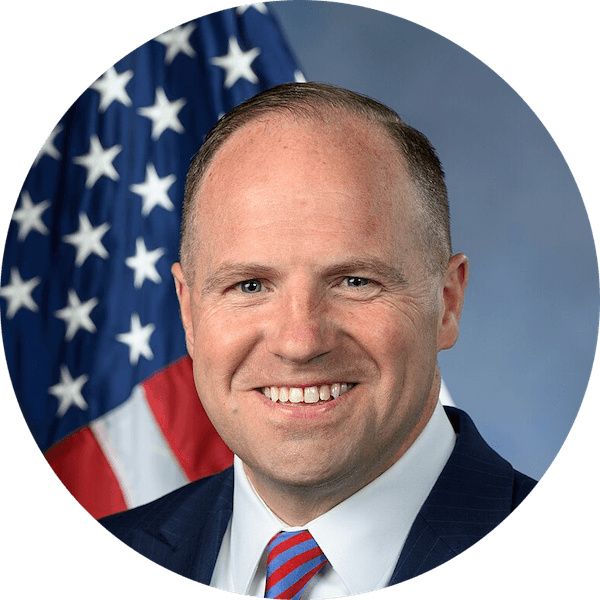


Ordered to be Reported in the Nature of a Substitute by the Yeas and Nays: 40 - 0.
Sep 16, 2026
Fit to Serve Act

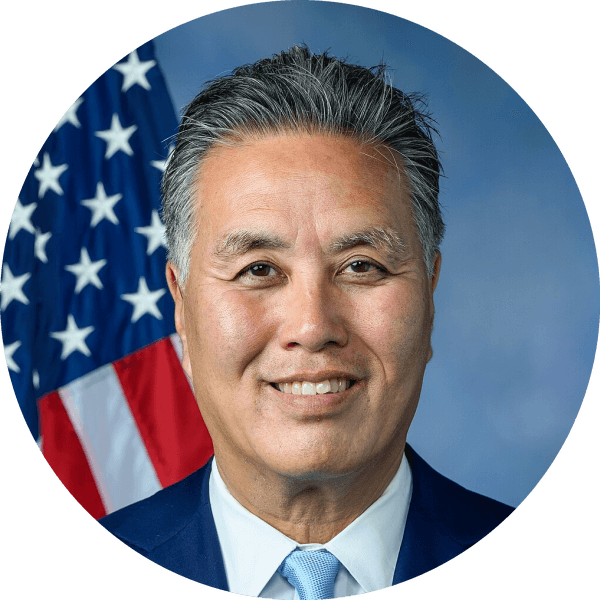


Referred to the House Committee on Armed Services.
May 21, 2025
Tracking Science, Technology, Communications in Congress? Monitor bills, track cosponsor momentum, and launch advocacy campaigns — all from one advocacy platform.