S. 1290: Artificial Intelligence and Critical Technology Workforce Framework Act of 2025
Sponsor
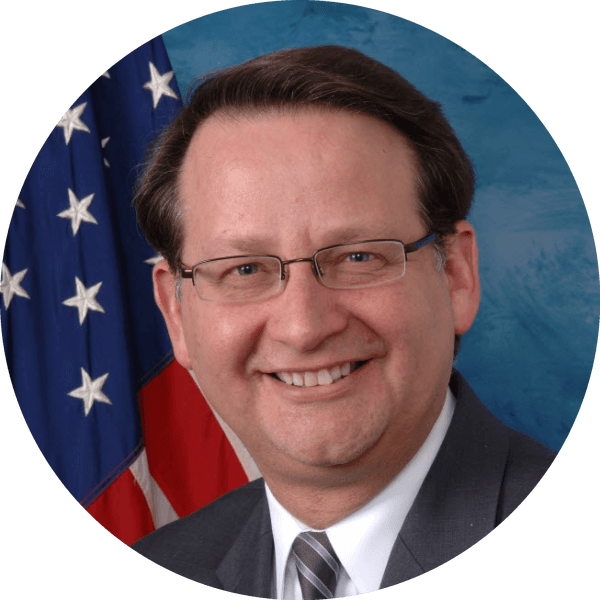
Gary Peters
Democrat · MI
A roadmap into AI jobs — no CS degree required
Why it matters
Within 540 days, NIST would have to publish the first national map of artificial intelligence careers — and the bill orders it to spell out how people without a four-year degree can land those jobs.
S. 1290 would put the National Institute of Standards and Technology in charge of building "workforce frameworks" for artificial intelligence, cybersecurity, and other emerging tech fields. Think of a framework as a shared map of a job: the tasks it involves, the knowledge and skills it takes, and how those add up to actual work roles you can train for.
The biggest deadline is for AI. Within 540 days of becoming law, NIST would have to develop and publish an AI workforce framework — laying out job categories, work roles, and the competencies each one needs. That map can't just cover coders. The bill says it should also include support roles like finance, law and policy, ethics, privacy, human resources, IT, supply chain security, and procurement, plus the soft skills employers look for. And it has to spell out how people from nontechnical or nontraditional backgrounds can use the skills they already have.
On cybersecurity, the bill tightens an existing tool. Within 180 days, NIST would owe Congress a report on how it plans to keep updating the NICE cybersecurity workforce framework. Then, starting 3 years out and every 3 years after for a 9-year stretch, NIST would have to report on how the framework is actually being used — including how well it works for people changing careers or skipping the bachelor's degree.
The bill also pushes NIST to reach beyond the usual pipeline. It would have to produce resources in multiple languages and put cybersecurity career materials in front of every age group, from K-12 students to adult workers. Every framework gets reviewed at least once every 3 years, with a report to Congress after each review. There's no dollar figure attached — what the bill creates is a schedule and a mandate, not a budget.
Bill Progress
Latest Action · Apr 3, 2025
Read twice and Referred to Commerce, Science, and Transportation. for review
S. 1290 Bill Summary
What S. 1290 actually does.
A national AI jobs map, due in 540 days
NIST would have to develop and publish an artificial intelligence workforce framework within 540 days of enactment, laying out workforce categories, work roles, and the competency areas each one requires.
Built for people without a four-year degree
Each framework would have to include information on how people from nontechnical or nontraditional backgrounds can use their skills, plus guidance on the credentials — degrees, certificates, certifications — that qualify someone for these jobs.
Frameworks reviewed at least every 3 years
NIST would review each workforce framework at least once every 3 years to decide whether it needs updating, and report that determination and any update plans to Congress after each review.
Cybersecurity update report due in 180 days
Within 180 days, NIST would report to Congress on how it plans to keep reviewing and updating the NICE cybersecurity workforce framework, including proposed changes and how it will consult industry, academia, and labor.
Tracking what works for career changers
Starting 3 years after enactment and every 3 years after that for a 9-year period, NIST would report on how the cybersecurity framework is being used and how effective it is for people with nontraditional backgrounds, especially those not pursuing a bachelor's degree.
Maps cover the whole org, not just coders
Frameworks would include support and operations roles such as finance, law and policy, ethics, privacy, human resources, IT, operational technology, supply chain security, and procurement — alongside the technical jobs.
Resources for every age and language
NIST would have to disseminate cybersecurity career resources for all age groups — K-12, postsecondary, and adult workers — and produce materials in multiple languages to widen access.
Who benefits from S. 1290?
Career changers and people without CS degrees
The bill repeatedly singles out people from nontechnical and nontraditional backgrounds — giving them a clear map of what AI and cybersecurity jobs require and which credentials get them there.
Students from K-12 through adult learners
Cybersecurity career resources would have to reach every age group, so a high schooler exploring options and a 40-year-old switching fields draw from the same standardized guidance.
Employers hiring in AI and cybersecurity
A shared framework that defines tasks, skills, work roles, and job categories gives companies a consistent vocabulary for writing job descriptions, hiring, and training — instead of every firm inventing its own.
Schools and training providers
Colleges, certificate programs, and bootcamps get a standardized target to align curricula against, and the recurring 3-year reviews are meant to keep that target current as the field shifts.
Who is affected by S. 1290?
The National Institute of Standards and Technology
NIST carries the workload: assess additional framework needs within 180 days, publish an AI framework within 540 days, review every framework at least every 3 years, and send recurring reports to Congress.
Federal, state, local, and Tribal governments
NIST would consult these governments — along with the agencies that use the frameworks — as it builds and updates the maps.
Industry, labor, nonprofits, and researchers
These groups are named as consultation partners, giving them a formal role in shaping what the frameworks say and how they get revised.
The NICE program office
The National Initiative for Cybersecurity Education would run the ongoing cybersecurity framework updates and the push to get more employers and schools using it.
S1290 Legislative Journey
Committee Action
Apr 3, 2025
Read twice and referred to the Committee on Commerce, Science, and Transportation.
About the Sponsor
Gary Peters
Democrat, MI · 17 years in Congress
Committees: Homeland Security and Governmental Affairs, Commerce, Science, and Transportation, Armed Services
View full profile →
Cosponsors (1)
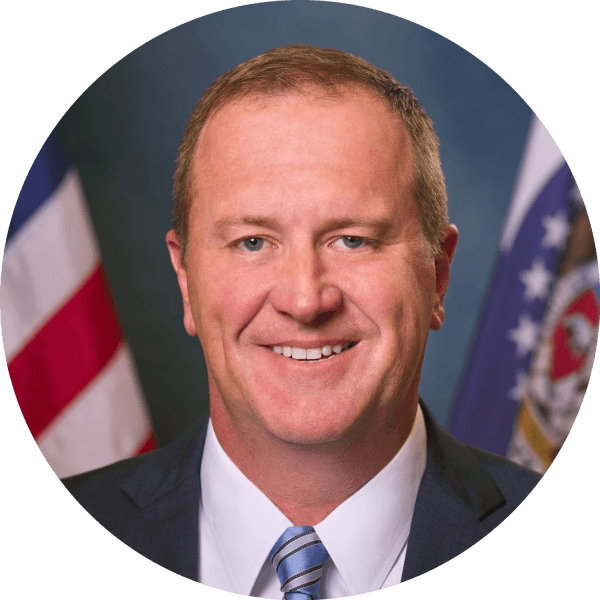
This bill has 1 cosponsor: 1 Republican. Cosponsors represent 1 state: Missouri.
Committee Sponsors
Commerce, Science, and Transportation Committee
1 of 28 committee members cosponsored

13 Democrats across this committee haven't cosponsored yet. Mobilize their constituents
What laws does S. 1290 change?
1 changes
Sections Amended
Section 2 of such Act (15 U.S.C. 272)
adding at the end the following: ``(f) Definitions
S. 1290 Quick Facts
- Committee
- Commerce, Science, and Transportation
- Chamber
- Senate
- Policy
- Science, Technology, Communications
- Introduced
- Apr 3, 2025
Read twice and Referred to Commerce, Science, and Transportation. for review
Apr 3, 2025
Official Sources
The NICE Workforce Framework for Cybersecurity is the existing model S. 1290 would have NIST keep updating and extend to AI.
The cybersecurity framework S. 1290 names by publication number and requires NIST to review and report on at least every 3 years.
Explains the work roles and competency areas structure the bill would have NIST replicate for an AI workforce framework.
The NIST program that disseminates the cybersecurity career resources S. 1290 would require for K-12, postsecondary, and adult learners.
NIST's AI hub; the agency tasked with developing and publishing the AI workforce framework within 540 days of enactment.
The NIST program office that would run the ongoing cybersecurity framework updates and the push to widen employer and school adoption.
The statute S. 1290 amends to add workforce frameworks for critical and emerging technologies to NIST's core functions.
The official bill page with full text, status, sponsors, and committee referral.
S. 1290 Common Questions
When would NIST have to publish an AI workforce framework?
Within 540 days of S. 1290 becoming law. NIST would have to develop and publish a national framework for artificial intelligence jobs — laying out job categories, work roles, and the competencies each one requires.
Does S. 1290 help people without a computer science degree get into AI or cybersecurity?
That's a core goal. The bill requires every framework to spell out how people from nontechnical or nontraditional backgrounds can use their skills, and to point them toward the credentials that qualify them for the work.
Would the AI framework cover non-coding jobs like HR, law, and ethics?
Yes. The AI framework would have to include support and operations roles — finance, law and policy, ethics, privacy, human resources, IT, supply chain security, and procurement — not just the technical jobs.
Could S. 1290 lead to a workforce map for quantum jobs?
Possibly. Within 180 days, NIST would have to assess whether other emerging technologies need their own frameworks — the bill names quantum information science as an example.
Are cybersecurity career resources required for K-12 students and adult workers?
Yes. NIST would have to put cybersecurity career resources in front of every age group — kindergarten through high school, college, and adult workers — and produce materials in multiple languages.
How often would NIST update these workforce frameworks?
At least once every 3 years. NIST would review each framework, decide whether it needs updating, and report that determination plus any update plans to Congress after every review.
Who would NIST consult when building the frameworks?
Federal, state, local, Tribal, and territorial governments, plus industry, nonprofits, labor organizations, and research and academic institutions. The bill names all of them as consultation partners.
Does S. 1290 come with any funding?
No. The bill doesn't authorize appropriations or attach a dollar amount. It hands NIST a set of deadlines and ongoing reporting duties, but no dedicated budget to carry them out.
Based on S. 1290 bill text
S. 1290 Bill Text
“To expand the functions of the National Institute of Standards and Technology to include workforce frameworks for critical and emerging technologies, to require the Director of the National Institute of Standards and Technology to develop an artificial intelligence workforce framework, and periodically review and update the NICE Workforce Framework for Cybersecurity, and for other purposes.”
Source: U.S. Government Publishing Office
Get notified when S. 1290 moves
Committee votes, floor action, cosponsor changes — straight to your inbox.
Bill alerts + Legisletter's monthly briefing. Unsubscribe anytime.
Science, Technology, Communications Bills
9 related bills we're tracking
AM Radio for Every Vehicle Act of 2025

Received in the Senate. Read twice. Placed on Senate Legislative Calendar under General Orders. Calendar No. 622.
Sep 16, 2026
Scientific Integrity Act



Referred to the House Committee on Science, Space, and Technology.
Feb 6, 2025
Kids Online Safety Act


Committee on Commerce, Science, and Transportation. Ordered to be reported with an amendment in the nature of a substitute favorably.
Aug 5, 2026
Sunshine Protection Act of 2025


Received in the Senate and Read twice and referred to the Committee on Commerce, Science, and Transportation.
Jul 15, 2026
GUARDRAILS Act


Referred to the Committee on Energy and Commerce, and in addition to the Committee on the Judiciary, for a period to be subsequently determined by the Speaker, in each case for consideration of such provisions as fall within the jurisdiction of the committee concerned.
Mar 20, 2026
Artificial Intelligence Civil Rights Act of 2025


Referred to the Committee on Energy and Commerce, and in addition to the Committee on Oversight and Government Reform, for a period to be subsequently determined by the Speaker, in each case for consideration of such provisions as fall within the jurisdiction of the committee concerned.
Dec 2, 2025
TAKE IT DOWN Act


Became Public Law No: 119-12.
May 19, 2025
States' Right to Regulate AI Act



Read twice and referred to the Committee on Commerce, Science, and Transportation.
Dec 17, 2025
ACERO Act


Received in the Senate and Read twice and referred to the Committee on Commerce, Science, and Transportation.
Feb 24, 2026
Trending Right Now
Bills gaining momentum across Congress
North Platte Canteen Congressional Gold Medal Act



Referred to the House Committee on Financial Services.
Feb 21, 2025
Fit to Serve Act




Referred to the House Committee on Armed Services.
May 21, 2025
ASAP Act



Ordered to be Reported in the Nature of a Substitute by the Yeas and Nays: 40 - 0.
Sep 16, 2026
Tracking Science, Technology, Communications in Congress? Monitor bills, track cosponsor momentum, and launch advocacy campaigns — all from one advocacy platform.